F. C. Malby is a novelist, poet and short fiction author. Her debut novel, Take Me to the Castle, won The People’s Book Awards. She is a contributor to four print anthologies, and her stories and poems have been widely published internationally online and in print.
I will be reading one of my short stories at an online performance of positive stories and poems celebrating local and national environmental initiatives with Pens of the Earth next Wednesday 22nd, 7-9pm. Sign up at eventbrite
About this event
Pens of the Earth and spoken word troupe T’Articulation invite you to an online evening, via Zoom, of prose and poetry inspired by environmental initiatives. Come and hear writers perform work written in response to our various themes including fresh pieces written for our 2021 Small Differences Add Up theme. (Submission window closes 30th September.)
These stories and poems celebrate local environmentalism – bringing a message of hope and empowerment through imagined encounters, actions, events, and settings; increasing awareness of our surroundings, our connections, and our ability to effect change.
We are also delighted to welcome Jenni Jones, Sustrans Liveable Cities & Towns Officer for Portsmouth, as our guest speaker. ‘School Streets are coming to Portsmouth!‘ She’ll tell you more…
Tickets to this event are free. However contributions to our Wilder Portsmouth fundraiser are greatly appreciated: donations will help seed change in the city, benefiting both people and wildlife.
The Zoom link will be emailed out to you the day before the performance. Please contact the organiser if you don’t receive it.
I imagined him to be tall and dark, my twin brother, when she told me; similar personality, more confidence. Ma told me she’d bled heavily when she carried me, thought she’d lost me, ‘till her stomach kept growing after the doctor ordered bedrest. Didn’t have scans in them days, she said. Aunt Connie had been drafted in to help. Then I arrived after what I’m told is the longest and worst labour, like it was somehow my fault, that I’d been difficult or might have been responsible for his loss. She looked startled in most of my fading baby photos — the ones in tartan albums, labeled in biro —like she’d birthed an alien. There was an awkward distance between us that looked nothing like Madonna and Child. Ma thought she’d told me once, but with most of her stories, I’d heard this one on numerous occasions by the time I carried my own bairns.
The constant, gnawing gap in my life, the longing, the loneliness, it had always been there. I found his face in a few male friends over the years, the ones that were silly and funny and kind. But, I lost him as time unfurled, wondered whether he might have been a doctor, like my Pops, or a vet, maybe a teacher. Sometimes I would reach out a hand to see if he caught it, or hear his voice in a stranger’s. I’d look at men my age and wonder what it would feel like to have him here in the flesh, if we’d fight the way siblings do. I imagined he’d be a better version of me. We look for better all the time. They tell us in school to do better, be better. Better… (continue reading at Spillwords Press).
“The present, we assume is eternally before us, one of the few things in life from which we cannot be parted. It overwhelms us in the painful first moments of entry into the world, when it is still too new to be managed or negotiated, remains by our side during childhood and adolescence, in those years before the weight of memory and expectation…”
The opening lines of Anuk Arudpragasam’s stunning book, A Passage North, Longlisted for the Booker Prize, draws us into a world of post civil was Sri Lanka, capturing the suffering through Tamil narrator, Krishan. The story begins with a call to let him know that his grandmother’s former carer, Rani, has died unexpectedly. He is also grappled with a recent email from a lost love, Anjum, an activist he met in Delhi four years previously.
As Krishan journeys by train from Colombo to the Northern Province for the funeral, he begins a journey through his own soul. The story is beautifully written, with flowing sentences that weave the reader through his thoughts and longings. A Passage North is a memory of the lost, the missing and the dead, casting a light on the ravages of war through the eyes of Krishan, a PhD student, living in Delhi as he watches the news unfold in 2009.
The book is meditative, a stream of consciousness in some respects, and an illustration of the impact of the connections we make and how it affects the human psyche when they are lost. Inspiration for the rhythm and style of the book is taken from Thomas Bernhard and Javier Marias.
What struck me most, was Arudpragasam’s insight into the way that men can intimidate women through a gaze or certain body language…
“In Delhi and many of the Hindi-speaking states more generallymale stares were different, were intensely unselfconscious and intensely unrelenting, so that even when you weren’t being harassed in more explicit verbal or physical ways you still had to use all of your psychological resources to resist these gazes in the course of each day, to prevent these men from trying to enter your soul through your eyes, like strangers who enter the privacy of your house without permission and without even bothering to take off their shoes.”
The sensitivity with which he tackles the subject of Anjun’s sexuality in a culturally oppressive environment, is both powerful and subtle.
I would liken the book in some ways to being lost inside a painting, a weaving of colours and shapes. If you enjoy literary fiction, I highly recommend this. It’s slow in pace, so don’t expect snappy twists and turns, but if you want a journey into Tamil culture and an insight into love and loss through the ravages of war, this won’t disappoint.
Arudpragasam is a bright, insightful writer, with much to share from his internal world. The sentences are sharply observed and intensely hypnotic. It will be interesting to see how it fares as the shortlist is put together. A compelling and thought-provoking read.
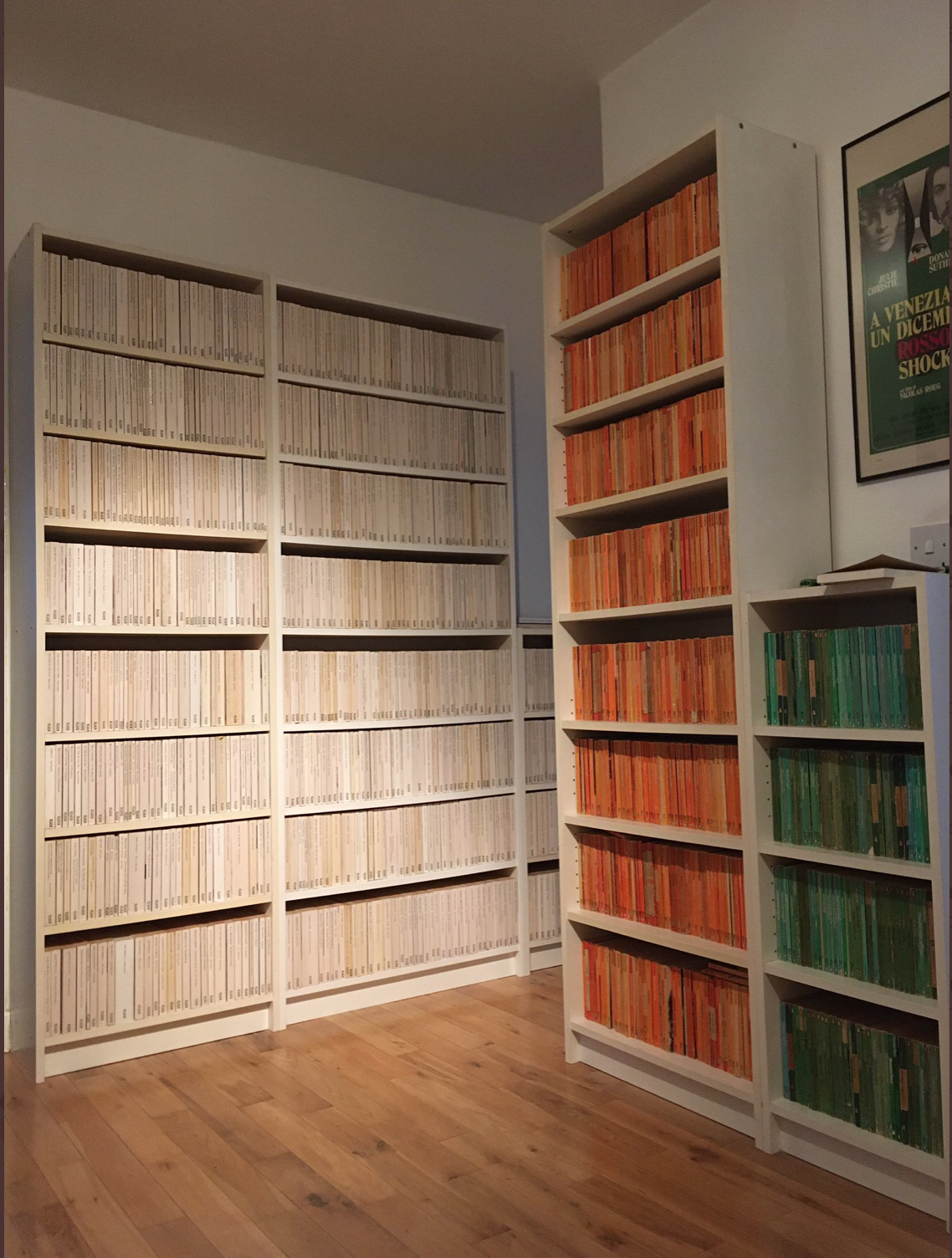
I first discovered Nicholas Royle when I began reading Best of British Short Stories, which he edited, published by SALT. I began with Best of British Short Stories 2011, and was hooked. I have a deep love of second-hand bookshops, and when I wrote a recent blog post on how people arrange their bookshelves, and he responded with a photo of his white-spined Picador books, I knew it was time for an interview.
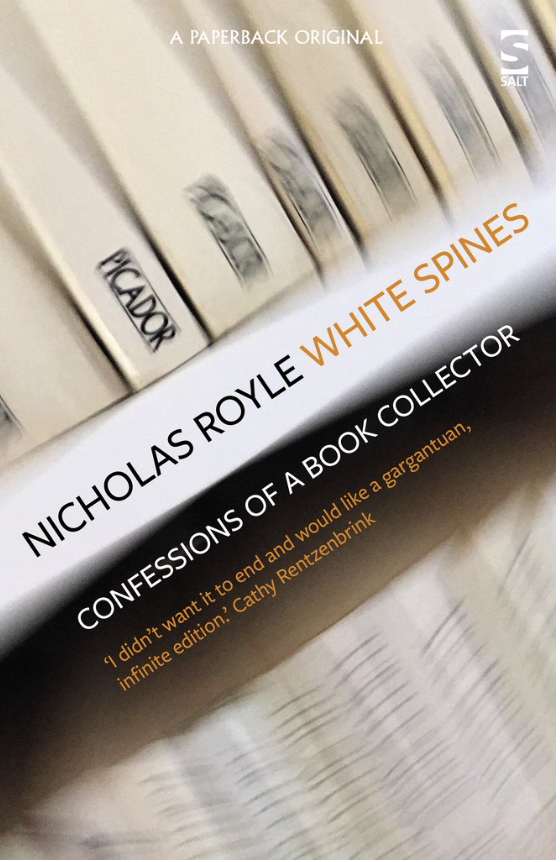
White Spines: Confessions of a Book Collector (Paperback – 15 July 2021)
A mix of memoir and narrative non-fiction, White Spines is a book about Nicholas Royle’s passion for Picador’s fiction and non-fiction publishing from the 1970s to the end of the 1990s. It explores the bookshops and charity shops, the books themselves, and the way a unique collection grew and became a literary obsession. Above all a love song to books, writers and writing.
Your latest book, White Spines: Confessions of a Book Collector, has just been released. Can you tell us about your passion for second-hand books, notably, white-spined Picador books, and the inspiration behind White Spines?
It goes back to my late teenage years. A surrealist painting on the sleeve of a single by Bauhaus. A painting by the same artist – Paul Delvaux – being used on the cover of a novel, Ice, by Anna Kavan, which was published by Picador. A wall of white-spined books – all Picadors – in a second-hand bookshop, Skoob Books, in London, where I’d moved to go to university. A Christmas present from my parents, Alberto Manguel’s Black Water: The Anthology of Fantastic Literature. That was it. I was hooked.
Do you have any favourite second-hand bookshops or charity shops?
Skoob has to feature in that list, since they’re partly responsible. Some of my favourites are closing, or have switched to online only, which is little better than closing, like Sharston Books in Manchester. But, in or near to Manchester, we still have Greenhouse Books, Didsbury Village Bookshop, George Kelsall, Lyall’s. Barter Books in Alnwick is amazing; Leakey’s in Inverness is incredible. Church Street Bookshop in Stoke Newington, north London. Loads of great branches of Oxfam Bookshop and Oxfam Books & Music, in particular Islington, Crouch End, Herne Hill, Bold Street in Liverpool, Leeds (at Headingley). I could go on. I could fill the internet.
Having written several volumes of short fiction and edited many anthologies, I have to ask, short fiction or novels?
Short stories. Then novels. Short novels ideally.
What’s your best editing advice for authors editing their work before it reaches a professional editor?
Read it out loud. If you wince at a word or phrase, if you just feel the tiniest doubt, whip it out, because otherwise you’ll wish you had done when it’s published. If publication is not necessarily on offer, bear in mind that editors (and agents) are not only looking for something that makes them sit up; they’re also looking for a reason to reject your work as soon as possible and move on to the next thing. So don’t give them an excuse.
What led you to set up Nightjar Press, is there a freedom in being able to hone in on one story at a time, and how do you discover stories for chapbook publication?
For many years I’ve believed that short stories are so special – the really good ones, I mean – that they need their own cover, their own artwork, maybe even their own ISBN. Short stories are worth making a fuss of, worth cherishing and treasuring, and collecting. I invite submissions, from writers who get what we’re doing, and I’m open to submissions, ideally from writers who get what we’re doing. I’m not massively keen on those submissions that come in with an email from someone, who has never ordered a Nightjar, saying, I think my 25,000-word historical fantasy set on Venus would be perfect for Nightjar.
What have you learned from being head judge of the Manchester Fiction Prize and and Reader at MMU, and how quickly can you tell whether or not you will like a story?
I can tell on the first page if the writer can write. It takes longer to work out if they’ve written a good story. That’s what I’ve learned from being head judge of the Manchester Fiction Prize and it’s also the answer to the final question. What I’ve learned from working with MA and MFA students at Manchester Met is that anyone can improve their writing if they want to, if they listen to feedback from peers and tutors. Obviously you have to make a judgment about what advice to take and what to ignore. Very occasionally you get someone who doesn’t listen – and they tend not to give either, in terms of generous, intelligent feedback. We try to weed these writers out at application stage, maybe in interview, and usually succeed.
What should writers look for in a good mentor and how do they go about finding the right one?
A mentor should get what you’re trying to do and be able to help you do it better, much like both a creative writing tutor and an editor. The three roles are very similar. How do you find a mentor? There are some schemes. Arvon run one. I was lucky enough to be one of their mentors and work for a year with three excellent writers – Sonia Hope, Nicola Freeman and Adam Welch – who I was able to help select. Otherwise, I think it’s probably a good idea to try to get personal recommendations.
Your impersonation of Dominic Cummings during lockdown, followed by many other well-known people, was highly entertaining. I think the highlights were Adele and Moby. Who’s next?
Thank you. I’m doing some Picador authors at the moment. Someone requested Picasso. Shouldn’t be too much of a stretch.
You are stuck in a bookshop with four authors or public figures, who would they be, and why?
Anna Kavan, Giles Gordon, Elizabeth Young, Joel Lane. You didn’t say they had to be alive. It’s a second-hand bookshop, of course, given that that’s the only place where we might find books by all four of these writers. Some of Anna Kavan’s work is in print with Peter Owen, and Joel Lane’s back catalogue is being reissued by Influx Press in beautiful editions, but you’ll struggle to find anything by Liz Young or Giles Gordon in a new bookshop. For now. I imagine a reading. Each of the four reads one of their stories and, as long as we are stuck there, they keep on reading. Bliss.
What are you currently reading?
I’m reading DM Thomas’s The White Hotel, which celebrates its 40th anniversary this year. I last read it 30-odd years ago. I’m reading the 1981 King Penguin paperback edition with cover illustration by Peter Till, which I regard as the edition against which all other editions should be judged. I’m also reading Ben Lerner’s The Hatred of Poetry (Fitzcarraldo Editions), which I found recently in the Oxfam Bookshop Shrewsbury. I wouldn’t have bought this new, as I’m not a fan of Lerner, but I’m not a fan of poetry either, so thought this might be interesting. Thirty pages in, I’m on the fence. I’m also reading a novel published in the last few years that’s supposed to be hilarious, with laughs on almost every page, one reviewer suggested. I’m on page 96 and have had four LOLs and one half-smile.
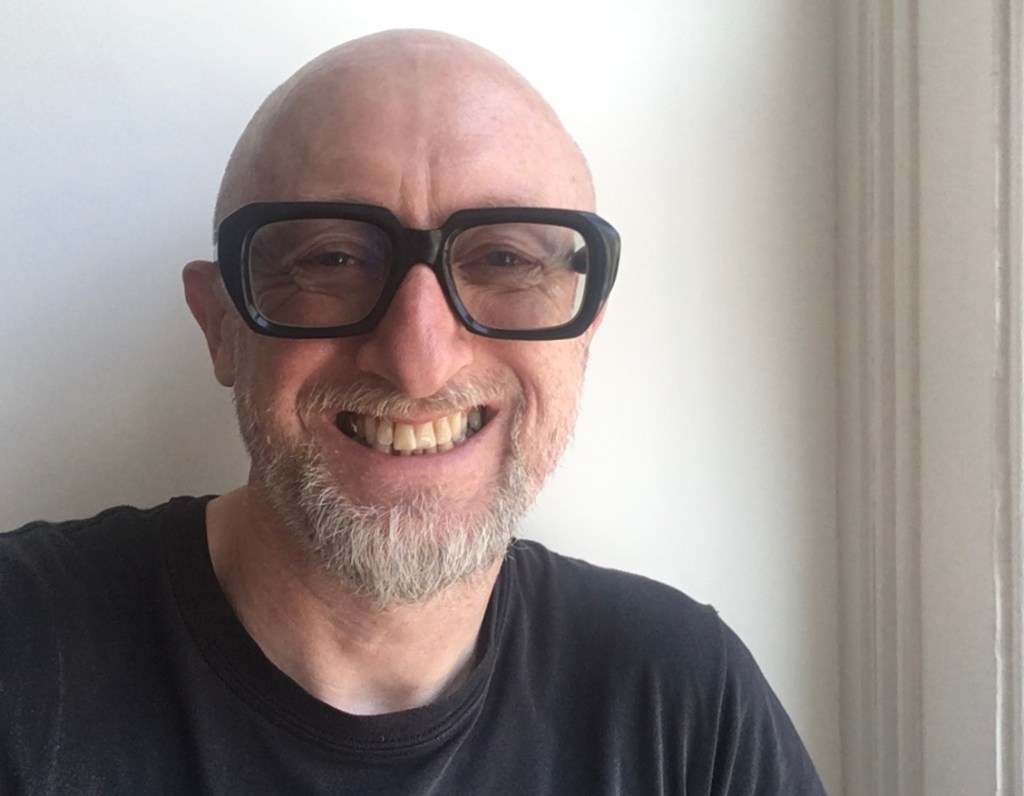
Nicholas Royle is the author of seven novels, including Antwerp (Serpent’s Tail) and First Novel (Vintage), and four short story collections, most recently London Gothic (Confingo Publishing). He translated Vincent de Swarte’s novel Pharricide for Confingo and is series editor of Best British Short Stories for Salt Publishing, who also published his latest book, White Spines: Confessions of a Book Collector. He is Reader in Creative Writing at Manchester Metropolitan University, head judge of the Manchester Fiction Prize and founder-editor of Nightjar Press. You can find him on Twitter or his website.
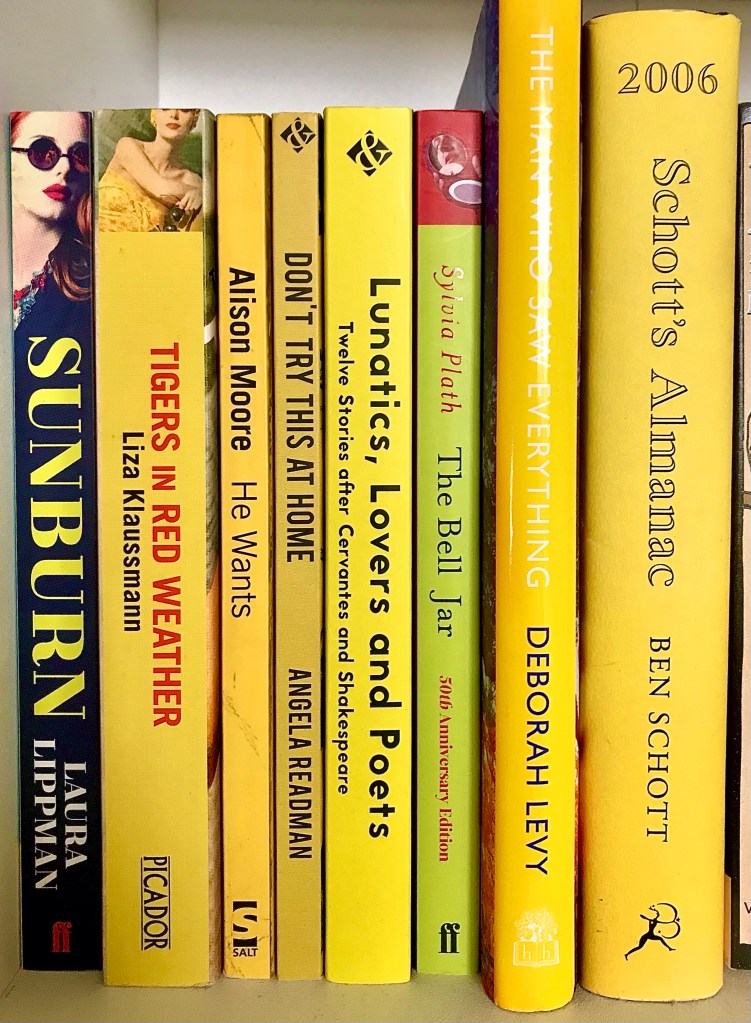
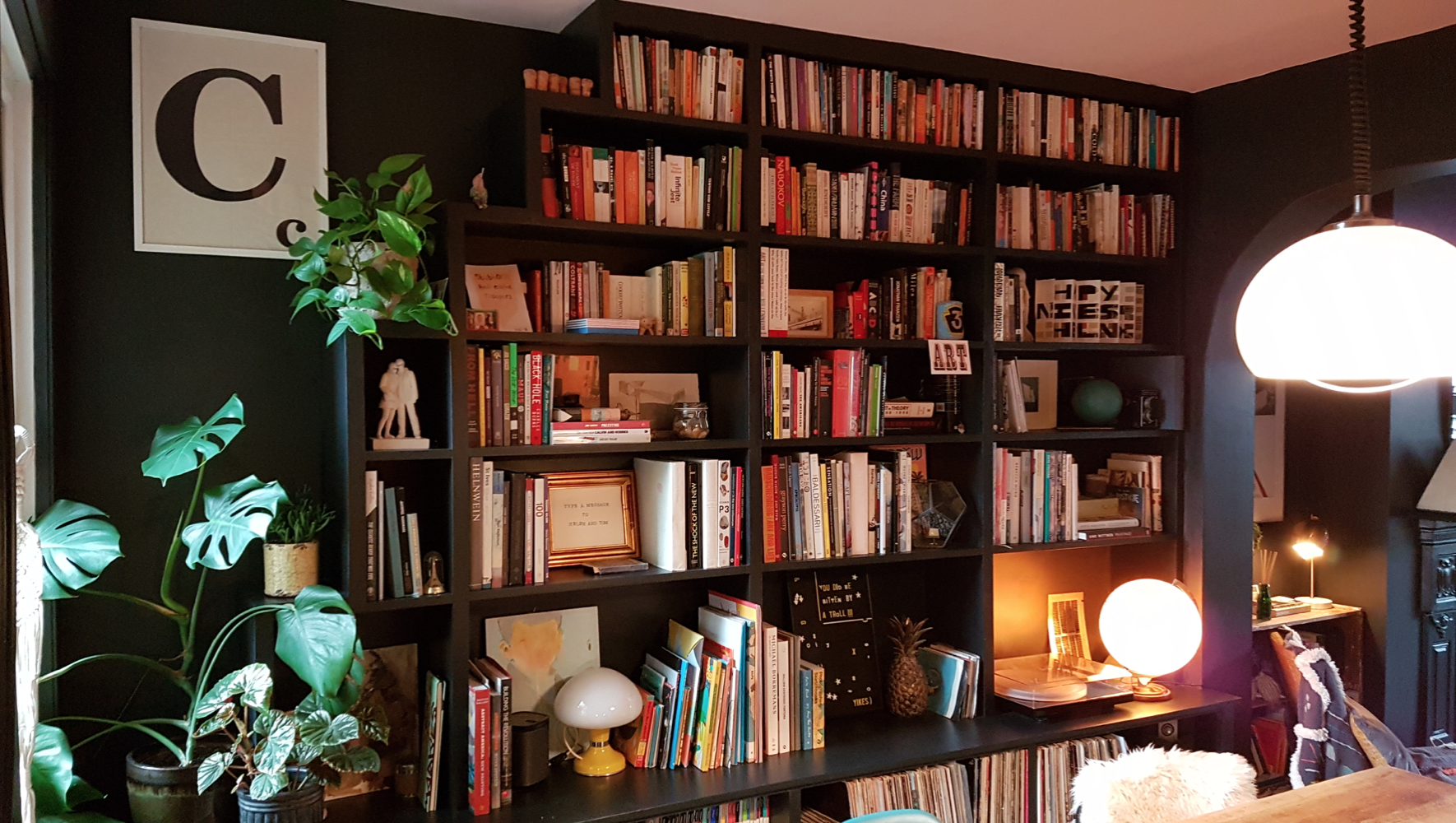
A friend told me yesterday that their books are all arranged in alphabetical order. I smiled and said that mine are roughly arranged by type. I have a section for psychology, travel, theology, biographies and autobiographies (which are mostly political, but I also have one on Miles Davis), crime thrillers, short stories, poetry, literary fiction, commercial fiction, favourite books (mostly by J.M Coetzee, Julian Barnes, Hilary Mantel, Alice Munro, Colm Tóibín, Milan Kundera, Deborah Levy and Alison Moore).
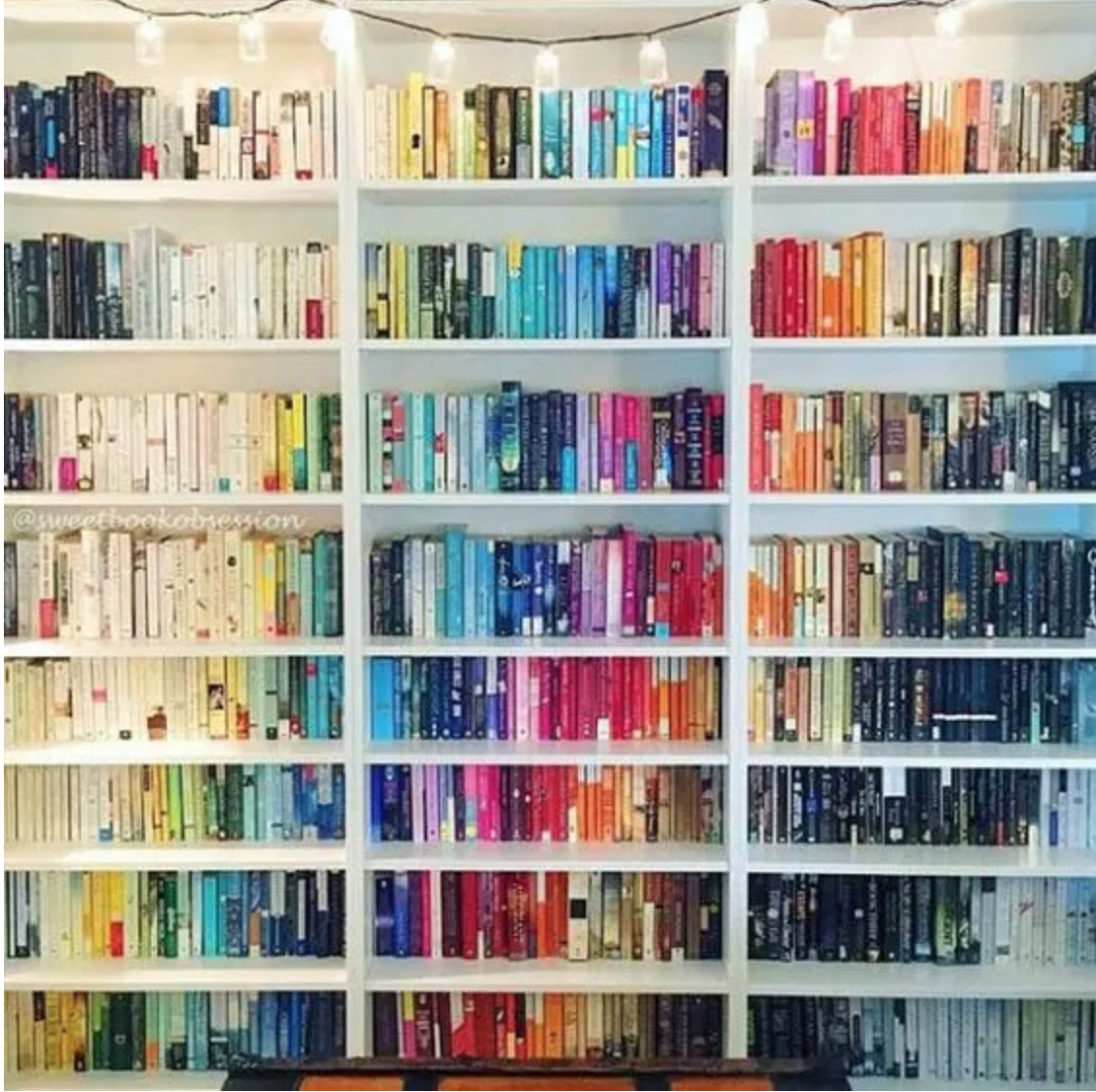
This morning, I noticed that I have a selection of books with yellow covers, although I’m not entirely sure how the lime green snuck in! It’s the only colour I seem to have grouped together, purely because I love yellow. I don’t think I will ever match my books by colour, having seen a few well-known figures (who shall remain nameless) adding the results of this to Instagram. It feels a little too OCD for my liking, by we are all beautifully different.
The Home Edit
How about this cascading cover colour bookshelves look from Book Bub?
Book Bub
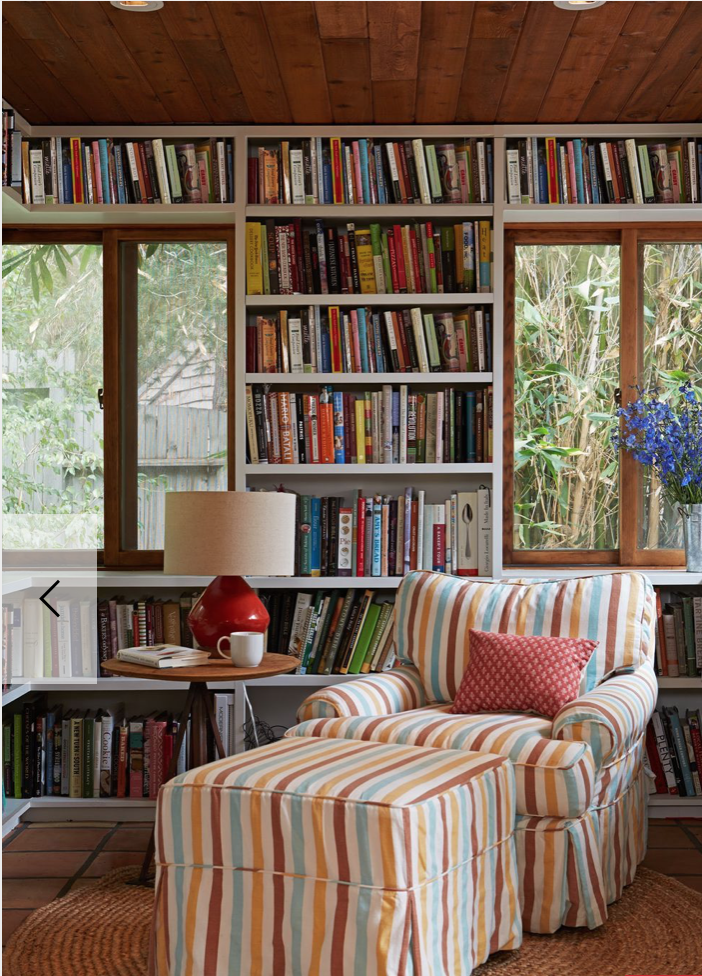
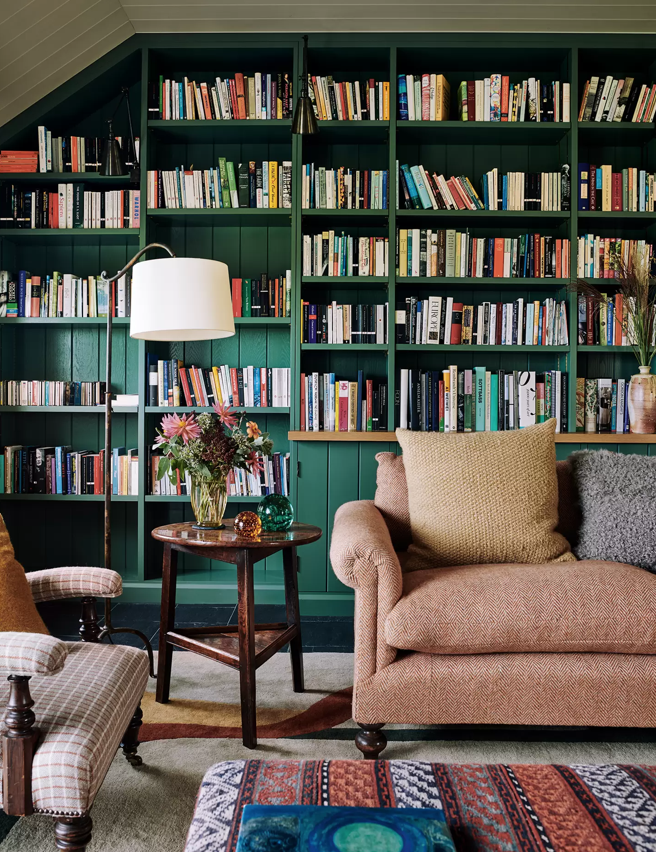
As a writer and a reader, I love books, bookshelves and other people’s bookshelves. If I go to a home and there is a large book collection on the shelves, I like to scan the collection and see what the owner reads. Sometimes I find we like similar authors and there are other occasions where I find something new. Amidst the Covid pandemic over the past 15 months or so, and with life as we knew it transferred to Zoom and Teams meetings, a background of bookshelves never fails to capture my attention. Personally, I like a more mixed approach to bookshelves.
Indie Wire
Douglas HillMichael SinclairBespoke Carpentry
How do you arrange your bookshelves? Do you have any favourite bookshelves? Drop a link to a snap in the comments, or tell us how you organise your shelves, and share the book love.




 F C MALBY
You must be logged in to post a comment.