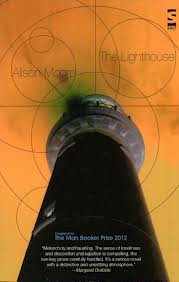
#bookaday Have more than one copy: The Lighthouse

lighthouse


I have two paperback copies and a kindle download. This gives you an idea of how much I enjoyed it. The doubling up of the paperbacks is down to a joyful discounted purchase of the Booker shortlisted books  in 2012. I have yet to read Wolf Hall.

The lighthouse caught, and held, my attention partly because of its sadness and for the emptiness of the main character. His life has fallen apart around him and he sets out on a journey, a walking trip to Germany. It is a journey that appears to mirror his own sense of a loss of direction. The abandonment of his mother, and the disappointment of his ex-wife and father, garner sympathy from the reader through Moore’s cleverly crafted narrative. A chilling and suspenseful read. So much emotion is conveyed through very scant explanation.

I have subsequently read her more recent short story collection, The Pre-War House and Other Stories. I reviewed the collection in previous post.

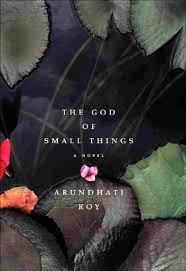
#bookaday Forgot I owned it: The God of Small Things

the god of small things


This one has been on my shelf for a while but I found it the other day, having forgotten all about it. Has anyone read it? In the absence of any views on the book, here is the blurb:

The God of Small Things (1997) is the debut novel of Indian writer Arundhati Roy. It is a story about the childhood experiences of fraternal twins whose lives are destroyed by the “Love Laws” that lay down “who should be loved, and how. And how much.” The book is a description of how the small things in life affect people’s behaviour and their lives. The book won the Booker Prize in 1997. Compared favorably to the works of Faulkner and Dickens, this is a modern classic that has been read and loved worldwide. Equal parts powerful family saga, forbidden love story, and piercing political drama, it is the story of an affluent Indian family forever changed by one fateful day in 1969. The seven-year-old twins Estha and Rahel see their world shaken irrevocably by the arrival of their beautiful young cousin, Sophie.

#bookaday The one I always give as a gift: Quiet: The Power of Introverts

20140606-095319.jpg

A book that I have recently been lending out and buying for friends is Susan Cain’s Quiet: The Power of Introverts in a World that Can’t stop talking. I first discovered the author from a TED talk. If you haven’t discovered TED, I can highly recommend the site. TED is a nonprofit organisation devoted to spreading ideas, usually in the form of short, powerful talks (18 minutes or less). TED began in 1984 as a conference where Technology, Entertainment and Design converged, and today covers almost every topic, from Science and Technology to Philosophy and Psychology and beyond.

I have learned so much from these and, in particular, Susan Cain’s talk on Introverts. If you are an extrovert please don’t switch off. There is every chance that you are living with, related to or working with one. The book is an eye-opener, let me tell you.

I was captivated by Susan’s talk and a lot of her research was a revelation to me. She graduated from Princeton and Harvard, and worked first as a Wall Street Lawyer, and then as a negotiations consultant. The book was born out of her difficulty with public speaking.

She highlights the power if ‘thinkers’ and has written a manifesto for introverts in which she quotes Ghandi:

In a quiet way you can shake the world.’

She believes that the power of quiet is greatly underestimated and underrated. It is to introverts, she says – Rosa Parks, Chopin, Dr. Seuss, Steve Wozniak – that we owe many of the great contributions to society. She discusses the rise of the Extrovert Ideal throughout the twentieth century and explores how deeply it has come to permeate our culture.

I’ve been building up to a post on writers as introverts and extroverts, so maybe you’ll find it here some time in the future. I can’t recommend the book highly enough.
 

#bookaday What book do you have that doesn’t belong to you? Monica Ali’s Brick Lane


brick_lane


My Mother used to run a Guest House, and I found Monica Ali’s Brick Lane in amongst the bookshelves in one of the rooms. I still need to return it and explain that the spine was damaged long before I borrowed it (a sign that many readers have enjoyed the story long before you begin). It garnered a lot of attention for its Man Booker shortlisting in 2003 and I liked the clean, simple cover design. Beyond that, I really had no idea what to expect. What drew me in was Ali’s language, her ability to give you a sense of a room or of the emotional state of her characters in barely a few sentences. The opening line is one of my favourite book openings:

“An hour and forty-five minutes before Nazneen’s life began – began as it would proceed for quite some tine, that is to say uncertainly – her mother Rupban felt an iron fist squeeze her belly.”

This is a story of Nazneen; it is a tale of her her journey from a village in Bangladesh to a flat in the East End of London, and of her arranged marriage to a man who initially seems cold, indifferent. She knows no English and has to rely on her husband, spending her days tucked away sewing clothes, until she meets the radical Karim. The story of racial conflict and tension is beautifully portrayed, as is the love affair she eventually has with Karim, and her ultimate choices. It makes you question so many of your own ideas, and is an intimate picture of a life lived in a new culture with all of the conflicting messages and emotions.


#bookaday One With A Blue Cover: On Chesil Beach by Ian McEwan

chesil beach


It is July 1962. Edward and Florence, young innocents married that morning, arrive at a hotel on the Dorset coast. At dinner in their rooms they struggle to suppress their private fears of the wedding night to come…

This is really all that’s needed for a book description of this gem of a novella, written by one of my favourite modern writers. It is a sensitively written but devastating portrayal of sexual awkwardness between a newly married couple staying in a pokey hotel in Dorset.

“This is how the entire course of a life can be changed – by doing nothing.”

These haunting words give you an idea of how McEwan plays with your emotions. His descriptions draw you in to the minds of the characters, Florence in particular, and her silence leaves you wanting to change the course of their lives. Her paralysis is partly what makes it work. The ending left me with a deep sadness. I don’t think a book has ever worked on my emotions in quite the same way. A huge feat of narrative genius.