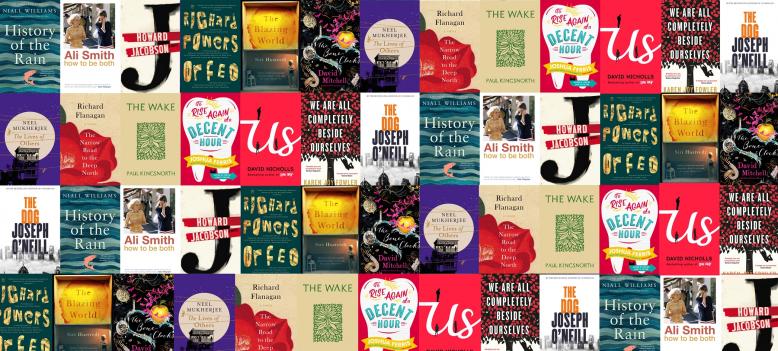
As I write, the longlist for the Man Booker prize 2014 has just been announced. It is the first year the prize has been opened up to novelists from around the world, as long as the books are written in English. Previous rules limited Publishers to Commonwealth authors only. Previous winner, Eleanor Catton, says, “I think it’s a really great thing that finally we’ve got a prize that is an English-language prize that doesn’t make a distinction for writers who are writing from a particular country.”
The longlist this year has proven controversial for several reasons. You only have to look at the #ManBooker14 Twitter hashtag to see the questions people are asking. Literature professor, journalist, author, and one of the 2014 Man Booker judges, Sarah Churchwell said, “As inevitable debate and criticism develop, do bear in mind that what we longlist is defined by what publishers submit to us.” It’s a helpful reminder that, although people are quick to criticise the judging panel, they are very much bound by what is submitted.
Publishers this year are navigating unchartered waters, and are finding their feet with the new rules. The longlist comprises 13 books by four Americans, six Britons, two Irish writers and one Australian:
To Rise Again at a Decent Hour, Joshua Ferris (Viking)
The Narrow Road to the Deep North, Richard Flanagan (Chatto & Windus)
We Are All Completely Beside Ourselves, Karen Joy Fowler (Serpent’s Tail)
The Blazing World, Siri Hustvedt (Sceptre)
J, Howard Jacobson (Jonathan Cape)
The Wake, Paul Kingsnorth (Unbound)
The Bone Clocks, David Mitchell (Sceptre)
The Lives of Others, Neel Mukherjee (Chatto & Windus)
Us, David Nicholls (Hodder & Stoughton)
The Dog, Joseph O’Neill (Fourth Estate)
Orfeo, Richard Powers (Atlantic Books)
How to be Both, Ali Smith (Hamish Hamilton)
History of the Rain, Niall Williams (Bloomsbury)
Howard Jacobson, a previous winner with The Finkler Question in 2010, is not a surprise; neither are the two previously shortlisted authors, Ali Smith and David Mitchell. But some are asking why Donna Tart’s Goldfinch is missing and why Ian McEwan’s The Children has also missed the list. The Guardian predicted that it might meet the mark because the “novel is about a female judge dealing with a religious young man who wants to opt out of life-saving medical treatment,’ citing that it may appeal to the chair of judges. David Nicholls’ book, Us, has surprised some by making the list. His previous novel, One Day, was turned into a film, but he would not usually be seen as a writer of Literary Fiction. I feel refreshed by the thought that genre is now less of an issue than, possibly, it used to be. Don’t you?
A crowd-funded book has appeared on the list for the first time: Paul Kingsnorth’s debut novel, set in 1066, was published by Unbound, which asks readers to give money towards publication in exchange for having their name included in the credits. This is a really interesting new development.
We will never know how or why the judges chose the books as they did, but I suspect that they were looking for a good range of stories as well as wonderful writing, and were avoiding anything too overtly political, especially given the current political climate.
Previous winners have included Hilary Mantel, Julian Barnes, Howard Jacobson, Ian McEwan and Yann Martel and John Banville. The shortlist will be announced on 9th September with six titles and the winner on 14th October. The judges for this year’s prize are Sarah Churchwell, Daniel Glaser, Jonathan Bate, Alastair Niven and Erica Wagner, with Anthony Grayling as the chair.
I very much look forward to the shortlist and to reading some of the longlisted books. Has anyone read any? What did you think?
Here are some interested extracts and related works by the authors:
David Mitchell’s Twitter Story “The Right Sort” Collected.
The Wake has been crowd-funded by Unbound. You can read all about it here.
Bloomsbury have an extract of The History of the Rain by Niall Williams for you to read.


 F C MALBY
You must be logged in to post a comment.