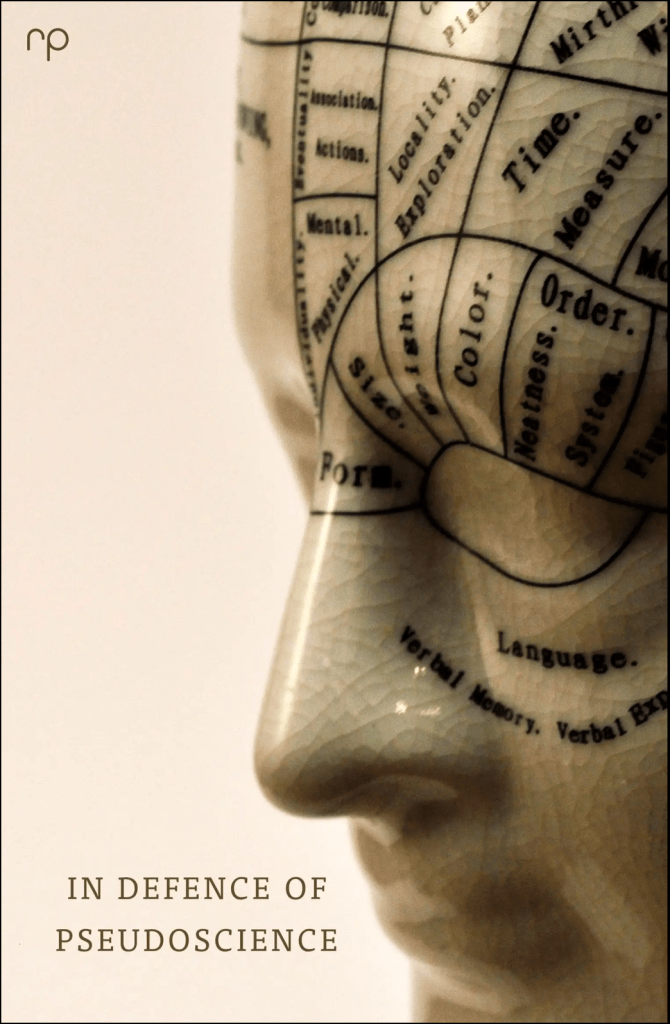
In Defence of Pseudoscience: Reflex Fiction Volume Five, Reflex Press, 28 July 2022
I have a short story in this anthology from Reflex Press. You Fold Yourself into Tiny Spaces was longlisted in the Reflex Press Quarterly International Flash Fiction Competition in 2021. I’m honoured to be published alongside so many wonderful authors. It will be released on 28 July, but can be preordered from Reflex Press.
In Defence of Pseudoscience contains 176 flash fictions from 152 writers from across the world. These short short stories, each no longer than 360 words, were longlisted for the four rounds of the Reflex flash fiction competition held in 2021.
Within these pages, the traditional narrative shares space with the experimental. Humour sits alongside tragedy. Each of these page-long stories packs a punch greater than its word count suggests.
In Defence of Pseudoscience is the perfect introduction to readers new to flash fiction and essential reading for those already familiar with the form.
Includes prize-winning flash fiction from Annette Edwards-Hill, Jeanine Skowronski, Thomas Malloch, Joshua Jones, Kirsteen Ure, Simon Linter, Morgan Quinn, Matt Kendrick, Evelyn Forest, Becca Yenser, Karen Jones, Rosaleen Lynch, Nora Nadjarian, Jo Withers, and Katja Sass.
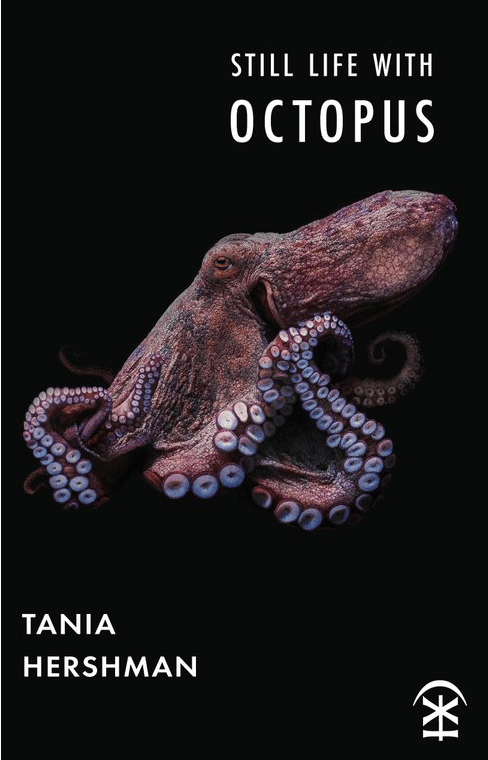
Tania Hershman’s second collection of poems, published by Nine Arches Press, explores the boundaries between animal and human, the worlds in which they live and the spaces they inhabit. Tania has this innate ability to find words that rest in the liminal spaces, almost like entering a Moroccan Souk, travelling through mazes of interlinking pathways, where you find intriguing treasures around each corner. It’s a journey into the unknown, the unexplored, and is a place that’s hard to leave, where the things you discover will remain in your mind long after the poem ends. It’s a magical, mystical experience.
‘What if you didn’t know what night was, landing here. What if you’d never heard of light.’
This enticing opening line, a questioning of reality, sets the tone for what is to follow. We explore time and space, the space within which and octopus can enter, remain, shape shift or escape. These poems explore the edges of mind and body, and the connections between the two in ways that will leave you resting on a particular word or phrase. She challenges our ideas of reality and meaning, our thoughts and feelings.
‘And what if the octopus could talk. And what if they turned to us and said, Enough with all the jars, and the tests of what we can get into and get through. You’ve seen what we can do.’
Each poem shifts the way an octopus changes its colour, reflecting its mood, yet there is a thread that connects many of the poems – the nature and shape of the heart, all that is hidden, the confines of space and the way that some things need to be released, or remain hidden.
‘And the body, too, has things it will never tell.’
The indefinite changes of the octopus are mirrored in the shifting of poems across the pages. There is something almost tidal about the ebb and flow of patterns. That the octopus is able to escape from a closed jar with such ease engages the reader with the idea that words can change and move within the confines of the structure of a poem. The fluidity of the words aid the journey as you travel through the pages.
‘I worry about where my heart is now, did it even reach you? Let go, whispers the octopus in my chest. These things are not in your control.’
The title poem, Still Life With Octopus, made me catch my breath, the words, ‘let go’, echoing through my mind. There is a literal and metaphorical letting go of expectations and of the boundaries you thought you understood. She creates a freedom with words and worlds where anything seems possible, exploring new possibilities and leaving the reader to ponder where the journey will take them.
A gifted writer and a wonderful short fiction teacher, her skilful mastery of words and her eye for the unseen reaches new heights in this stunning collection. With an extensive background in Science, including an MSc in Philosophy of Science, Tania’s research naturally seeps onto the page and into the words and worlds that she creates. This book is a thing of beauty; it’s a pure treasure and a collection that you will want to re-explore again and again.
Tania Hershman’s second poetry collection, Still Life With Octopus, will be published by Nine Arches Press in July 2022 and her debut novel, Go On, by Broken Sleep Books in Oct 2022. Her poetry pamphlet, How High Did She Fly, was joint winner of Live Canon’s 2019 Poetry Pamphlet Competition and her hybrid particle-physics-inspired book ‘and what if we were all allowed to disappear‘ was published by Guillemot Press in March 2020. Tania is also the author of a poetry collection, a poetry chapbook and three short story collections, and co-author of Writing Short Stories: A Writers’ & Artists’ Companion (Bloomsbury, 2014). She is co-creator of the @OnThisDayShe Twitter account, co-author of the On This Day She book (John Blake, 2021), and has a PhD in creative writing inspired by particle physics. www.taniahershman.com
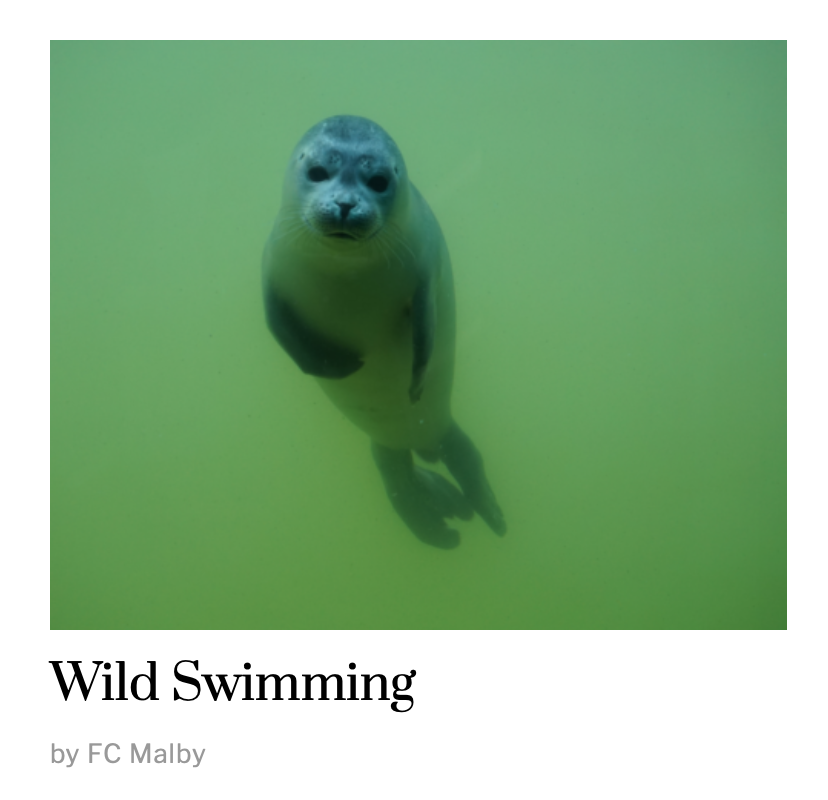
Sundown rippled across the waves as Laurie slipped into the water; the cold, slapping against her thighs as she edged further out to sea, leaving the laughter of children behind, their form, a string of Lowry dots strewn across a hot shoreline. Her muscles tightened as more of her flesh was touched by the cold of the ocean, tensed as blood rushed away and up to her core, where it was warmer, less hostile.
As her shoulders slid under, until her head was fully submerged and her flesh engulfed, silence was the thing she relished most. If anything happened on the shore, she would not hear, her ears only taking in echos of gentle ocean currents and of boat engines far out in the distance; here, in the water, it was cold and quiet. The temperature drop focused her mind on the movement of her body, as she kicked and swung each arm out to sea, towards the sun as it began to hide behind the line of the horizon. She could only see the light under the water, the colour of the sea removing the orange glow of the skyline, the way a childhood storybook removed an image with a single sheet of coloured acetate, wiping it out completely and showing you a different picture through a different coloured lens. Above and below the water line were two different scenes, the image below the water, darker, mysterious, expansive. She found the vastness of the ocean liberating, freeing her mind. Laurie had seen the Ice Man, Wim Hof, explaining the Ayurvedic effects of cold water on the immune system, as well as the mind, hormones, blood flow, skin and hair. Her hair floated freely in wet strands, her skin felt the tingle of the North Sea salt water, cleansing her flesh and renewing her mind. Friends talked about wild swimming, but it had not made sense, not until she had felt the cold on her own flesh and submerged her body into the silence of the sea. It had become addictive, a way of numbing the thoughts that shouted at her as the day drew to a close, clamouring for her attention. As her body temperature dropped, so did life’s pressures. What had begun as a sponsored open water swim, had now become part of her daily ritual, a way of letting her thoughts slip into the ocean, carried off to some far flung shore, where no one knew her name…
I met an aspiring write yesterday, who asked lots of questions about the craft of writing, and wondered whether beginning a novel was a viable option after quitting a high-flying city job. I remember asking similar questions, back in 2007, when I moved abroad and gave up a teaching job that I loved. Moving from London to Vienna stirred up all sorts of ideas in my mind and, as I said to the person yesterday, there is something about moving to a different place, and living in a different culture, that somehow frees your mind and inspires lots of creative ideas. There are lots of questions from the writing community on Twitter today and, if you follow the hashtag #WritingCommunity, you’ll see many of these. There are so many questions and so many good books to you to get you started, and to help hone your craft.
My first piece of advice to anyone wanting to begin writing is to read widely, both within and outside your genre, especially outside your genre – it’s easy to just focus on what you want to write – and read as much as you write, spend as much time reading as you do writing.
Read as many books on the craft of writing that you can get your hands on. Find your local library, as there are lots of useful books that you can borrow. You don’t need to buy them all, or do a book swap with another writer. I’ll add some of the books that I’ve found helpful at the end of the post. It’s by no means an exhaustive list.
Sign up for writing courses. The Avon Foundation have lots of wonderful writing courses and many authors offer course, as well. Learn as much as you can.
Don’t be afraid to experiment. You may be fiction writer – a poet, a novelist or a short story writer – or you might prefer creative non-fiction writing (memoir, autobiography/biography, essays, literary journalism, journaling, or topics like food or travel writing, self-development, art or history). Within fiction there are so many genres; read as widely as you can.
Don’t give up. You will have hard days were you want to quit. It will get hard. If writing was easy, there would be many more authors with published work. Even the most gifted writers hit a wall at some point. Push through it.
Set yourself targets, if this works for you. When I began, I sat down to write from 9am – 6pm (with breaks) and gave myself 3 months to get around 35,000 down on paper. After this length of time, I would assess whether or not I had enough to continue and a good enough story to write a whole novel. It worked, I kept going, and I finally finished my first book.
Find a writing partner or a writing group. If you can’t, or it doesn’t suit you, tap into the writing community online. Twitter is a good place to start and will be really helpful, in terms of keeping up to speed with the industry. It’s a great way of networking, finding support, and following publishing trends. I have been contacted by authors, readers, editors, agents and publishers this way. It’s invaluable.
These are some of the books that have helped me along the way, although, Meander, Spiral, Explode is a new acquisition, so I’ll write a review when I’ve read it. Which books have helped you? Can you recommend any others?
We spent yesterday exploring one of the oldest timber-framed buildings in Suffolk. It is one of the best preserved of the cloth towns in the county, and was built in the 14th century. Little Hall, in Lavenham, belonged to clothiers and later, scholars and schoolmaters.
I was fairly captivated by the books in the library, the scent of lignin, the choice and range of books, and a beautiful writing desk with a window view. I think the pictures speak for themselves…



 F C MALBY
You must be logged in to post a comment.