Prague: A People, A City, A History

prague 1 prague 2 prague 3 prague 4 prague 5 prague 6

Prague is a city close to my heart. I spent a few memorable months in a town closer to the Slovak border as a teenager teaching English. It was a bitterly cold winter of 1993, only months after the fall of communism and it was just as Czechoslovakia had become a new Czech Republic. It was a unique and life changing moment in history, both for a young girl from Britain and for the Czech and Slovak Republics. The red tape and bureaucracy involved in entering the country to work in a school was immense. I had to sign a form which was also required to be signed by the headmaster, the state police and central government, then photocopied eight times.

The experience was life changing and the memories of a people, as yet untouched by western culture, was an eye opener. Lives were lived simply and with family gatherings a frequent occurrence. The emphasis on Czech culture and folk music, and stories handed down through generations, on lives determined by fierce winters and the need for thick boots, coats and hats (none of which I owned), created a seed in me; a seed that would later grow to become a story.

As I listened to the lives of people who had lived under daily threat of the communist state police, and with the risk of imprisonment, a world opened itself up to me. This was a world where post was intercepted, movement restricted, media heavily censored and ordinary lives monitored secretly, and scrutinized by a power that eventually collapsed in 1989 after the Velvet Revolution and the fall of the Berlin wall. The chain of events across Eastern Europe was cataclysmic. I was amazed to hear different sides to a story that remains a powerful historical period. Girls my age missed the security of one hundred percent employment under a communist government and the comfort of rules and regulations, but as I listened I heard stories of those who were less fortunate and whose families were torn apart by deceit as people were forced to turn on their own friends and family, and parents were imprisoned for being deemed traitors, enemies of the state.

That a land so beautiful and so rich in culture and stunning in its elegance had endured such a savage and restrictive past, was a message to me that over the years grew into a story, and subsequently a book. Take Me to the Castle became my debut novel, published in 2012, and it went on to win The Peoples’ Book Awards in 2013. It was a story that had to be written, a story that developed out of listening to first hand experiences and of staying in Letovice during a unique turning point in history at a time when I heard not a single English voice and felt the chill of the snow as it reached Charles Bridge and the Vltava River, as it covered the musicians and artists, the castle and the cathedral. The silence betrayed a deeper history of Jewish graveyards and of former prisons and government offices filled with files on ordinary people.

I fell in love with Prague and I have been back since to a much changed city, but my memories of 1993 remain and will stay with me.

Photo credits clockwise from top left:

1. Word-visits.blogspot.co.at, Trips to Prague

2. Free-picture.net, Cities of the World

3. Wikimedia, Daniel Wabyick, Prague – sculpture (about the deteriorating effects of communism on man)

4. Prague-guide.co.uk, Velvet Revolution Memorial

5. Panic on the Streets of Prague, Prague-life.com

6. teflworldwidepraguereviews.wordpress.com, Prague Streets

Library Finds and Old Books

photo 1

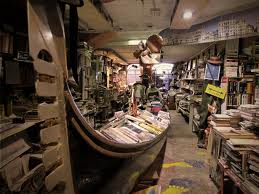
My Father arrived on a flight from the UK last week armed with a selection of books which were being sold from a library. Among them were The First English Dictionary 1604 by Robert Cawdrey, Plain Words: A Guide to the Use of English by Ernest Gowers (1948), and The Meaning of Everything: The Story of the Oxford English Dictionary by Simon Winchester. For those of you who appreciate the smell of old books, they oozed the vanilla scent that is produced by aging paper as the lignin breaks down. You can read about the Science of it here . The content was of particular interest to me as a writer. I love words: their origins, use and translations and I used to collect dictionaries and the odd thesaurus, along with books of literary quotes.

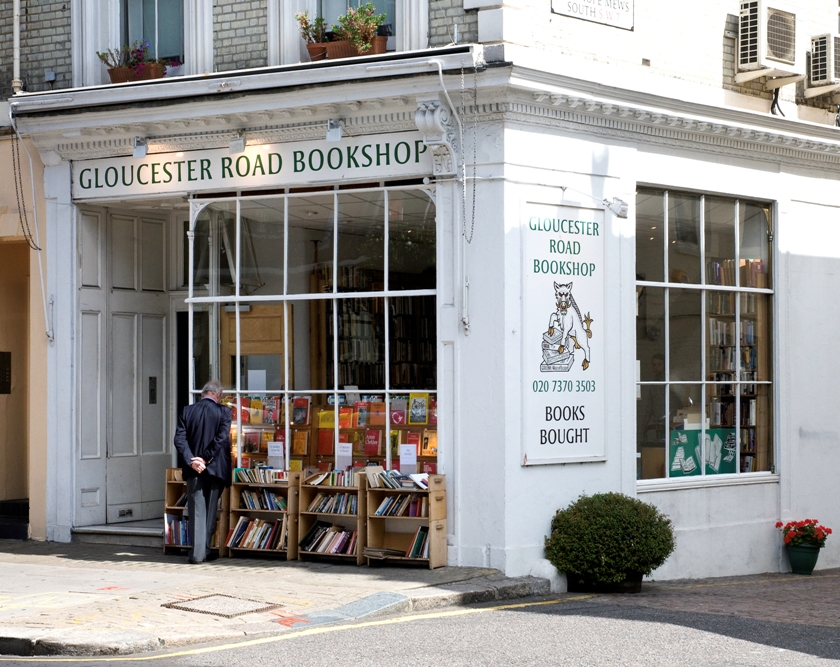
Amongst the books my Father brought with him were a few on different parts of the world and a History of England which was originally presented to the Archbishop of Canterbury, Michael Ramsey, in 1974. The inscription made the book all the more unique in the age of eBooks and I was reminded of the wonder of old books. We used to have a second hand bookshop at the end of our road when I was a child with the most unusual books and the same wonderful musty vanilla smell invading your senses as you opened the door. I love eBooks for the ease and speed of getting into a new book, especially as I live in a country where English is not the primary language and where the English books take up a small shelf space in the upper corners of a few bookshops. But I will never tire of the scent of old paper, of interesting inscriptions placed in the front of second hand books, of the notes scribbled in the margins and of wondering who the owner might have been, or whether there is a whole story behind a string of owners. Neither will I tire of the physical turning of the pages and the feeling of holding a book in my hands as I curl up with a coffee and a few hours of peace.

Asunder by Chloe Aridjis: A Review

download (1)

I was recommended this book by a friend and am so grateful to have read it. The rich language and the palpable tension in the narrative kept me turning the pages in one sitting until I reluctantly reached the end. It is a book I will go back to and reread at some stage. The similarity with what I am currently writing was also striking, so the read was timely.

“They call us guards, warders, invigilators, room keepers, gallery assistants. We are watchmen, sentinels, but we don’t polish guns, shoes or egos. We are custodians of a national treasure, a treasure beyond value stored behind eight Corinthian columns of a neoclassical façade, the dreams of the ancients stuccoed to our building.”

Marie’s job as a museum guard at the National Gallery in London offers her the life she always wanted, one of invisibility and quiet contemplation. But amid the hushed corridors of the Gallery surge currents of history and violence, paintings whose power belie their own fragility. There also lingers the legacy of her great-grandfather Ted, the warder who slipped and fell moments before reaching the suffragette Mary Richardson as she took a blade to one of the gallery’s masterpieces on the eve of the First World War.

After nine years there, Marie begins to feel the tug of restlessness. A decisive change comes in the form of a winter trip to Paris, where, with the arrival of an uninvited guest and an unexpected encounter, her carefully contained world is torn apart.

The book has a depth to it that pulled me in immediately. There is a magical darkness to her prose and the author’s descriptions and sharp eye for detail were compelling. It is powerfully and creatively written through the eyes of Marie, the museum guard. Her world and her insights into the people and places around her give you a sense of claustrophobia and of the parallels between the fragility of life and of the valuable paintings in the gallery. I have a particular interest in art and have spent many happy hours in various galleries around the world, so her research into the technical aspects of the topic were interesting.

A passage I really enjoyed describes the character’s feelings as she lies in a bed in Paris in the home of a couple who have recently separated and left the flat empty. There is a sense of the reader intruding on the intimacy of the the lives of the unknown couple:

“Yet almost immediately this darkness began to curdle into something viscous and heavy. As I lay in bed I began to speculate about the couple who’d slept in my spot for who knows how many years. I tried to imagine their faces, their bodies, their voices, whether they slept on their sides, stomachs or backs, whether intertwined or at separate ends of the bed, about whatever moments, fraught or transcendent, they’d lived out where I lay, what conversations, what passion or frustration. I began to worry I might inherit their dreams, that I’d find myself in ragged environments populated by ragged figures without knowing how to fend them off.”

There is something very abstract about Aridjis’ writing. She creates a world that is both surreal, yet very real. There is something of Nabakov in her style and she hones in on the idea of destruction and decay brilliantly, without overwriting.

This is an absolute must-read for anyone who enjoys literary fiction and the world of art. There is a strong psychological element to the story which gives it wide appeal. This book almost flew below the radar and I am so glad not to have missed it.

Don’t Be Discouraged

Before I begin, I just wanted to say a couple of things; firstly, a big THANK YOU to Rebecca Bradley for my blog award. It is very much appreciated. Do check out the other blogs on the list, as they are really good and full of great articles. Rebecca is a crime writer and her posts are a great source of inspiration.

I also wanted to let you know that you can download my short story, The Bench, for FREE until midnight US time tonight and extracts of my work and two new flash fiction pieces, ‘Whiskey’ and ‘Lines and Space,’ can now be read on Readwave, so do take a look.

I have spoken to several writers recently, both new and established, to discover that they have all been through periods of discouragement and wondered whether to give up, and whether the difficulties were worth it. After my wax lyrical post from last week on the fact that I love writing and would keep going, whether or not the world continued to read, I thought that this week I might try to balance things out by highlighting some of the tougher parts of writing and encouraging people not to give up.

Writing can be an isolating pursuit and it is a long haul process. There are no quick fixes with writing a book or getting published. The journey is long and unpredictable and you can’t always find the breakdown tools when a chapter doesn’t work or a scene grinds to a halt. The weather can be too murky to see ahead and the characters can sometimes feel out of reach; you try to pin them down but they refuse to show themselves. If you have felt lost in the maze of the first draft, or so fearful of finishing that you edit and re-edit until you remove all trace of the story that originally griped you, refusing to let go, read on.

There are readers who do want to hear your story, lives that will be changed by your unique view of the world. Don’t subscribe to the view that there are already too many books on the shelves or that  your voice won’t count. If you have a story that wakes you in the night and follows you through the shadows of the day, if you begin to know your characters in a way that makes them real, and if you feel somewhere in the pit of your stomach that you HAVE to tell THIS STORY, then let nothing stand in your way. You may need to overcome obstacles and juggle commitments, you many need to learn more about the craft or read a wider range of books, and you will need to be disciplined enough to sit down and type until your head rolls onto the keyboard, but it will be worth it. Don’t let people tell you it can’t be done or that you’re wasting your time. Don’t give up before you reach the end.

Fix your eyes on what you want to achieve and then move any mountain to get there.

I want to give you some encouraging stories from writers who have not given up and whose work will be read by people because they persevered. Some are self-published, some began self-publishing and signed traditional book deals on the back of their success, or moved from trad publishing into self-pub, others secured agents and publishers. Whatever path you choose to take, fix your eyes on your readers and your story, muster up a fierce resolve and get going. Don’t give up until you reach the finish line.

Hugh Howey, self-published a sixty page postapocalyptic thriller, titled Wool, in 2011 and within a year of publishing it on Amazon it grew into a USA Today  bestselling novel and was picked up by Ridley Scott for a film deal. Howey has kept the rights to the eBook but signed a print deal with Simon and Schuster.  He has sold more than half a million copies.

Claire King, author of In The Night Rainbow, blogged about her experience of contacting agents and she charts their responses and then her success. She points to the difficulties of the publishing industry being “incredibly risk averse and subjective.”

Vanessa Gebbie interviews Sarah Hilary. Her agent Jane Gregory signed Sarah on her fourth manuscript and it was her fifth and sixth books that were sold to Headline in a two book deal this year. She talks to Vanessa about not giving up: “[the book] went to auction, but for every two publishers who loved it there were four who didn’t, or not enough to offer for it. ‘All it takes is one’, as the adage goes, and you should certainly never give up – or make radical changes – based on what appears to be a loose consensus. Unless or until your gut (or your ear) tells you that what you’re hearing is the truth.”  I’m very much looking forward to reading Someone Else’s Skin when it comes out in 2014.

Catherine Ryan Hyde, author of 20 books, moved from traditional publishing to self-publishing eBooks on Amazon. She found herself at the top of the Amazon kindle charts this morning with her book, When I Found You, after Amazon promoted it. Her book, Pay It Forward, was turned into a film. Her early successes came from writing short stories, at one point racking up more than 122 rejections before being first published, and since then a total of more than 1500 rejections resulting in about 50 published stories.