Argo: What We Can Learn From Film About Not Overwriting

I watched Argo over the weekend, having seen it win an impressive collection of awards. Among it’s accolades were:

Seven nominations for the 85th Academy Awards, winning three, for Best Film EditingBest Adapted Screenplay, and Best Picture. The film also earned five Golden Globe nominations, winning Best Picture – Drama and Best Director, while being nominated for Best Supporting Actor for Arkin. It won the award for the Outstanding Performance by a Cast in a Motion Picture at the 19th Screen Actors Guild Awards and Best Film, Best Editing, and Best Director at the 66th British Academy Film Awards.

As you can imagine, I had high expectations and the film didn’t disappoint.

Here is a brief synopsis:

In 1979, the American embassy in Iran was invaded by Iranian revolutionaries and several Americans were taken hostage. However, six managed to escape to the official residence of the Canadian Ambassador and the CIA was eventually ordered to get them out of the country. With few options, exfiltration expert Tony Mendez devised a daring plan: to create a phony Canadian film project looking to shoot in Iran and smuggle the Americans out as its production crew. With the help of some trusted Hollywood contacts, Mendez created the ruse and proceed to Iran as its associate producer. However, time was running out with the Iranian security forces closing in on the truth while both his charges and the White House had grave doubts about the operation themselves.

The film is adapted from a true story, written about in the book The Master of Disguise by CIA operative Tony Mendez.

I spent a lot of time wondering how it would translate into a written story (I do this very often when watching films) and one thing stood out to me on several occasions – None of the script was overwritten. There were a small handful of tense or sensitive moments where, as a writer, it would be tempting to fill the space with dialogue, but that didn’t happen. Instead, there were delightful silences where you, the audience, knew exactly what each character was thinking, purely from the situation and from the expressions on their faces.

There was one key moment at the end of the film where, without spoiling the plot for those of you who haven’t seen it, there was a handshake, and so many things could have been said but neither character said a word. The handshake and ensuing silence was far more powerful than any dialogue which would, I expect, have destroyed the scene.

It has been rumbling through my mind for a while, the film and it’s highlights. Most of the highlight were moments where there were no words, no fill-ins from the scriptwriter to destroy the impact. The topic is of a sensitive nature and it could have easily been crushed with careless writing. It was a stark reminder for me not to overwrite, not to fill the moments with words and flowery descriptions. Sometimes, when you are writing, just a snapshot of a character’s movement or their body posture can be enough.

The Magic of Short Stories

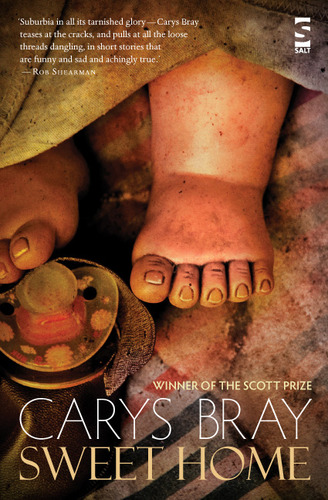
Today’s guest post is written by author Carys Bray, winner of Salt Publishing’s 2012 Scott Prize. Thank you, Carys. I am really enjoying the complexity of these short stories which are honest and gritty accounts of family life, bound up in a collection which leaves its mark long after the pages stop turning. Highly recommended. Carys also had a recent piece of short fiction published in Literary Magazine, Litro. My Brother is Missing is an emotionally charged story and just as gripping as her collection.

??????????????????????

I gate-crashed an undergraduate seminar a couple of weeks ago in order to listen to guest speaker, Chris Beckett. Chris’ collection The Turing Test won the 2009 Edge Hill Short Story Prize and his novel Dark Eden was the Sunday Times SF novel of the year. During the seminar Chris talked about the way he approaches short stories by combining seemingly disparate elements in order to make his fiction three-dimensional. I once heard short story writer Adam Marek say something similar – I can’t quote him exactly, but he talked about how he often takes something fantastic and combines it with something ordinary.

I don’t believe there’s a ‘recipe’ for writing successful short stories, but I suspect Chris Beckett and Adam Marek are on to something when they talk about the way they mix their ingredients: short stories need depth and many of my favourite stories blend the mundane with the magic of the impossible.

Adam Marek’s story ‘Tamagotchi’ is about a father whose son’s Tamagotchi has AIDS. On the surface, the story is about an impossible thing – a terminally ill toy, but it’s really about a father’s relationship with his son and the fundamental helplessness of parents. The father in the story can’t fix the Tamagotchi and he can’t ‘fix’ his son’s developmental issues. There is clearly a connection between the Tamagotchi’s illness and the son’s development – the metaphor may sound laboured as I attempt to dissect it, but it isn’t. The story is touching and funny, a beautiful exploration of a father’s need to make everything right.

Chris Beckett’s story ‘Piccadilly Circus’ is about an elderly woman who is both fascinated and repulsed by new technology. Clarissa is an Outsider in the Urban Consensual Field, a virtual city constructed in the image of London as it was when it ‘still seemed feasible for millions of physical human beings to casually consume what they wanted of the world’s resources.’ As one of the few physical people left, Clarissa can view the consensual world via an implanted switch. Old and frail, she embarks on a journey through the ruins of London to see the lights of Piccadilly Circus as it was in her childhood. It’s a wonderfully clever story set in an extraordinary world. Beckett addresses aging, our perception of reality and whether something is real if it can be turned on and off with the flick of a switch.

I think there’s something wonderful about these impossible stories. At first glance they’re entertaining, but they’re also illuminating; the blend of the familiar and the impracticable can challenge a reader’s perspective and assumptions.

When I started writing short stories I had tremendous fun creating improbable scenarios; supermarkets where children are bought, a baby carved out of ice, and an old lady constructing a gingerbread house. But in each case I suppose I was also writing, or at least thinking, about something else; the commodification of children and childhood, infertility, and the way outsiders are treated.

I’ve been working on a novel for some time now, but earlier this week I spent a day editing a short story I began last summer. It was lovely to handle something small again, to attempt to blend seemingly disparate ideas into a coherent whole. Tobias Wolff said, ‘There’s a joy in writing short stories, a wonderful sense of reward when you pull certain things off.’ I agree, and I think that same joy can be experienced when reading short stories, particularly the kind of stories that illuminate the everyday with a little bit of impossible magic.

Adam Marek’s story ‘Tamagotchi’ is found in his new collection The Stone Thrower, published by Comma Press.

Chris Beckett’s story ‘Piccadilly Circus’ is found in his collection The Turing Test published by Elastic Press.

Adam Marek’s story ‘Remember the Bride Who Got Stung’ is available to read at Thresholds, the international short story forum.

Read about Chris Beckett’s Dark Eden in the Guardian.

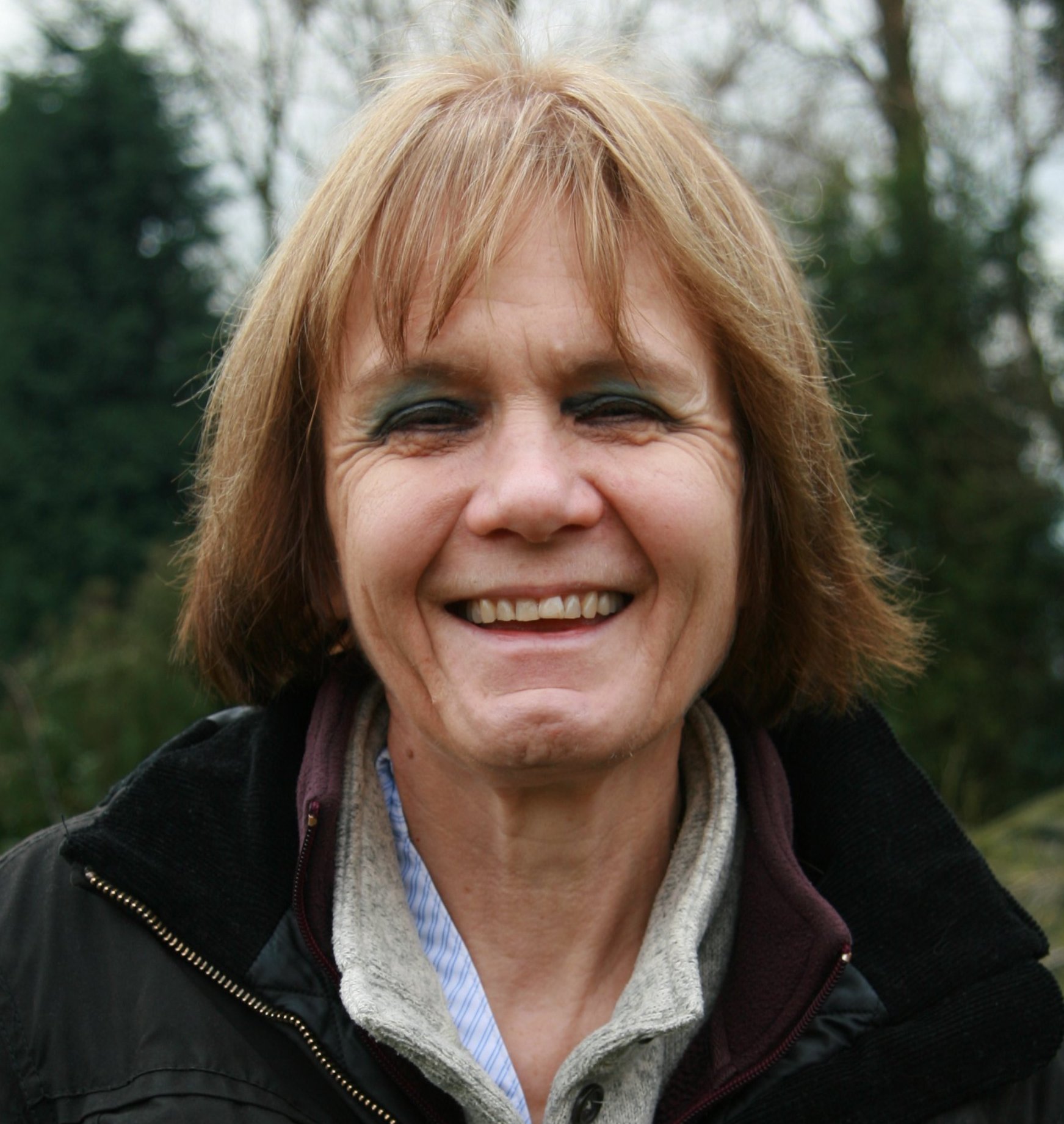
Author pic from EH Prize edited Carys Bray’s short stories have been published in a variety of literary magazines. She currently teaches at Edge Hill University and is a co-editor at Paraxis. She is working on a PhD and a novel.


Goodreads and LibraryThing

goodreads library thing

I have written a guest blog post with a comparison of the two sites for authors. The post covers my experience of meeting readers, giving away books, and gaining reviews. Both are really good sites for readers and authors and are a helpful point of connection between the two. If you haven’t yet had a look, I would highly recommend them. Goodreads has a lot of groups and interesting discussions and LibraryThing is full of readers who are wanting to review books and interact with authors. The site has a fascinating zeitgeist page of reader and book statistics, if you like that kind of thing. I love finding out about which books are popular and which languages are the most translated. I have met some interesting people on both sites and will continue to interact through discussions and groups.

If you would like to link up with me on Goodreads I would be happy to see you there. I also have an author profile on LibraryThing but you don’t connect in the way that you can on Goodreads. Do have a look, if you are interested and browse around the site.


30 Amazing Libraries and Bookshelves

1. The McAllen Public Library

The McAllen Public Library in an abandoned Wal-Mart:

2. The Libreria Acqua Alta in Venice:

The Libreria Acqua Alta in Venice:

Source: pixmule.com

3. This cozy reading nook:

This cozy reading nook:

4. This person’s amazing home library:

This person's amazing home library:

Source: enochliew

6. House on the Rock in Wisconsin:

House on the Rock in Wisconsin:

Source: thefabweb.com

8. The reading room at the New York Public Library:

The reading room at the New York Public Library:

Source: imgur.com

9. The Royal Portuguese Reading Room:

The Royal Portuguese Reading Room:

10. This former theater turned bookstore in Buenos Aires:

This former theater turned bookstore in Buenos Aires:

Source: imgday.com

11. Leakey’s Second Hand Bookshop in Scotland:

 Leakey's Second Hand Bookshop in Scotland:

Source: facebook.com

12. This library in The Netherlands:

This library in The Netherlands:

Source: bustler.net

13. This person’s bathtub:

This person's bathtub:

14. This house:

This house:

15. The Liyuan Library near Beijing:

The Liyuan Library near Beijing:

Source: nedhardy.com

16. The Rijksmuseum Research Library in Amsterdam:

The Rijksmuseum Research Library in Amsterdam:

17. This library in France:

This library in France:

18. The Bodleian Libraries at Oxford University:

The Bodleian Libraries at Oxford University:

Source: westga.edu

19. More from the Bodleian Library:

More from the Bodleian Library:

20. The Oxford Union Library:

The Oxford Union Library:

Source: www

21. The Biltmore House Library in North Carolina:

The Biltmore House Library in North Carolina:

22. The Long Room at Trinity College:

The Long Room at Trinity College:

Source: reddit.com

23. International Library of Children’s Literature in Japan:

International Library of Children's Literature in Japan:

Source: www

24. Professor Richard A. Macksey’s personal library:

Professor Richard A. Macksey's personal library:

25. The Hearst Castle Library:

The Hearst Castle Library:

26. The University of Coimbra General Library:

The University of Coimbra General Library:

27. This living room:

This living room:

28. The Public Library of Cincinnati:

The Public Library of Cincinnati:

29. The Lello & Irmao Bookstore in Portugal:

The Lello & Irmao Bookstore in Portugal:

Source: genuardis.net

30. The Library of Congress:

The Library of Congress:

Reblogged from Buzzfeed.com