How Do You Organise Your Bookshelves?

FC Malby

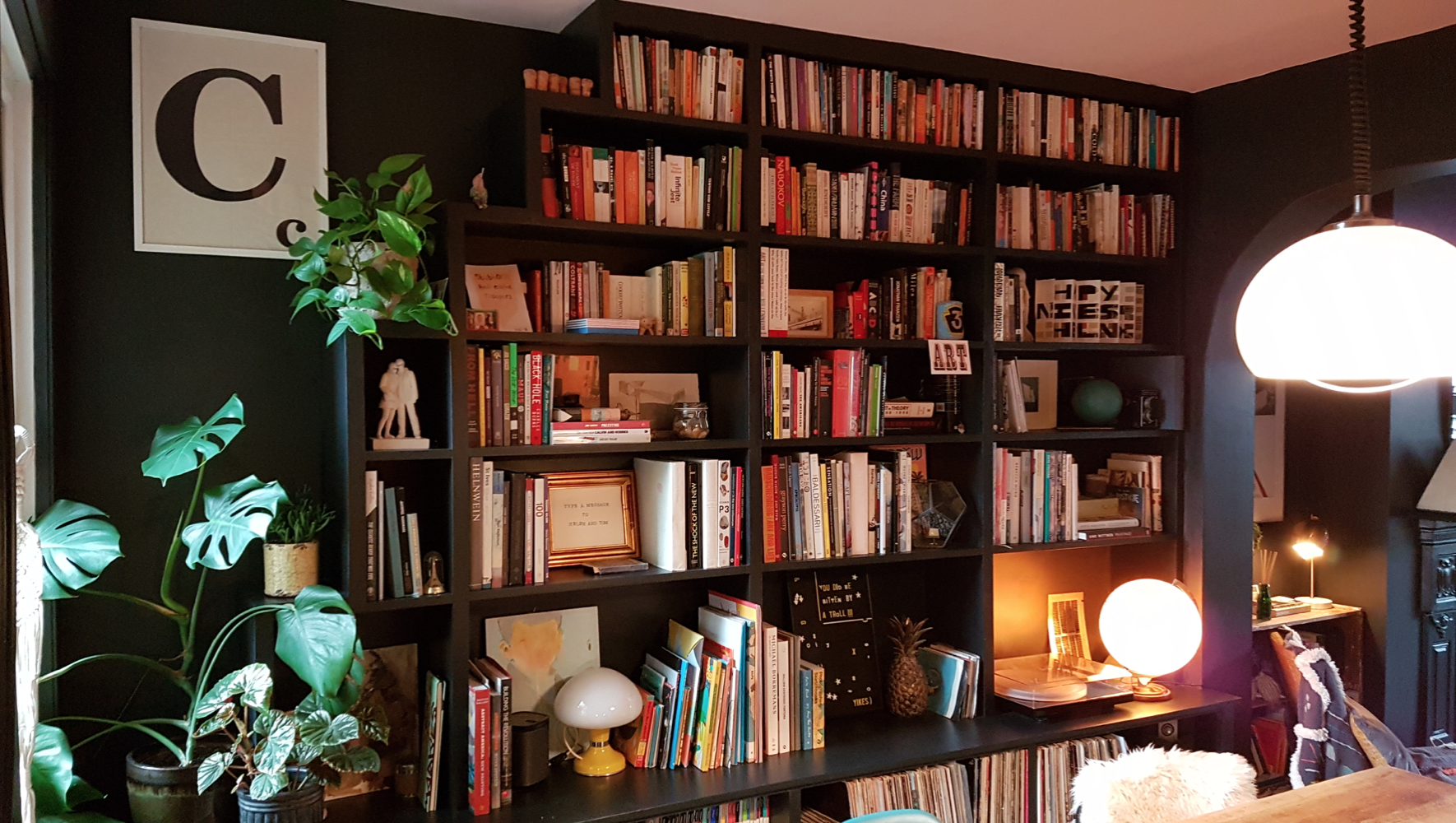
A friend told me yesterday that their books are all arranged in alphabetical order. I smiled and said that mine are roughly arranged by type. I have a section for psychology, travel, theology, biographies and autobiographies (which are mostly political, but I also have one on Miles Davis), crime thrillers, short stories, poetry, literary fiction, commercial fiction, favourite books (mostly by J.M Coetzee, Julian Barnes, Hilary Mantel, Alice Munro, Colm Tóibín, Milan Kundera, Deborah Levy and Alison Moore).

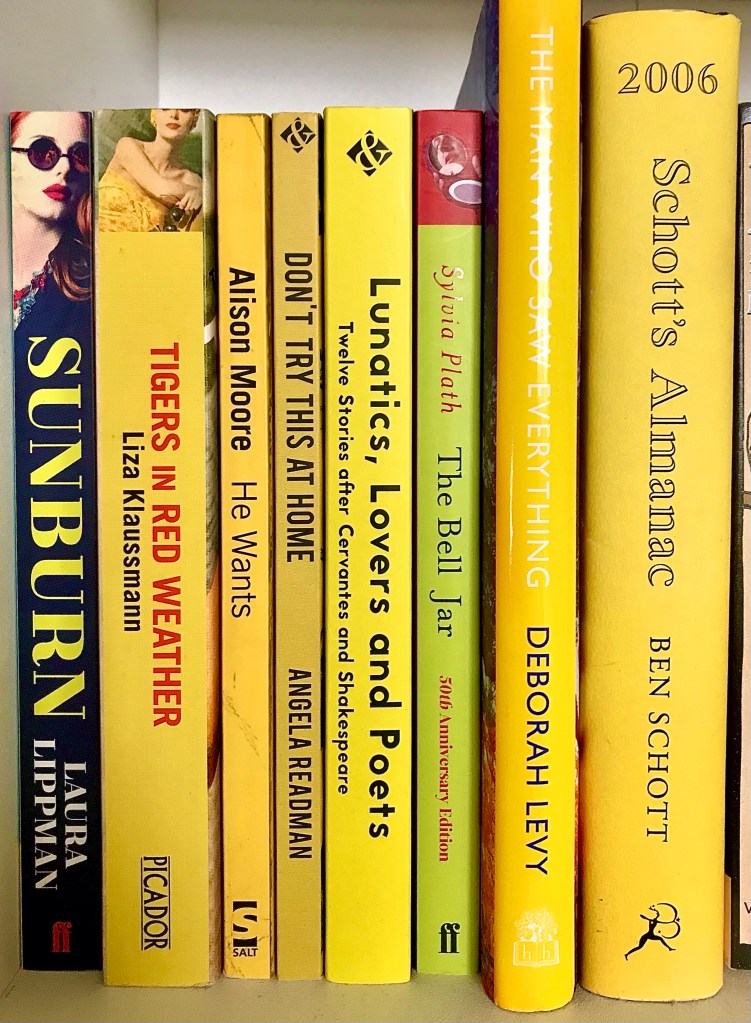
This morning, I noticed that I have a selection of books with yellow covers, although I’m not entirely sure how the lime green snuck in! It’s the only colour I seem to have grouped together, purely because I love yellow. I don’t think I will ever match my books by colour, having seen a few well-known figures (who shall remain nameless) adding the results of this to Instagram. It feels a little too OCD for my liking, by we are all beautifully different.

The Home Edit

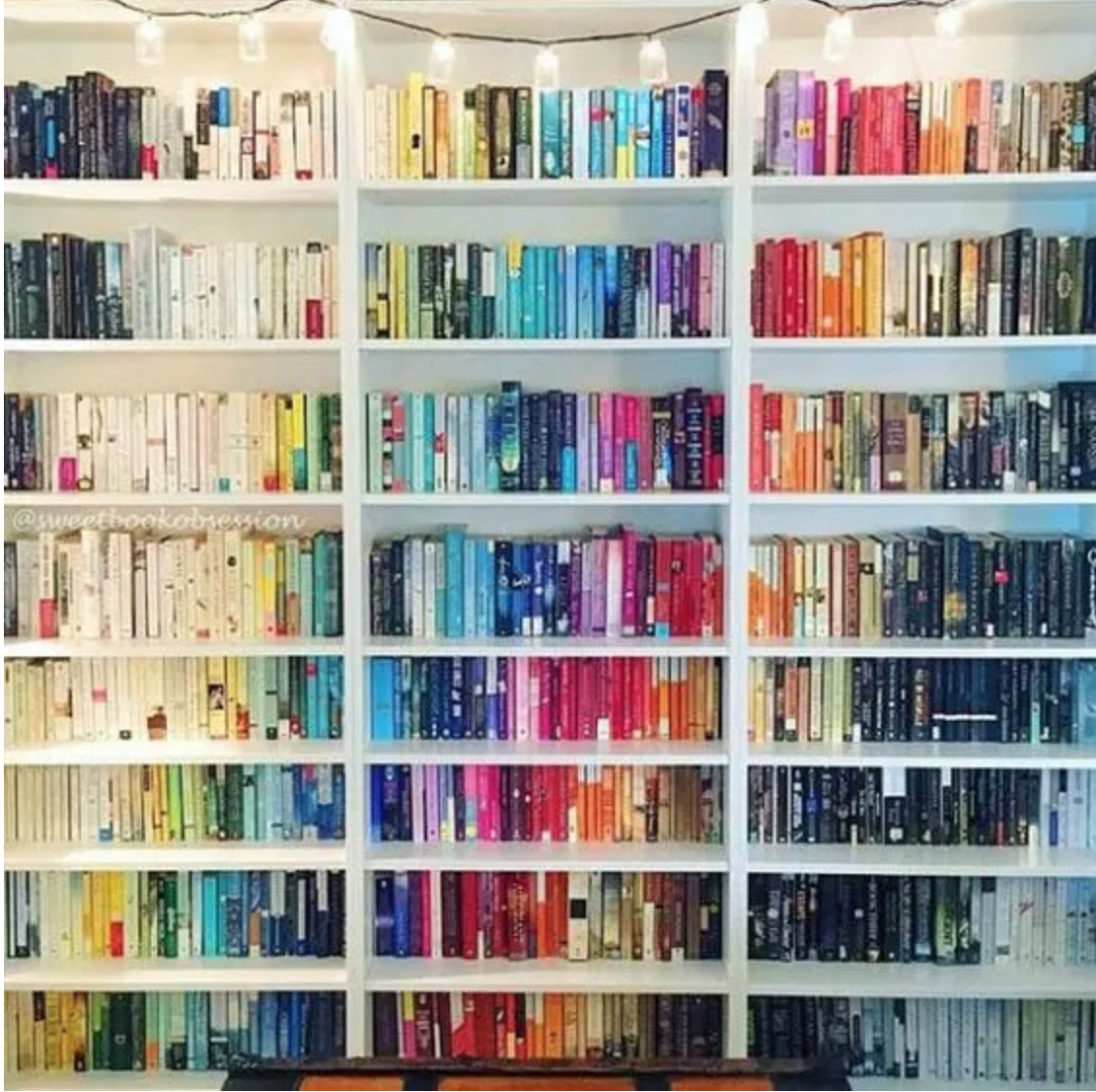
How about this cascading cover colour bookshelves look from Book Bub?

Book Bub

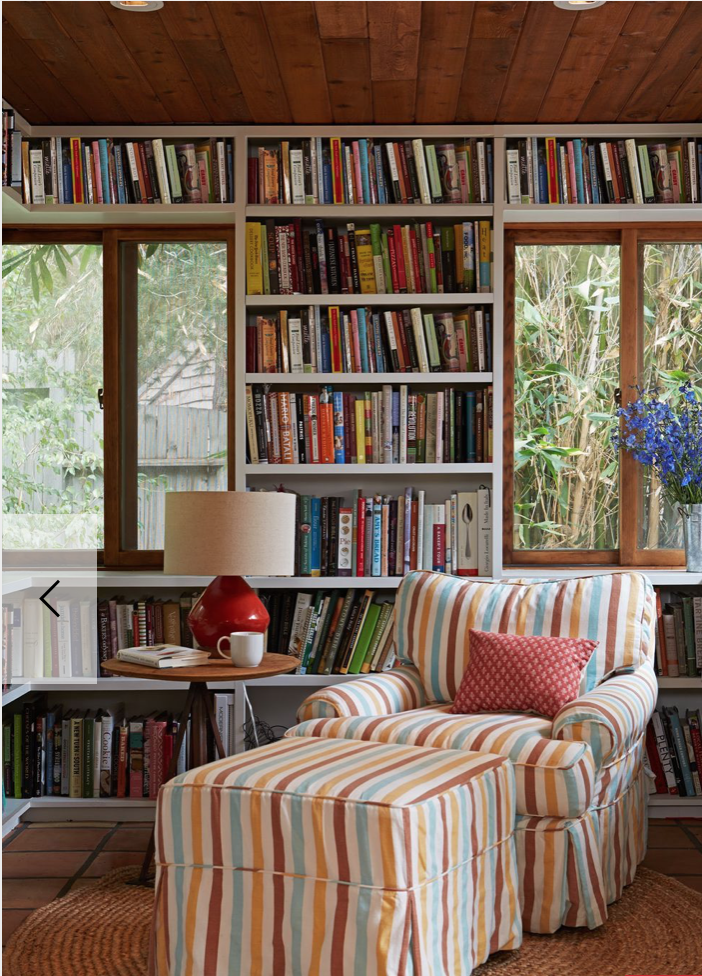
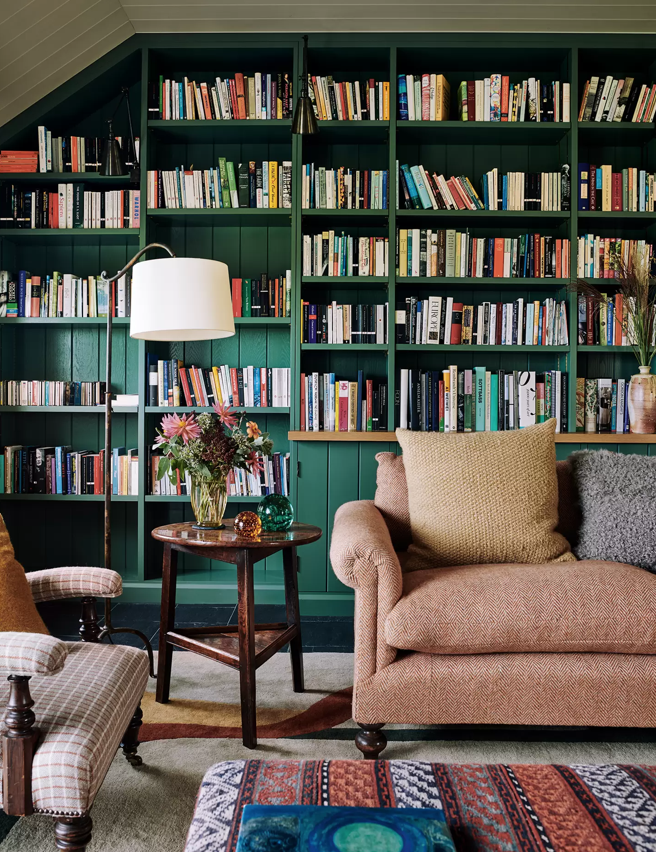
As a writer and a reader, I love books, bookshelves and other people’s bookshelves. If I go to a home and there is a large book collection on the shelves, I like to scan the collection and see what the owner reads. Sometimes I find we like similar authors and there are other occasions where I find something new. Amidst the Covid pandemic over the past 15 months or so, and with life as we knew it transferred to Zoom and Teams meetings, a background of bookshelves never fails to capture my attention. Personally, I like a more mixed approach to bookshelves.

Indie Wire

Douglas Hill

Michael Sinclair

Bespoke Carpentry

How do you arrange your bookshelves? Do you have any favourite bookshelves? Drop a link to a snap in the comments, or tell us how you organise your shelves, and share the book love.

#bookadayuk Hooked you into reading: The Fairy Tales of Hans Christian Andersen and The Brothers Grimm

For those of you who have been following the #bookaday posts, I’ve been up in the Alps for a week. I’m back and refuelled, and will pick up with the posts and get back to writing. We drove the length of the Grossglockner Pass, which is the highest and one of the most beautiful roads in Europe. Here are a few photos before I write about what hooked me in to reading. It seems fitting that the photos are of Europe, the home of the writers I want to talk about.

P1180861

P1180792

P1180594

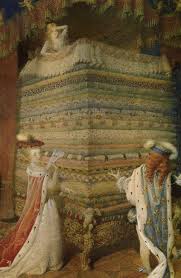
I was influenced by so many great authors throughout my childhood. While I enjoyed Enid Blyton, Judy Blume and Noel Streatfeild early on, what hooked me in to reading was primarily fairy tales. I loved Hans Christian Andersen’s The Princess and the Pea and, although I wouldn’t necessarily subscribe to the Happy Ever After endings, there was something magical about the idea of anyone being able to feel a pea beneath layers of mattresses. Children often want to believe the unbelievable, don’t they? Think Peter Pan, The Lion, the Witch and the Wardrobe; or, in my case, The Lochness Monster, the Abominable Snowman and the Tooth Fairy. The first two exist, don’t they? Anything implausible, I believed in it. Such was my hopeless and incorrigible imagination. The thing is children want to believe in unreality, they want a world beyond the real and the plausible. And I think adults sometimes look for the same thing. It’s why we read fiction.

pea

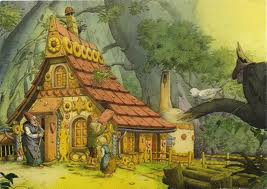
And then there were the Brothers Grimm’s fairy tales: Rapunzel, Hansel and Gretel, Cinderella. I devoured them all, utterly absorbed in another world. Hansel and Gretel grabbed my attention for the suspense as the children become lost in the woods. I liked the idea of a house made of sweets, and was always captivated by images of the roof. I have started to make a European gingerbread house at Christmas, a tradition in Germany which comes from this story.

In Germany, there’s a rhyme that’s said about Gingerbread Houses that comes directly from the story of Hansel and Gretel:

Knusper, knusper, knäuschen,
wer knuspert an meinem Häuschen?
Der Wind, der Wind,
das himmlische Kind.

English Translation:

Nibble, nibble, gnaw
Who is nibbling at my little house?
The wind, the wind
The heavenly child.

house

I’ll also throw in Joseph Jacob’s Jack and the Beanstalk. A giant at the top of a beanstalk? Really? These imaginary worlds are a wonderful escape from the real world and teach children about the far reaches of the imagination. And you are never too old to read them.

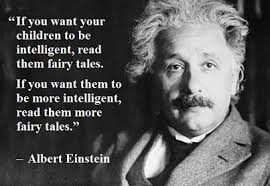
Einstein said, “If you want your children to be intelligent, read them fairy tales. If you want them to be more intelligent, read them more fairy tales.” While I am certainly no genius, I find his quote interesting because it suggests a link between the imagination and the intellect. What are your thoughts?

einstein

#bookadayUK The Alchemist, Paulo Coelho

alchemist 2


This is a short #bookaday post today as I’ve already posted photos of yesterdays trip to Sopron, Hungary. Today’s #bookaday challenge is to choose a book that reminds you of someone you love. My husband bought and read this to me on our honeymoon. I love being read to (although it doesn’t happen often), and the magical settings of the book and the nature of the holiday at the time has burned this story into my memory. I look forward to going back and rereading it someday.

The Alchemist was first published in Portuguese in 1988, written by Brazilian born Coelho, and has been translated into 56 languages. It follows the story of a young Andalusian shepherd named Santiago in his journey to Egypt, after having a recurring dream of finding treasure there.

The book is an international bestseller and has sold more than 65 million copies worldwide. It has become one of the best-selling books in history, setting the Guinness World Record for most translated book by a living author.

It’s not necessarily my favourite book but it is evocative and full of imagery, and the memories of hearing the story are what remains.


#bookaday Forgot I owned it: The God of Small Things

the god of small things


This one has been on my shelf for a while but I found it the other day, having forgotten all about it. Has anyone read it? In the absence of any views on the book, here is the blurb:

The God of Small Things (1997) is the debut novel of Indian writer Arundhati Roy. It is a story about the childhood experiences of fraternal twins whose lives are destroyed by the “Love Laws” that lay down “who should be loved, and how. And how much.” The book is a description of how the small things in life affect people’s behaviour and their lives. The book won the Booker Prize in 1997. Compared favorably to the works of Faulkner and Dickens, this is a modern classic that has been read and loved worldwide. Equal parts powerful family saga, forbidden love story, and piercing political drama, it is the story of an affluent Indian family forever changed by one fateful day in 1969. The seven-year-old twins Estha and Rahel see their world shaken irrevocably by the arrival of their beautiful young cousin, Sophie.

#bookaday Favourite Book From Childhood: The Lion, the Witch and the Wardrobe by C.S. Lewis

The Bookseller has announced that Harper Collins imprint The Borough Press is launching a social initiative for booklovers to share books they love on Twitter and Instagram using the hashtag #bookaday. It will begin today, Sunday 1st June, and run throughout the entire month. Where has the year gone? How did we get to June? I will be blogging briefly on my book choices each day throughout June.

bookaday

I have many childhood favourites, but The Lion, the Witch and the Wardrobe sits at the top of the list. I’m sure you know the story but for those who don’t, it’s a fantasy novel for children (and adults!) The first of seven in The Chronicles of Narnia series, this one is probably the most well known. The setting is Narnia, a land of talking animals and mythical creatures that the White Witch has ruled for 100 years of winter. Four children are evacuated from London to an old country house in England during World War 2. Lucy, the youngest, discovers the land of Narnia through a wardrobe in a spare room. The others take some convincing but soon follow. TIME magazine included the book in its “All-TIME 100 Novels.” In 2003, it was listed at number 9 on the BBC‘s survey The Big Read. It has been published in 47 languages.

lion witch wardrobe

Why did I chose this one? I think there was something about the other-worldliness of the story that appealed to me as a child. The idea of a whole world on the other side of all that we know made me curious. I also related to Lucy’s difficulty in convincing her siblings that Narnia existed. There were times in my childhood where people I trusted didn’t believe me when I told them something important. I think a lot of children/adults can connect with this theme. Then there is the struggle between good and evil, between the White Witch and Aslan. Isn’t there always a struggle between good and evil in our minds and in our wills? There are so many themes in the book that I think anyone can relate to. Overall, it’s a magical tale of four children on a journey of discovery, who are willing to battle for justice in a land that not everyone can see. Their different characters and responses to the situations they encounter are, in my eyes, what make the story work. And the illustrations…

narnia

                     narnia 2

Have you read The Lion, the Witch and the Wardrobe? Join the conversation.