I’ve been recording readings of short stories and extracts of my work to SoundCloud. You don’t need an account to listen. I’ve recently added one of my longer and earlier short stories, which you can download as an eBook.
Set in Jaipur, India, this story reveals the hidden tensions in the mind of a young boy as he has to let go of the girl he loves for an unknown young bride, chosen by his parents. As the wedding day approaches, will he be able to follow his parents’ wishes in the face of his passion and quiet desperation?
“The title of this book is very rich in symbolism, and the story true depth. Two young hearts filled with a love that can never be, left facing a life of emptiness they have not chosen. It is easy to imagine their hearts left broken and bleeding. These two young people have no choice but to be obedient to their families and their traditional ways of life. The first line of the story reads: “Her, sari, the colour of blood, caught the breeze as she turned and walked away”. He knows that is the last memory he will ever have of the love of his life and is prepared to carry it forever. What a stunning start to a story! This story continues so full of emotion and is delicately written. It was very easy to empathize with the character right at the start. It takes a great talent to drag me in so quickly. I felt the pain as he did. This book can turn even the most hardened bachelor into a romantic! The story may be short, but the memory will last on.”
I am eight years old and this is the year I learn to float. It is the year I learn to speak Spanish, although I firmly believe floating will be more useful, especially if I want to become a magician’s assistant. You don’t need language qualifications.
“Heather?” Mum yells up the stairs. “Come down and set the table.” I wonder if I can do this by floating, but I will need more practise. She doesn’t understand magic. Not many people do. I set the table and float back upstairs, but I have to stop half way as I lose my focus.
At the dinner table, later in the evening, the conversation revolves around government policies, shopping lists and Harry’s exams. “I can levitate,” I say. Silence falls across the room. Grandpa is snoring in the corner in his rocking chair. Dad gives me an eat-your-food look and that’s all I say for the rest of the evening. At breakfast tomorrow, I will try Spanish. It will be more acceptable.
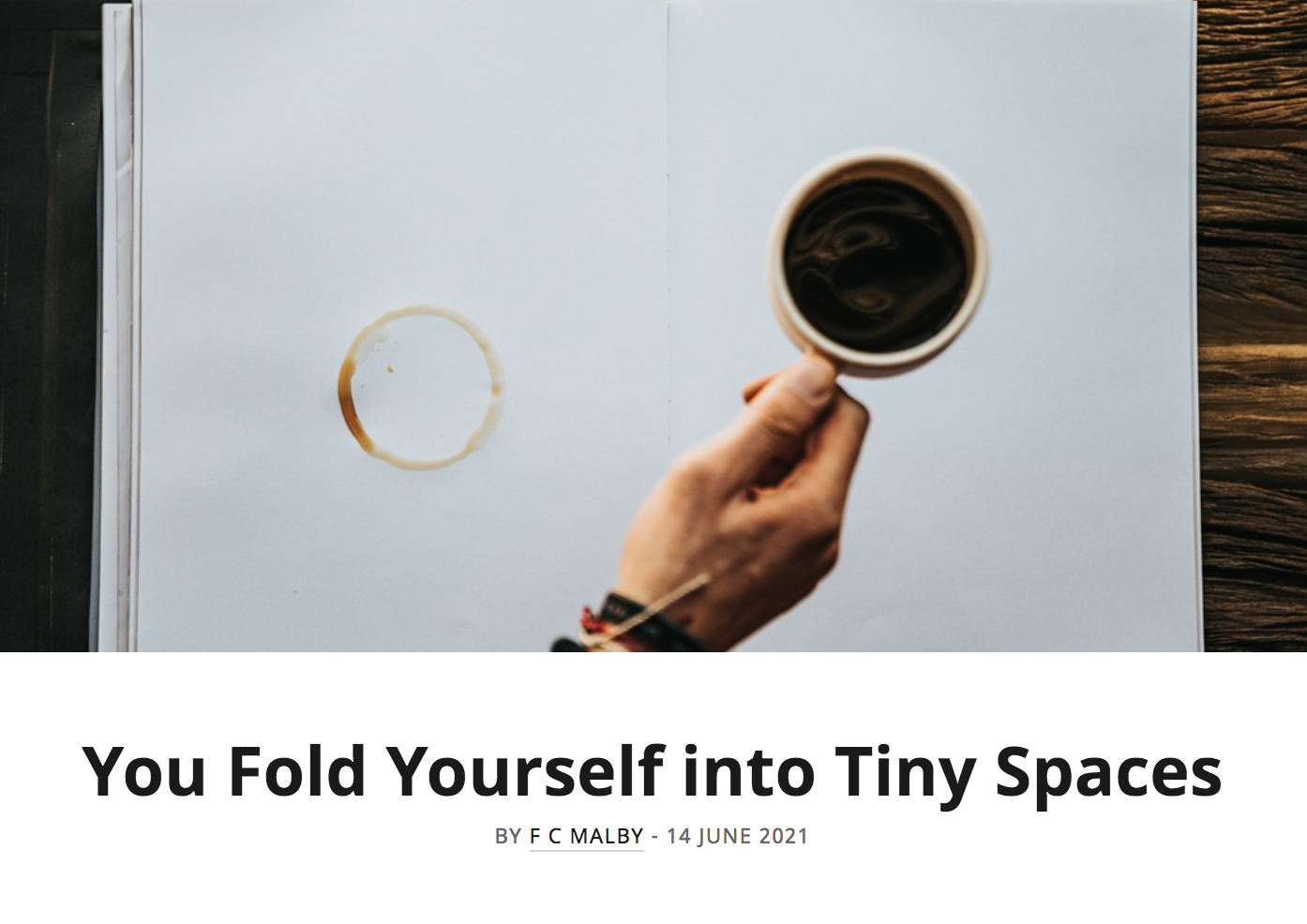
You fold yourself into tiny spaces, words come at you like rain. You tuck in your arms and feet – soles digging into your calves – so that the words don’t slice your limbs. You hide your competition win in case it’s seen as an indulgence, like the cakes you get for afternoon tea: Miniature, crustless cucumber sandwiches, cakes and scones with clotted cream and strawberry jam. Saliva lines your lips as you imagine this.
You squeeze your words into shorter sentences and, sometimes, single words. Your arms sting with the folding and the tucking. The tiny spaces make her feel bigger, less threatened; more. You listen hard and speak less, reaching a point where the bird flying overhead, beyond the skylights, provides the distraction you need.
‘Why didn’t you tell me?’ she asks, but you know you can’t give a proper answer.
‘I forgot,’ you say, and take a swig of hot tea, the mug leaving a ring on the mat. This will be noted… continue reading at Reflex Press.
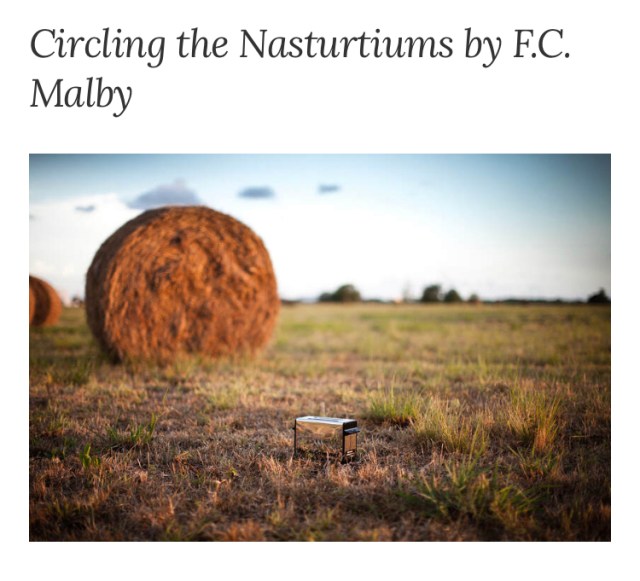
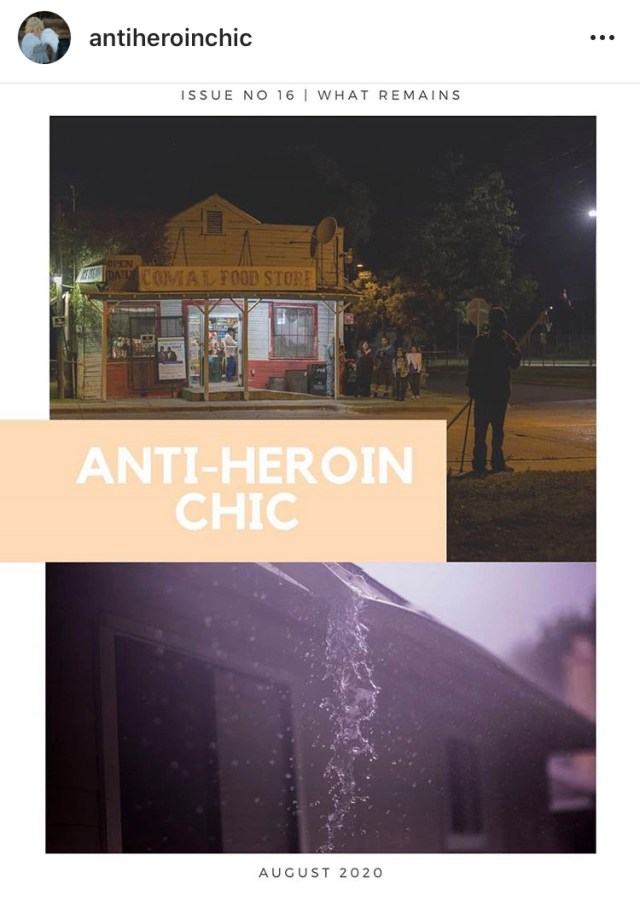
Butterflies were circling the nasturtiums in a frenzied race to find nectar, but it had not yet flowered. It was a lush green and ripe for bloom, when the flame flower would climb, scrambling through other plants, covering unsightly fences. She had not yet flowered, when the ‘gardener’ had grabbed her by the waist and forced her onto his lap, kissing her neck and asking her to marry him. She had been nine years of age, he sixteen. She had tried to explain the age difference. He had told her that he didn’t care. The thought had repulsed her, her fierce kicks into the centre of his shins adding weight to her no, and her get off me. He had eventually let go, accepted her resistance too late… read the story at Anti Heroin Chic
Ellipsis Zine is an online and print literary magazine for beautifully written fiction & creative nonfiction.
How and why did you begin Ellipsis Zine, and how long has it been running?
I set up Ellipsis Zine in June 2017 and initially wanted to create an online space for flash fiction I liked to read. I hadn’t been writing flash very long and thought that a website with a mixture of work I enjoyed reading would help improve my own writing, while also offering a new space for writers to submit to. I wasn’t sure how well that was going to be received but pretty soon I was swamped with great submissions. Following on from the wave of excitement during the first month, I took the plunge and opened a call for work to be published in print and I was completely overwhelmed with the response.
What have you learned from your experience as Founding Editor?
It’s all subjective. I’ve declined work that has almost immediately been snapped up by other publications and reading them again, it was clear I was wrong to pass on them. There can also be any number of factors for a piece being declined, it’s not always because the piece isn’t ready. The magazine may not be the right fit. Timing can also be important – and not always something that a submittor can do anything about. If a piece submitted deals with the break up of a relationship, for example, I would generally pass on it if I’ve published a similar piece recently.
What do you do with your time outside working on the Zine?
I work in a marketing department, with a background in design, and so the setting up of the magazine and print zines has been a fairly smooth process.
The editorial team has expanded. Can you tell me who is on the team and how or why they were chosen?
I have a great team of flash writers helping me behind the scenes. Stephanie Hutton, Amelia Sachs, Richard De Nooy, Helen Rye, Jennifer Harvey and Christina Dalcher. It was Richard who first suggested putting together a team, to help strengthen the website and have a team to help compile the zines, and as a sounding board for ideas and advice. Working in a bubble can be difficult at times, so having a team of writers to work with has been invaluable.
What are you looking for in a piece that you hope to publish?
We want to publish stories that make us forget where we are, stories that introduce us to people, places and things we’ve never seen before and stories that stick with us long after we leave them. In the same way a great song, novel or film, hangs around with the audience. We want a great piece of flash to be something that will be read again and again, and something that will linger.
Can you tell us about the process from submission to publication in the online and print zines?
With print online submissions, I try to get back to everyone within seven days. If selected, I may put forward minor edit suggestions and then provide a date for publication. This is usually scheduled around a month or so later, depending on the time of year. With the print publications, the time between submission and selection is a little longer. With the last few zines, I’ve had one or more of the editorial board compile the list of published work for me. Again, once chosen, we ask for minor edits to the work. Once the zine is compiled, I will send page proofs to all writers, to ensure I’ve copied everything over correctly. At this point, writers have the opportunity to make any last minute changes. This is usually a week or two before publication.
Do you have any advice for authors sending you submissions?
That’s a tough question, because I tend to want to publish a wide mix of work, but it is important to note that it is all subjective. I’ve published sci-fi, horror and humour and I do notice trends with submissions. I sometimes get a batch of work that hasn’t made the longlist/shortlist of a competition, because they are all on the same theme. I’ve also noticed that I can receive a large amount of work based on death, relationship breakdown, dementia etc. I have written pieces on these subjects myself, and although, individually they are brilliantly written, when I receive a lot of them, they can lose their impact. I’d suggest that anyone who approaches these subjects to think a little differently. This will help set the work apart from others.
Can you tell us a little about the expansion into areas such as the Novella-in-Flash, collections, and zines celebrating LGBTQ writers?
Much like everything with Ellipsis, the expansion into publishing Novella-in-Flash and collections stemmed from wanting to try something new. Stephanie Hutton’s novella was a huge success, selling much more than any of the other zines and so it was natural to try and replicate that success. Talking with Stephanie about an open call, she put forward the idea of publishing an author who wasn’t as established – hence, the call for a debut flash collection from an unpublished author. This desire to give underrepresented voices a platform, naturally, influenced the decision to publish a zine that celebrated LGBTQ writers and their work.
What are your plans for Ellipsis for the coming year?
We have an extremely busy year ahead. There are a few flash events, which I will be attending in the Summer: National Flash Fiction Day, June 15th, has just been confirmed, and a publication launch. Our Love | Pride zine, celebrating LGBTQ writers and their work, is released at the end of February, along with a flash fiction collection in April/May. The Summer zine publication will be collection by a single author. Later in the year we’ll have a call for submissions for another zine and a micro-fiction competition. There are ongoing website submissions and, at some point, I may need to have a lie down.
You have recently had some of your own work published. Can you tell us about your own writing?
I’m still finding my feet with my own writing, but running Ellipsis has been extremely helpful. I have read some amazing work and this has enabled me to see what does/doesn’t work with a piece of flash. I began to write my own novella-in-flash, which was sidelined to write a novel, which was then sidelined to write another novel. At some point in the next few years I’m sure one of these projects may be finished.
What are your top five literary journals or magazines?
I love the work in Flashback Fiction. There is the added bonus of hearing the pieces being read by the authors. Popshot Magazine is also a favourite. I’m a sucker for a printed publication, and this is beautifully put together. I also regularly read MoonPark Review, TSS Publishing and Reflex Fiction, but this list is not exhaustive because there are so many great publications out there. I’ve compiled a list of some of my favourite publications on the Ellipsis website here: ellipsiszine.com/literary-magazines/
Ellipsis is managed by Steve Campbell and has the support of an editorial board of international flash fiction writers and published authors. View their biographies here: Editorial Board.



 F C MALBY
You must be logged in to post a comment.