Category Archives: writing
Why do you write?

This is a question many people ask authors, and sometimes authors ask themselves the very same question. It is hard to put the answer into words and there are different reasons for each person. What it comes down to for a majority of writers is an incredibly vivid imagination and a passion for words.
Having spent years teaching English to children, I am a grammar and punctuation freak. I often want to take a black felt-tip pen to shop signs and flyers advertising items using really bad grammar. You can probably imagine that I own a copy of Eats, Shoots and Leaves. Well, you’re right – it’s sitting next to Lost in Translation. I also enjoy reading Port Out, Starboard Home: And Other Language Myths. It’s a perfect gift for anyone who loves to know about the idiosyncrasies and origins of words. The author, Michael Quinion, has contributed extensively to the Oxford English Dictionary. He is an English Etymologist who explains the origins of words and phrases. Why are meals square? He published a U.S. version Ballyhoo, Buckaroo and Spuds: Ingenious Tales of Words and Their Origins.
So, back to writing. I often think that writing came out of the blue for me five years ago when I began my first novel, but when I think back to my childhood I remember journals and poetry. I kept diaries and travel journals. I wrote reams of poems and tucked them all way. Then when I studied English A Level I was captivated by the words of an English Professor who taught us about Milton’s ‘Paradise Lost.’ The words jumped off the page and danced – images flittered through my mind and I think it was at that point that I fell in love with language, and with the way that words can be used to create scenes in your imagination.
I think many writers write both because they want to, and because they have to. When you have a story that needs to be written down, it won’t go away. Despite the discipline and determination required to finish, and then to edit your work, and the numerous other factors which draw you away, there is something intangible which keeps you there, writing the story. It’s hard to explain, but for me it is something like the process of colours being applied to a canvas – the artist can see the image before it appears but the colours need to be applied and layered to form texture and an image. It is the same with words, I can see the scene in my mind but the words – dialogue and narrative – have to be applied in layers to form an image that will be imprinted in the mind of another person, the reader.
Editing and the overuse of words – make each word count

I don’t know about you but I find book editing so much more difficult than the actual writing process. It feels as though you are dissecting the life out of your creativity and destroying your story. If you are a good writer, it doesn’t necessarily mean that you will also make a good editor, entrepreneur or (add any other hat).
If you self-publish then the amount of head-spinning changes that you will have to make throughout the writing, editing, publishing and marketing process are phenomenal and at each stage you are wearing a different hat. It is a cycle that many writers resist until they can get to the stage of writing again and beginning the next book.
At the editing stage there is one issue that has played on my mind recently, the overuse of words. After having put my book through beta readers, two professional edits and many, many of my own edits – I’ve lost count – there are still issues popping up, mainly the overuse of words. I obviously have a penchant for certain words, which I’ve used on multiple occasions, we all do. For example, I found ‘somehow’ more than ten times. What purpose does the word serve? Not much, exactly! So I either slashed or replaced it. You can use the ‘find’ function on word, as it speeds up the process, but don’t automatically replace one word with another. Think about the flow of the sentence, the context and the grammar.
Have a look at these words, all on the top of the lists of overused words:
Awesome
Unique
Interesting
Basically
Literally
Really
What do they tell you? Not a lot. The point is that every word needs to drive the plot forward or give the reader a better understanding of a character, which in turn drives the plot forward. Many writers use ineffective words as padding and it derails the pace. If you want to keep the pace going you need to keep your writing tight.
If I wrote ‘The scene of the crime was literally a swarm of reporters, all really hoping for a snap’ would you keep reading? Would you still be awake?
How about ‘The body lay inside a ringed fence, flash-bulbs lit up the scene.’ Better? These are basic but give you the idea. I would also advise against using words like ‘little’. I found that I’d used the word ‘perched’ twice for a character who would never ‘perch’. It’s not even an appealing word. What about ‘very’ and ‘get’? It’s easy for these words to go unnoticed but it is important to make each word count.
Which words do you use too frequently?
W. H. Auden

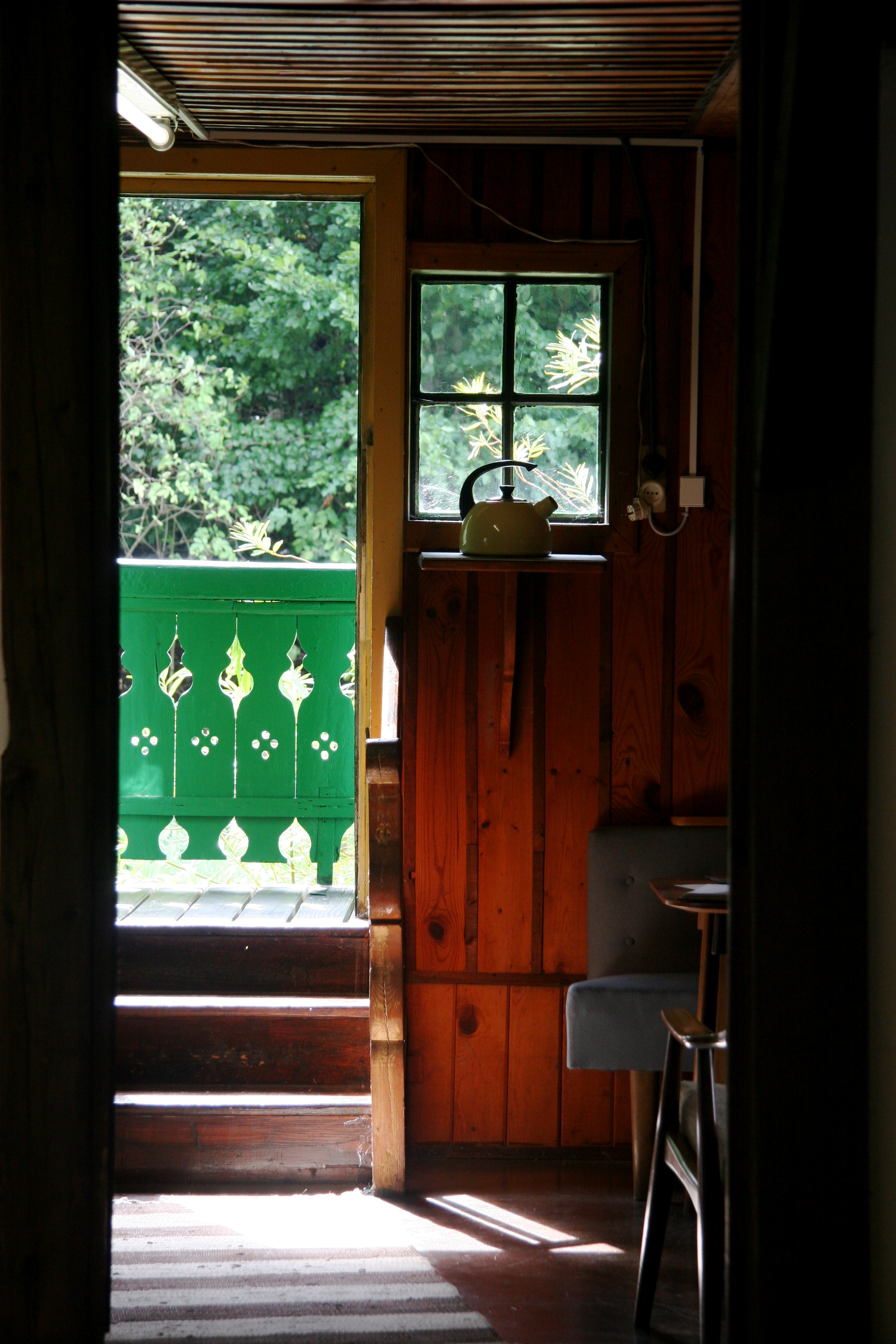
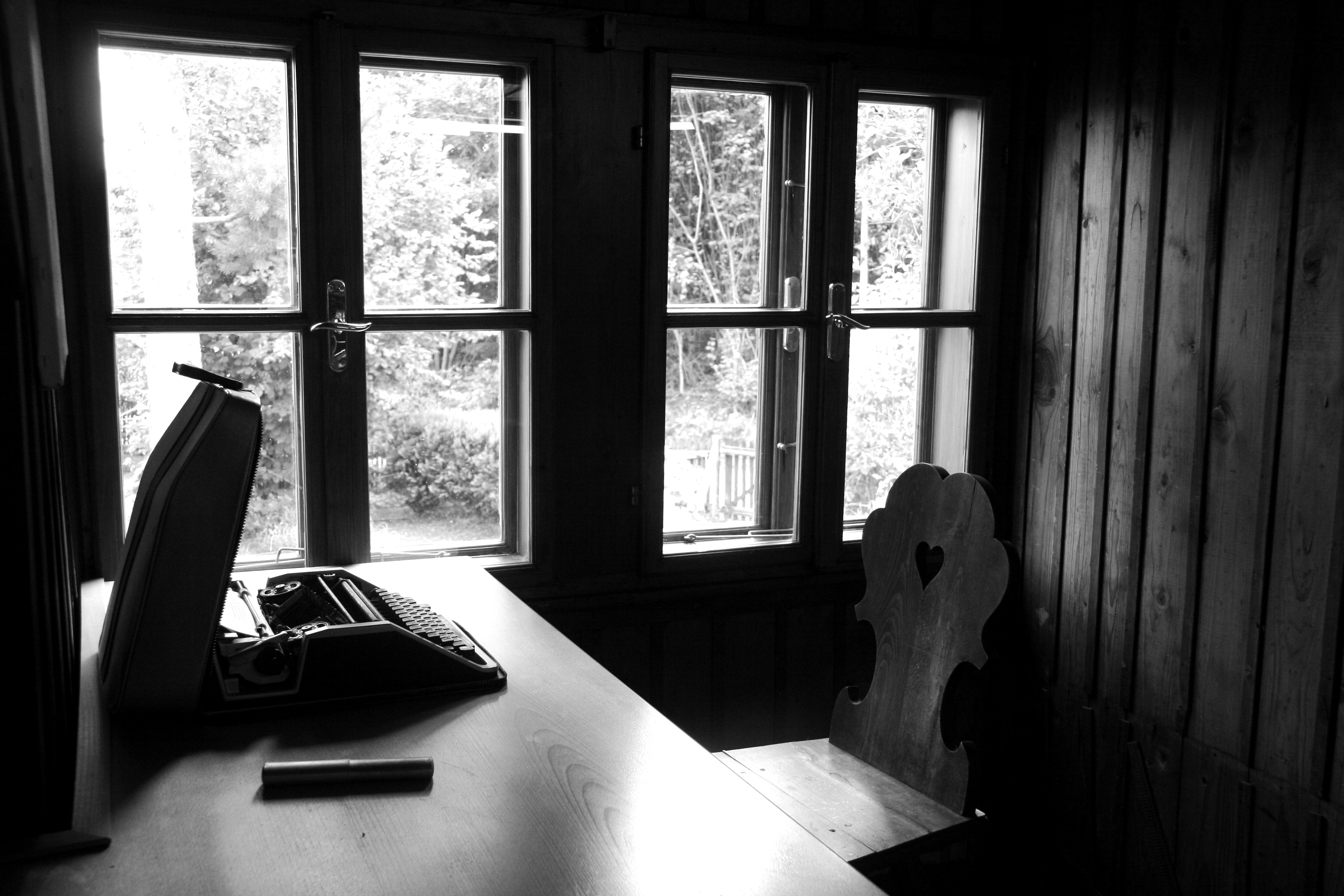
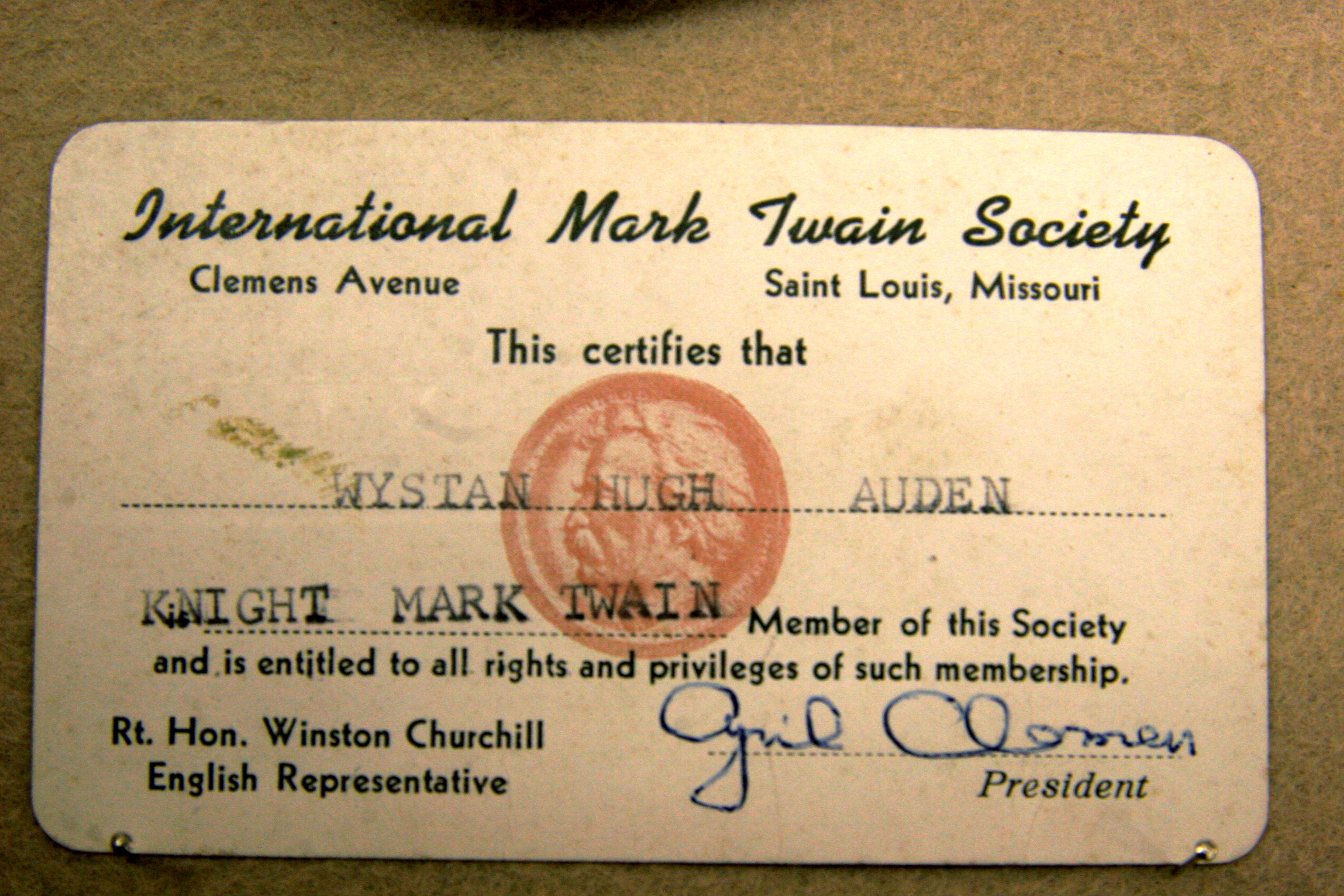

‘Stop all the clocks’ is one of many favourite poems, and I went to visit Auden’s rented summer-house at Kirchstetten, in Austria, recently.
It is where he penned many of his poems and the upstairs room where he wrote has been preserved as a museum, with his book shelves, kettles, empty vodka bottles, typewriter and slippers still in place. I really enjoy both photography and writing, so I wanted to begin this blog by sharing some of the photographs of the upper room of the summer-house, in the hope that it might inspire your writing as much as it did mine. His typewriter sits neatly on his desk, where you can look out over views of the quiet street and lush green trees, made me wonder what it must have been like for him during his writing day, working in a secluded location in the middle the most beautiful countryside. It reminded me of George Orwell’s hideaway, which he also rented on the Isle of Jura, where he penned ‘1984’. There is something about isolation for writers that seems to trigger bursts of creativity. I sometimes find that I need a cafe with noise, and people milling about and chatting, but it is in the quiet places that an idea often forms in a chrysalis, and where the words appear on the page, inviting me on a journey with characters and events.
 F C MALBY
You must be logged in to post a comment.