Tombland Bookshop: East Anglia’s Literary Treasure

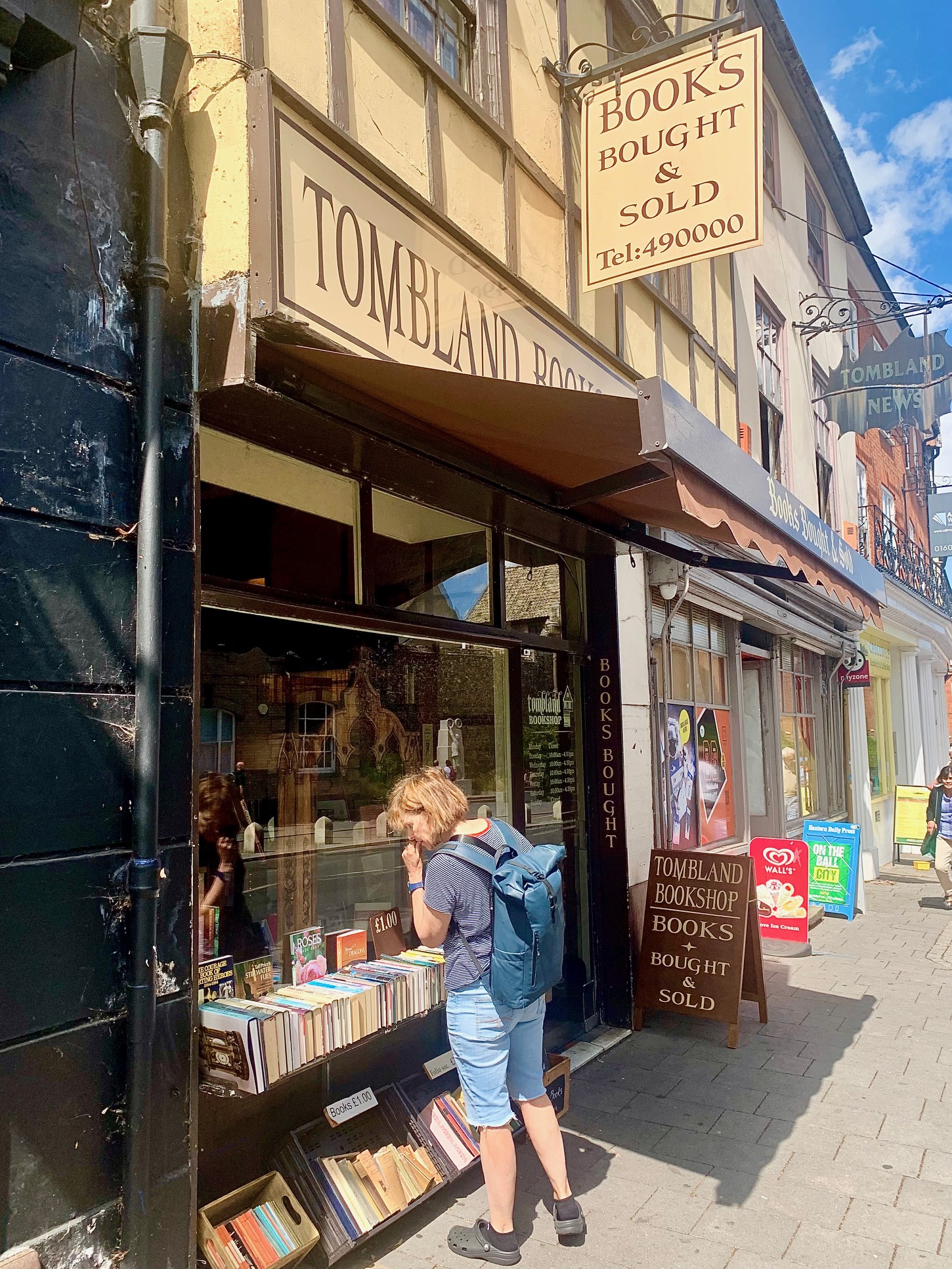
Tombland Bookshop,  8 Tombland, Norwich NR3 1HF

Norwich has deep literary roots: the city is England’s first UNESCO City of Literature (one of only 20 globally), the National Centre for Writing, where I took part in a Flash Fiction Writing Workshop at the National Centre for Writing in Dragon Hall back in 2019, and home to 13th/14th century Christian mystic, Julian of Norwich, the first woman to write and publish a book in the English language: Revelations of Divine Love is one of the earliest surviving English-language works written by a woman.
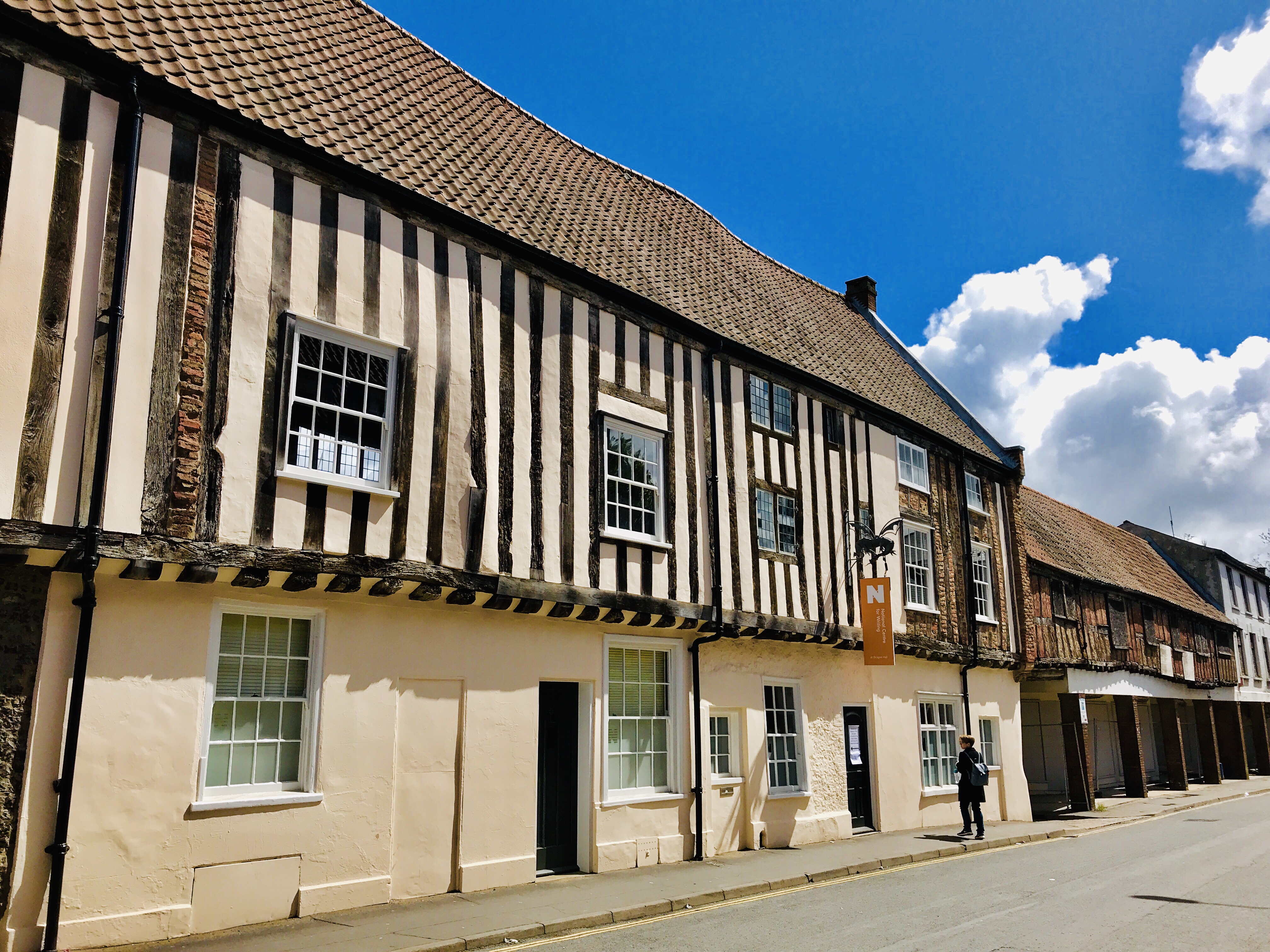
Dragon Hall, National Centre for Writing,
115–123 King Street, Norwich, NR1 1QE (photo taken in May 2019)

Other writers who have also called Norwich home include Thomas Browne, Thomas Paine, Ian McEwan, Kazuo Ishiguro, Emma Healey, Eimear McBride and Sarah Perry. I’m always thrilled to find a new secondhand bookshop, and this one is really impressive.

Tombland Bookshop, opposite the Norwich Cathedral, is a characterful bookshop, housed in a medieval 15th-century beamed building. They sell academic, secondhand, and antiquarian books across two and a half floors. The ground floor is split level and the open plan provides a sweeping entrance of bookshelves.
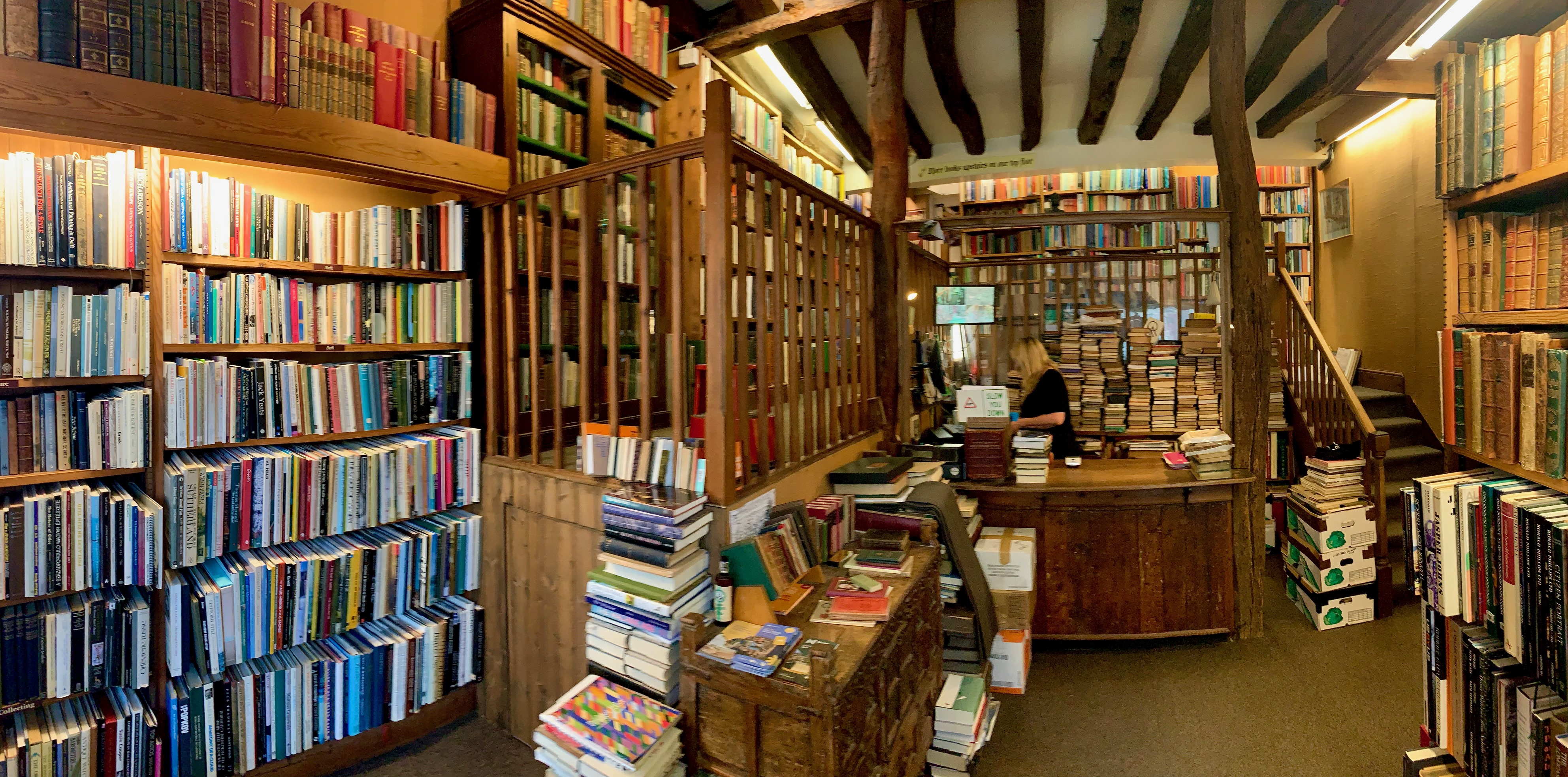
As well as buying and selling rare books, Tombland also offers book valuations, binding and restoration. It is the largest bookshop of its kind in East Anglia with books selling for between £1 and over £10,000.
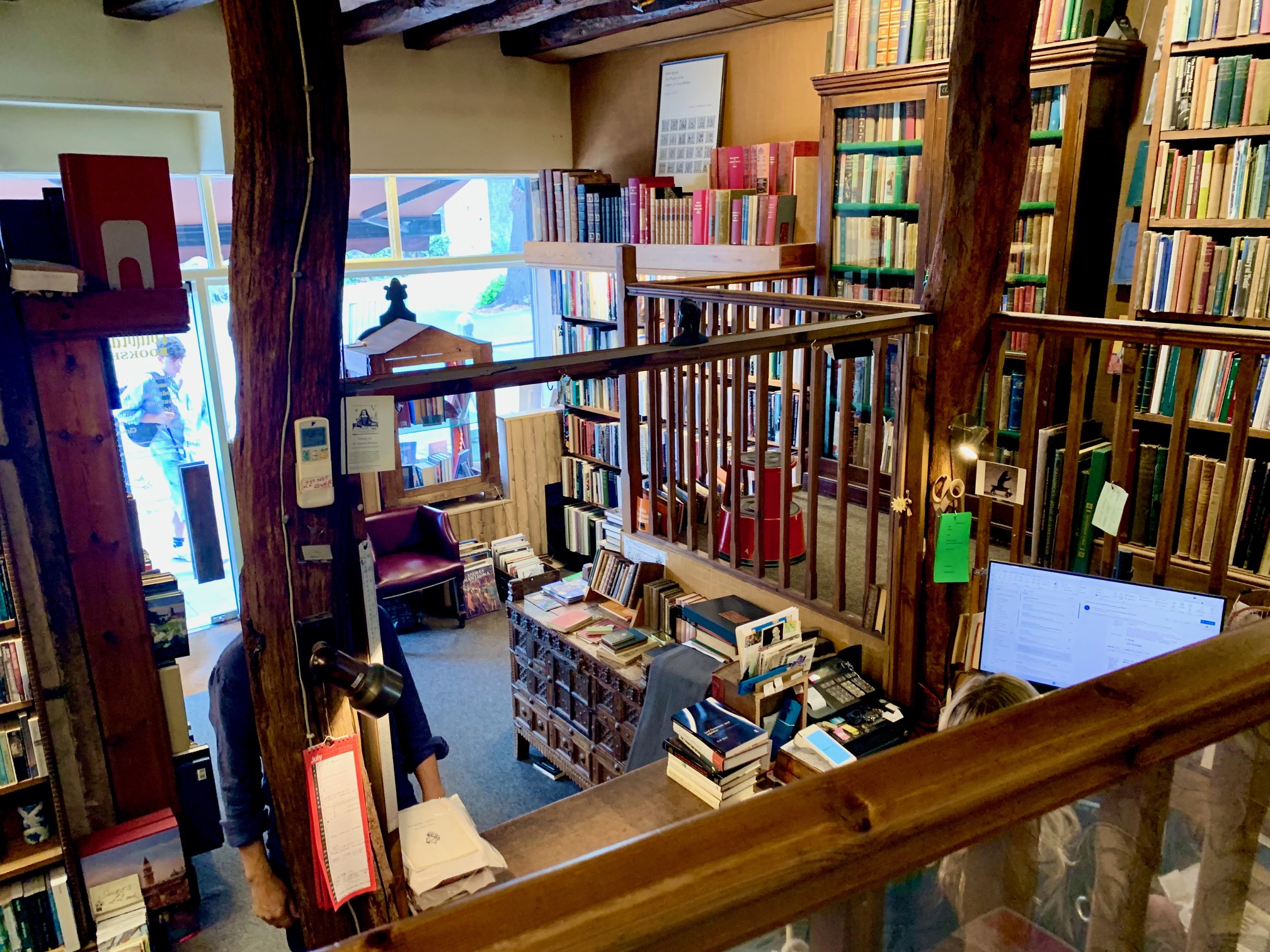
Tombland owes its name to the Tombland area of Norwich in which it resides, and finds its origins in the Danish word for ’empty space’ or ‘open land.’ This area was home to an Anglo-Scandinavian marketplace in the 11th century.
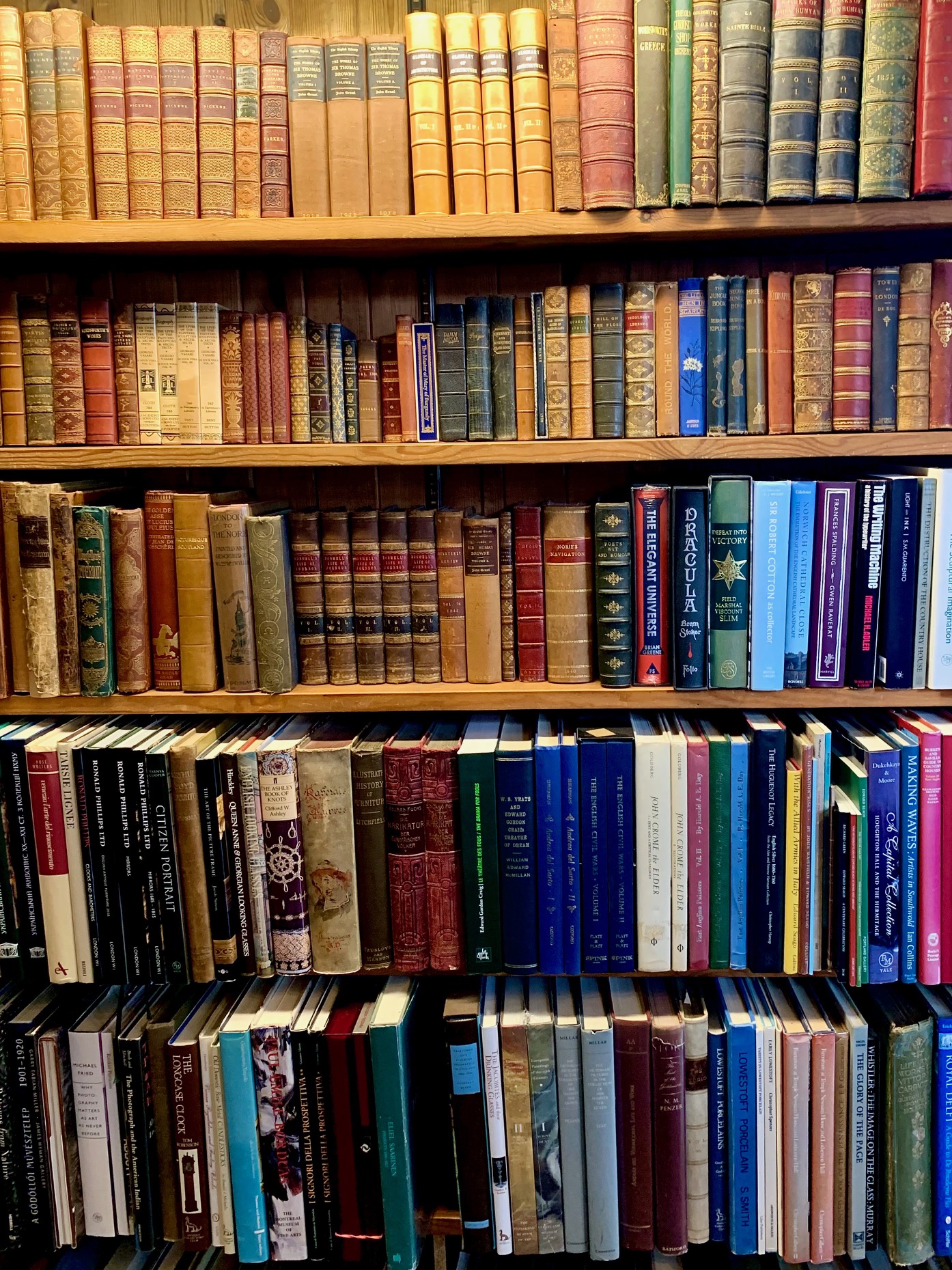
Staff are helpful and knowledgeable. It’s the kind of bookshop that you could spend hours in, and I wondered what it might be like to spend the day there, reading and writing.
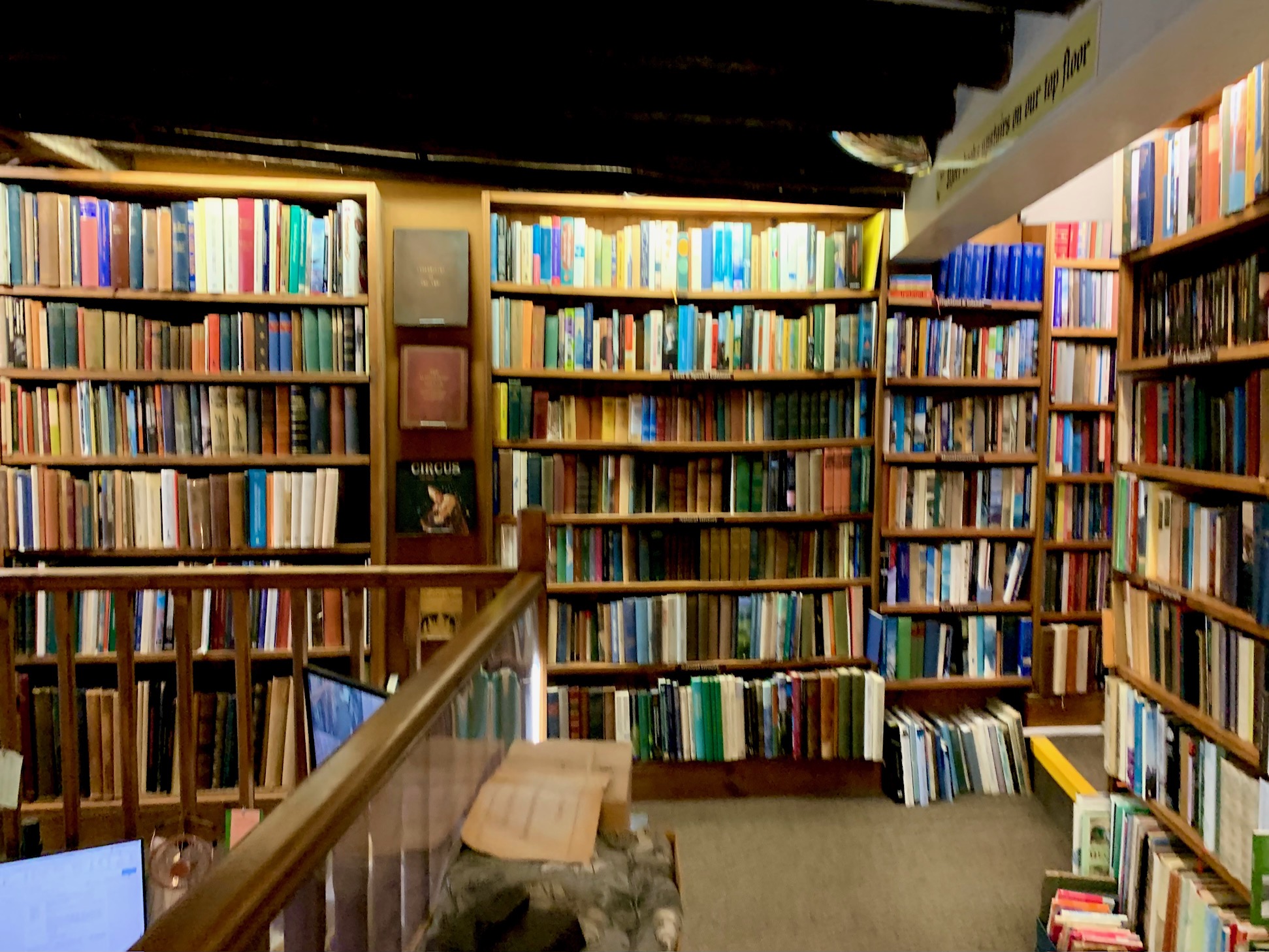
The last Drif’s Guide to Second Hand Bookshops rates Tombland as the ‘best bookshop in East Anglia’ and one of the dozen best in the UK. It’s not difficult to see why.
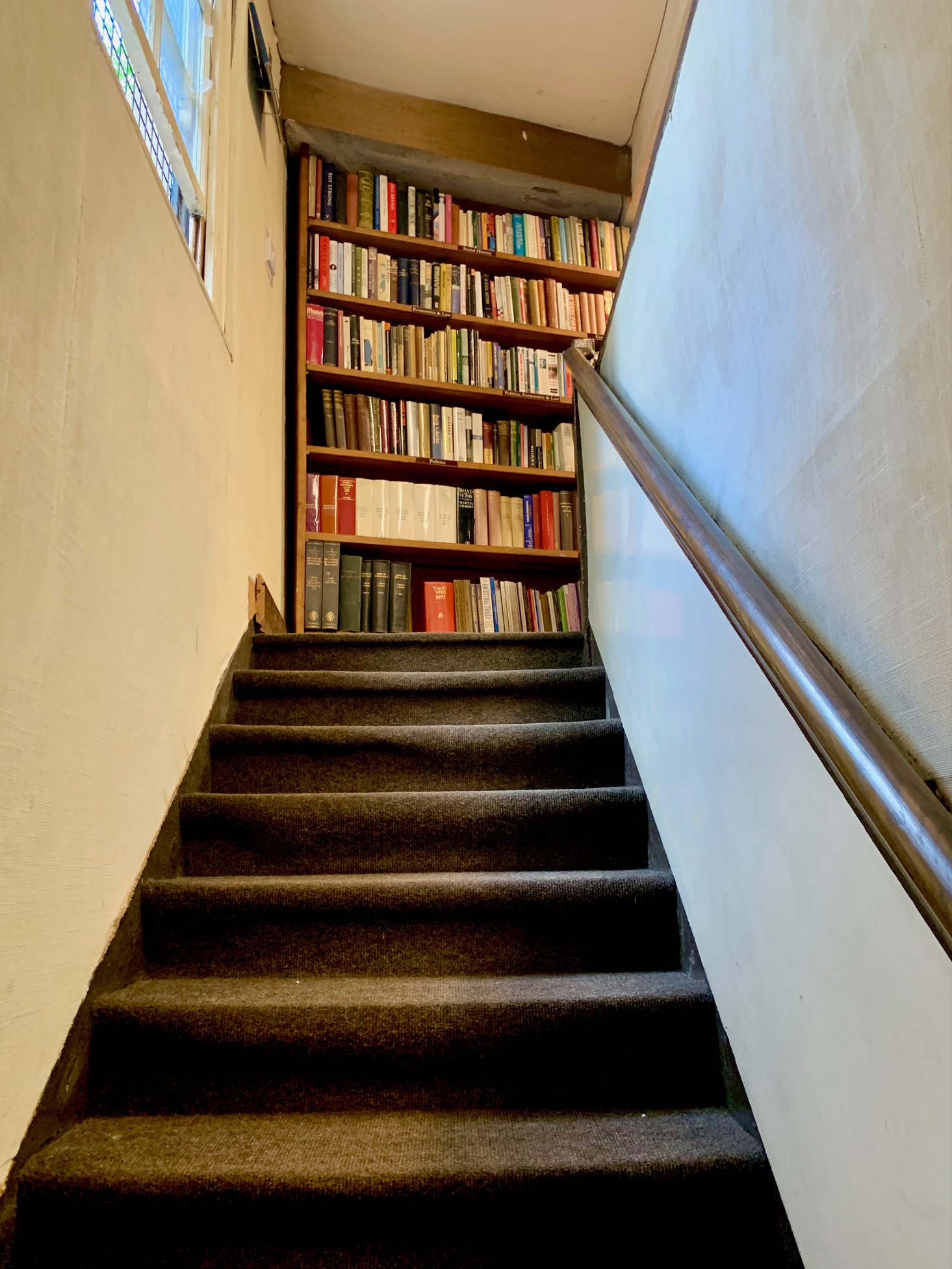
Staircase to top floor

The Independent also included them in their most recent guide as one of the 50 best bookshops in the UK.
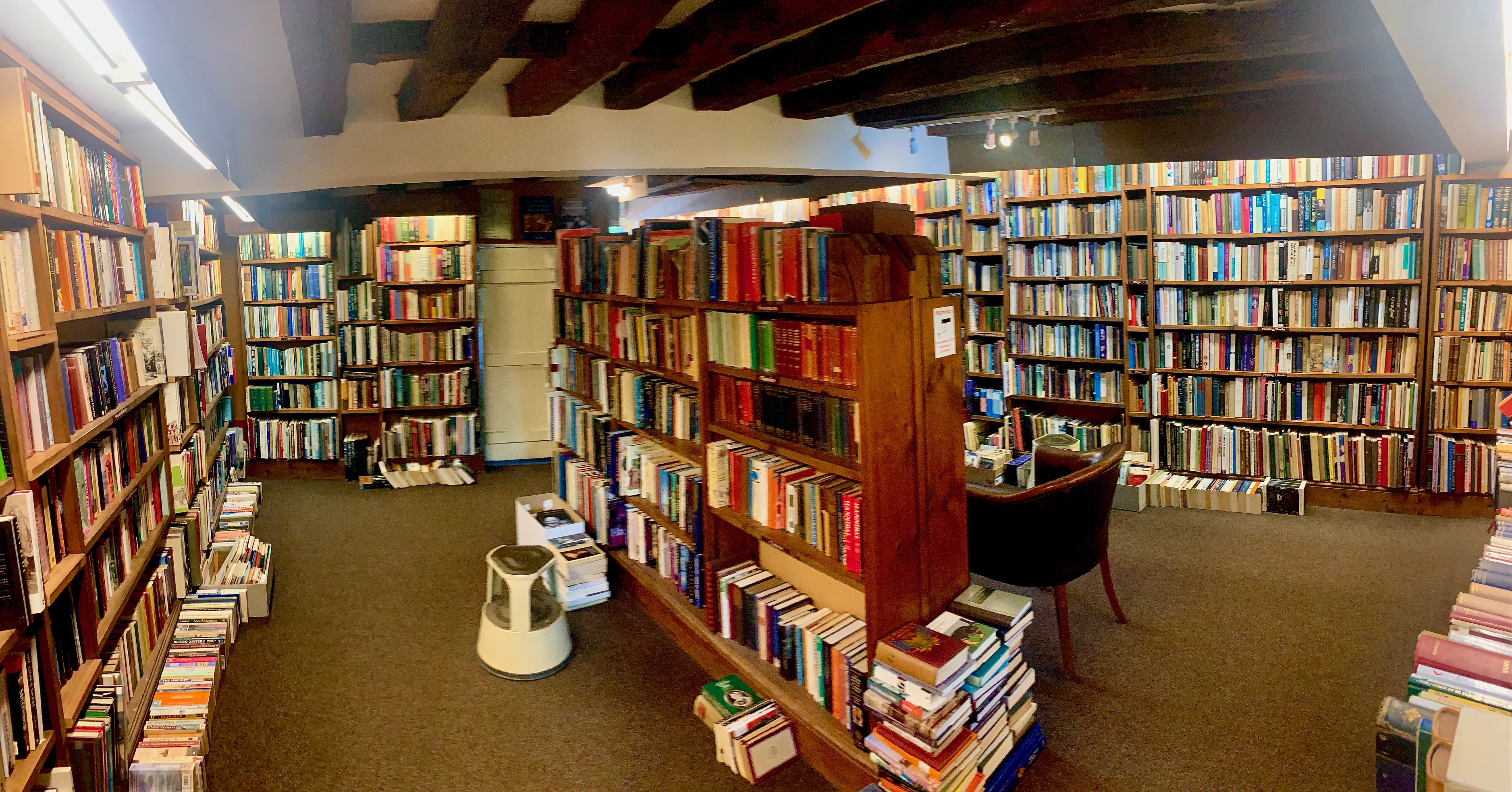
Top Floor

Although the building itself is medieval, the bookshop has been established for over 35 years, and includes books on art, architecture, local history, natural history and music, poetry, children’s books, travel, and academic books.
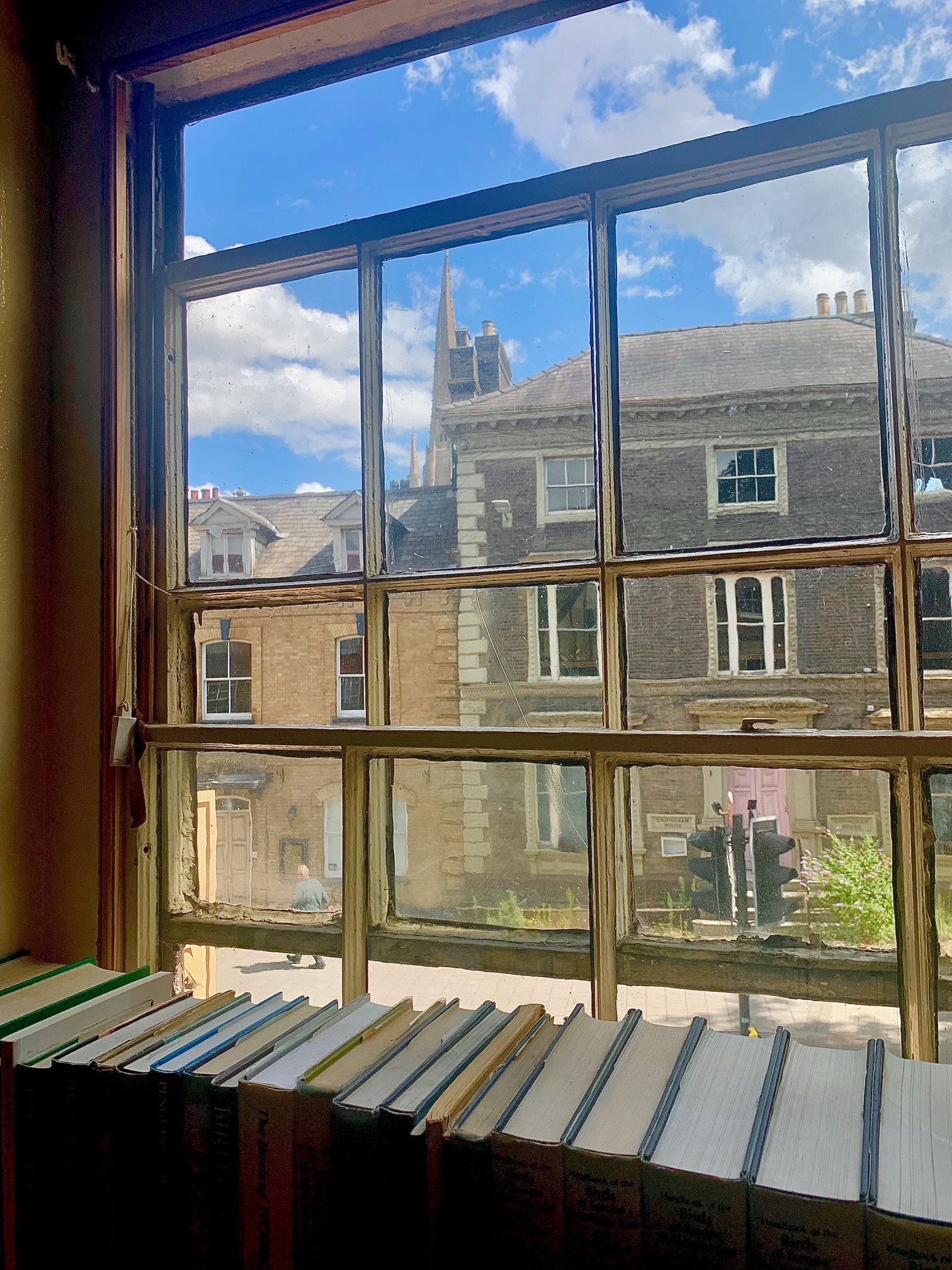
Cathedral View

I picked up some poetry books from Philip Larkin, Anna Crowe, Seamus Heaney, and Ted Hughes to add to my collection.
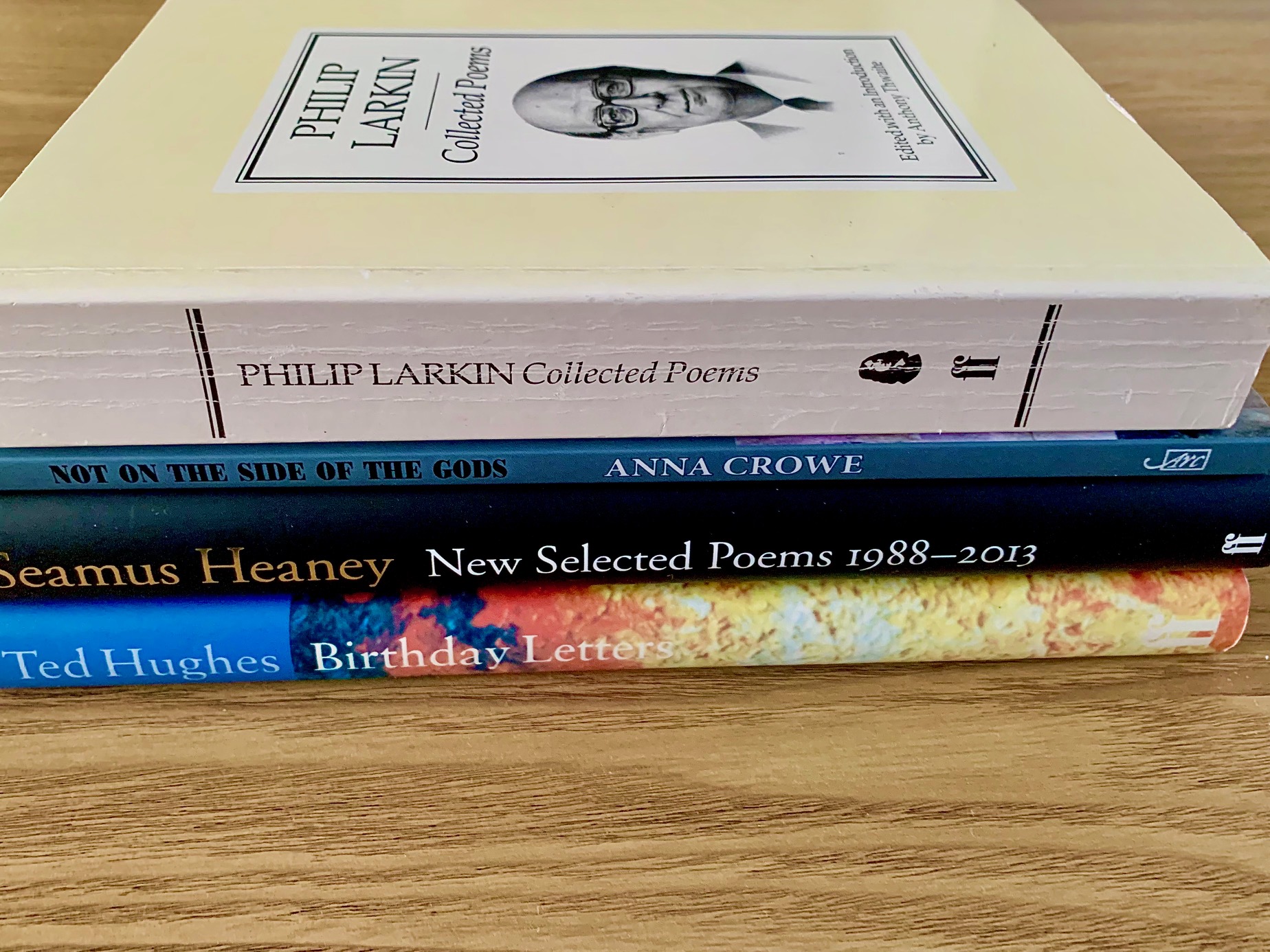
Poetry Collection Purchases

What I’ve learned after 14 years as a published author

I get lots of questions from new and aspiring writers. So, after four published books and stories in five international anthologies, here are my thoughts.

Finding your style takes time

You will write many words that you throw away or put in a drawer. The more you write, the better you will become at the craft. Don’t give up at the beginning. Blogging is also a great way of honing your craft (and gathering an audience). It’s also a solid platform, as social media sites come and go, or shift. I’ve had almost 142,000 readers on my site since I began – your readership is cumulative. Views have doubled in two years.

Consistency is important

You don’t have to spend hours every day, but find what works and stick with it. I try to write regularly, and when I’m writing a novel, I spend several hours each day writing. For you, it might just be journaling once or twice a week, or working on a short story or a novel for an hour a day or a few hours a week. Writing can fit around your schedule.

Take breaks when you need to

If you feel dry or uninspired, it’s absolutely fine to step away or switch gears and switch from stories to poetry or blogging, or letter-writing. There are so many ways of writing, so don’t limit yourself to a huge manuscript, which can feel daunting. I began with short stories, then later began my debut novel. I started writing poetry many years ago, but only returned to it in more recent years, only beginning to send work off for publication more recently.

Find what inspires you

Go for a walk, use images as writing prompts, or work in a cafe if you work better with noise and other people around you. I wrote some of my last novel with a writing partner, both online and in person in cafes. Find what works for you personally and don’t be afraid to experiment.

Create a writing space

I can’t stress this enough. Find a space that’s yours, a space that’s comfortable (because you spend hours in it), and a space where you won’t keep being interrupted. Writers’ spaces have been some of my most popular blog posts. You can find them here and here.

Read, read, read

Read as much as you write, if not more. Reading both within and outside your genre will give you inspiration and help you to find what works and what doesn’t. It also breaks up your writing time. In an age of fast information and scrolling, it can be hard to focus, but you need that focus to be able to write. Whether you prefer an eBook or a paperback is up to you, but I prefer to read physical copies, as I spend a lot of time using screens for work and writing. It’s a controversial topic, but I don’t think you can beat a fresh hardback book!

Launch of Wild Seas Audiobook: A Community Storytelling Journey

Wonderful news that Pens of the Earth will be launching a new audiobook version of Wild Seas, Wilder Cities on 29th June 2026 at Portsmouth Guildhall’s Lens Studio.

Here is a little more about their journey …

‘I believe in the power of community, and also in the power of stories to bring about change.’ Wilder Voices workshop attendee

In 2025, following the paperback and ebook publication of Wild Seas, Wilder Cities, Pens of the Earth received funding from Portsmouth Creates to invite people across Portsmouth to learn performance skills and join many of the book’s contributing authors and poets to record the upbeat and diverse environmental fiction, articles and poetry contained within the book.

‘… proud to be a part of making this book more accessible and able to reach a wider readership – or listenership I should say!’ Wilder Voices workshop attendee

The audiobook was created as part of the Portsmouth Creates In Our Words festival of literature, literacy, and storytelling – designed to inspire, engage and connect people of all ages. The inspiration of this brief enabled Pens of the Earth to reach out and involve people from all walks of life in the recordings, including teachers, actors, authors, poets, artists, environmentalists, environmental volunteers, and other members of the public.

‘I have been reading the book and love it. The whole idea of all these authors coming together to create such a masterpiece is truly inspiring and reading some of the work enabled me to be part of that.’  Wilder Voices workshop attendee

From mid-October to early December 2025, fifty different people took part in the recordings, and the diverse voices bring to life the ‘rising chorus of voices’ previously described by Nicola Chester in her 2024 review of our published book.

‘Really great to meet new creative souls, great morning, all learnt from each other.’ Wilder Voices workshop attendee

They began with three workshop and recording days led by Christine Lawrence at Casemates Studios in their vibrant and friendly venue, hosting the workshops in one of their rehearsal rooms.

Later in November, they recorded the Wild Seas, Wilder Cities contributors, welcomed back some of the workshop participants who were eager to read more, and invited a number of volunteers from the local acting and spoken word communities.

Why Unstructured Time is the Key to Creativity

I often have conversations with people who are struggling to write, and I think challenges to creativity are increasing. We live in a world of constant connectivity, but our brains weren’t designed to be constantly switched on. We check emails, check social media, and we’re often accessible for most of our waking hours. It takes a conscious effort to step away and to switch off.

We live in a world of constant connectivity, but our brains weren’t designed to be constantly switched on.

Creativity, and writing in particular, needs room to breathe. Our bodies need movement, often in nature, and our minds need time to wander freely without distractions. Movement can unlock creativity in ways that sitting at a desk can’t match. When you’ve had inspiration for a story or a poem, was it when you were busy, or when you had space to think? Was it while you were sitting still, or on the move?

Movement can unlock creativity in ways that sitting at a desk can’t match.

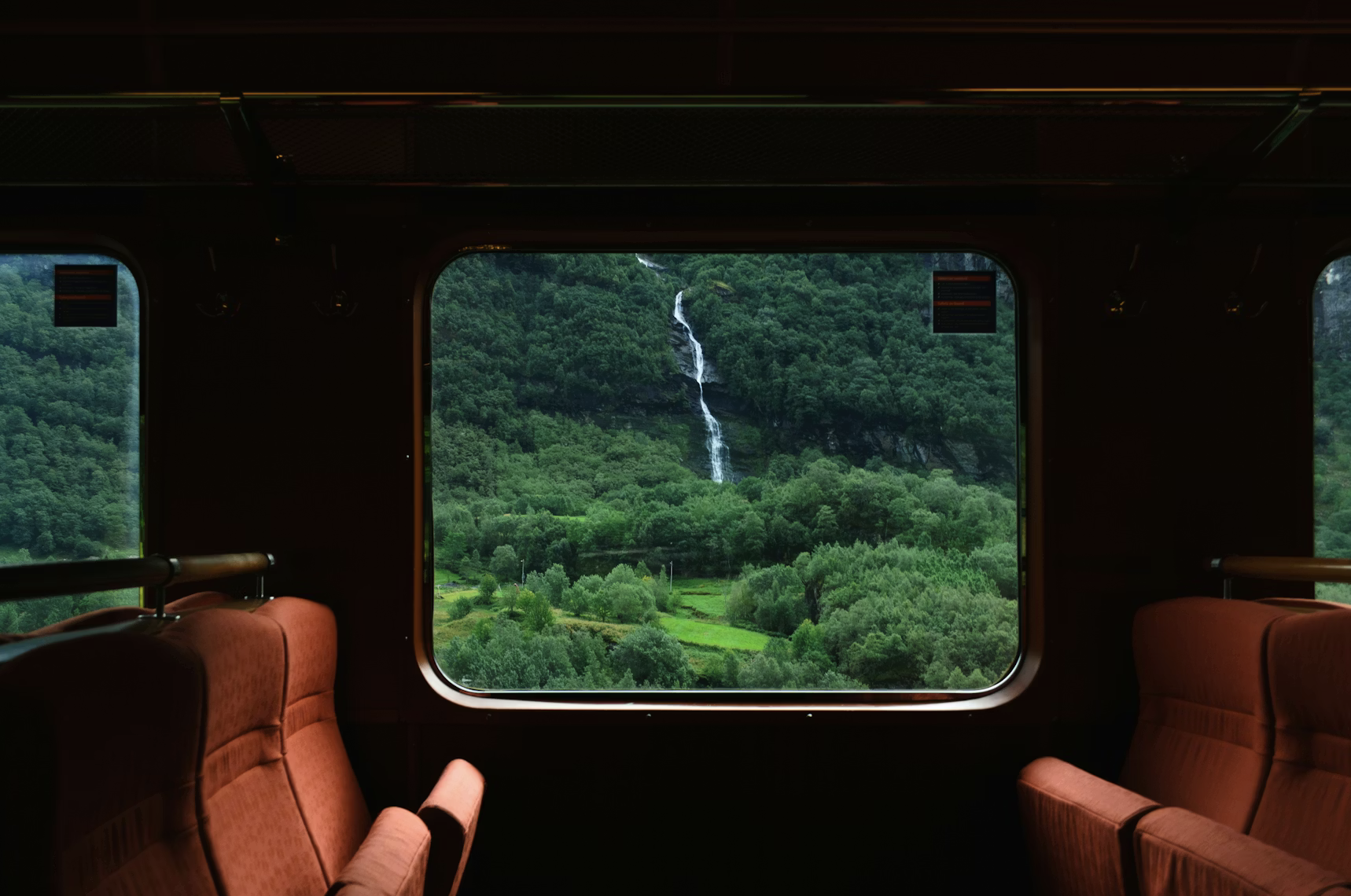
Ideas often come to me on a train journey, a walk, or just as I fall asleep. The most creative ideas often surface when we are not trying to focus on creativity, but when there’s space for our minds to wander. If you struggle to write at home, change your scene and find a quiet corner of a cafe. Sometimes, it helps to write with someone else. I’ve written with a friend writing and writing partner over the years in their office space when no one was working, or online together in silence regularly.

The most creative ideas often surface when we are not trying to focus on creativity, but when there’s space for our minds to wander.

Unstructured time is more important than we realise. Allowing ourselves to simply be, rather than constantly doing, is key to creativity. It helps the brain to make new connections and create new ideas. Creating space away from mental busyness involves finding a rhythm that works for you. It will be different for each individual.

Unstructured time is more important than we realise.

What sparks your creativity? Drop a message in the comments.

National Flash Fiction Day 2026 Anthology Line Up

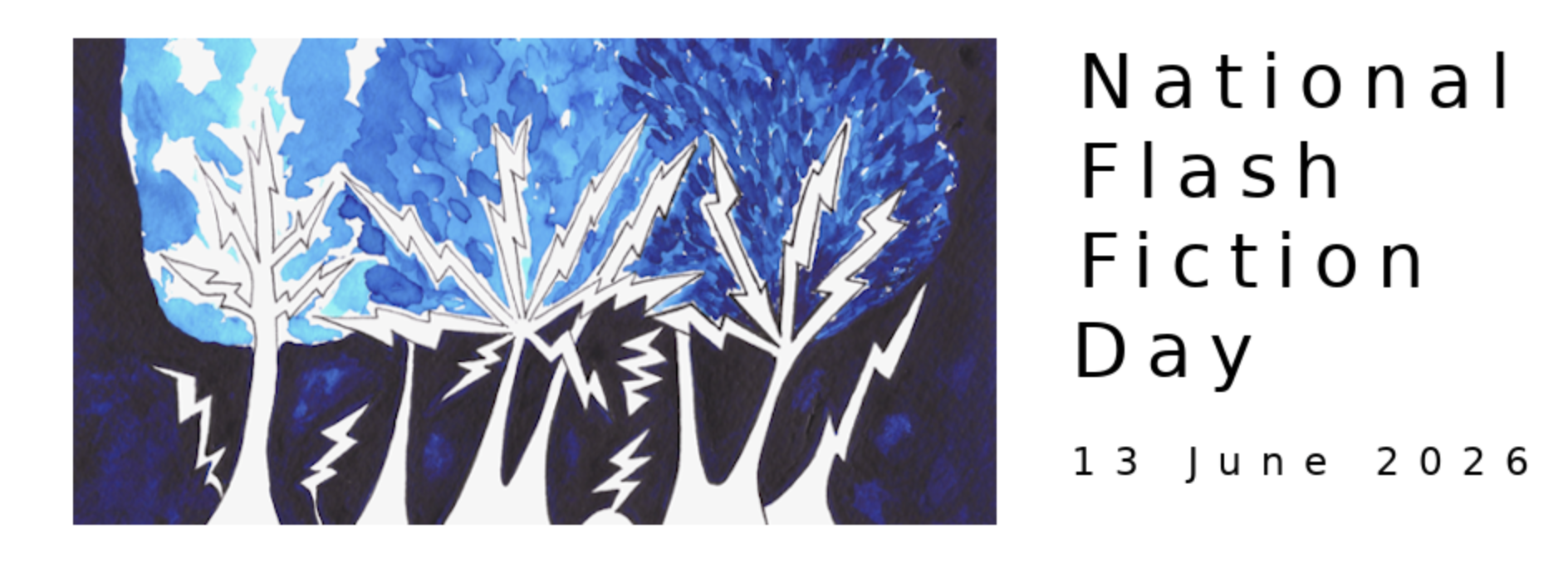
I’m thrilled to share the news that my recent story, Lotus, has been selected for publication in the National Flash Fiction Day 2026 Anthology. Here is what the editors had to say:

After reading scads of brilliant stories on the theme of BRIDGES, editors Karen Jones and Sharon Telfer have finalised their selections for the 2026 National Flash Fiction Day anthology and for the third annual Editors’ Choice Awards.

Below is the list of the stories that will appear in this year’s anthology. Thank you so much to everybody who submitted their stories for consideration for this year’s anthology. It was an honour to read each and every piece.  We appreciate the chance to read your work! We hope that you will all join us for the launch of the anthology on National Flash Fiction Day later this year.

2026 National Flash Fiction Day Anthology Line Up

  • ‘A Brief History of Trolls’ by Anne Howkins
  • ‘A Frog Funeral’ by Finnian Burnett
  • ‘As Easy as Falling Off a Log’ by Paula Durance
  • ‘Bridge Over Troubled Water (Show Choir 6TH Grade)’ by Jessica Edmond
  • ‘Bridge Over Troubled Water’ by Mileva Anastasiadou
  • ‘Bridge That Gap with a Cadbury’s Snack’ by Alison Wassell
  • ‘Cantilever’ by James Roderick Burns
  • ‘Come On’ by Patricia Q. Bidar
  • ‘Dice’ by C. L. Spillard
  • ‘Doggerland (or, 10,000 years ago there were no migrant boats crossing the English Channel)’ by Erin Bondo
  • ‘Don’t Look Down’ by Hilary Ayshford
  • ‘Falling from the Mid-Point’ by Keith Rutter
  • ‘Forty-nine Hedgehogs and the Hump-bottom Bridge’ by Rosaleen Lynch
  • ‘Gentle Yoga Guide to Dealing with Materializing’ by Andy Lavender
  • ‘He and She’ by Shelley Roche-Jacques
  • ‘How to Fill the Space’ by Debra A. Daniel
  • ‘Hue and Cry’ by Sarah Masters
  • ‘If You Leave From the Southwest Gate and Follow the Cliffs for Half a Day, You Will Reach the Chasm, and the Bridge and the Heap’ by Jenna Muiderman
  • ‘In Hebden Bridge at Midnight’ by Lucienne Cummings
  • ‘Jack the Zoo’ by Jaime Gill
  • ‘Learning to Talk Like the Bridge Ladies’ by Lola Page
  • ‘Le Nez’ by Jill Munro
  • ‘Lotus’ by F. C. Malby
  • ‘Maybe Sarajevo’ by Cassandra Parkin
  • ‘Meet Me Halfway’ by Rob Walton
  • ‘Mile Marker 1.5’ by Steven Patchett
  • ‘Mothman Caused the Silver Bridge Collapse’ by Sonora Hills
  • ‘Mudlarking Under Richmond Bridge During the Annual Draw Off’ by Rachael Dunlop
  • ‘Nepenthes’ by Jules Foshee
  • ‘No Jerusalem for Alf Bridges’ by Andy Larter
  • ‘Northolt Park’ by Sally Jane Tate
  • ‘Nose’ by Rebecca Klassen
  • ‘On Southend Pier, Sergeant Cranley Doesn’t Cut the Mustard’ by Gill O’Halloran
  • ‘Placenta’ by Karen Arnold
  • ‘Reasons to Be with You Parts One to Five’ by Emily MacDonald
  • ‘Salad Days’ by Melanie Maggard
  • ‘Seven Bridges Road’ by Sara Hills
  • ‘Sister Benedict’ by Fiona Vigo Marshall
  • ‘The Calm After the Storm’ by Jo Rigg
  • ‘The Keep’ by Beth Sherman
  • ‘The Passing Place’ by Bryony Burton
  • ‘The Valley’ by Isabel McKeough
  • ‘The World Doesn’t Like People It Can’t Mold’ by Christina Tudor
  • ‘This Life’s Span’ by Audrey Niven
  • ‘Vivaldi in B, Please Hold’ by Nivara Lune
  • ‘Watermarked’ by Rosaleen Lynch
  • ‘What It Holds’ by M.M. Bailey
  • ‘What Single People Do on Sundays’ by Cath Holland
  • ‘When Will the Bridge Break?’ by May Suri
  • ‘Why I Sometimes Wish I was a Troll Under a Bridge’ by Rebecca Field
  • ‘Woman by the Spree, April 1945’ by Emma Venables

Author Ingrid Jendrzejewski Published on  Leave a comment on National Flash Fiction Day 2026 Anthology Line Up