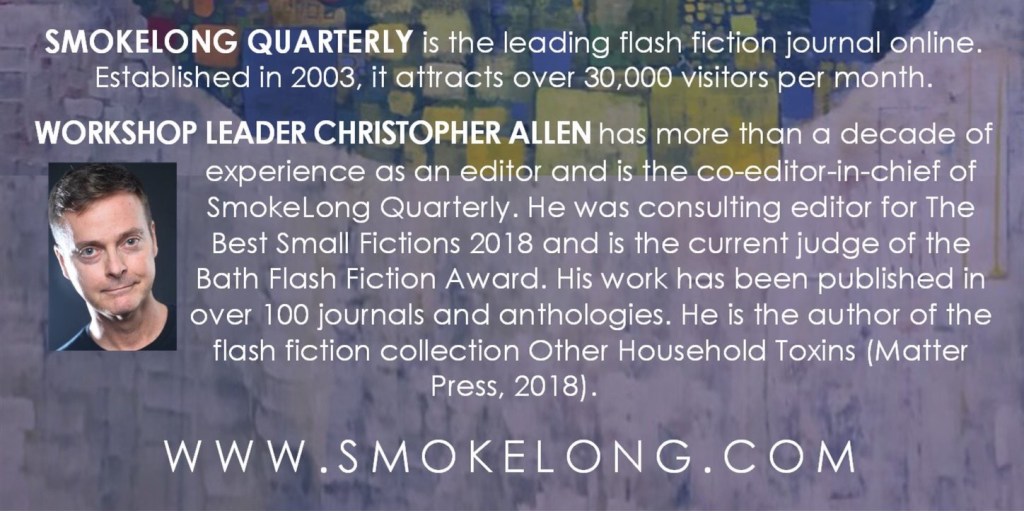
On Saturday I had the pleasure of attending the Flash Fiction Workshop, run by the good folk of Smokelong Quarterly, Christopher Allen and Helen Rye, at the National Centre for Writing in Norwich. It was a beautiful setting and a great opportunity to hone our skills. I sat alongside sixteen others – some writers, some editors, all wanting to learn about the craft.
I wanted to share some of my experiences with you. It was the first writing course I have been on, despite having had work published for nearly seven years. Armed with a notepad and pen, the lack of a computer felt freeing. My left-handed writing is quite shoddy but there was a freedom in being able to scrawl across the page and to underline and cross out or circle parts of the text.
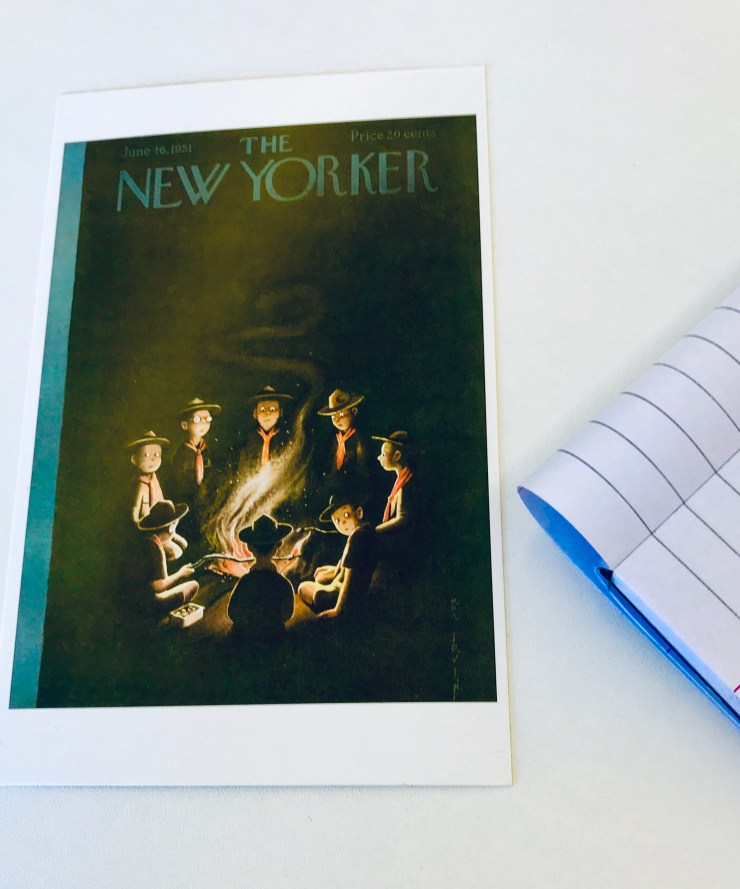
We were given various exercises which took me out of my comfort zone. There were also lots of writing prompts, which I admitted to disliking. One of the prompts was a front cover image from a 1951 edition of the New Yorker. We discussed it in pairs and I very much enjoyed the group work. Bouncing ideas off another writer was invaluable and has led me to the idea of finding a writing buddy. Writing can be quite solitary and the very nature of having lots of writers together fuelled me.
Christopher asked us to think about narrative and dialogue, tense, point of view and our use of language.
For me, some of the most useful questions and ideas I am left with as I type up the notes, are – finding the core or the emotion of the story, using memory, and brutal editing, but more than that, finding a fluid approach to the text and being flexible in your approach. Finding what works and what doesn’t.
I was reminded that flash shares nothing in common with the short story form or the novel and is all about a moment. I have done various photography jobs over the years and I like taking photographs for the same reason that I like writing flash. It’s about finding a moment in time and sharing in it a way that evokes emotion in the reader. It’s about observation and the fine details of life. It’s about thoughts and feelings that stop us in our tracks. It’s about relaying and recreating the gut wrenching moments in time that evoke a sensation, a reaction, an emotion.
It was, quite simply, brilliant. If you have a chance to go on a writing course, go. It can’t recommend it highly enough. I would like to thank Rupert Dastur from TSS Publishing for sponsoring me to go on this course. I am hugely grateful.
Now to expand on some of the pieces I began and start to submit my work.
Ellipsis Zine is an online and print literary magazine for beautifully written fiction & creative nonfiction.
How and why did you begin Ellipsis Zine, and how long has it been running?
I set up Ellipsis Zine in June 2017 and initially wanted to create an online space for flash fiction I liked to read. I hadn’t been writing flash very long and thought that a website with a mixture of work I enjoyed reading would help improve my own writing, while also offering a new space for writers to submit to. I wasn’t sure how well that was going to be received but pretty soon I was swamped with great submissions. Following on from the wave of excitement during the first month, I took the plunge and opened a call for work to be published in print and I was completely overwhelmed with the response.
What have you learned from your experience as Founding Editor?
It’s all subjective. I’ve declined work that has almost immediately been snapped up by other publications and reading them again, it was clear I was wrong to pass on them. There can also be any number of factors for a piece being declined, it’s not always because the piece isn’t ready. The magazine may not be the right fit. Timing can also be important – and not always something that a submittor can do anything about. If a piece submitted deals with the break up of a relationship, for example, I would generally pass on it if I’ve published a similar piece recently.
What do you do with your time outside working on the Zine?
I work in a marketing department, with a background in design, and so the setting up of the magazine and print zines has been a fairly smooth process.
The editorial team has expanded. Can you tell me who is on the team and how or why they were chosen?
I have a great team of flash writers helping me behind the scenes. Stephanie Hutton, Amelia Sachs, Richard De Nooy, Helen Rye, Jennifer Harvey and Christina Dalcher. It was Richard who first suggested putting together a team, to help strengthen the website and have a team to help compile the zines, and as a sounding board for ideas and advice. Working in a bubble can be difficult at times, so having a team of writers to work with has been invaluable.
What are you looking for in a piece that you hope to publish?
We want to publish stories that make us forget where we are, stories that introduce us to people, places and things we’ve never seen before and stories that stick with us long after we leave them. In the same way a great song, novel or film, hangs around with the audience. We want a great piece of flash to be something that will be read again and again, and something that will linger.
Can you tell us about the process from submission to publication in the online and print zines?
With print online submissions, I try to get back to everyone within seven days. If selected, I may put forward minor edit suggestions and then provide a date for publication. This is usually scheduled around a month or so later, depending on the time of year. With the print publications, the time between submission and selection is a little longer. With the last few zines, I’ve had one or more of the editorial board compile the list of published work for me. Again, once chosen, we ask for minor edits to the work. Once the zine is compiled, I will send page proofs to all writers, to ensure I’ve copied everything over correctly. At this point, writers have the opportunity to make any last minute changes. This is usually a week or two before publication.
Do you have any advice for authors sending you submissions?
That’s a tough question, because I tend to want to publish a wide mix of work, but it is important to note that it is all subjective. I’ve published sci-fi, horror and humour and I do notice trends with submissions. I sometimes get a batch of work that hasn’t made the longlist/shortlist of a competition, because they are all on the same theme. I’ve also noticed that I can receive a large amount of work based on death, relationship breakdown, dementia etc. I have written pieces on these subjects myself, and although, individually they are brilliantly written, when I receive a lot of them, they can lose their impact. I’d suggest that anyone who approaches these subjects to think a little differently. This will help set the work apart from others.
Can you tell us a little about the expansion into areas such as the Novella-in-Flash, collections, and zines celebrating LGBTQ writers?
Much like everything with Ellipsis, the expansion into publishing Novella-in-Flash and collections stemmed from wanting to try something new. Stephanie Hutton’s novella was a huge success, selling much more than any of the other zines and so it was natural to try and replicate that success. Talking with Stephanie about an open call, she put forward the idea of publishing an author who wasn’t as established – hence, the call for a debut flash collection from an unpublished author. This desire to give underrepresented voices a platform, naturally, influenced the decision to publish a zine that celebrated LGBTQ writers and their work.
What are your plans for Ellipsis for the coming year?
We have an extremely busy year ahead. There are a few flash events, which I will be attending in the Summer: National Flash Fiction Day, June 15th, has just been confirmed, and a publication launch. Our Love | Pride zine, celebrating LGBTQ writers and their work, is released at the end of February, along with a flash fiction collection in April/May. The Summer zine publication will be collection by a single author. Later in the year we’ll have a call for submissions for another zine and a micro-fiction competition. There are ongoing website submissions and, at some point, I may need to have a lie down.
You have recently had some of your own work published. Can you tell us about your own writing?
I’m still finding my feet with my own writing, but running Ellipsis has been extremely helpful. I have read some amazing work and this has enabled me to see what does/doesn’t work with a piece of flash. I began to write my own novella-in-flash, which was sidelined to write a novel, which was then sidelined to write another novel. At some point in the next few years I’m sure one of these projects may be finished.
What are your top five literary journals or magazines?
I love the work in Flashback Fiction. There is the added bonus of hearing the pieces being read by the authors. Popshot Magazine is also a favourite. I’m a sucker for a printed publication, and this is beautifully put together. I also regularly read MoonPark Review, TSS Publishing and Reflex Fiction, but this list is not exhaustive because there are so many great publications out there. I’ve compiled a list of some of my favourite publications on the Ellipsis website here: ellipsiszine.com/literary-magazines/
Ellipsis is managed by Steve Campbell and has the support of an editorial board of international flash fiction writers and published authors. View their biographies here: Editorial Board.
What’s on your list? I always have several things on the go and more on the to be read pile. I thought I’d share a few that have grabbed my attention. Some are new, others are a little older and have taken time to get to.
Hot Milk
I read and loved Levy’s book, Swimming Home, and I have high hopes for this one.
Short listed for the Man Booker Prize and the Goldsmiths Prize in 2016, this is a hypnotic tale of female sexuality. Two women arrive in a village on the Spanish coast. Rose is suffering from a strange illness andher doctors are mystified. Her daughter Sofia has brought her here to find a cure with the infamous and controversial Dr Gomez – a man of questionable methods and motives. Intoxicated by thick heat and the seductive people who move through it, both women begin to see their lives clearly for the first time in years.
Through the opposing figures of mother and daughter, Deborah Levy explores the strange and monstrous nature of womanhood. Dreamlike and utterly compulsive, Hot Milk is a delirious fairy tale of feminine potency, a story both modern and timeless.
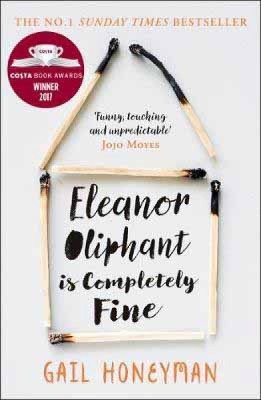
Eleanor Oliphant is Completely Fine
I picked this one up because of the hype surrounding it (marketing really does work, folks!) and the awards it has received. Winner of the Costa First Novel Award 2017, Longlisted for the Women’s Prize for Fiction 2018and the Desmond Elliott Prize, this successful debut novel is about to be turned into a major film produced by Reese Witherspoon.
Eleanor Oliphant has learned how to survive – but not how to live. She leads a simple life, wears the same clothes to work every day, eats the same meal deal for lunch every day and buys the same two bottles of vodka to drink every weekend. She is happy. Nothing is missing from her carefully timetabled life. Except, sometimes, everything.
One simple act of kindness is about to shatter the walls Eleanor has built around herself. Now she must learn how to navigate the world that everyone else seems to take for granted – while searching for the courage to face the dark corners she’s avoided all her life.
The Ministry of Utmost Happiness
Much like Levy’s Hot Milk, I picked this up because I loved the author’s previous work, The God of Small Things. Longlisted for the Women’s Prize for Fiction 2018 and the Man Booker Prize 2017, this is, “a sprawling kaleidoscopic fable,” according to The Guardian.
‘At magic hour; when the sun has gone but the light has not, armies of flying foxes unhinge themselves from the Banyan trees in the old graveyard and drift across the city like smoke . . .’
So begins The Ministry of Utmost Happiness, Arundhati Roy’s incredible follow-up to The God of Small Things. We meet Anjum, who used to be Aftab, who runs a guesthouse in an Old Delhi graveyard and gathers around her the lost, the broken and the cast out. We meet Tilo, an architect, who, although she is loved by three men, lives in a ‘country of her own skin’. When Tilo claims an abandoned baby as her own, her destiny and that of Anjum become entangled as a tale that sweeps across the years and a teeming continent takes flight . . .
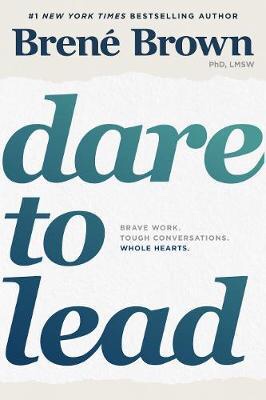
Dare to Lead
I really enjoy Brene Brown’s work and, having read Braving the Wilderness and Rising Strong, I have been anticipating the release of this gem. This is a work of non-fiction and is based on new research conducted with leaders, change makers and culture shifters, she’s showing us how to put ideas from her previous work into practice so we can step up and lead.
Many of us lead in different spheres of influence. This is a book for everyone who is ready to choose courage over comfort, make a difference and lead.
When we dare to lead, we don’t pretend to have the right answers; we stay curious and ask the right questions. We don’t see power as finite and hoard it; we know that power becomes infinite when we share it and work to align authority and accountability. We don’t avoid difficult conversations and situations; we lean into the vulnerability that’s necessary to do good work.
But daring leadership in a culture that’s defined by scarcity, fear and uncertainty requires building courage skills, which are uniquely human. The irony is that we’re choosing not to invest in developing the hearts and minds of leaders at the same time we’re scrambling to figure out what we have to offer that machines can’t do better and faster. What can we do better? Empathy, connection and courage to start.Dare to Lead answers these questions and gives us actionable strategies and real examples from her new research-based, courage-building programme.
Short stories are the heartbeat of many writers. I intersperse writing short stories with writing and editing novels. My second novel is now complete and edited. Below is a list of my recent publications and some links to other stories I have enjoyed reading.





 F C MALBY
You must be logged in to post a comment.