What Portrait Photography Can Teach Us About Characterisation…

I enjoy spending time in galleries and, whether it is a collection of paintings, sculptures or photography, I can while away a few hours looking at art. Photography stimulates ideas and sparks my creativity perhaps more than any other art form. I used to spend a lot of time at the Portrait Gallery in London and Vienna has an equally impressive collection of galleries. I was thankful to find that the World Press Photo Awards made a stop here each year, so I haven’t missed out!

I particularly like the work of David Bailey, Mario Testino and Annie Leibovitz. This week I discovered a portrait photographer who was new to me: Michel Comte. Based in Zurich, Comte is a trained art restorer whose first photography contract was with Karl Lagerfeld. He has worked for Vanity Fair, Vogue, Armani, Ferrari, Jaguar and Mercedes Benz, to name a few, and has photographed Miles Davis, Jeremy Irons, Mike Tyson and Michael Schumacher, with whom he became good friends.

He is one of the few professional photographers I know to have photographed both for international advertising companies and for documentaries covering war zones. Comte has increasingly moved towards a more reportage and documentary style of photography, and has travelled to unstable areas in Iraq, Afghanistan, Bosnia, Sudan and Cambodia. If you are interested in his work, the video below shares some of his thoughts on what makes a good photograph.

So, what does this have to do with writing, I hear you thinking? Comte got me thinking about the idea of how much of a person’s soul and character can be captured in a split second, and how so much of what you – the viewer – see forms an impression of who they are as a person. Very quickly you form a judgement from the eyes, the body language, the clothing, the expression and the feel of the picture. This is what Comte says, ‘the person projects.’

As a writer we have the exciting and difficult job of ‘capturing’ each character almost as a snapshot, and portraying who they are through their movements, body language and expressions. Writers have the advantage of using dialogue, actions and the responses of other characters, but the essence of character description comes down to much of what is captured in a moment with a lens. Comte talks about Catherine Deneuve, and the way that a normally confident woman shows a moment of unusual vulnerability in the his photographs. These are the moments which, as a writer, need to be drawn out and put down on the page.

Have a look at the video, if you haven’t already, and think about what strikes you from each image. Think about how you would describe the person and why. Ask yourself what it is about one person that stands out and makes them unique or memorable. It might be a look of vulnerability or mystery, it could be the stance or the eye contact. Sometimes what people wear or how they stand and move, dictates your response to them as a person.

What do you think about character description? How has art or other media inspired your work?

Disgrace by J M Coetzee: A Review

disgrace

There are books which stay with you for months and years beyond the final page; there are books which draw you in to the point where you cease to feel time; there are books which transport you to a different time and place, yet keep you rooted fully here in the present. This book achieves all of these with a masterful use of imagery and language. This is one of the most powerful books I have read, partly because of its timeless themes and wholly for its ability to get inside the mind of its main character and his daughter, and of course for the delicate insight into human nature, with its brutality and desires. I was utterly captivated.

Set in post-apartheid South Africa, J. M. Coetzee’s searing novel tells the story of David Lurie, a twice divorced, 52-year-old professor of communications and Romantic Poetry at Cape Technical University. He has an impulsive affair with one of his students, Melanie Isaacs. The affair sours and he is denounced and summoned before a committee of inquiry. Willing to admit his guilt, but refusing to yield to pressure to repent publicly, he resigns and retreats to his daughter Lucy’s isolated smallholding. For a time, his daughter’s influence and the natural rhythms of the farm promise to harmonise his discordant life. But the balance of power in the country is shifting. He and Lucy become victims of a savage and disturbing attack which brings into relief all the difficulties in their relationship.

Among many accolades for the book are the Man Booker Prize (1999),

National Book Critics Circle Award Nominee for Fiction (1999),

Commonwealth Writers’ Prize for Best Book Overall (2000)

Coetzee delves into the darkness of the human condition, making this an uncomfortable but compelling read. His descriptions are often harsh and gritty, but somehow satisfying: ‘The skull, followed by the temperament: the two hardest parts of the body.’ His insight into the mind is beautifully reflected in sentences such as this: ‘His own opinion, which he does not air, is that the origin of speech like in song, and the origins of song in the need to fill out with sound the overlarge and rather empty human soul.’

I will hold on to my battered copy, treasure it, reread it, and enjoy the fact that I have finally managed to read it, although late in the game. Have you read it? What did you think? I’d like to hear your thoughts.

How Art Can Save Your Soul

I have often wondered what it is about certain books that resonates with the reader. There are certain books that, no matter how much time passes, still hold a place in your mind – books that stand out as sharing something powerful, books that heal, books that tap into a fear or a passion. What is it that makes some of the books we read stay with us?

And so it is with art, music, and many other forms of creativity.

I came across this fantastic article and talk at brainpickings.com, and if you haven’t read, it I would highly recommend a look. The brain child of Maria Popova, who has written for Wired UK, The New York Times, Harvard’s Nieman Journalism Lab, and The Atlantic, among others, the site delves into art, design, science, technology, philosophy, history, politics, psychology, sociology, ecology, anthropology, and more. It never fails to come up with interesting and creative articles. This one is too good to miss. In the video below, British philosopher Alain de Botton expresses a need to understand Art and its psychological impact on our lives. 

He focuses on the the seven psychological functions of art, all of which I think can be applied to books and reading:

1. REMEMBERING

Since both memory and art are as much about what is being left out as about what is being spotlighted, de Botton argues that art offers an antidote to this unease. With the written word, much of its power also lies in what is not said, what is left to the reader to fill in and imbue.

2. HOPE

Both art and the written word present a form of hope, however dark or ‘pretty’, they inspire and give us a form of hope that can become lost in everyday life. “Cheerfulness,” de Botton tells us, “is an achievement, and hope is something to celebrate. If optimism is important, it’s because many outcomes are determined by how much of it we bring to the task. It is an important ingredient of success.

3. SORROW

Sorrow in art and in books reminds us of the legitimate place for negative emotions and for sorrow in life. It helps to process pain and to feel less alone in our suffering, when times are hard.

4. REBALANCING

Art can help us to balance our psychological states, relationships and working routines. “We might, for example, tend to be too complacent, or too insecure; too trusting, or too suspicious; too serious, or too light-hearted. Art can put us in touch with concentrated doses of our missing dispositions,” according to de Botton. We are sometimes drawn to books that differ greatly from our lives, and the knowledge or emotion we gain from reading a particular work can fill in a gap in our knowledge or feelings about life. A work of art or a book can portray a virtue we are missing and restore a form of balance to our lives.

5. SELF-UNDERSTANDING

Much of what is mere intuition in our lives can be opened up to us through a painting or a story, as they delve into the depths of the soul. De Botton proposes that, “from time to time, we encounter works of art that seem to latch on to something we have felt but never recognized clearly before. Alexander Pope identified a central function of poetry as taking thoughts we experience half-formed and giving them clear expression: ‘what was often thought, but ne’er so well expressed.’ ”

6. GROWTH

Many forms of art widen our horizons. Paintings and books both take us to places we my otherwise never venture into, helping us to grow and develop. I can think of several books that have taught me much about the heart of human emotion and of situations which I have never encountered. The writer can take you into the mind of a person experiencing something you haven’t met in your own life and a painting or a photograph, in turn can help us to connect and to grow.

7. APPRECIATION

In the busyness of our lives, we so often miss the small details, the expressions on a child’s face, the light catching a new bud, a word unspoken, a colour, a scent, a sound. We rush through our lives and often fail to appreciate what we see. The artist and the writer can draw us into a specific scene and dissect life in a way that we may miss.

If you are interested in finding out more about Alain de Botton, you can find him on the website and on twitter. His new book, Art as Therapy, is one of the best art books of 2013. He founded the lecture series The School of Lifeartastherapy (1)

Christmas Markets, Vienna: A Feast For The Senses.

The scent of cinnamon and spices fills the air, people mill around the stalls clutching their mugs of punch and crepes or baked potatoes. Hats cover glistening faces and the atmosphere is seasonal and filled with anticipation. Lights catch the spinning decorations and fir trees line the entrances. The Christmas markets in Vienna began as early as 1294. Also known as Christkindlmarkt or Weihnachtsmarkt, the markets originated in Germany, Austria, Italy and France. The history of Christmas markets goes back to the Late Middle Ages in the German-speaking part of Europe. The streets of Vienna are lined with huts from as early as mid November and sell punch, gluhwein (hot mulled wine with a shot of brandy), glass and ceramic Christmas decorations, traditional cribs and baked delights, such as Lebkuchen and Magenbrot (both types of soft gingerbread). There are puppet shows for the young and brass bands and carols for the rest of the audience.

Starting in 1997 Frankfurt Christmas Markets were established with support from Frankfurt in Birmingham, Edinburgh, Leeds and Manchester in Britain. A market began in Lincoln in 1982, and other large Christmas markets have been held in England in Bath (since 2000) and Liverpool (since 2006). German immigrants also brought the Christmas market celebrations to parts of the US.

IMG_0840 IMG_0848 IMG_0855 IMG_0865 IMG_0869  IMG_0882 IMG_0883 IMG_0888 IMG_0899 IMG_0914 IMG_0917 IMG_0922 IMG_0937

IMG_0940

All that’s left to say is Best Wishes for the Christmas Season and a very Happy New Year to you all.


Unbraiding the Short Story: An Interview with Author and Conference Co-Director, Dr Sylvia Petter

photo (3)

I met Sylvia recently and fortuitously through twitter via a mutual connection. I was grateful to hear of another writer in Vienna and we have met on several occasions since, including at a reading of her newest short story collection at Shakespeare and Co. in the city. She is an inspiring and enthusiastic writer who is organising events at the International Short Story Conference in Vienna in July 2014. I wanted to find out more about the conference and share with you some of Sylvia’s experiences and writing. Her short stories are thought-provoking, often touching on social and political issues.

Hi Fiona,

Thanks for giving me space on your blog!

What drew you in to writing short stories and what is it about the form that appeals to you?

I came late to writing. In the late 90s, on the way back from a course in the UK I picked up my first writing magazine. There was a contest for a story about a ghost in a computer room. I started writing and couldn’t stop; I wanted to find out how the story would end. Magic? The story got nowhere, but I was hooked. I had to learn how to write fiction and I’ve been learning ever since. I learnt a lot in the Geneva Writer’s Group and also online in the pre-web days in Alex Keegan’s Boot Camp where a group of us had to analyse not only our own stories but also stories from the Best American Stories series. That was an intense three years online, my “MfA”.

The form seems to come naturally; my cruising count is relatively short – under 2K. But it’s a difficult form. There is story and story, and what I’m looking for is resonance.

Which writers inspire your work and do you have any favourite short stories or collections?

I love the work of the Australian expatriate, Janette Turner Hospital, and the Canadian, Timothy Findley, who also wrote short stories. Edna O’ Brien’s stories move me, as do Alice Munro’s and stories by the Australians, Cate Kennedy and Paddy O´Reilly.  Favourite collections would be ones by Janette Turner Hospital – Dislocations, Isobars, North of Nowhere, South of Loss, and her most recent prize-winning collection, Forecast: Turbulence. I’m also fond of the adult short stories by Roald Dahl. There is so much good short-story writing around in different media – online, audio, and the reading I attended at the Word Factory in Soho this summer to listen to Kevin Barry, Keith Ridgway and Mary Costello. Then there´s terrific flash fiction by Tania Hershman, and a host of others.

You’re an Australian living in Vienna, having also lived in Geneva. Have the cultural differences helped to give you new insights or fueled your writing in any way?

When I was in Geneva, my stories were mainly set in Australia, although taking inspiration from happenings in the region. The same thing is happening in Vienna, but to a lesser extent. This may be linked to the expat experience and also to the fact that I feel at home in Vienna now – despite the word ‘home’ being a difficult one to pigeonhole. Many of my stories have a political tinge to them, so the setting depends on who the characters are and the issues that are making me and sometimes them say ‘what if?’

Your reading of the collection, Mercury Blobs, at Shakespeare and Co. in Vienna in the Summer was a wonderful event. Your short stories are full of life and exude the enthusiasm that flows through in to your conversation. How much of your character and experience filters through into your work?

Thank you so much for your good words, and I’m so glad you had fun that night. The atmosphere was terrific and the audience attentive. That makes things easy.  And I was so pleased that Annie Evett, my Australian publisher, was there and that the kids made some videos and didn’t fall asleep. Most of my stories are triggered by some happening I’ve experienced, or been told about, or read about in the papers, and then I do a lot of ‘what iffing’. I suppose bits of me and bits of people I’ve met are all mixed up in the characters. So, beware, you may find bits of yourself in a future story.

As Co-Director for the 13th International Conference on the Short Story in English in 2014, you are organising the conference held in July next year with Dr. Maurice Lee. What are your hopes for the conference in raising the profile of the short story form and what are your expectations for the event?

I’ve been going to the conferences since 2002. I only missed the 2006 one in Portugal because I was moving from Geneva to Vienna. I’m very excited that the 2014 conference will be happening in Vienna, and the international mix is bound to demonstrate all the things the short story can do. There´ll be several stories in English translation from the local Austrian writers and from writers from Asia. The event is timely as recent international recognition of the genre – the Man Booker to Lydia Davis, the Giller to Lyn Coady for a short-story collection, and of course, the Nobel Prize to Alice Munro – will put a spotlight on the Vienna conference. Behind the scenes with her magic wand is also Dr Susan Lohafer, who vets all the papers and proposals.

I expect to have a week devoted to the short story, with readings and panels and workshops and networking, where there´ll be sharing and learning, cross-pollinating, and enjoying the buzz of immersion in this exciting and all too long somewhat neglected genre. There’ll be more than 70 writers attending, as well as a host of scholars. We want people to leave Vienna with a new and stronger appreciation of the short story and how these conferences promote them and their writers, and we want them to want to come to the next one, and the next one and the next. This conference is sort of my home, wherever it may be held.

There is a wide range of authors attending, can you tell us about how you chose and invited the various writers to speak and to get involved in the workshops?

One of the things that impressed me at the first conference I attended in New Orleans in 2002 was that Dr Maurice A. Lee, the Director, told us all to leave our egos at the door – the big ones and the little ones. The conference brings well-known and lesser-known writers together on an equal footing. We are there for story. Of course, there are some big names, but what we are looking for are writers who are ready to be there together and celebrate story. We’re expecting over 70 writers from all over the world. There is a tremendously inclusive atmosphere of sharing and cross-pollination, and we have fun.

Regarding the workshop leaders, all had to have demonstrated teaching experience in the genre, and we wanted a certain geographical distribution. Some of the participants have been attending since the first conference in 1988, so writers who had attended before were asked if they wanted to come to Vienna, and many do come back again and again. Thanks to the possibility of getting the word out about the conference via the website and social media like Facebook, Twitter and Pinterest, and by word of mouth, new faces will be at the Vienna conference.

Each conference also showcases work by local writers translated, where necessary. We’re honoured to have multi-prize winning writer, Friederike Mayröcker, attend, along with Clemens Setz, Doron Rabinovici and others. The exciting thing about the Vienna conference is that participants will also see the theme of ‘unbraiding’ a little like the unbraided plaits of Empress Sissi, reaching out into perhaps unfamiliar directions, as well as the braids that when opened allow for an investigation  of the techniques, history and psychology underlying a short story. The local approach added to this, I feel, will help underline the universality of the genre itself even though it is one that is difficult to pigeonhole.

Cutting edge papers also play their role in bringing writers and scholars together—the birds and the ornithologists, as Robert Olen Butler once said. I remember at the 2012 conference in North Little Rock when writers and scholars attended a round table on flash fiction. The next day, a young scholar from Portugal spoke about the work of Lydia Davis. Flash fiction writers were in the room, and this year, flash fiction practitioner, Tania Hershman, was invited to address a colloquium at the University of Braga in Portugal. This year, too, Lydia Davis won the Man Booker for her micro-fiction. Synchronicity? Whatever. But some magical connections do seem to take place.

The presentation of papers as a more formal representation will be held alongside other formats, including performance, art and film. How do you think the different angles on the short story will appeal?

The conference has always had paper presentations interleaved with reading sessions, although performance and film have not been very present. The paper/reading tandem works very well. Some papers are sometimes on the work of participating writers, which adds a certain edge for both the presenter and writer concerned, and also for the audience. In Vienna, there may be some new offerings in the area of performance and film, but that all will be seen in the final programme which should be available in a few months. The Call for Papers is open until 10 January 2014.

How it will appeal? I think story can have so many different ways of being disseminated. The idea of performance and film also brings together different manners of representation. Everything is changing in the way things are presented. But hasn’t that always been the case? It is easy to look back and see the changes, but when you’re in the middle of change, it may sometimes appear a little overwhelming to some. We want to look at a variety of possibilities in a nurturing and supportive atmosphere. I also think the readings will appeal to the local Vienna population, so there will be great international mingling for them, too, when they come to hear writers from Austria, Australia, Ireland, Canada, UK and the USA.

How can people get involved in the conference and workshops and how can they support the event? 

The conference proper opens on Wednesday, 16 July and ends on Saturday night, 19 July 2014. But there’ll be kick–off events open to the public: a reading at the Alte Schmiede on Monday 14 July, ten workshops by seasoned and well-known teachers and writers on Tuesday, 15 July, readings on Thursday and Friday evenings. Of course, we would like people to register for the conference so as to take advantage of the mingling and the atmosphere, the learning, and to enjoy and be stimulated by the readings, papers and panels. There´ll also be a luncheon reading for conference participants and a farewell dinner at a Heurigen. Shakespeare & Co is also planning a books & brunch event on the Sunday morning for those leaving Vienna later.

People can support the conference by registering to attend, by going to the readings, signing up for the workshops—I don’t think Vienna has ever seen such a fantastic group of teachers in one place at the same time—by entering the short story contest which closes in April, by submitting papers and proposals by the 10 January deadline, by joining the Society for the Study of the Short Story by making donations, and by spreading the word about this wonderful event that I’m so happy to see back in Europe, and hosted in Vienna.

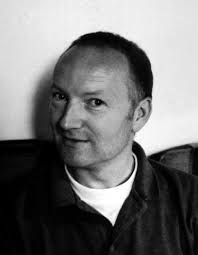
sylviaBorn in Vienna, Sylvia grew up in Australia and after more than 25 years in the Geneva area, is now living in Vienna, Austria. She started writing fiction in 1993, and her poems, articles and stories have appeared in print and on the web. The Past Present, her first collection of short stories, was published in 2000/2001 in paperback and eBook formats by IUMIX, UK. Her second collection of stories, Back Burning, won the IP Picks Best Fiction Prize and was published in 2007 by IP, Australia. Her stories also appear in the charity anthologies 100 Stories for Haiti, 50 Stories for Pakistan, A Pint and a Haircut – True Irish Stories, 100 Stories for Queensland and New Sun Rising: Stories for Japan.

You can connect with Sylvia on twitter, her website, blog or facebook.