I would like to introduce you to our guest author, Avril Joy. With a degree in History of Art and experience as a social worker then a teacher at Goldsmith’s College under her belt, Avril has travelled widely, and it was her experience of working and teaching in prisons which drew her to my attention, as well as her clear gift for short story writing. Avril is a wonderful person and a truly inspiring writer. Her short story, Millie and Bird, won the first Costa Short Story Award in 2012.  You have travelled to India, Kashmir and Nepal. Is travel a key source of inspiration for your work and how does it inform your writing?
I’m not sure about travel exactly, although my travels in India and Sri Lanka do feature quite strongly in my novel The Orchid House, but place is definitely an inspiration for me. For me, an idea for a story or novel often begins with a place and then obviously I have to go in search of the characters. I’ve always loved reading fiction that’s rich in place and atmosphere. I think travel is for the naturally curious and it’s good for a writer to be curious about places and the people who live there. I notice that Asian characters often pop up in my writing. I do love going to new places – I’m off to Venice for the first time soon and will definitely be keeping a journal to scribble down observations and ideas – but I also think that there is a rich source of inspiration to be found in the places where we live.
How did you begin teaching and then writing in a women’s prison, and in what way has the experience affected you as a person?
I began teaching in prison when I came back from my travels. I took a temporary post, just because it was on offer, which turned into a lifetime (certainly in terms of prison sentencing!) commitment. It affected me deeply but it’s not necessarily obvious in my writing, although it’s always there underneath. I’m always drawn to people, especially women, living on the margins, or in their own internal prison. Invisible lives interest me, the lives of those who have no voice. I learned a lot from the women in prison about freedom and survival, about laughter, and about not feeling sorry for yourself. There’s a great deal of pain inside a women’s prison but also a surprising amount of fun and also friendship which I’ve written about in my long short story (on Kindle), When You Hear the Birds Sing. I met the author Wendy Robertson in prison when she was appointed Writer-in-Residence. We struck up a great working relationship and ultimately a lasting friendship. She was the first person to encourage me. She told me I could write and in many ways that changed my life.
What drew you to Literary Fiction in particular?
I think this was simply a result of my life as a reader. I’ve always read and loved Literary Fiction and Poetry, so it was natural for me to write in a similar way.
You won the very first Costa Short Story Award in 2012. What is it about short fiction that many writers often love or fear?
What I love about writing a short story is that it allows you to experiment, to try different voices, to use language not so much as a vehicle for narrative but for its own sake, although simplicity and clarity are what counts. I love the intense nature of the short story and it’s ambiguity – the way you leave space for the reader to bring their experience and imagination to the piece. You have a chance with a short story to make it as perfect as you can. What I fear is that writing which is not good enough will be immediately exposed, it’s a very unforgiving form. Also for me I am often afraid that there isn’t enough of a story there and I’m not good at quirky or different and I can’t really do funny which I think is a real skill. I think perhaps my stories are too quiet for some taste but then those are probably the kind of stories I like to read.
What advice would you give to new writers in terms of publication and entering competitions?
I think competitions are great for getting work published or anthologised, also submitting to magazines and for this reason I feature opportunities for both in my free weekly newsletter which anyone can sign up for on my blog. It’s important to think about the particular competition you are entering or magazine you’re submitting to and to look at what they’ve chosen or published in the past, they often have a house style. Also make sure you follow the rules, but my best advice is to write the story you want to write and try to make it, in Nadine Gordimer’s words, ‘burn a hole in the page.’ The reader has to be affected or moved in some way by your story. Oh yes, I should also say, make the beginning good, draw the reader in. How to do all this? Learn from the best by reading the best.
Your blog posts are informative and inspiring, what have you gained from blogging?
I’ve been blogging for more than five years and in that time it’s given me a great sense of audience and helped develop my writer’s voice. I love that you can just hit publish and your words are out there, and this sustained me when my work was not being published. It’s also been a great place to celebrate mine and others’ successes. Blogging makes you a good editor and if you blog regularly it means you exercise the writing muscle. Also blogging has allowed me to share my experiences as a writer, both the ups and the downs, and maybe, I like to think, help or inspire others – once a teacher always a teacher I guess, it definitely fulfils that need in me.
The new short story collection, The Story: Love, Loss and the Lives of Women: 100 Great Short Stories, edited by Victoria Hislop, is out as an eBook with the hardback edition newly released on 26 September. Can you tell us about the collection?
It’s a wonderful collection of 100 stories written by women, selected by Victoria Hislop. I still can’t quite believe I’m in the anthology along with queens of the short story like Alice Munroe, Helen Simpson, Angela Carter, Katherine Mansfield… the list is remarkable. Of course my inclusion is down to winning the Costa which has given my writing a huge boost and a brought me a whole new audience and I’m very grateful for that. As well as being a cornucopia of stories the collection has a great introduction on the selection process, the nature of short story writing and what makes a good story. I think it would make a thoughtful and lasting gift for readers and writers alike. There is something for every taste here. Although I’ve been reading the collection on my Kindle, marvelling at one brilliant story after another, I’m most looking forward to getting my hands on the book itself in hardback, 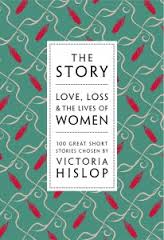 Featuring two centuries of women’s short fiction, ranging from established writers like Alice Munro and Angela Carter, to contemporary rising stars like Miranda July and Chimanda Ngozi Adichie, this is the biggest and most beautiful collection in print today. Handpicked by one of the nation’s favourite novelists, Victoria Hislop – herself a great writer of, and champion for, short stories – and divided thematically into collections on love, loss and the lives of women, there’s a story for every mood, mindset and moment in life. CONTRIBUTORS INCLUDE: Margaret Atwood, Angela Carter, Emma Donoghue, Daphne Du Maurier, Stella Duffy, Susan Hill, Doris Lessing, Penelope Lively, Katherine Mansfield, Hilary Mantel, Lorrie Moore, Alice Munro, Ali Smith, Muriel Spark, Alice Walker, Jeanette Winterson, Virginia Woolf. Special promotional price to celebrate the short story (limited period).
Avril’s collection of short stories, Millie and Bird and Tales of Paradise, will be published in 2014 by Iron Press. You can find Avril at www.avriljoy.com
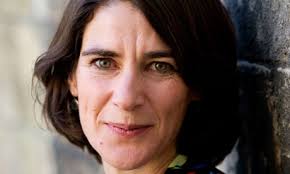 ‘A story needs rhythm. Read it aloud to yourself. If it doesn’t spin a bit of magic, it’s missing something.’ Esther Freud
 ‘Always carry a notebook. And I mean always. The short-term memory only retains information for three minutes; unless it is committed to paper you can lose an idea for ever.’ Will Self
 ‘I always have to know my characters in a lot of depth–what clothes they’d choose, what they were like at school, etc . . . And I know what happened before and what will happen after the part of their lives I’m dealing with.’ Alice Munro
 ‘Never use a metaphor, simile, or other figure of speech which you are used to seeing in print. This sounds easy, but in practice is incredibly difficult… Common phrases have become so comfortable that they create no emotional response. Take the time to invent fresh, powerful images.’ George Orwell
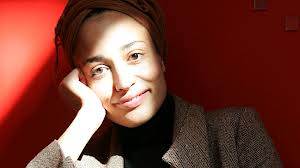 ‘Protect the time and space in which you write. Keep everybody away from it, even the people who are most important to you.’ Zadie Smith
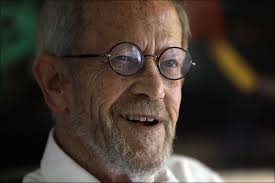 ‘Keep your exclamation points under control. You are allowed no more than two or three per 100,000 words of prose. If you have the knack of playing with exclaimers the way Tom Wolfe does, you can throw them in by the handful.’ Elmore Leonard
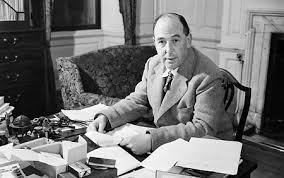 ‘Don’t say it was delightful; make us say delightful when we’ve read the description. You see, all those words (horrifying, wonderful, hideous, exquisite) are only like saying to your readers Please will you do the job for me.’ CS Lewis
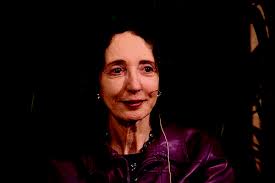 ‘Be daring, take on anything. Don’t labor over little cameo works in which every word is to be perfect. Technique holds a reader from sentence to sentence, but only content will stay in his mind.’ Joyce Carol Oates
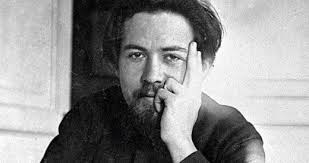 ‘My own experience is that once a story has been written, one has to cross out the beginning and the end. It is there that we authors do most of our lying.’ Anton Chekhov
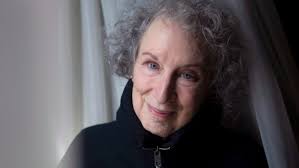 ‘Don’t sit down in the middle of the woods. If you’re lost in the plot or blocked, retrace your steps to where you went wrong. Then take the other road. And/or change the person. Change the tense. Change the opening page.’ Margaret Atwood
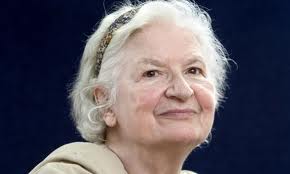 ‘Open your mind to new experiences, particularly to the study of other people. Nothing that happens to a writer – however happy, however tragic – is ever wasted.’ PD James



 F C MALBY
You must be logged in to post a comment.