WordPress sends these milestone reminders, and it’s often a good time to take stock and realise how far you’ve come as a writer. I began writing my debut novel, Take Me to the Castle, in 2007. It was published in 2012 and won The People’s Book Awards in 2013. I began writing short stories with several going on to be published in literary journals. Some won writing competitions and I was inspired by so many other writers and their stories…Alice Munro, Lydia Davis, Hilary Mantel, David Gaffney, Raymond Carver, Franz Kafka, Anton Chekhov, Ernest Hemingway.
It’s been a journey! Eight books (including two novels, two short stories and work in four anthologies) later and I still get a buzz from writing down the first words of a story, a poem, or a novel. I don’t know where the last 12 years have gone, but it’s been quite a journey. Writing, the grit required to keep going and hone your craft, along with the journey to publication, requires motivation and determination. It demands new learning and a level of discipline, but it’s also a lot of fun. The creativity, the process, it’s all part of the draw to write.
I’ve learned that you will always surprise yourself, and others. You’ll never quite know where you are going. This applies even to the most tightly planned plot! You can read more about planning, plot and structure in these posts:
I get asked lots of questions on where I find my ideas and how I write. It’s different for poetry, short stories, flash fiction and novels. Novel writing is a marathon, not a sprint, but it also allows you more space for a story to unfold. Short stories and flash fiction, in particular, are less forgiving and no word can be wasted. You need to grab your reader in just a few hundred words, or more, or less!
I love writing. I love it as much now as I did 12 years ago. Blogging has also been a really helpful way of sharing my journey and what I’ve learned. I’ve been able to encourage new writers, connect with readers, network with people, interview authors and be interviewed. Thanks for joining me on the journey, whether you’ve just arrived (welcome!) or if you’ve been here a while. Drop any questions in the comments.
F. C. Malby writes novels, short stories, and poetry. She has travelled widely, teaching English in the Czech Republic, the Philippines and London. She is a qualified teacher and a photographer, and is currently studying for a Masters in Theology. Her debut novel, Take Me to the Castle, set in early 1990s Czech Republic, won The People’s Book Awards. Her second novel, Dead Drop, set in Vienna, is a lyrical, daring thriller about the undercover world of art crime. Her debut short story collection, My Brother Was a Kangaroo, includes award-winning stories published in literary magazines and journals worldwide. Malby’s poetry has appeared in journals, magazines and podcasts, and her second collection of short stories, A Place of Unfinished Sentences, includes stories that have been published in anthologies with Reflex Press and Pens of the Earth, and placed in competitions. She is a contributor to four print anthologies (the forth is forthcoming with Pens of the Earth in Oct 2024). She is also a contributor to anthologies published by Reflex Press, Unthank Book and Litro. Her short fiction won the Litro Magazine Environmental Disaster Fiction Competition, and was nominated for Publication of the Year in the Spillwords Press Awards. Her stories have been widely published both online and in print. Her website is here.
About A Place of Unfinished Sentences, by F. C. Malby
This second collection concerns the sentences we leave unfinished, questions surrounding sudden loss, a decision on a train. It covers themes of relationships and memory, exploring what happens when memory fails. It looks at beginnings and endings, weaving through themes of generations, family, uncertainty, and what happens when experiences change us.
From A Place of Unfinished Sentences
The woman sitting opposite me looks like the guy I used to date. Her face is angular, her eyes fixed to the page of a book I cannot see. I wonder why she reminds me of him. The door clunks back into the frame of the train’s carriage. A thud as it stops makes me jump, and a man with a trolley walks through and scans the seats.
“Tea? Coffee?” he asks, glancing at the ex-boyfriend lookalike.
“Neither,” she says, her eyes remaining fixed on the pages in her hands.
He looks at me. “Coffee, black, no sugar,” I say, without waiting to be asked. He lowers his shoulders, exhaling slowly as he pours me a cup from a large metal coffee pot. Steam rises from the spout, the scent of it licking at my nostrils. Saliva fills my mouth in anticipation.
“Snacks,” he says, almost as a statement. I can hear my Grandmother telling me that it’s rude not to form full sentences. Nobody is in a full sentence mood this morning. The trains have been delayed by three hours because of a ‘body on the line’ and the weather is damp and oppressive. Normally, the announcement is ‘leaves on the line.’ This morning it’s a body. An elderly lady told me it was a young man. Such a waste of a life, she had said with a tone of disgust, eyebrows raised, as though taking your own life was comparable to a child throwing away a gift they no longer wanted. I had started to explain that you don’t know what’s going on in someone else’s life, but she walked away mid-sentence.
London was a place of rush, a place of interchange, a place of unfinished sentences. The young boy’s life might have been an unfinished sentence: a friend in a rush, too busy to hear that he had felt low for months; an interchange of parents going to and from work, passing like ships in the night; a sentence about feeling hopeless, left unfinished.
As an author, the question I get asked most often is, Where do you find your ideas? It’s a notoriously difficult question to answer and most authors struggle to voice, or even to know, where they find their ideas. But, I’m going to give it a try! The short answer is that it comes from the strangest of places, and I need to begin with the adage that everyone is different.
Where do you find your ideas?
The most important important advice I could give any aspiring author is, be an observer. Watch people, observe their movements, eye contact, body language, look at what they don’t say. Only 7% of communication is verbal, in other words through what people say, which means that a whopping 93% of communication is nonverbal – body language, gestures, tone of voice, facial expressions, body posture. A person’s body language is a part of communication and reflects emotions and moods.
Be an observer.
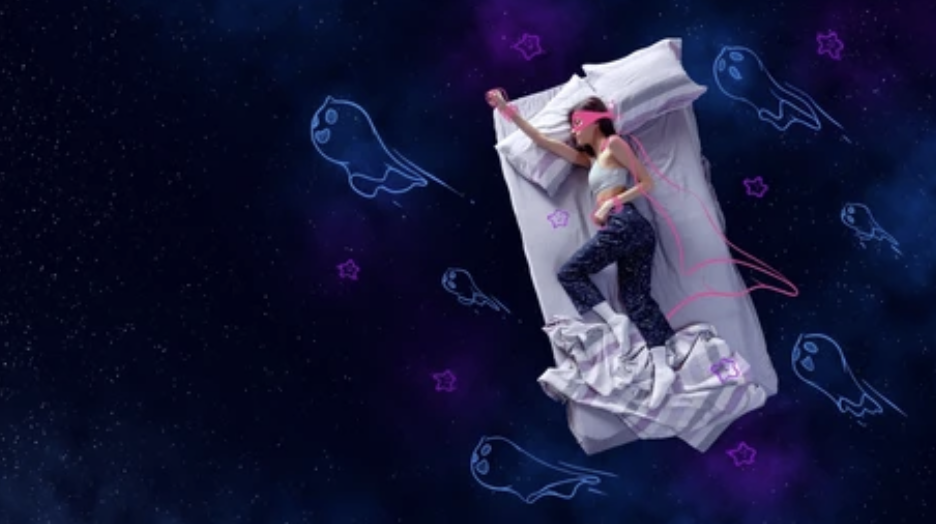
Dreams are often where ideas form, especially in those liminal spaces between the states of being awake and asleep. New neuroscience research from the Paris Brain Institute shows that the phase before we fully fall asleep is hugely creative for our brains. American Inventor, Thomas Edison, used partial naps while holding spheres in his hands to harness his inspiration. The spheres would fall as he fell asleep and wake him at the right time to capture his sleep-inspired ideas. Physicist Albert Einstein and artist Salvador Dali also believed in short bursts of sleep to boost creativity. The experiment, which is reported in the Science Advances article, Sleep onset is a creative sweet spot. Although sleep is often seen as a waste of time and productivity, it is actually essential to our creative performance.
The phase before we fall asleep is hugely creative for our brains.
Imagine that you are taking a photograph of a moment, a snap shot in time. I often walk or drive past a scene, usually of two or more people talking, sometimes a lone person doing something interesting or curious, and I wonder what they might be saying or thinking, and how they might be feeling. Authors are endlessly curious and out of this curiosity often comes new ideas for stories. Imagine taking a photograph of the scene. What would you be wanting to know as a viewer? Who are these people? Where are they from? What are they doing? What is the emotion underlying the event? Could something else be happening?
Imagine that you are taking a photograph of a moment.
Use a prompt – an image, a poem or news article. What ideas does this conjure up in your imagination? Is there big news event with an image of a person or a story about them? Can you find an offshoot from this? Let’s have a go….this is an image from a BBC news article on inflation. There is a woman holding a pizza in a supermarket. What is she thinking (inflation aside!)? What else might be going on in her life? Does she live alone or with a family or a partner? What does her body language convey? Is this a local shop or is she passing through, or escaping something? So many ideas can come from just one image that are entirely unrelated to the image or event. Sometimes a visual cue helps.
Sometimes a visual cue helps.
Have you had an interview or an interesting conversation or event recently? Was there a person who stood out or a part of the dialogue that stayed with you? This is fiction, so the details will need to be changed, but what can you extract from what was said? Did it make you think of something else? Sometimes writing down ideas in a journal can help when you sit down to write. I sometimes do this, although the best ideas tend to stay in your mind.
Taylor is a black, fun-sized Chicago native currently living in Cincinnati, Ohio. She received a Bachelor’s Degree with Honors in English and a Master’s in English, Creative Writing from the University of Alabama, Birmingham. She is now a second year Creative Writing PhD student and Yates scholar at the University of Cincinnati. Her work appears, or is forthcoming, in New Ohio Review, Borderlands Texas Poetry Review, Jellyfish Review, Iron Horse Literary Review, Another Chicago Magazine, Empty Mirror and others. She has been nominated for two Pushcart Prizes, and Best New Poets 2020.
1. How did your writing journey begin and did anything in your life particularly influence this?
I’ve been writing since I was much younger, probably in my early teens. I used to write poems in the middle of my diary entries, so I always had a love for poetry. When I went to college at the University of Alabama, Birmingham, I was an English major with a Creative Writing concentration, but back then I focused more on Fiction. I was still writing poems, but I wasn’t really studying and reading it outside classes. In my senior year, I took an Ekphrastic Poetry class, and that was what caught my attention. Looking back, I was in a really terrible romantic relationship at the time, and my father was starting to become more noticeably abusive around that time, so I think poetry saved me during a really hard time in my life. After that class I switched my concentration to Poetry for my Master’s degree, and I’ve been dedicated to writing it ever since. Of course, I branch out and write other things, but writing poetry is essentially second nature to me now.
2. What have you learned from your Bachelor’s and Master’s degrees in English, and has this changed the way you write?
Since my Bachelor’s degree was so heavily focused on fiction, my poetry is often narrative-driven and it’s really important for me to get the details right. I’m almost always trying to tell a complete story within a poem and to tell it so vividly that my reader is right there with my speaker. When I was writing poetry during my Master’s degree, I was still finding my voice as a poet. Those two years were me figuring out how to make a poem as strong as I possibly could. How can I make these line breaks have more impact? How can my verbs do more work, so I can then spend less time describing things? How do I write about the subjects things with a fresh twist? My Master’s was really a two year study in making my language come alive on the page.
3. What is the area of study for your PhD?
I am currently pursuing a PhD in Creative Writing at the University of Cincinnati, focusing on poetry.
4. Can you tell us a bit about your poetry and your creative non-fiction work?
Lately, I’ve been writing more heavily about race and thinking about what it means to be a Black woman in this world. My first completed poetry manuscript touches on themes of ancestry and black womanhood, and I believe those threads run through everything I write, and will continue to be currents running through my work throughout my career. The poetry that I’m writing now in this moment is essentially a part of this larger project, to write the kind of poems I wish I had read when I was a younger Black girl. I think I would have come to poetry much sooner if I was reading poetry in which I could see myself. So the poems I’m writing now are about being in love, having a difficult family, loving my body, and experiencing racism. My creative non-fiction work has been a space where I’ve given myself permission to write about some of the more traumatic things in my life, such as my alcoholic father and body dysmorphia. I want to eventually complete a collection of essays looking at all of the things that have shaped me and made me the woman and writer I am today, and I think a big part of that is looking at the obstacles I’ve overcome along the way.
5. How has being nominated for two Pushcart Prizes and Best New Poets 2020 affected your profile as a writer?
Being nominated for two Pushcarts and for Best New Poets was such a shock. I’m not sure if it has necessarily affected my profile as a writer, but it did wonders for my own personal view of my writing. It’s been a little over a year now that I’ve started submitting my work, so to get those nominations right away confirmed that I was doing something right. This time last year, I was getting ready to start a PhD program with writers who were older than me, more accomplished, had awards, books and tours. I was joining the program with only a handful of publications to my name. I know that playing the comparison game is never a good idea, but impostor syndrome was very real. Those nominations were like a voice that said, “keep going,” during a time when I wasn’t sure I belonged in this world.
6. What advice would you give to new writers?
Write about what matters to you. There is no right or wrong way to write a poem. Don’t just read poetry, read things outside your genre, outside of your interests. Always shoot for the stars, you miss every shot you don’t take!
7. Who or what are your inspirations?
This is such a hard question because there are so many writers publishing some really amazing writing. One of the writers who completely changed my life was Erica Dawson. I was introduced to her during my Master’s and that was the first time that I realised I could write about what mattered to me. I could write about being black, I could write about my grandmother, I could write about getting my hair done. I also admired the way Erica wrote in form, and I’m now a formalist at heart myself. She definitely changed the entire landscape of what I thought poetry could be for me. Danez Smith is another poet who continues to stun me with the way they use language (Danez is non-binary). Their poetry manages to be joyous even while being about heavy subjects. They have a gift for rhythm, for music. They put words to feelings that I never knew I had. I am always connecting to their work and feeling seen in their work and that’s so important to me. Two other really incredible Black female poets that come to mind are Ashley M. Jones and Tiana Clark. Ashley is unapologetic in the way she writes about race and blackness and it’s so admirable. Tiana transports me into another universe every time I read her work.
8. This is a difficult but necessary question – How has being Black affected your life?
I would say that the area that is probably most affected by my race is education. I didn’t have teachers who looked like me until I got to college. The texts I read throughout high school were mostly by white, male authors. My knowledge of black history is nowhere near where it should be, and I’m doing the work of catching up on my own, and even writing about those gaps in education in my poetry. In my Catholic high school and middle school I experienced racism from my teachers. An 8th grade teacher equated sounding unintelligent with “talking black.” In high school, black students were drug tested far more often than white students, and the school tried to penalise students with false positive test results. When I lived in Birmingham, I was called a “nigger” at the gas station the morning after Trump was elected president. When I was dating a white man, I ended the relationship because I didn’t feel like he would fully understand my position and the position of our children in a world like this. In the world of academia, I often have to be twice as impressive as my white peers and counterparts. I’m fortunate to be on a PhD course where I have other women of color as peers, but I know that other PhD courses aren’t as diverse as mine. I worry about what life may be like in the future if I work in academia, and if the environment will be one in which I’m constantly fighting to prove my worth and be heard. I go back and forth on whether I want to bring children into this world. Just within the past few days, the #PublishingPaidMe hashtag has put a spotlight on the disparities between how writers of colour and white writers are paid for their work, which has been a little disheartening to see. It bleeds into everything. But I’m so proud to be Black. I love being Black. I wouldn’t change it for anything.
9. Can you recommend any good literary journals run by Black editors or Black writers that we can read, support and follow?
A poet I follow on Twitter, Natalie Eilbert, compiled a really wonderful list. I would suggest Borderlands Texas Poetry Review, Fiyah Lit Mag, The Hellborne, and Kissing Dynamite, to name just a few.
I read so many pieces of writing advice about planning your work, plotting and figuring out each chapter before you begin but I would like to propose just diving in. Some of my best work has been a blind journey into a world where there is no clear plot or outcome from the beginning, and in many ways it provides a freedom to explore and to let a story unfold.
“A writer who waits for ideal conditions under which to work will die without putting a word on paper.”
I think he had a point in that we often wait, procrastinate, ponder, ruminate. Add any other word that fits and you have a writer who is too afraid to begin. The problem is that time is short and every day that passes is an opportunity for you to delve into a new world of words. I say this to encourage rather that to thwart the plans of those who truly like to plan. But I know that there are those who also wonder whether they can write if they don’t have a plan, an MA in Creative Writing, a bestseller to their name or any other reason to add to the list. Diving in can bring with it a freedom from the confines of your own expectations.
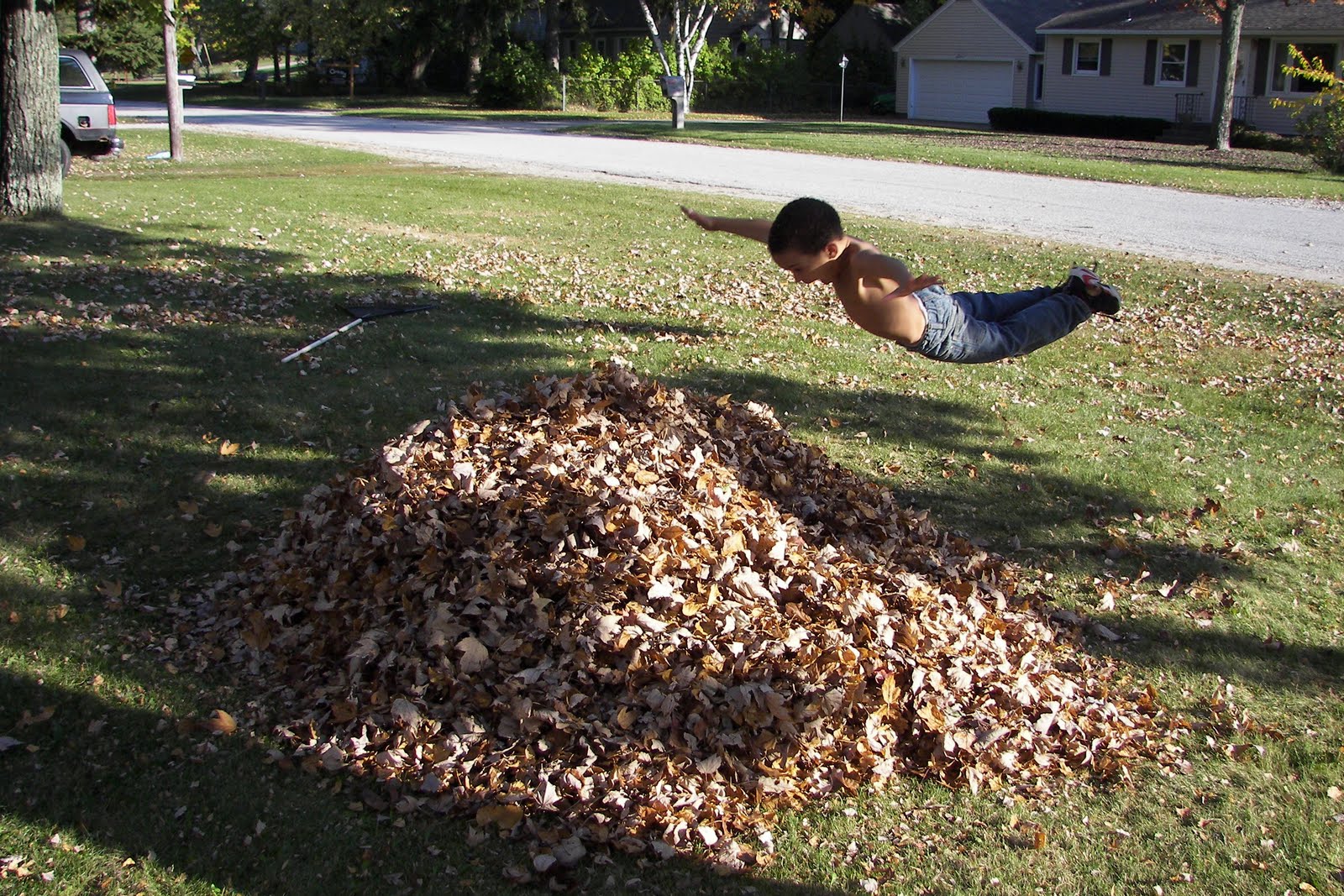
Imagine diving into a huge pile of leaves. There is something in us as adults that stops us, tells us it’s not the done thing and that it’s for children. Imagine the freedom of just plunging onto a freshly swept pile of autumn leaves. Then imagine putting fingers to the keys or pen to paper and writing one word at a time until you find yourself in a world entirely unexpected and intriguing, a world where the rules have changed and where new characters appear. For me this is part of the excitement of writing, and part of the freedom.






 F C MALBY


You must be logged in to post a comment.