Poems Published in Cable Street Press: Issue 9

Four of my poems have been published in the marvellous Summer Edition of Cable Street Press, Issue 9.

A word from the editor on Issue 9:
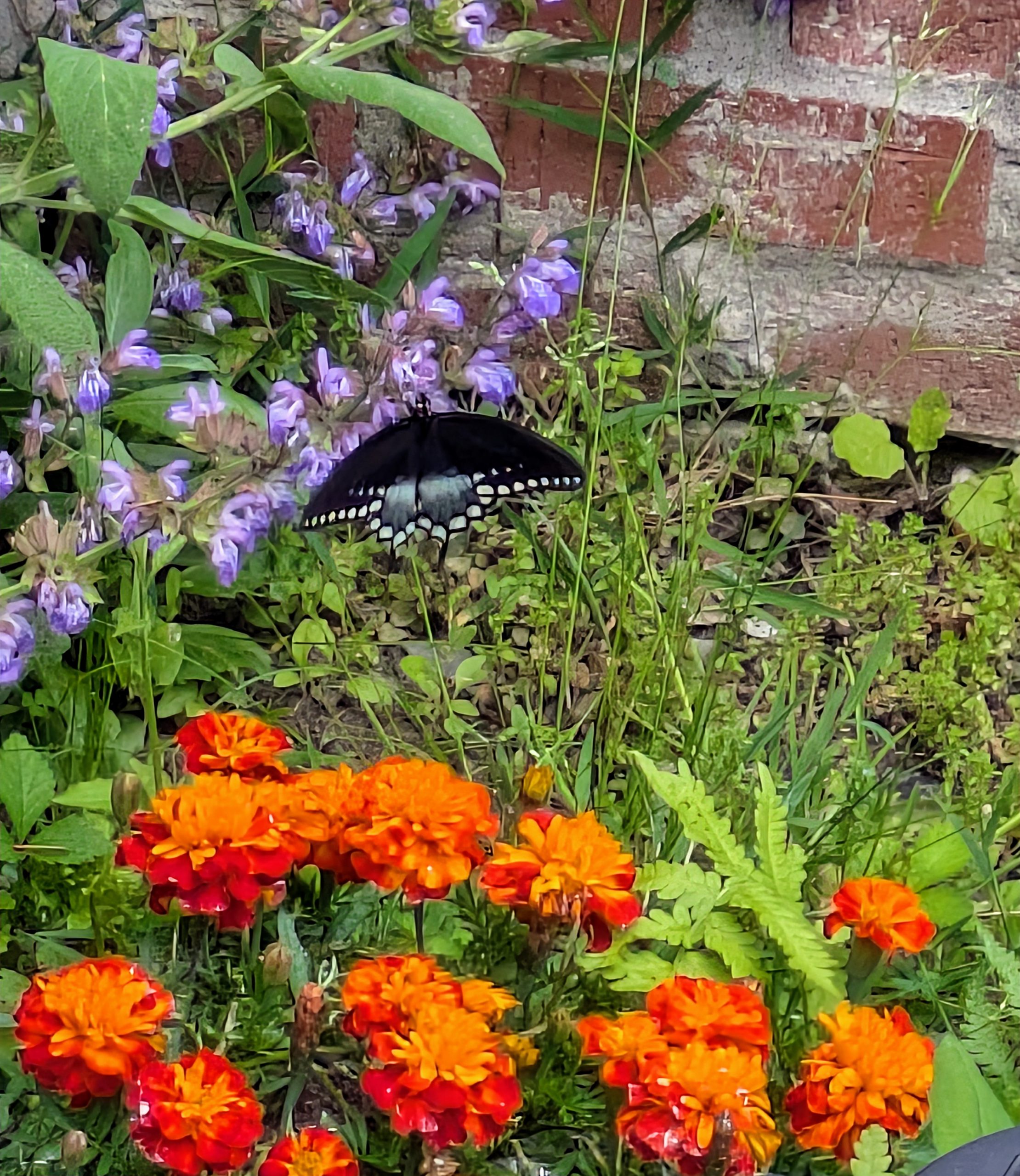
Tiger Swallowtail Butterfly, Sage Flowers, Marigolds.

Bastille Day has come and with it, the explosion of writing and art that is the latest Cable Street Issue. I’ll be frank with you—every issue blows my mind. I see all the pieces one by one and they are surprising, delightful, shocking, thought provoking. But then they all come together, and each and every time, I’m moved by the web of art in conversation that is created...And these are only some of the many treasures of this issue. Storm into this tower at your own speed, making sure to check out the poetry of F.C. Malby and Roberta Schultz…There is plenty to enjoy on this Bastille Day weekend.

— Hardy Griffin for the editors

Poems by F C Malby

My poems, Crossing, I Have Already Gone, Moths, and Where Have All the Birds Gone feature a range of themes, including the contentious issue of immigration. Through Crossing, I wanted to give a voice to the voiceless; this is a particularly exigent issue.

Crossing

I line up with other bedraggled bodies,
some look as though they might be dying,

others carry the weight of grief. I watched
a child slip away while we waited yesterday,

saw the life leave its lungs, the mother clung
to its body, tears wet the child’s face. It’s not

pretty, it’s worse than they tell you. I don’t
know whether we will make it or whether

we might be taken back. I don’t speak
the language, few of us do. It matters.

The look on the guard’s faces is difficult
to read, tells me they’ve seen so much

of this. None of us know what to do or
what’s next. Clothes dry on a makeshift

line between tents, next to plastic bags
of what we have left after the police take

anything else. Some of us camp under
bridges, avoiding the boulders that stop

us settling on softer ground. We wait for
the next boat, for a better life. The

mother is still holding the child. We
wait. Some of us won’t make it.

Read my other three poems here.
Exciting News: Four Poems to be published in Cable Street Literary Journal

I’m thrilled to have an acceptance of four poems to be published in International Literary Journal, Cable Street, in July. They only publish work three times a year, so I’m happy that my poems have found their way into this wonderful journal. I don’t know about you, but I love a backstory, so I thought I’d share a little about the publishers ahead of the publication.

CABLE STREET


“We are, first and foremost, an international, online journal fostering exchange among writers and readers of many languages. We post new issues three times a year: on or about May 1, Bastille Day, and Thanksgiving.

Our name reflects the essence of our journal: a festival of communication across nations and traditions, a chance to wander the byways of art from many hands and many lands. 

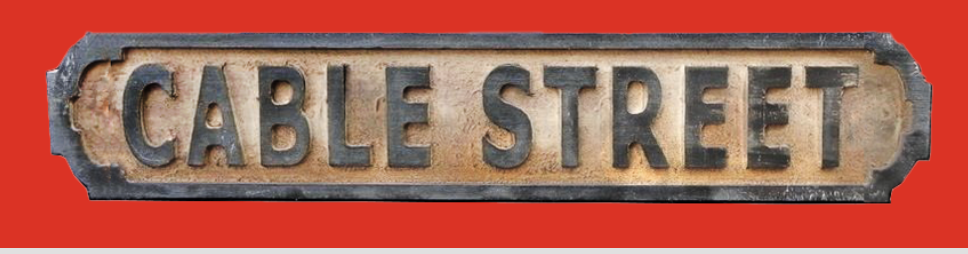
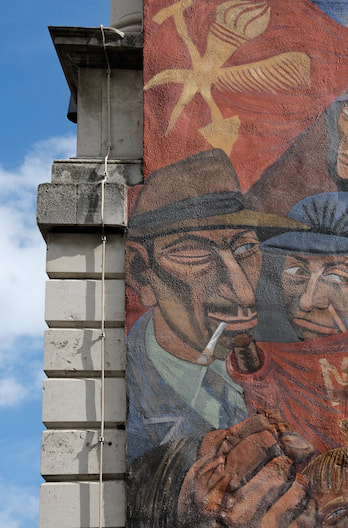
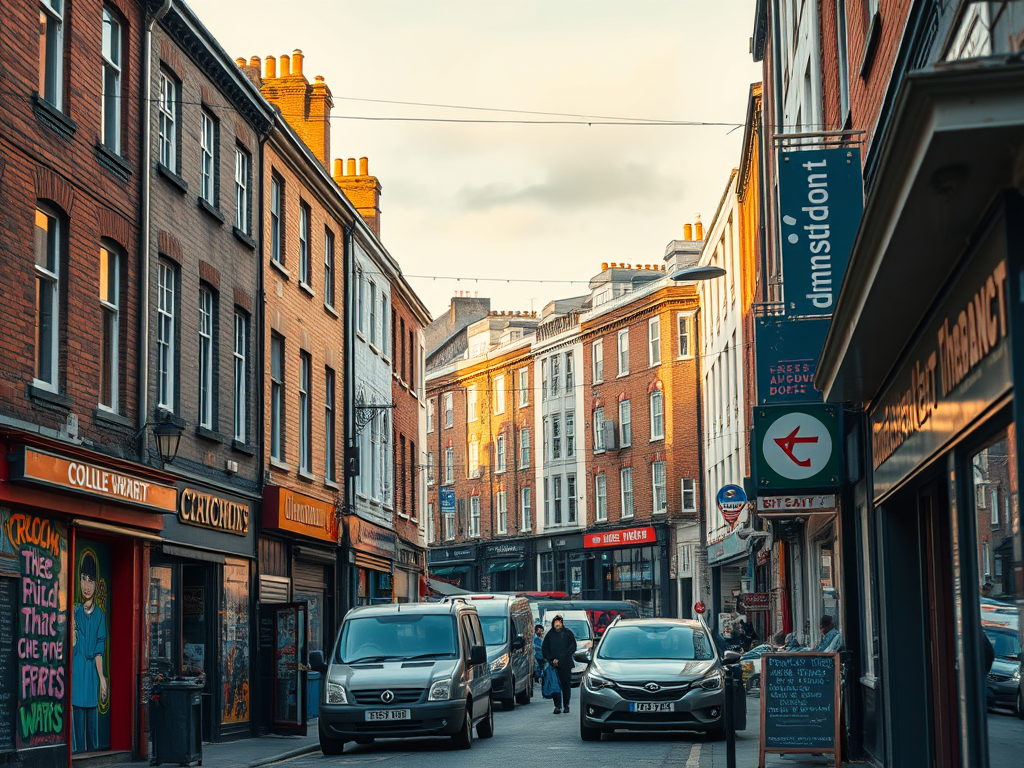
Cable Street is a road in London’s East End. It takes its name from the ships’ cables once made there—cables that traveled the world on British fleets. A place enlivened, then and now, by the dozens of languages spoken by sailors, traders, and immigrants. A place where, in 1936, a coalition of antifascists took a stand against the British Union of Fascists, turning back the tide of repression and ethnocentric dominion.

Like our namesake thoroughfare, Cable Street embraces the human family in its multitude of cultures.

Photo credit: Cable Street Journal, Cable Street, London

More news in July!

Poetry Publication

My poem, She Laughs with the Breeze, has been published today at Fifty Word Stories:

She laughs with the breeze
as it sweeps through the town,
men — liquor-fueled and free
with their words — lean on the
bar as the music plays…

You can read the rest of the poem over at Fifty Words. Leave a comment and let me know if this inspires you.

Book Pile

This morning, I’m dipping into some poetry and short stories from a few of my favourite authors. The advice I was given when I began writing was, read as much has you write. Over the years I’ve come to see the importance of this and the need for balance.

Ian McEwan, in an interview, said that he reads for several hours a day and it’s good to read a range of fiction, especially outside your genre. Although, today I’m focusing on poetry and short fiction. I’ve written quite a bit of both, recently, but I haven’t had time for much reading. I’m currently studying for a Masters in Theology, so it’s a juggling act. I finished ‘Reservoir 13’ by Jon McGregor this week. I need some time before I review it, as I have so many thoughts on it.

Today, I’m looking at these beauties by Claire Keegan, whose book, ‘Small Things Like These,’ was my favourite read of 2022. I then read ‘Foster,’ which was also an intensely beautiful, if a little melancholic, read. I’ve reviewed it on this blog. These are stand alone short stories, The Forester’s Daughter and So Late in the Day. I also want to read Alison Moore’s Eastmouth and Other Stories. I really enjoy her short fiction and her novels. One of my favourite stories for sheer tension and beautiful writing was ‘When the Door Closed, It Was Dark,’ originally published by Nightjar Press and in the collection, Pre-War House and other Stories, but Salt Publishing.

Wendell Berry’s poems are meditations on relationships and belonging, and Daunisha Laméris’ poetry is vibrant and atmospheric. I haven’t started Homesickness by Colin Barrett, but I enjoy his short fiction. His newest book, Wild Houses, will be published by Jonathan Cape in 2024. Now, time to read…..

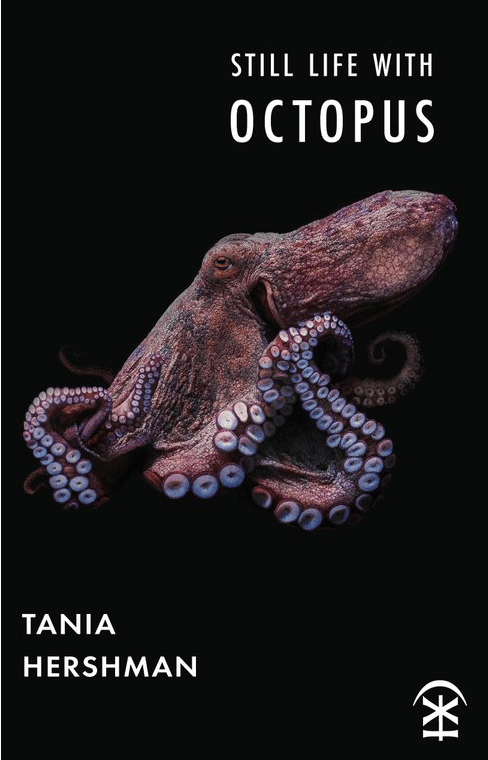
Review: Still Life With Octopus, by Tania Hershman

Tania Hershman’s second collection of poems, published by Nine Arches Press, explores the boundaries between animal and human, the worlds in which they live and the spaces they inhabit. Tania has this innate ability to find words that rest in the liminal spaces, almost like entering a Moroccan Souk, travelling through mazes of interlinking pathways, where you find intriguing treasures around each corner. It’s a journey into the unknown, the unexplored, and is a place that’s hard to leave, where the things you discover will remain in your mind long after the poem ends. It’s a magical, mystical experience.

‘What if you didn’t know what night was, landing here. What if you’d never heard of light.’

This enticing opening line, a questioning of reality, sets the tone for what is to follow. We explore time and space, the space within which and octopus can enter, remain, shape shift or escape. These poems explore the edges of mind and body, and the connections between the two in ways that will leave you resting on a particular word or phrase. She challenges our ideas of reality and meaning, our thoughts and feelings.

‘And what if the octopus could talk. And what if they turned to us and said, Enough with all the jars, and the tests of what we can get into and get through. You’ve seen what we can do.’

Each poem shifts the way an octopus changes its colour, reflecting its mood, yet there is a thread that connects many of the poems – the nature and shape of the heart, all that is hidden, the confines of space and the way that some things need to be released, or remain hidden.

‘And the body, too, has things it will never tell.’

The indefinite changes of the octopus are mirrored in the shifting of poems across the pages. There is something almost tidal about the ebb and flow of patterns. That the octopus is able to escape from a closed jar with such ease engages the reader with the idea that words can change and move within the confines of the structure of a poem. The fluidity of the words aid the journey as you travel through the pages.

I worry about where my heart is now, did it even reach you? Let go, whispers the octopus in my chest. These things are not in your control.’

The title poem, Still Life With Octopus, made me catch my breath, the words, ‘let go’, echoing through my mind. There is a literal and metaphorical letting go of expectations and of the boundaries you thought you understood. She creates a freedom with words and worlds where anything seems possible, exploring new possibilities and leaving the reader to ponder where the journey will take them.

A gifted writer and a wonderful short fiction teacher, her skilful mastery of words and her eye for the unseen reaches new heights in this stunning collection. With an extensive background in Science, including an MSc in Philosophy of Science, Tania’s research naturally seeps onto the page and into the words and worlds that she creates. This book is a thing of beauty; it’s a pure treasure and a collection that you will want to re-explore again and again.

Tania Hershman’s second poetry collection, Still Life With Octopus, will be published by Nine Arches Press in July 2022 and her debut novel, Go On, by Broken Sleep Books in Oct 2022. Her poetry pamphlet, How High Did She Fly, was joint winner of Live Canon’s 2019 Poetry Pamphlet Competition and her hybrid particle-physics-inspired book ‘and what if we were all allowed to disappear‘ was published by Guillemot Press in March 2020. Tania is also the author of a poetry collection, a poetry chapbook and three short story collections, and co-author of Writing Short Stories: A Writers’ & Artists’ Companion (Bloomsbury, 2014). She is co-creator of the @OnThisDayShe Twitter account, co-author of the On This Day She book (John Blake, 2021), and has a PhD in creative writing inspired by particle physics. www.taniahershman.com