Short Story News

After a break from blogging, I’m back with some short story news. After 8 years in Vienna, Austria, I am now back in the UK and a collection of my short stories is due to be released soon as an anthology. I’m really excited about the collection, which includes many stories published in literary magazines, and several anthologies as stand alone stories.

short-story

The other news is that my story, Lines in the Sand, will be published by Unthank Books in Unthology 8 in November. My work will be published alongside some wonderful writers, so I am thrilled to be a part of this publication.

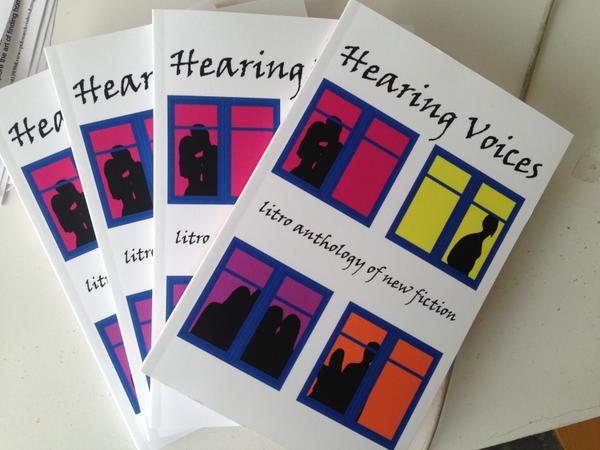
litro anthology

And one of my stories has gone into this wonderful collection, Hearing Voices, which will soon be published by Kingston University Press. It includes work by Pulitzer Prize winner, Anthony Doerr and is an exciting mix of stories from locations as far flung as Ithaca, Nairobi and the surface of the moon!

Thank you for all of your comments and interest in the blog.

Interview with Author and 1000words Editor, Natalie Bowers

100words

I met Natalie when my short fiction piece, North Norfolk Coast, was published online in 1000words at the beginning of July. 1000words publishes flash-fiction of up to 1000 words in length, written in response to an image. I have been impressed with the site and the quality of the work for a while. Natalie’s response to my submission was really professional and friendly, and I have enjoyed reading some of her own fiction (more on her work at the end of the post). I was thrilled when she agreed to an interview, so thank you for joining us, Natalie, and for answering some questions that I think authors often ask, or want to ask.

When and how did 1000words begin, and what inspired you to start gathering flash fiction?

1000words began in 2012 as part of the first National Flash-Fiction Day. I’d just finished an online flash-fiction course with Calum Kerr, the brains behind NFFD, who’d said he was looking for people to organise events, online and off. I’ve always had a secret desire to run my own fiction magazine, so this seemed the perfect opportunity to start one. I also love photography, so what better way was there to blend my two main interests and fulfill an ambition than by starting 1000words?

 What is flash fiction, for those who are new to the form, and how is it unique?

There are as many definitions of flash-fiction as there are people writing it, but for me, flash-fiction is simply a very short story. Although at 1000words we accept stories of up to 1000 words in length, I actually prefer reading and writing stories no longer than 500 words. When it comes to flash-fiction I like to be punched in the gut. I like flash-fiction to be short, sharp and to take my breath away.

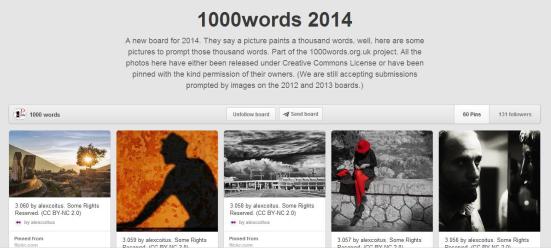
 The idea of using an image prompt from the Pinterest page is very creative. How do you decide which images to use?

I go with my instincts. If I see an image and find myself immediately making up a story, I pin the image. I’ve pinned quite a few of my own photos on our Pinterest boards too, as I always have a camera on me and am constantly on the lookout for story ideas.
pinterest 1000

There is a wonderful range of stories on the site. How do you chose what will be published, and what are you looking for in a piece of fiction?

Again, I go with my instincts. If the opening few lines grab me, I know I’m likely to enjoy the whole piece and will most likely publish it. What I’m really looking for is a consistent narrative voice. It doesn’t have to be a confident voice, but I need to feel as if the narrator is a real person and believes in the story they’re telling. I’m also looking for something special: a surprising simile, a poignant observation, a subverted cliché, an old story told in a new way, or a new story told in an old way. It’s hard to define, but I know it when I see it.

Is there anything that will automatically send work to the rejection pile, and are there any submission tips you can share? 

There’s nothing that will automatically send work to the rejection pile. If I decline to publish a story, it’s usually due to a combination of factors such as an inconsistent narrative voice, unnatural sounding dialogue, cliché imagery or plot or over-explaining (not leaving enough to the reader’s imagination). If a story has a lot of grammatical mistakes and doesn’t look as if it’s been proofread properly then I’ll probably turn it down, as it’ll be too much work to prepare it for publication. One of the biggest turn-offs for me, though, are stories with a twist ending where the twist hasn’t been sufficiently foreshadowed or where it’s been so obviously sign-posted that I’ve guessed it before the end. It’s a difficult balancing act, and one I struggle with myself.

Tell us a little about yourself and your own writing?

I’ve always written stories in my head, if not on paper. I remember writing and illustrating a book for my little brother when I was about ten. It was a complete rip-off of the children’s TV series Jamie and His Magic Torch, but I put my heart and soul into it! In my early teens, I graduated to Star Wars fanfiction, but I didn’t write much at all in my late teens and twenties, I was too busy with school, university, work and then babies – I did science A-levels, a degree in Biochemisty, a PGCE in secondary science education, taught for a few years and then gave it all up to raise two lovely children. I’d had depression and anxiety after the birth of my daughter in 2005, and the doctor advised me to find something with which to occupy my brain. Writing seemed like a good idea, so in 2007, after a bit of dabbling, I took The Open University’s Start Writing Fiction Course, and I haven’t really looked back since. I’ve written quite a few short stories, but flash-fiction is where I feel most at home and I’m pleased to say that I’ve had a fair few pieces published here and there. Right now, I’m working on a collection of summer-themed flash-fictions and in September (if I get enough punters) I’ll be teaching my first ever writing course in the adult education department of my local secondary school. Bit scary!

Are there any short fiction authors who are a particular inspiration? 

Loads! I have a ‘Recommended Reading’ page on my website where I list lots of my favourite authors and stories, but if I had to name just a few, they’d be: Calum Kerr, Nik Perring, Kevlin Henney, Shirley Golden, Cathy Lennon, Lorrie Heartshorn, Angela Readman, Kurt Vonnegut, Raymond Carver, Elmore Leonard, Annie Proulx and Kate Atkinson. These are the people whose work I rush to read. (That was more than just a few, wasn’t it?!)

Friends of 1000words are flashandzoom, Paragraph Planet and Stories with Pictures. Can you tell us a bit about each of them?

flashandzoom is a photography and poetry project run photographer Jaime Hill and a writing pal of mine, Zoe Mitchell. The aim of the project is to provide a fresh perspective to photography and poetry, and to create art that reaches people on a number of levels. It’s been a bit quiet of late, but what they’ve produced in the past has been beautiful.

Paragraph Planet publishes a 75-word paragraph (fiction and non-fiction) EVERY SINGLE DAY of the year, which is an amazing feat. You can also read author interviews and there’s a sister site called ‘Writing Workout’ where writers can do all sorts of writing exercises. I’ve had a couple of pieces published on Paragraph Planet and intend to send more soon.

Stories and Pictures is a site that brings writers and artists together in collaboration. It’s chock-full of beautiful stories accompanied by beautiful pictures. Some of the stories have been inspired by pictures, and some of the pictures have been inspired by stories. I’ve had a story and a photo published there too.
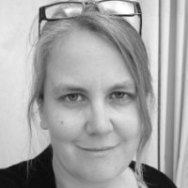
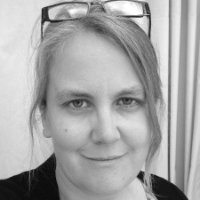
  natalie 2 Natalie Bowers, along with Heather Stanley, is the editor and publisher of 1000words online flash fiction magazine. She lives in Hampshire with her husband, two children and a growing collection of ukuleles. Natalie has a degree in Biochemisty, a PGCE in secondary science education, and has taught Science and A-Level Biology. Her short stories have appeared in print and her flash-fiction has been published in various online journals. You can find a list of her publications on her blog, and she is a fellow Ether Books author. You can follow 1000words on Facebook and Twitter.
 

North Norfolk Coast

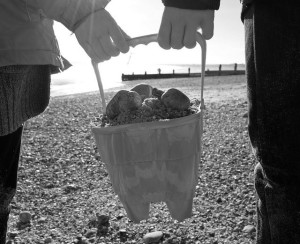
Just as I had posted the previous publication news, I discovered that another of my short stories has just been published online. North Norfolk Coast has been published at 1000 Words:

coast

Extract:

Days were spent with her brother, Donald, on the beaches of the North Norfolk coast, with its wild winds and salt air. They built sand castles before the sun set; before the waves swept over the turrets, dragging them back into the sea. She could hear her father’s voice.

‘You’ll catch your death if you don’t put a sweater on, girl. It’s getting cold.’

He spoke as though he was still fighting from the trenches. She wondered how death could be caught, if at all. The swell of the waves grew with each crash, pounding the shore and devouring the castles with their flags. The moats, engulfed with water at high tide, turned her thoughts to the river, which had burst its banks in an early January. The thought frightened her, perhaps more than her father’s unkind words.

You can read the rest at 1000 Words.

Writing Process Blog Tour

I have been invited by author Rebecca Bradley to answer some questions about my current writing as part of a writing process blog tour. You can read her answers on her blog.

So here are my responses to the following questions:

What are you currently working on?

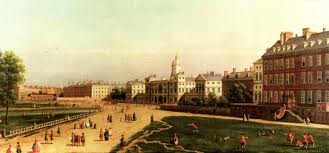
I am working on the ending of my second novel. The first was historical fiction, and set in 1980s/1990s Prague. It was a fictional take on the impact of the fall of communism on the lives of the Czech people, and the ensuing changes. This one is entirely different. It’s a thriller, set in Vienna, and was inspired by a trip to an auction house in the city during the annual Long Night of Museums over a year ago, which you can read about here and here. I stood next to a Canaletto painting, which was said to be expected to fetch ten million euros at auction. So many thoughts surfaced, from who would pay that much for one work of art and where would it end up, to imagine if I just lifted it and walked away with a painting. Crazy, I know, but such is the imagination of a writer! And from there, a whole story began to unravel. Researching art theft has been fascinating and I particularly enjoyed reading insights from the founder of the FBI Art Crime Team, Robert Wittman. His memoir, Priceless, is really worth a read. In it, he discusses how he went undercover to rescue some of the world’s most valuable stolen art treasures, and he highlights the need for greater expertise in the area of the theft of cultural property. Several of my short stories have been published online and won various competitions, so I am also polishing a collection for publication.

canaletto

How does your work differ from others of its genre?

I read a lot of literary fiction and I really dislike all the genre segregation and the debates surrounding what makes good writing. In my view good writing is good writing regardless of its genre. Does the genre categorisation make literary fiction genreless? Nobody seems to agree. I don’t believe that any one type of writing is better than another. I’m happy about the rise of the short fiction form and hope that all forms and genres can be equally celebrated. My current novel is written in the first person, present tense, which many would say is tough and risky, but I think it works and it has certainly held my attention for long enough to continue with the story. It helps the reader to get inside the mind (and fears) of the protagonist, which would be difficult from another perspective. It increases the tension. It is also set in Europe, and in a city I know well enough to include the minute details and the feel of the place.

Why do you write what you do?

Well, you’ve seen the variety – historical fiction, thrillers, short stories – and it probably reflects a highly varied taste in reading, but as far as the current work is concerned I find thrillers really intriguing in terms of what makes them work, especially psychological thrillers. I have been hooked by many great writers over the years and in a way they have fed into what I am currently writing. I also read a lot of short stories and am passionate about writing short fiction. You’ll find several on my website if you are interested.

How does your writing process work?

It always starts with an idea, which is followed by several vivid scenes. Once I can link them together I can start to plot and plan the story. I do quiet a lot of research, despite the fact that I write fiction, and I draft and re-draft, often adding in new scenes or scrapping parts which don’t quite work. You have to be unafraid of being ruthless. Readers will want to stop reading at points where you don’t edit properly. With the first book I cut out an entire family (who really had no place in the story) and several chapters. I once read that if you take every other word out of a text, the story still makes sense. Try it. It will show you how many unnecessary words can be used which could have been cut. Maybe I should reread this post! I work at an empty table with a strong coffee and some water. I don’t always feel hungry when I write, especially when I get caught up in the flow of the story. I take breaks to move around but I try to keep set time for writing and to treat it seriously. I guard my writing time and often snatch evenings to write when I can.

coffee

I’ll now pass the baton on to Fiona Melrose, Michelle Flatley, Colette McBeth and Jon Rance.


Interview with Costa Short Story Award Winner, Avril Joy

I would like to introduce you to our guest author, Avril Joy. With a degree in History of Art and experience as a social worker then a teacher at Goldsmith’s College under her belt, Avril has travelled widely, and it was her experience of working and teaching in prisons which drew her to my attention, as well as her clear gift for short story writing. Avril is a wonderful person and a truly inspiring writer. Her short story, Millie and Bird, won the first Costa Short Story Award in 2012. download (3) You have travelled to India, Kashmir and Nepal. Is travel a key source of inspiration for your work and how does it inform your writing?

I’m not sure about travel exactly, although my travels in India and Sri Lanka do feature quite strongly in my novel The Orchid House, but place is definitely an inspiration for me. For me, an idea for a story or novel often begins with a place and then obviously I have to go in search of the characters. I’ve always loved reading fiction that’s rich in place and atmosphere. I think travel is for the naturally curious and it’s good for a writer to be curious about places and the people who live there. I notice that Asian characters often pop up in my writing. I do love going to new places – I’m off to Venice for the first time soon and will definitely be keeping a journal to scribble down observations and ideas – but I also think that there is a rich source of inspiration to be found in the places where we live.

How did you begin teaching and then writing in a women’s prison, and in what way has the experience affected you as a person?

I began teaching in prison when I came back from my travels. I took a temporary post, just because it was on offer, which turned into a lifetime (certainly in terms of prison sentencing!) commitment. It affected me deeply but it’s not necessarily obvious in my writing, although it’s always there underneath. I’m always drawn to people, especially women, living on the margins, or in their own internal prison. Invisible lives interest me, the lives of those who have no voice. I learned a lot from the women in prison about freedom and survival, about laughter, and about not feeling sorry for yourself. There’s a great deal of pain inside a women’s prison but also a surprising amount of fun and also friendship which I’ve written about in my long short story (on Kindle), When You Hear the Birds Sing. I met the author Wendy Robertson in prison when she was appointed Writer-in-Residence. We struck up a great working relationship and ultimately a lasting friendship. She was the first person to encourage me. She told me I could write and in many ways that changed my life.

What drew you to Literary Fiction in particular?

I think this was simply a result of my life as a reader. I’ve always read and loved Literary Fiction and Poetry, so it was natural for me to write in a similar way.

You won the very first Costa Short Story Award in 2012. What is it about short fiction that many writers often love or fear?

What I love about writing a short story is that it allows you to experiment, to try different voices, to use language not so much as a vehicle for narrative but for its own sake, although simplicity and clarity are what counts. I love the intense nature of the short story and it’s ambiguity – the way you leave space for the reader to bring their experience and imagination to the piece. You have a chance with a short story to make it as perfect as you can. What I fear is that writing which is not good enough will be immediately exposed, it’s a very unforgiving form. Also for me I am often afraid that there isn’t enough of a story there and I’m not good at quirky or different and I can’t really do funny which I think is a real skill. I think perhaps my stories are too quiet for some taste but then those are probably the kind of stories I like to read.

What advice would you give to new writers in terms of publication and entering competitions?

I think competitions are great for getting work published or anthologised, also submitting to magazines and for this reason I feature opportunities for both in my free weekly newsletter which anyone can sign up for on my blog. It’s important to think about the particular competition you are entering or magazine you’re submitting to and to look at what they’ve chosen or published in the past, they often have a house style. Also make sure you follow the rules, but my best advice is to write the story you want to write and try to make it, in Nadine Gordimer’s words, ‘burn a hole in the page.’ The reader has to be affected or moved in some way by your story. Oh yes, I should also say, make the beginning good, draw the reader in. How to do all this? Learn from the best by reading the best.

Your blog posts are informative and inspiring, what have you gained from blogging?

I’ve been blogging for more than five years and in that time it’s given me a great sense of audience and helped develop my writer’s voice. I love that you can just hit publish and your words are out there, and this sustained me when my work was not being published. It’s also been a great place to celebrate mine and others’ successes. Blogging makes you a good editor and if you blog regularly it means you exercise the writing muscle. Also blogging has allowed me to share my experiences as a writer, both the ups and the downs, and maybe, I like to think, help or inspire others – once a teacher always a teacher I guess, it definitely fulfils that need in me.

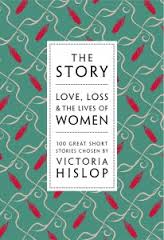
The new short story collection, The Story: Love, Loss and the Lives of Women: 100 Great Short Stories, edited by Victoria Hislop, is out as an eBook with the hardback edition newly released on 26 September. Can you tell us about the collection?

It’s a wonderful collection of 100 stories written by women, selected by Victoria Hislop. I still can’t quite believe I’m in the anthology along with queens of the short story like Alice Munroe, Helen Simpson, Angela Carter, Katherine Mansfield… the list is remarkable. Of course my inclusion is down to winning the Costa which has given my writing a huge boost and a brought me a whole new audience and I’m very grateful for that. As well as being a cornucopia of stories the collection has a great introduction on the selection process, the nature of short story writing and what makes a good story. I think it would make a thoughtful and lasting gift for readers and writers alike. There is something for every taste here. Although I’ve been reading the collection on my Kindle, marvelling at one brilliant story after another, I’m most looking forward to getting my hands on the book itself in hardback, images (9) Featuring two centuries of women’s short fiction, ranging from established writers like Alice Munro and Angela Carter, to contemporary rising stars like Miranda July and Chimanda Ngozi Adichie, this is the biggest and most beautiful collection in print today. Handpicked by one of the nation’s favourite novelists, Victoria Hislop – herself a great writer of, and champion for, short stories – and divided thematically into collections on love, loss and the lives of women, there’s a story for every mood, mindset and moment in life. CONTRIBUTORS INCLUDE: Margaret Atwood, Angela Carter, Emma Donoghue, Daphne Du Maurier, Stella Duffy, Susan Hill, Doris Lessing, Penelope Lively, Katherine Mansfield, Hilary Mantel, Lorrie Moore, Alice Munro, Ali Smith, Muriel Spark, Alice Walker, Jeanette Winterson, Virginia Woolf. Special promotional price to celebrate the short story (limited period).

Avril’s collection of short stories, Millie and Bird and Tales of Paradise, will be published in 2014 by Iron Press. You can find Avril at www.avriljoy.com