F. C. Malby is a novelist, poet and short fiction author. Her debut novel, Take Me to the Castle, won The People’s Book Awards. She is a contributor to four print anthologies, and her stories and poems have been widely published internationally online and in print.
In losing a great man, a human rights activist, a disturber of the peace to some, Nelson Mandela is remembered across the globe as a leader who endured twenty seven years in prison for the sake of his people, a man who fought against injustice and stood for what he believed to be a better way. He became the first black South African to hold the office of President, focusing on the dismantling of apartheid through tackling racism, poverty and inequality. I am reminded, as I read more of his life and his influence and words, that words hold great power in people’s minds and lives, words have the power to influence, to change and to move barriers in our society, our political systems and in our hearts. Words both written and spoken have the power to create change.
In losing Mandela yesterday, I can’t help thinking of a recent loss of a man remembered for a similar struggle, a man whose integrity and perseverance won the hearts of many in a country also affected by great political change and a turbulent history. I am reminded also of the power of his words and his influence. Vaclav Havel died on 18 December 2011: Playwright, essayist, poet, dissident and politician, his prominence as a participant in the liberal reforms of Czechoslovakia in 1968 were followed by his plays being banned during the totalitarian regime. His words continued to hold power through that time and he became president of Czechoslovakia in 1989, becoming the country’s first non-communist leader since 1948.
Both men spent time as political prisoners, incarcerated for standing up against powers that threatened to crush their countries. They believed in justice and equality and had the strength of character and tenacity to keep going in the face of great opposition because they believed in a better future. Both men spoke words that hold great power today, words which helped to shape their society, culture and politics. Their influence in the world and their contribution to their countries cannot be underplayed. In sharing these two incredible lives I want to remind us that the words we read and the words we write can have the power to shape, to heal, and to influence lives, to change the way people think and see the world. With this in mind I want to leave you with some of the great words that have become the legacies of these men.
NELSON MANDELA
“Education is the most powerful weapon which you can use to change the world.”
“It always seems impossible until it’s done.”
“The greatest glory in living lies not in never falling, but in rising every time we fall.”
“I like friends who have independent minds because they tend to make you see problems from all angles.”
“A good head and a good heart are always a formidable combination.”
“A fundamental concern for others in our individual and community lives would go a long way in making the world the better place we so passionately dreamt of.”
VACAV HAVEL
“I really do inhabit a system in which words are capable of shaking the entire structure of government.”
“Work for something because it is good, not just because it stands a chance to succeed.”
“Hope is not the conviction that something will turn out well, but the certainty that something makes sense, regardless of how it turns out.”
“Isn’t it the moment of most profound doubt that gives birth to new certainties?”
“None of us know all the potentialities that slumber in the spirit of the population.”
“The period you grow up in and mature in always influences your thinking.”
There are many writing blogs with an array of articles on different aspects of the craft of writing. I read a range of them and have learned a great deal about writing, publishing, editing and much more. The writing blog WRITE TO DONE is searching for the Top 10 Blogs for Writers in 2013. Edited by Mary Jaksch, Write to Done posts regular articles on writing fiction, copywriting, freelancing, blogging, creativity, and the art of writing. It is an invaluable resource for writers, so if you haven’t yet browsed their pages I would recommend having a look. It will be well worth your time. Their top 10 chosen blogs from previous years have led me to many new and useful blogs.
Those of you who read this blog regularly know that there are a range of author interviews, book reviews, guest posts and writing posts, and despite advice from some bloggers not to blog about writing, they are precisely the posts which receive the highest number of hits on this blog. The difference between a post on writing and a book review, or a post on something less related to fiction is surprising. Many writers obviously read posts about writing, although some prefer not to, and readers are also curious to know about the inside workings of the craft of writing. Give me someone who loves Formula One racing who wouldn’t want to step inside a Ferrari or a Lotus, or a person who loves classical music who wouldn’t want to sit in an orchestra pit and watch the conductor at close range, and the bows of the string section moving in time to the conductor as he sets the tempo for the sound. Are you with me?
So, now is the time to vote for any writing blogs which have inspired you over the year. Here’s how you can nominate a blog:
How to Nominate Your Favorite Writing Blog:
→ Nominate your favorite blog in the comment section.
→ You have only one vote (only your first will be counted).
→ Please include the web address of the blog.
→ Explainwhy you think the blog is worthy of winning this year’s award.
To make the cut, a blog must be nominated more than once. Nominations must be received by 12th December, 2013.
The top 10 list will be incredibly helpful for other writers once it is compiled. Here is a brief list of some of the blogs which have inspired me.
http://annerallen.blogspot.co.uk which is written by Anne Allen and Ruth Harris. It is one of Writer’s Digest’s 101 Best Websites for Writers and is full of honestly and humour, and is really informative.
http://www.jonathanpinnock.com This blog, Jonathan Pinnock’s Write Stuff has a great range of information and thoughts on writing and, again, is very honest. He also covers short stories, which keeps me happy.
http://www.claire-king.com/blog Claire’s advice and insights are to-the-point and given from the perspective of a writer who is rigorous and, again, honest. Do you see a theme emerging here?
Don’t forget to vote for your favourite writing blogs and do add any others in the comments.
I read so many pieces of writing advice about planning your work, plotting and figuring out each chapter before you begin but I would like to propose just diving in. Some of my best work has been a blind journey into a world where there is no clear plot or outcome from the beginning, and in many ways it provides a freedom to explore and to let a story unfold.
“A writer who waits for ideal conditions under which to work will die without putting a word on paper.”
I think he had a point in that we often wait, procrastinate, ponder, ruminate. Add any other word that fits and you have a writer who is too afraid to begin. The problem is that time is short and every day that passes is an opportunity for you to delve into a new world of words. I say this to encourage rather that to thwart the plans of those who truly like to plan. But I know that there are those who also wonder whether they can write if they don’t have a plan, an MA in Creative Writing, a bestseller to their name or any other reason to add to the list. Diving in can bring with it a freedom from the confines of your own expectations.
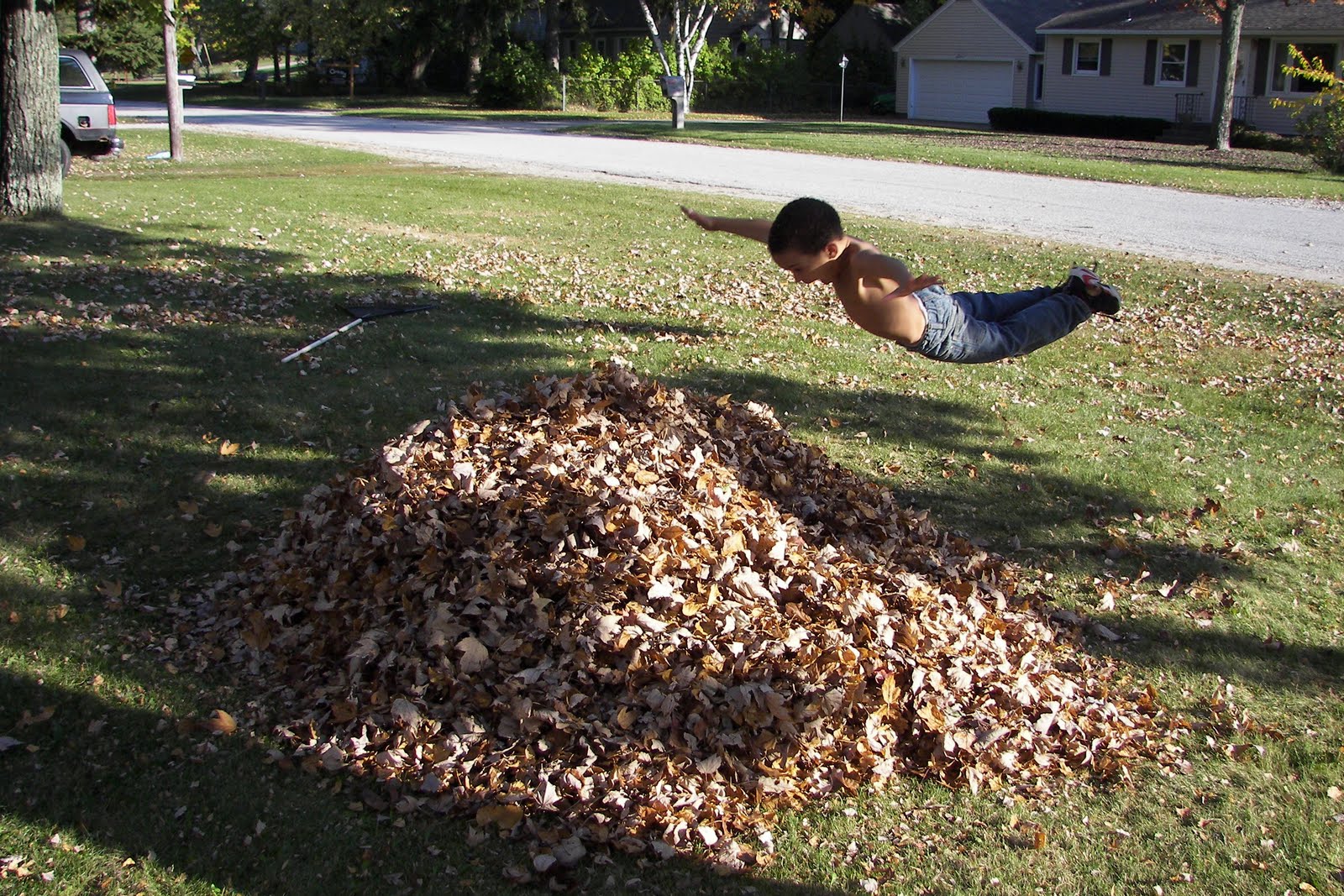
Imagine diving into a huge pile of leaves. There is something in us as adults that stops us, tells us it’s not the done thing and that it’s for children. Imagine the freedom of just plunging onto a freshly swept pile of autumn leaves. Then imagine putting fingers to the keys or pen to paper and writing one word at a time until you find yourself in a world entirely unexpected and intriguing, a world where the rules have changed and where new characters appear. For me this is part of the excitement of writing, and part of the freedom.
What gave you the courage to leave an advertising job in London and launch into writing?
After five years in London straight after university, I’d reached the point where I felt as though I really needed to make a change. I was caught up in a very busy day job, one that didn’t leave a lot of headspace for much else.
For quite some time I’d felt that I wanted to do something more creatively fulfilling, something that was more for myself, but it was a matter of choosing the right point at which to make the change, as there were things I really liked about my job, and London life. My husband and I have always loved snowboarding, and we’d talked idly about doing a ski season many times. Going to live in the French Alps, and working as chalet staff, was a great way to break from our old routine, and explore new horizons – literally and figuratively. That was when, and where, I began writing. I think when you make a decision that’s from the heart, but you’ve also really thought it through, it doesn’t feel like courage comes into it all that much.
What have you learned about the process of writing and the publishing industry since you first put your ideas down?
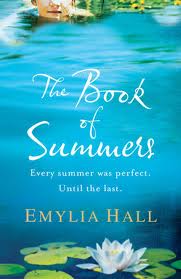
While I was writing my first novel, The Book of Summers, my biggest concern was that it would get lost in the slush pile among all the other hopeful manuscripts, never finding its way into the right pair of hands. As soon as I had an agent on my side, the brilliant Rowan Lawton, I felt much more confident – I still knew that publication wasn’t guaranteed, but I felt like I was on the right path. When I got ‘the call’ with the news that Headline wanted my book, I was floored. The thing I’d been working towards for some years, and had wanted almost more than anything else, had actually happened. It felt like a dream. That was July 2011, and sometimes I have to remind myself of how incredibly lucky I am, and what a privilege it is to write full-time. It’s easy for it to feel normal, and I don’t want that to happen. It’s not normal – it’s wonderful – an extraordinary way to spend your days. But for all the joy, there are aspects that make writing a job like any other, days when putting pen to paper feels like a chore, and my daily word-count target like an insurmountable mountain. That’s when a well-timed and self-administered kick up the backside is just the thing. Be rigorous, be tough, and make yourself work even when you don’t feel like it. That’s what I’ve learnt. It might be my dream job, but it’s also very real work.
You have talked previously about poetry being an inspiration for your work. Do you have particular favourites or other key inspirations?
I wrote a piece for Book Slam recently on this very subject, which you can read here.
My favourite poem is probably Fern Hill by Dylan Thomas – I love the evocation of a rural childhood, and the melancholy of the poet’s ability to recollect, but never be fully able to return. A desire for some kind of time-travel, driven by nostalgia and longing, lies at the heart of much of my writing. I almost always start a story with ‘place’, and those places are often landscapes that belong to my past, or hold a particular kind of allure for me, mostly of the unreachable, or faintly exotic, kind. I live in Bristol, and I love it here, but I have no particular interest in setting a story in the city. That said, if I moved away I’m almost certain that I’d think ‘ah…. Bristol’ and want to do something with that feeling.
I think Richard and Judy probably made a huge difference, and certainly introduced many more readers to my work – for that, I’m hugely grateful. Having their seal of approval also gave me a wonderful confidence boost, it’s something to hold on to. I’ve always had great respect for their book club choices, and have found some of my favourite contemporary novels thanks to them. The translations of The Book of Summers are really exciting to me, it’s a real thrill to hold a foreign edition of your work in your hand, especially for a travel-junkie like myself. I’ve been to Hungary and Spain for promotional visits and literary festivals. One of Budapest’s biggest bookstores devoted an entire window display to The Book of Summers, which was a real thrill to see, and my Spanish publisher ran an amazing publicity campaign that included radio ads and an aeroplane trailing a banner in the skies above Malaga…. Surreal, and brilliant.
Your next book, A Heart Bent Out of Shape, was published last month in the UK (and will be released as The Swiss Affair in the US in 2014). How did the books differ in the length of time that it took you to complete them and are there any similar threads running through both?
I wrote The Book of Summers over the course of about four years, in quite a meandering fashion, most of the time writing alongside a day job. I did however take a clear six months off to give it ‘the final push’, and then another six months working part-time in a bookshop while finishing it. I burnt through my savings, but never regretted giving myself this kind of focused time on the book. It really worked for me. A Heart Bent Out of Shape was written under quite different conditions. It was the second book in a two-book deal, and I quit my part-time job in a Bristol marketing agency in order to write it to deadline. It took about a year and a half, from start to finish. During the process I sometimes wondered if I was trying to move too quickly, but then it all came together, and the last six months of work, with the wisdom of my agent and editors filling my sails, turned out to be the most pleasurable.
I share your love of the slopes but am happier on skis than a snowboard. How important do you think it is for writers to have passions that take them out of the writing process and away from their book?
I love what snowboarding gives me; it’s exhilarating in every way. I love the speed, the way sometimes you can scare yourself a little, but ultimately always feel in control. And the setting… I love the mountains, and the beauty of a blue sky and powder day is, in my mind, unsurpassable. I also have a big crush on alpine style; the architecture, the food, the rugged exteriors and the cosy interiors… it all comes together to be, for me, the perfect pastime. We spent two winters living in Morzine in the French Alps, and I had a year in Lausanne as a student, so the mountains never feel far away; there are seven snowboards in our house, and I’m a sucker for vintage ski art and old resort postcards. As to writers and their passions, I think the great outdoors is the best tonic for us solitary, desk-bound folk. A beautiful view can’t help but give perspective, and it’s good to feel your heart pumping and your muscles straining, giving your mind and body something else to think about. My third novel has a bit of a surf element to it, and I’m keen to take some lessons down in Cornwall.
Your books are set in Hungary and Switzerland. Is travel important to you and how do you create a sense of place in your work?
Travel is really important to my work. I love books that transport the reader, emotionally and physically, and give a real sense of place. They’re my favourite books to read, and therefore my favourite to write. So far I’ve chosen places as settings that I love and feel a real connection with, so conjuring the detail of them, trying to capture their essence, is a really enjoyable process and feels quite natural. Desk-bound travelling! The book I’m working on at the moment is set in Cornwall’s Far West, and the wildness of that landscape really appeals to me. I grew up in Devon, and so it doesn’t feel like a world away, but retains enough of an exotic edge to make me interested in writing about it. I think a lot of my obsession with writing about place comes from my rural childhood. I lived in the same cottage in a tiny village until I went away to university and moved to London, and as a child I always had a great curiosity about other places, and other people’s lives. We travelled quite a lot as a family, always driving across Europe each summer, and those trips have really stayed with me. I grew up holding onto the memory of one trip, and looking forward to the next, always savouring the details of our travels, and loving sharing them as a family. When I went to university I made sure that a year abroad was part of that experience, and I chose Lausanne, in Switzerland, which became the setting for A Heart Bent Out of Shape. I guess I have the kind of mind that holds on to the details of a place, and the kind of imagination that wants to do something with them.
Are there any books that have taken your breath away or left a lingering sense of another world?
Many, but to name just a few… The Poisonwood Bible by Barbara Kingsolver. The White Woman On The Green Bicycle by Monique Roffey. The Silver Dark Sea by Susan Fletcher. Each conjures place so vividly, be it Congo, Trinidad, or a remote Scottish island, and I was utterly lost in their worlds. I really admire the writing of Daphne du Maurier, and love how central Cornwall was to her work, inspiring her life on the page, and beyond it. And Ernest Hemingway’s epilogue to Death In The Afternoon is, to my mind, a truly perfect piece of writing about place… the opening line ‘If I could have made this enough of a book it would have had everything in it,’ exactly sums up how I felt when writing A Heart Bent Out of Shape. My greatest desire was to do justice to my memory of Lausanne, to capture its beauty and convey that very particular feeling of being young, and abroad, and everything seeming full of promise. I wanted to write the whole city into that novel, every view, every scent, every sight, but in the end you have to step back, write what’s right, and keep the rest for yourself.
After studying at York University and in Lausanne, Switzerland, Emylia spent five years working in a London ad agency, before moving to the French Alps where she began to write. The daughter of an English artist and a Hungarian quilt-maker, Emylia enjoys travel and snowboarding. She now lives in Bristol with her husband, also an author. Her first novel, THE BOOK OF SUMMERS, was a Richard and Judy Summer Book Club pick in 2012. It’s published by Headline in the UK, MIRA in the US & Canada. Her second novel, A HEART BENT OUT OF SHAPE (or THE SWISS AFFAIR, in the US) was published in September 2013 (Feb 2014 in the US). Emylia’s writing and short fiction has appeared in a variety of publications, including ELLE magazine, the Book Slam anthology, Too Much Too Young, and broadcast on BBC Radio 6 Music. She is currently at work on her third novel.
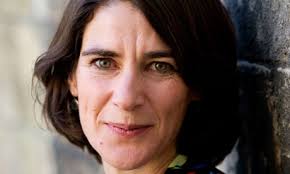
‘A story needs rhythm. Read it aloud to yourself. If it doesn’t spin a bit of magic, it’s missing something.’ Esther Freud
‘Always carry a notebook. And I mean always. The short-term memory only retains information for three minutes; unless it is committed to paper you can lose an idea for ever.’ Will Self
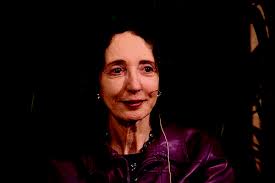
‘I always have to know my characters in a lot of depth–what clothes they’d choose, what they were like at school, etc . . . And I know what happened before and what will happen after the part of their lives I’m dealing with.’ Alice Munro
‘Never use a metaphor, simile, or other figure of speech which you are used to seeing in print. This sounds easy, but in practice is incredibly difficult… Common phrases have become so comfortable that they create no emotional response. Take the time to invent fresh, powerful images.’ George Orwell
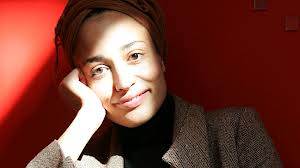
‘Protect the time and space in which you write. Keep everybody away from it, even the people who are most important to you.’ Zadie Smith
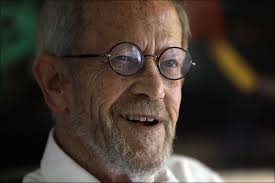
‘Keep your exclamation points under control. You are allowed no more than two or three per 100,000 words of prose. If you have the knack of playing with exclaimers the way Tom Wolfe does, you can throw them in by the handful.’ Elmore Leonard
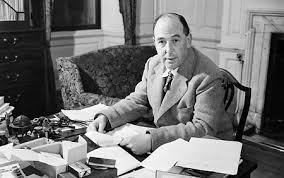
‘Don’t say it was delightful; make us say delightful when we’ve read the description. You see, all those words (horrifying, wonderful, hideous, exquisite) are only like saying to your readers Please will you do the job for me.’ CS Lewis
‘Be daring, take on anything. Don’t labor over little cameo works in which every word is to be perfect. Technique holds a reader from sentence to sentence, but only content will stay in his mind.’ Joyce Carol Oates
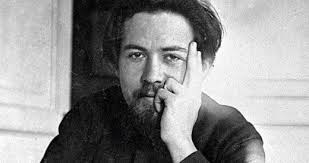
‘My own experience is that once a story has been written, one has to cross out the beginning and the end. It is there that we authors do most of our lying.’ Anton Chekhov
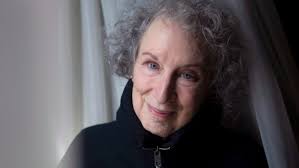
‘Don’t sit down in the middle of the woods. If you’re lost in the plot or blocked, retrace your steps to where you went wrong. Then take the other road. And/or change the person. Change the tense. Change the opening page.’ Margaret Atwood
‘Don’t bend; don’t water it down; don’t try to make it logical; don’t edit your own soul according to the fashion.’ Franz Kafka
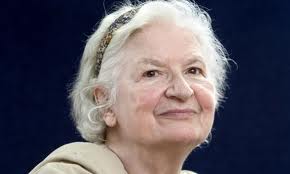
‘Open your mind to new experiences, particularly to the study of other people. Nothing that happens to a writer – however happy, however tragic – is ever wasted.’ PD James






 F C MALBY
You must be logged in to post a comment.