I’d like to welcome Sarah Hilary to the blog today. Her debut novel, Someone Else’s Skin, will be published on Thursday by Headline. It has already received some great reviews and has been heralded as “one of the debut novels of next year, if not THE debut novel.” I wanted to find out more about Sarah, her path to publication, and the inspiration behind her work. Thank you, Sarah, for today’s interview. We wish you all the best for the imminent release of your book!
What drew you to crime fiction and how have you been influenced by other authors or film and television?
SH: I always loved Sherlock Holmes, and I adore TV crime. Key influences would be Silence of the Lambs (film and book), Fred Vargas, Patricia Highsmith, TV shows like The Bridge, The Mentalist, Peaky Blinders… All these things keep me on my toes and inspire me to keep exploring the different angles of crime.
How does your work as a copywriter and editor work alongside fiction writing? Does it help or hinder your creative process?
SH: It helps, I think. I have to produce some pretty taut prose at work, which is never a bad thing in a fiction writer. And it’s good to have time away from stories, to stay in touch with the real world.
What do you think helps to make characters likeable or believable to the reader, and how important is it?
SH: It’s all about empathy. I don’t believe a character needs to be likeable so much as recognisable; he or she needs to touch a nerve in the reader. One reader said that she found Marnie Rome irritating, and that this was a compliment, because it meant that Marnie was ‘real’. I get bored reading about heroes and villains. I’m fascinated by the human qualities between these two extremes. That’s where the interest lies for me.
Where do you write and why?
SH:In cafes, when I can. I like the white noise, and the sense of being in the world and outside it, at the same time.
What is your process and how do you plan?
SH: I keep notebooks and mark down the twists, for the story and for the characters. Other than that, I don’t do much planning. I used to try, but it ended up killing my interest in the story. So now I take a deep breath and dive in…
Your debut novel, Someone Else’s Skin will be released in just a few days. Can you tell us about your journey to publication?
SH: Long and rocky. I was lucky enough to get noticed and encouraged by the agent I’d set my heart on (Jane Gregory) who gave me so much encouragement each time she rejected my early manuscripts. I knew that if I could write a book she loved then I’d make it. Stamina was a very big part of it but, boy, did it pay off.
Thank you, Sarah. Finally, a lighter question for you! What do you do with your time when you are not writing?
SH: Watch TV with my daughter. Read. Count my blessings.
Sarah Hilary has worked as a bookseller, and with the Royal Navy. Her debut novel, Someone Else’s Skin, will be published in 2014 by Headline in the UK, Penguin in the US, and in six other countries worldwide. A second book in the series will be published a year later. Set in London, both books feature DI Marnie Rome, a woman with a tragic past and a unique insight into domestic violence. www.sarah-crawl-space.blogspot.co.uk/
What gave you the courage to leave an advertising job in London and launch into writing?
After five years in London straight after university, I’d reached the point where I felt as though I really needed to make a change. I was caught up in a very busy day job, one that didn’t leave a lot of headspace for much else.
For quite some time I’d felt that I wanted to do something more creatively fulfilling, something that was more for myself, but it was a matter of choosing the right point at which to make the change, as there were things I really liked about my job, and London life. My husband and I have always loved snowboarding, and we’d talked idly about doing a ski season many times. Going to live in the French Alps, and working as chalet staff, was a great way to break from our old routine, and explore new horizons – literally and figuratively. That was when, and where, I began writing. I think when you make a decision that’s from the heart, but you’ve also really thought it through, it doesn’t feel like courage comes into it all that much.
What have you learned about the process of writing and the publishing industry since you first put your ideas down?
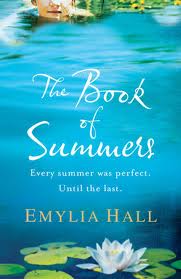
While I was writing my first novel, The Book of Summers, my biggest concern was that it would get lost in the slush pile among all the other hopeful manuscripts, never finding its way into the right pair of hands. As soon as I had an agent on my side, the brilliant Rowan Lawton, I felt much more confident – I still knew that publication wasn’t guaranteed, but I felt like I was on the right path. When I got ‘the call’ with the news that Headline wanted my book, I was floored. The thing I’d been working towards for some years, and had wanted almost more than anything else, had actually happened. It felt like a dream. That was July 2011, and sometimes I have to remind myself of how incredibly lucky I am, and what a privilege it is to write full-time. It’s easy for it to feel normal, and I don’t want that to happen. It’s not normal – it’s wonderful – an extraordinary way to spend your days. But for all the joy, there are aspects that make writing a job like any other, days when putting pen to paper feels like a chore, and my daily word-count target like an insurmountable mountain. That’s when a well-timed and self-administered kick up the backside is just the thing. Be rigorous, be tough, and make yourself work even when you don’t feel like it. That’s what I’ve learnt. It might be my dream job, but it’s also very real work.
You have talked previously about poetry being an inspiration for your work. Do you have particular favourites or other key inspirations?
I wrote a piece for Book Slam recently on this very subject, which you can read here.
My favourite poem is probably Fern Hill by Dylan Thomas – I love the evocation of a rural childhood, and the melancholy of the poet’s ability to recollect, but never be fully able to return. A desire for some kind of time-travel, driven by nostalgia and longing, lies at the heart of much of my writing. I almost always start a story with ‘place’, and those places are often landscapes that belong to my past, or hold a particular kind of allure for me, mostly of the unreachable, or faintly exotic, kind. I live in Bristol, and I love it here, but I have no particular interest in setting a story in the city. That said, if I moved away I’m almost certain that I’d think ‘ah…. Bristol’ and want to do something with that feeling.
I think Richard and Judy probably made a huge difference, and certainly introduced many more readers to my work – for that, I’m hugely grateful. Having their seal of approval also gave me a wonderful confidence boost, it’s something to hold on to. I’ve always had great respect for their book club choices, and have found some of my favourite contemporary novels thanks to them. The translations of The Book of Summers are really exciting to me, it’s a real thrill to hold a foreign edition of your work in your hand, especially for a travel-junkie like myself. I’ve been to Hungary and Spain for promotional visits and literary festivals. One of Budapest’s biggest bookstores devoted an entire window display to The Book of Summers, which was a real thrill to see, and my Spanish publisher ran an amazing publicity campaign that included radio ads and an aeroplane trailing a banner in the skies above Malaga…. Surreal, and brilliant.
Your next book, A Heart Bent Out of Shape, was published last month in the UK (and will be released as The Swiss Affair in the US in 2014). How did the books differ in the length of time that it took you to complete them and are there any similar threads running through both?
I wrote The Book of Summers over the course of about four years, in quite a meandering fashion, most of the time writing alongside a day job. I did however take a clear six months off to give it ‘the final push’, and then another six months working part-time in a bookshop while finishing it. I burnt through my savings, but never regretted giving myself this kind of focused time on the book. It really worked for me. A Heart Bent Out of Shape was written under quite different conditions. It was the second book in a two-book deal, and I quit my part-time job in a Bristol marketing agency in order to write it to deadline. It took about a year and a half, from start to finish. During the process I sometimes wondered if I was trying to move too quickly, but then it all came together, and the last six months of work, with the wisdom of my agent and editors filling my sails, turned out to be the most pleasurable.
I share your love of the slopes but am happier on skis than a snowboard. How important do you think it is for writers to have passions that take them out of the writing process and away from their book?
I love what snowboarding gives me; it’s exhilarating in every way. I love the speed, the way sometimes you can scare yourself a little, but ultimately always feel in control. And the setting… I love the mountains, and the beauty of a blue sky and powder day is, in my mind, unsurpassable. I also have a big crush on alpine style; the architecture, the food, the rugged exteriors and the cosy interiors… it all comes together to be, for me, the perfect pastime. We spent two winters living in Morzine in the French Alps, and I had a year in Lausanne as a student, so the mountains never feel far away; there are seven snowboards in our house, and I’m a sucker for vintage ski art and old resort postcards. As to writers and their passions, I think the great outdoors is the best tonic for us solitary, desk-bound folk. A beautiful view can’t help but give perspective, and it’s good to feel your heart pumping and your muscles straining, giving your mind and body something else to think about. My third novel has a bit of a surf element to it, and I’m keen to take some lessons down in Cornwall.
Your books are set in Hungary and Switzerland. Is travel important to you and how do you create a sense of place in your work?
Travel is really important to my work. I love books that transport the reader, emotionally and physically, and give a real sense of place. They’re my favourite books to read, and therefore my favourite to write. So far I’ve chosen places as settings that I love and feel a real connection with, so conjuring the detail of them, trying to capture their essence, is a really enjoyable process and feels quite natural. Desk-bound travelling! The book I’m working on at the moment is set in Cornwall’s Far West, and the wildness of that landscape really appeals to me. I grew up in Devon, and so it doesn’t feel like a world away, but retains enough of an exotic edge to make me interested in writing about it. I think a lot of my obsession with writing about place comes from my rural childhood. I lived in the same cottage in a tiny village until I went away to university and moved to London, and as a child I always had a great curiosity about other places, and other people’s lives. We travelled quite a lot as a family, always driving across Europe each summer, and those trips have really stayed with me. I grew up holding onto the memory of one trip, and looking forward to the next, always savouring the details of our travels, and loving sharing them as a family. When I went to university I made sure that a year abroad was part of that experience, and I chose Lausanne, in Switzerland, which became the setting for A Heart Bent Out of Shape. I guess I have the kind of mind that holds on to the details of a place, and the kind of imagination that wants to do something with them.
Are there any books that have taken your breath away or left a lingering sense of another world?
Many, but to name just a few… The Poisonwood Bible by Barbara Kingsolver. The White Woman On The Green Bicycle by Monique Roffey. The Silver Dark Sea by Susan Fletcher. Each conjures place so vividly, be it Congo, Trinidad, or a remote Scottish island, and I was utterly lost in their worlds. I really admire the writing of Daphne du Maurier, and love how central Cornwall was to her work, inspiring her life on the page, and beyond it. And Ernest Hemingway’s epilogue to Death In The Afternoon is, to my mind, a truly perfect piece of writing about place… the opening line ‘If I could have made this enough of a book it would have had everything in it,’ exactly sums up how I felt when writing A Heart Bent Out of Shape. My greatest desire was to do justice to my memory of Lausanne, to capture its beauty and convey that very particular feeling of being young, and abroad, and everything seeming full of promise. I wanted to write the whole city into that novel, every view, every scent, every sight, but in the end you have to step back, write what’s right, and keep the rest for yourself.
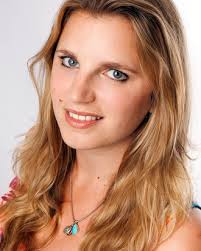
After studying at York University and in Lausanne, Switzerland, Emylia spent five years working in a London ad agency, before moving to the French Alps where she began to write. The daughter of an English artist and a Hungarian quilt-maker, Emylia enjoys travel and snowboarding. She now lives in Bristol with her husband, also an author. Her first novel, THE BOOK OF SUMMERS, was a Richard and Judy Summer Book Club pick in 2012. It’s published by Headline in the UK, MIRA in the US & Canada. Her second novel, A HEART BENT OUT OF SHAPE (or THE SWISS AFFAIR, in the US) was published in September 2013 (Feb 2014 in the US). Emylia’s writing and short fiction has appeared in a variety of publications, including ELLE magazine, the Book Slam anthology, Too Much Too Young, and broadcast on BBC Radio 6 Music. She is currently at work on her third novel.
This is a guest post by Trish Nicholson. I first discovered Trish because of her blog posts on writing and the connection between the reader and writer. Her love of travel resonated with me and her approach is unique. Writing has always been an important part of her life, contributing to columns and features in national media, and books on management, and anthropology. Several of her short stories have won prizes in international competitions and been published in anthologies.
Trish is a social anthropologist and a keen photographer who has worked and travelled in over 20 countries, including extensive treks in Nepal, Bhutan and Tibet. She has an MA in Anthropology and an MSc in Rural Development. In 1997 she was awarded a PhD from the University of the Philippines for research on culture and tourism in Mogpog, Marinduque Island. Her work has taken her from the UK and Europe to Vietnam, Austrailia and the Philippines where she researched indigenous communities and worked in the Philippines with Voluntary Service Overseas, and on to Papua New Guinea with the World Bank Development Project.
Now settled in New Zealand and writing full-time, Trish combines her passions for anthropology, stories, travel and photography by writing creative non-fiction, which she describes as: “professional research and experience narrated by a storyteller, whispering in the reader’s ear as they walk beside me.” Thank you for your post, today, Trish:
Each piece we write is a creative expression from a specific moment and place within us, a unique presence, and I suppose we shouldn’t have favourites but most of us do. While writing Inside Stories for Writers and Readers, the chapter that brought me the most pleasure, and the greatest challenge, was Voice, Language and Dialogue. Although the whole book explores in various ways the relationship between writer and reader, this chapter stretched me to explain how that chemistry works through their distinctive voices.
Voice in literature is a fascinating subject rarely written about in depth, perhaps because it is one of the most elusive concepts in writing technique, so I am happy to accept C. F. Malby’s invitation to share with you how I visualise that relationship.
Everyone has a voice – the expression of who we are, our persona – but it’s not quite as simple as that because we are complex beings. We present ourselves differently to the various people we relate to – spouse, sibling, colleague, local librarian – not only in the things we talk about, but the words we choose and the gestures we use. We have a multiplicity of voices – what I have called a ‘chorus’, a personal ‘madrigal choir’.
Our writer’s voice is expressed most distinctly in the style of writing and the kind of stories we write, but also in the characters we create. We choose which of our voices to use for a particular piece, but for our characters, we have to become sufficiently familiar with them to write consistently in their voices – represented not only in dialogue, but in thoughts, actions and body language because these are all parts of voice.
Developing a character’s voice is a deliberate and careful act for which we draw on our own chorus as well as on our observations and general experience. None the less, both character voice and writer’s voice are partly subconscious and reveal aspects of the author’s persona; a feature picked up by a reader who brings his or her own ‘madrigal choir’ to the relationship and creates an individual interpretation of the story.
Among our friends and acquaintances, even people met for the first time, we recognise that we enjoy listening and talking with some more than with others, and we appreciate them in different ways. We may find what they say more, or less, interesting, but their ‘voice’ as we perceive it, also indicates their attitude towards us. Some people call this personal ‘vibes’. They can influence our thinking and even our feelings about ourselves in a similar way to a story that relates to our own experience.
Perhaps because of the permanency of the written word, this effect seems even stronger in the relationship between a reader and a writer when they meet in a story. Each reader responds emotionally in a different way, both to the author and to the characters, especially when an author allows readers to use their imagination rather than feed them with every detail.
But when I read a novel, I want to identify with the characters, not with the author. This is the crux of what is meant by ‘show don’t tell’. By showing character through all the aspects of character voice – thoughts, dialogue, gestures and actions – a reader can engage with them; if we are told these things directly, the author’s voice predominates and gets in the way.
Whether a work is fiction or non-fiction, readers react to an author, and create their own interpretation of a story, with the voices they bring to the reading. In Inside Stories I discuss this and other aspects of creative writing in greater depth, using short stories as illustrations because the voices are often louder and clearer in the intensity of literary short fiction.
As writers, we choose the voices we use to create a particular story, as readers we complete it through our own voices – and in each cases, it is achieved both consciously and subconsciously. This chemistry between writer and reader arising from prose is at the heart of writing, whatever the genre.
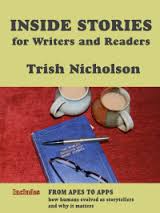
Inside Stories for Writers and Readers looks at the creative process for readers and writers and offers a unique insight into the different themes of writing and reading novels, short stories, fiction and non fiction.
You can connect with Trish via twitter or her website and find her other books here.
From your experience of journalism, as well as novel writing, has one fed in to the other in any way?
Journalism teaches you to be economical with words. It tells you not to be too self-indulgent.
What do you most like to read and are there any books you have read recently that have stood out or changed you?
I read all kinds of stuff. I have been re-reading Graham Greene recently. I studied him at university. Did a whole module on him. I think, from the outside, my books are nothing like his, but I consider him my greatest influence.
What have been the most difficult things to write about and why?
There is some mathematics in my new novel, and I had to look like I knew what I was talking about, so I researched, and I quickly saw how so many mathematicians go crazy.
You have said that The Humans, your new book, is the one work you would most like to be remembered for. Although you have written several other books, what has given you confidence in this project in particular?
Because I totally cut loose. A part of me used to play the game. You know, I used to be trying to be highbrow, or taken seriously, and that somehow got in the way. With this, I knew it was probably going to be published whatever (as my last book did quite well) so I just went for it. Comedy, science-fiction, sentimentality – all those illegal things.
What advice would you give to new writers on their path to publication?
Be brutal with your writing. Don’t let yourself have it easy. And then be persistent, and thick-skinned, for everything that follows.
What do you enjoy doing outside writing and reading?
Being with my kids, toast and peanut butter, running, holidays. I am not into fancy things, but I am into fancy holidays.
If you could meet any well-known figure, living or dead, who would it be and why?
Emily Dickinson, without a doubt. Amazing mind, intriguing person. She’d be too shy to open her front door though, so that’d be a problem.
Matt has written novels, screenplays, children’s novels and worked as a journalist, collaborating with The Guardian, The Sunday Times and The Independent. He has won a range of awards, including the Yorkshire Young Achievers ‘Achievement in the Arts’ Award in 2009, and his novels have been translated into 29 languages. The film rights for his first novel, The Last Family in England (2004), have been sold to Brad Pitt’s production company. His previous novel, The Radleys, won an ALA Alex Award in America, has been shortlisted for the Portico prize and nominated for the Carnegie Medal. It won the TV Book Club Summer Read. He was born in Sheffield, Yorkshire in 1975. Since then he has lived in Nottinghamshire, Ibiza and London. He studied English and History at Hull University and then did an MA at Leeds, and now lives in York with author Andrea Semple and their two children.
This is just a quick post to let you know that my interview with Elaine Aldred is over at her blog, Strange Alliances: F.C. Malby. Literally Engaged With Her Writing. We discuss my teaching experience in the Czech Republic just after the fall of communism, and various aspects of writing and publishing.
Many thanks to Elaine for taking the time to interview me. She is a wonderful support to writers and her backlist of author interviews is well worth the read. Do leave comments and feel free to ask any questions.
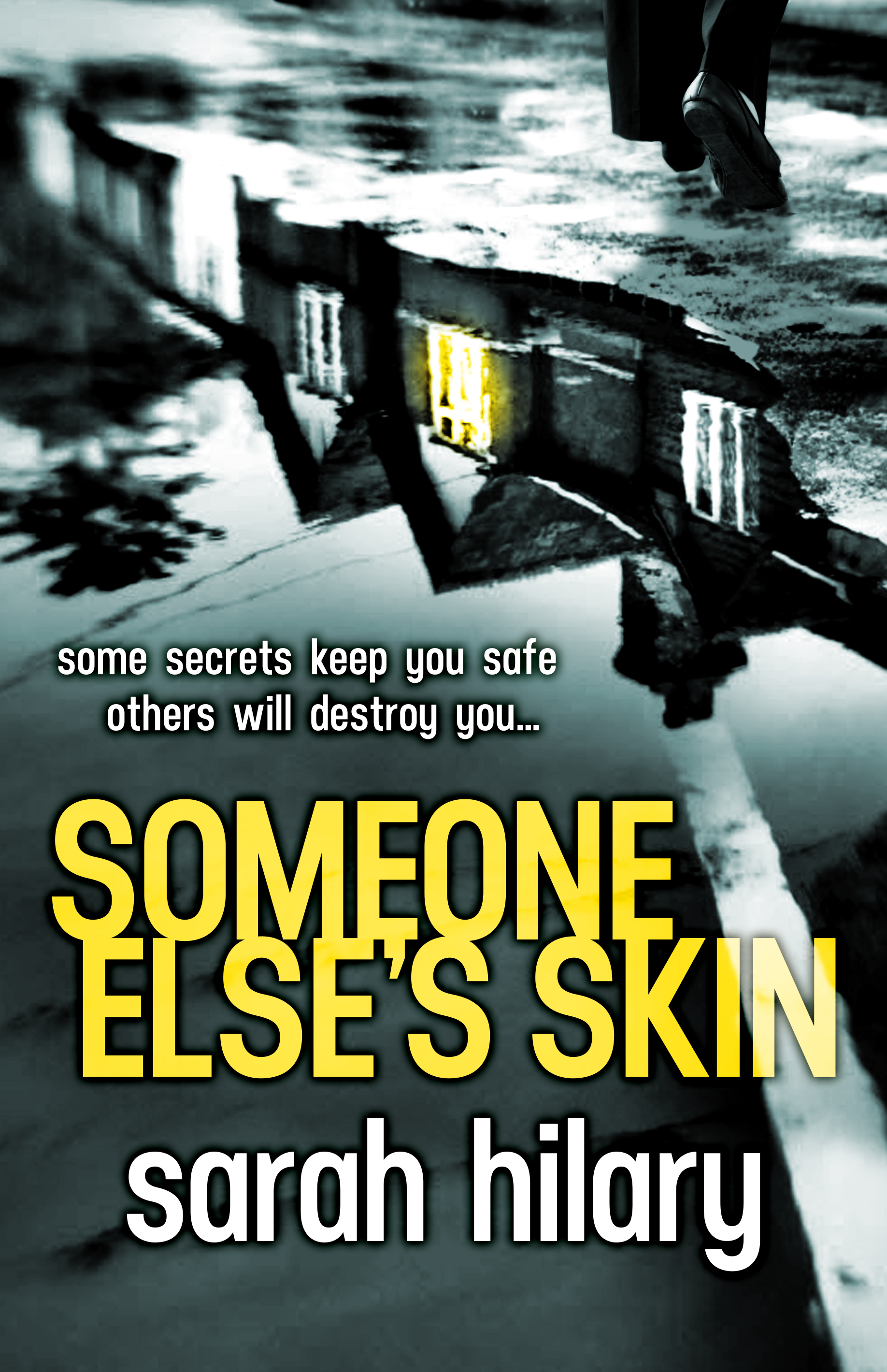
 Sarah Hilary has worked as a bookseller, and with the Royal Navy. Her debut novel, Someone Else’s Skin, will be published in 2014 by Headline in the UK, Penguin in the US, and in six other countries worldwide. A second book in the series will be published a year later. Set in London, both books feature DI Marnie Rome, a woman with a tragic past and a unique insight into domestic violence. www.sarah-crawl-space.blogspot.co.uk/


 F C MALBY
You must be logged in to post a comment.