I’m thrilled to have an acceptance of four poems to be published in International Literary Journal, Cable Street, in July. They only publish work three times a year, so I’m happy that my poems have found their way into this wonderful journal. I don’t know about you, but I love a backstory, so I thought I’d share a little about the publishers ahead of the publication.
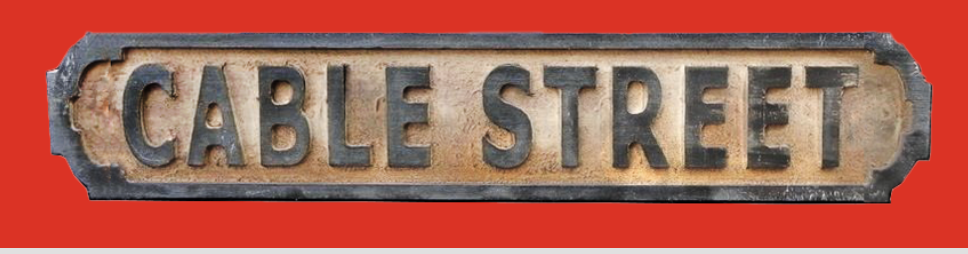
CABLE STREET
“We are, first and foremost, an international, online journal fostering exchange among writers and readers of many languages. We post new issues three times a year: on or about May 1, Bastille Day, and Thanksgiving.
Our name reflects the essence of our journal: a festival of communication across nations and traditions, a chance to wander the byways of art from many hands and many lands.
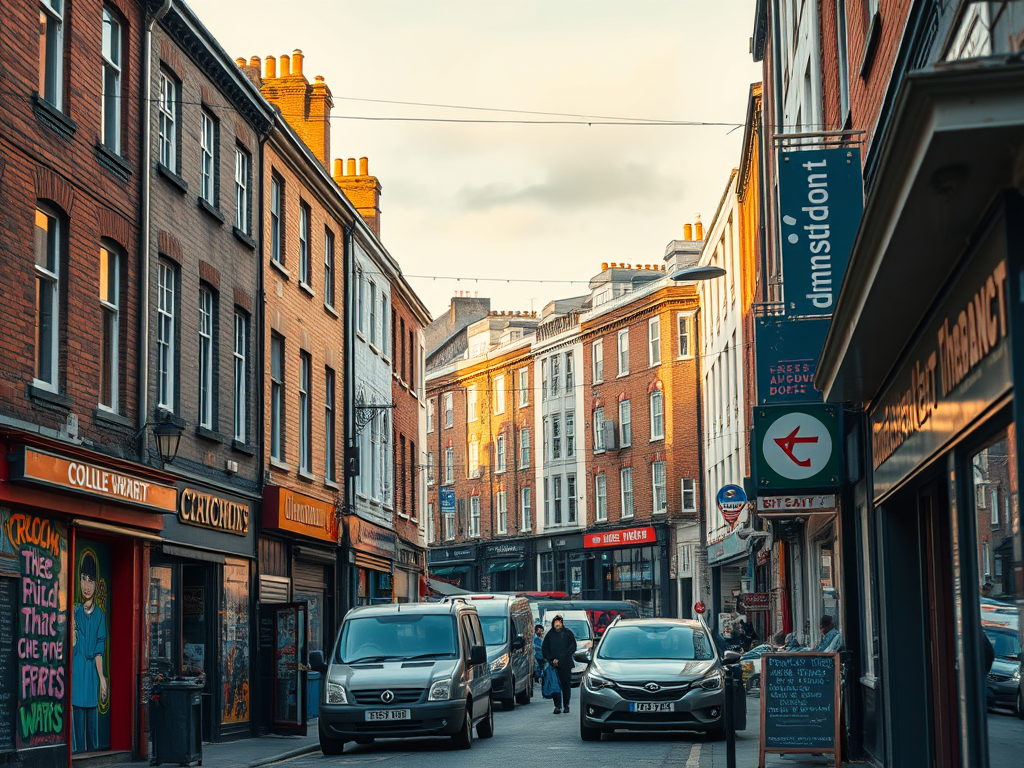
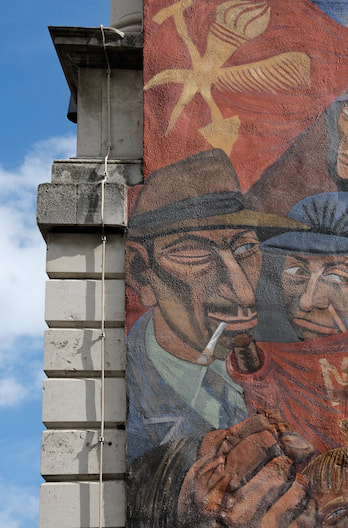
Cable Street is a road in London’s East End. It takes its name from the ships’ cables once made there—cables that traveled the world on British fleets. A place enlivened, then and now, by the dozens of languages spoken by sailors, traders, and immigrants. A place where, in 1936, a coalition of antifascists took a stand against the British Union of Fascists, turning back the tide of repression and ethnocentric dominion.
Like our namesake thoroughfare, Cable Street embraces the human family in its multitude of cultures.“
Photo credit: Cable Street Journal, Cable Street, London
Five Minutes features micro-memoirs, hundred-word pieces about five minutes in a life. I’m thrilled to share the wonderful news that my short story, ‘Cellophane Wrapped,’ about the controversy and conscience around eating meat, has been accepted by Five Minute Lit and will be published in February 2024.
Reading team comments included “kept me thinking after” and “witty, relevant, well-written.”
They have also invited me to be an editorial reader for future submissions in 2024. I will share the publication once it is published at Five Minute Lit. You can read some of their micro stories online and read Karen Zey’s useful article, The Art and Craft of Writing Micro.
Shirley checked her bag twice to see if she’d put tissues inside. The kitchen windows needed cleaning. She could do that when she returned home later. The visit would be quick. She went into the downstairs bathroom, applied some lip gloss, post box red, bared her teeth like a lioness, rubbed them with her index finger, added a liberal smattering of perfume, and left the house, double-checking the front door before getting into the car. Charles had only been in the hospital for two days, but how she looked would matter. She couldn’t work out whether she missed him or the idea of him. It was easier at home without him there; she could hide her need for life to be ordered, along with her penchant for a glass of Pinot Grigio. It was never more than a glass or two, but the way he curled his lips to one side said enough. The cat would have to find something wild to eat tonight, she thought, as the lights turned red at the end of the street.
Roxanne blasted out of the car radio, seeping out through the open windows. Summer nights like these felt hot and sticky. She glanced at the man in the Mondeo next to her, assessing her, and she turned down the dial. Dialing down was something she had become skilled at, she’d spent her whole life doing it. The Mondeo man had a gray beard and round glasses. He wouldn’t approve of red lights or selling your body to the night. He wouldn’t approve of her lip gloss, either. She had wanted to make the effort for Charles, whatever state he was in. She’d been taught to keep herself free of makeup or wild impulses, in keeping with her Mormon upbringing, but it went against her nature. Now she would take it out on the bathroom, scrubbing and cleansing, bleaching every inch of the surfaces. Her own body, though, would no longer be subjected to the same disciplines.
I know my mind is made up, So put away your makeup, Told you once I won’t tell you again. It’s a bad way. The street thrummed with music; sounds from the fairground in the park up the road threatened to drown out her own. She could hear the screams. That much fear isbad for your heart, her father had told her. It’s the thrill, she had said at the time, but he’d already walked away. Charles had walked away when she talked about the cat or the children. The only thing that interested him these days was classic cars or some current news item, as long as it didn’t involve global warming, because it didn’t exist. She had learned to stick to frivolous subjects that did not involve the non-existent warming of the planet, the cat or the children. The latter had already left home. It made her heart feel weak. He never talked about them, as though they didn’t exist, either.
The lights went green and a young boy, about the same age as her Brian, floored it down the street towards the edge of the city, hair all slicked back, music louder than hers. He wouldn’t have heard of The Police. What she wouldn’t give to go back to those days with her whole life ahead of her. The hospital was a street away. The sun lowered over the tower blocks. Children lined the pavements with chalks and footballs; carefree. The scent of charred red meat rose up between the houses in bellows of smoke. The hospital car park created the usual fiasco of digging around for the right change, Or you’ll be towed, M’am, the parking attendant had told her when she’d gone in to visit Jan, from her book group, who was Just in for a small procedure. Shirley had never found out exactly what it involved.
Inside, staff swirled around like the beginnings of a storm with the swooshing and circling of currents, picking up things as they gathered speed. Patients were being pushed about on beds and in wheelchairs. Doctors moved swiftly and without looking up. A lady at reception was telling someone to Please come in to see a doctor. She hated the accident and emergency department. It reminded her of her brother, Ronnie, breaking his ankle in football at school. The smell of disinfectant made her queasy.
“Can you tell me where the cardiology ward is, please? I haven’t been before,” she said, as a nurse passed her with a tray of meds.
“Take the lift up to the fourth floor and it’s on your right.”
Shirley nodded, but the nurse had already gone, talking as she moved, her voice disappearing off down the corridor. The lift was empty. It stopped on the second floor. A lone man got in and stood away from her on the other side, didn’t look up, checked his watch. She always felt safer when people didn’t look directly at her, although she felt ridiculous thinking this as a grown woman. The lift juddered to a halt on the third floor. He got out. An elderly lady was waiting with a nurse, and holding a walking frame with a crocheted bag hanging from the top. They stepped in gently. Shirley pressed the button to hold the lift. The nurse nodded, put her arm on the back of the lady, rearranged the drip that was attached to a stand. Moving all of this metal between a fixed floor and a moving floor looked precarious, but she suspected that they were used to it. She had probably seen too many horror films, expected something to be severed. These were the kinds of thoughts that she couldn’t share, not with Charles, not with anyone. She turned to look in the mirror behind her, pulled out the red lip gloss, and reapplied it liberally. She pursed her lips together, got out on the fourth floor, and turned right.
The corridor was long and stark, with insipid green walls and a fire extinguisher with a ‘break glass press here’ sign on a red box on the wall just above. Charles did not appear to be in any of the rooms, which were mostly filled with older men, much older than him. In one room, a whole family had gathered and machines were beeping. She wondered whether he was, perhaps, nearing the end of his life, partly because she had seen a priest hovering in the corridor. In another, a lady sat knitting, watching a man sleep. She stopped to look at Shirley as she passed. It was a soulless place, not somewhere you would choose to be. Where was Charles? Had he left? Continue reading in Roi Fainéant Press.
FC Malby is a contributor to Unthology 8 and Hearing Voices: The Litro Anthology of New Fiction. Her short fiction won the Litro Magazine Environmental Disaster Fiction Competition. She was shortlisted by Ad Hoc Fiction, Lunate Fiction and TSS Publishing, and her work has been nominated for Non Poetry Publication of the Year in the Spillwords Press 2021 Awards. Her work is forthcoming in the Reflex Press Anthology, Vol. 5.
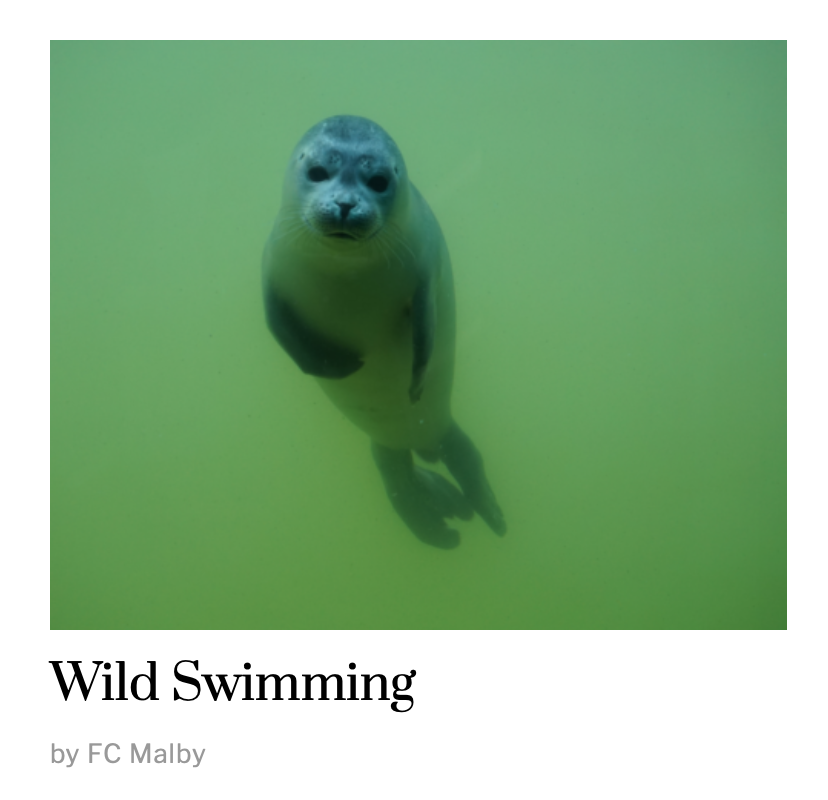
Sundown rippled across the waves as Laurie slipped into the water; the cold, slapping against her thighs as she edged further out to sea, leaving the laughter of children behind, their form, a string of Lowry dots strewn across a hot shoreline. Her muscles tightened as more of her flesh was touched by the cold of the ocean, tensed as blood rushed away and up to her core, where it was warmer, less hostile.
As her shoulders slid under, until her head was fully submerged and her flesh engulfed, silence was the thing she relished most. If anything happened on the shore, she would not hear, her ears only taking in echos of gentle ocean currents and of boat engines far out in the distance; here, in the water, it was cold and quiet. The temperature drop focused her mind on the movement of her body, as she kicked and swung each arm out to sea, towards the sun as it began to hide behind the line of the horizon. She could only see the light under the water, the colour of the sea removing the orange glow of the skyline, the way a childhood storybook removed an image with a single sheet of coloured acetate, wiping it out completely and showing you a different picture through a different coloured lens. Above and below the water line were two different scenes, the image below the water, darker, mysterious, expansive. She found the vastness of the ocean liberating, freeing her mind. Laurie had seen the Ice Man, Wim Hof, explaining the Ayurvedic effects of cold water on the immune system, as well as the mind, hormones, blood flow, skin and hair. Her hair floated freely in wet strands, her skin felt the tingle of the North Sea salt water, cleansing her flesh and renewing her mind. Friends talked about wild swimming, but it had not made sense, not until she had felt the cold on her own flesh and submerged her body into the silence of the sea. It had become addictive, a way of numbing the thoughts that shouted at her as the day drew to a close, clamouring for her attention. As her body temperature dropped, so did life’s pressures. What had begun as a sponsored open water swim, had now become part of her daily ritual, a way of letting her thoughts slip into the ocean, carried off to some far flung shore, where no one knew her name…



 F C MALBY
You must be logged in to post a comment.