Disgrace by J M Coetzee: A Review

disgrace

There are books which stay with you for months and years beyond the final page; there are books which draw you in to the point where you cease to feel time; there are books which transport you to a different time and place, yet keep you rooted fully here in the present. This book achieves all of these with a masterful use of imagery and language. This is one of the most powerful books I have read, partly because of its timeless themes and wholly for its ability to get inside the mind of its main character and his daughter, and of course for the delicate insight into human nature, with its brutality and desires. I was utterly captivated.

Set in post-apartheid South Africa, J. M. Coetzee’s searing novel tells the story of David Lurie, a twice divorced, 52-year-old professor of communications and Romantic Poetry at Cape Technical University. He has an impulsive affair with one of his students, Melanie Isaacs. The affair sours and he is denounced and summoned before a committee of inquiry. Willing to admit his guilt, but refusing to yield to pressure to repent publicly, he resigns and retreats to his daughter Lucy’s isolated smallholding. For a time, his daughter’s influence and the natural rhythms of the farm promise to harmonise his discordant life. But the balance of power in the country is shifting. He and Lucy become victims of a savage and disturbing attack which brings into relief all the difficulties in their relationship.

Among many accolades for the book are the Man Booker Prize (1999),

National Book Critics Circle Award Nominee for Fiction (1999),

Commonwealth Writers’ Prize for Best Book Overall (2000)

Coetzee delves into the darkness of the human condition, making this an uncomfortable but compelling read. His descriptions are often harsh and gritty, but somehow satisfying: ‘The skull, followed by the temperament: the two hardest parts of the body.’ His insight into the mind is beautifully reflected in sentences such as this: ‘His own opinion, which he does not air, is that the origin of speech like in song, and the origins of song in the need to fill out with sound the overlarge and rather empty human soul.’

I will hold on to my battered copy, treasure it, reread it, and enjoy the fact that I have finally managed to read it, although late in the game. Have you read it? What did you think? I’d like to hear your thoughts.

Review: The Testament of Mary by Colm Tóibín

 images (6)

‘I REMEMBER EVERYTHING. MEMORY FILLS MY BODY AS MUCH AS BLOOD AND BONES. 

This is Mary. A mother whose son was taken from her and lost to the world. A woman who lives now in exile, watched by those who seek to preserve the sanctity of her son’s memory. But Mary’s recollections of his difficult life and tragic death are a truth that few who knew her son now recognize. As the myths grow around her like walks, so Mary clings to the truth, revealing, in a time of turmoil and profound change, her own fragile humanity.’

I was intrigued by Colm Tóibín’s novella, given the controversial subject matter and read it in one sitting – 104 pages in its entirety. A fictional account of Mary’s loss of her son on the cross and of her doubts surrounding the miracles and the disciples, it delves into the nature of her fear and confusion. It is a brave attempt to fill the gaps in one of the greatest stories of history and daring in its openness, in its raw uncovering of the destructive nature of loss and what it can do to a person. The Testament of Mary has a beautiful, almost dream-like quality and the depiction of Mary’s grief, of her anger and distrust, is striking, powerful and at times shocking. Yet I could begin to relate to aspects of her pain and understand some of her crippling doubts. Tóibín’s use of language is poetic and lyrical keeping the reader absolutely engaged. There are times when the mind often drifts as you read but this book draws you in and holds you tightly in its grasp until the author releases his hands with the final words that ‘words’ in themselves ‘matter.’ My only wish would be for greater detail in the scenes to plant the reader in the picture and the events as they unfold, but the book remains firmly inside the mind of Mary as she waits for the inevitable to approach.

There is an otherworldly feel to the narrative and an ethereal quality that links cleverly to the context of the book. An inherent darkness seeps into the words, leaving you with the sense that this could almost have been a psychological thriller. Literary it may be, but it has the power to almost transcend genres through thriller, literary fiction, biographical non-fiction. It is difficult to draw the line. There has been less opposition to the book than might be expected and for good reason; the fact that it is a fictional representation of a biblical story leaves the pages open and ripe for an author of great talent to sensitively explore what it might have been like for a Mother to lose a son in the most graphic and torturous of methods. The detail in the crucifixion scenes is just enough and it is not overwritten. The claim that he was the ‘Son of God’ is not the focus of the book and it is interesting that his name is never used, instead we are taken to the core of a Mother’s memories of her child as a baby and of the cold distance between them now, and her excruciating powerlessness as he is placed into the hands of his enemies.

An utterly absorbing and memorable read. It is not difficult to see why this has been shortlisted for the Man Booker Prize. This is Tóibín’s third Booker nomination. He was awarded the Costa Novel Award in 2009 for Brooklyn and has received numerous other awards and a Frank O’Connor International Short Story Award shortlisting for The Empty Family in 2011. A gifted and enthralling writer. 

Listen to an excerpt of The Testament of Mary narrated by Meryl Streep.

Swimming Home

swimming home

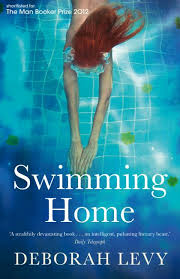
Deborah Levy’s Swimming Home is a book that has been on my to-be-read pile for far too long. I managed to reading it, amongst other books, while I was away last week. Shortlisted for The Man Booker Prize in 2012, I was expecting great things from this book and it did not disappoint.

As he arrives with his family at the villa in the hills above Nice, Joe sees a body in the swimming pool. But the girl is very much alive. She is Kitty Finch: a self-proclaimed botanist with green-painted fingernails, walking naked out of the water and into the heart of their holiday. Why is she there? What does she want from them all? And why does Joe’s enigmatic wife allow her to remain?

Both the unusual cover and the concept grabbed my attention from the start and I knew that this would be an allegorical journey in many ways. Levy’s use of visual constructs and rich symbolism retains a powerful hold over the reader’s experience. The wording is lyrical and enticing, wasting nothing. She casually underplays the devastating story as it reaches an unexpected climax. It has been described as a ‘literary beast’ of a novel and, although initially skeptical, I can understand why; I would agree. Reviews have been mixed, understandably, as her style is highly specific and will not appeal to all. Her power to draw in and to shock is almost a surprise and I found myself rereading parts of the text in disbelief. She uses subtle repetition to great effect and the prose has a circular narrative in that it ends almost where it begins. The outcome? Well, you’ll have to read it and decide what you think. I would highly recommend it to those who enjoy literary fiction and a short, sharp shock. I look forward to reading her newer short story collection, Black Vodka.

The Darker Side of Life: Reality and Fiction

crime scene

I was planning to write a specific post for today until I read the news this morning. I was horrified by the graphic nature of the news that a baby had been flushed down a public and filthy toilet in China. Although this is not the first time it has happened, this seems particularly horrific because of the fact that the baby was alive and had sustained a fractured skull. The weakened cry as it was eventually cut free reduced me to tears. I won’t add a link as not everyone will want to watch, but the video and images are all over the news so you won’t need to look far to find it.

I don’t cry easily so it took me by surprise. I still feel a sense of grief over the complete abandonment of the mother. Although I know that life has elements of evil (look no further than the recent and brutal Woolwich killing), and that humans are fallible, and sometimes mentally ill or disturbed, or just desperate, but my response made me think hard about the difference between the darker side of life in reality and in fiction.

Take Me to the Castle, my debut, was a literary historical fiction novel, set within the framework of the politics of the fall of communism in Eastern Europe. One of the earliest books, which totally gripped me was John Buchan‘s The Thirty Nine Steps. I was given it with a collection of other penguin books in my early teens and the suspenseful journey through Scotland’s wild moors of Richard Hannay, who is on the run from the police after finding a dead body in his flat, kept me turning the pages at breakneck speed. It inspired in me a love of suspense in a good story. I have recently read quite a few crime and literary crime fiction/psychological suspense novels, and I have pondered the difference between the world you inhabit in a book and the world that you wake up in every day.

With fiction there are usually rules and expectations with certain types of books. You look at the cover, the genre, the author and the blurb, and it gives you a hint of what to expect. If you read chick lit novels and do not like horror, you might avoid books with darker covers and bold print. If you enjoy sci-fi and do not like literary fiction, you might avoid the pastel covers with possibly a booker prize winning author’s name across the front. These are crude and basic descriptions but you can see what I’m getting it. Readers come to a book with expectations. They do not expect a gruesome death in a romance novel or a historical drama in a dystopian book. There are, of course, genre cross-overs and new authors breaking the rules and these are continuing to increase. Agents and editors use the term, ‘genre-bending’ to describe these books.

In fiction the darker side of a story is contained within a world with defined boundaries and, although you can become completely absorbed in that particular world, you emerge with the knowledge that the events are fictional and are not directly related to your life. With the exception of fiction novels set within the framework of specific times in history, a fiction novel is just that: FICTION. It’s effects are deep but are limited to the confines of the world the author has created.

In life, the reality of crime and the darker aspects of human nature have no boundaries. The news seems increasingly more shocking and gruesome, although much of this is down to the changing nature of journalism. It would seem that our world is growing increasingly colder and more dangerous, from the point of view of what we read in the press. My husband, however, who is a crime specialist in the field of research and policy, assures me that the world is becoming a statistically safer place. The global homicide rates are lower now than they have ever been. I won’t quote sources as that is his arena, but the issue of what I saw this morning reminds me that the darker side of life in reality does not hold the boundaries that we see in fiction and is often much harder to deal with.

The framework that exists within fiction (as a safety net for some readers) is not apparent in life and the shocking news that we read about often leaves us with deeper fears than the books that we choose to read.

Photo credit: http://www.officialpsds.com

A Library Snapshot

I have been reading a mixture of books recently and many of them are too good not to share, so I’d like to dip into each one and give you a glimpse of what makes the books stand out in a crowded bookshelf. I haven’t finished all of them so these are just outlines and glimpses.
101 days            orkney       amity and sorrow    first-light-charles-baxter-paperback-cover-art     irish short story

A Hundred and One Days by Åsne Seierstad

Author Åsne Seierstad is a freelance journalist and who writes about everyday life in war zones. From her first hand experiences, she has written about Kabul, Baghdad and Grozny. I particularly enjoyed The Bookseller of Kabul, so I have finally picked up this gem, A Hundred and One Days, set in Baghdad during the US invasion of Iraq. I enjoy non-fiction and stories set in conflict areas so her books appeal to me. Seierstad focuses on the lives of Iraqi citizens, providing an insight into their days lived under the constant threat of attack, first from the Iraqi government and later from American bombs. She also describes in vivid detail the frustration felt by journalists in their attempts to sort truth from propadanda. The book looks at the ‘before,’ ‘during,’ and ‘after,’ of the war without casting moral judgement on the situation, and looks at everyday lives with a sharp understanding of human nature, a trait in her writing which I have enjoyed in her other books.

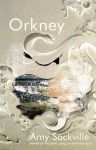
Orkney by Amy Sackville

Amy Sackville is a creative writing teacher at Kent University, and this is her second novel, set on a remote island in Orkney. It is a poetic and lyrical story of an unusual couple: a 61 year old literature professor and his pupil who is never actually named. The  book spans their fortnight honeymoon in this barren landscape and, as she spends an obsessive amount of time by the sea, he realises how little he knows her. We don’t know why his wife is so obsessed by the sea, but it has something to do with her father, who disappeared when she was young. The language of the book is beautiful and intriguing, and I couldn’t put it down.

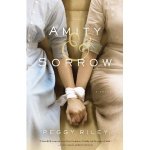
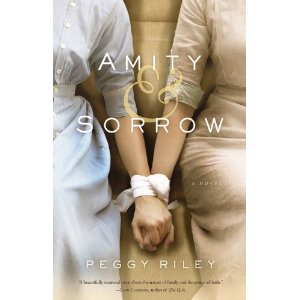
Amity and Sorrow by Peggy Riley

Riley is a writer and a playwright. There is so much to say about her but I’ll save it for my upcoming author interview next week. Released on March 28, this book is shocking and gripping story of a mother who rescues her daughters from a cult, their father and a fire,  driving for days without sleep until they crash their car in rural Oklahoma. The girls, Amity and Sorrow, can’t imagine what the world holds outside their father’s polygamous compound. Rescue comes in the unlikely form of Bradley, a farmer grieving the loss of his wife. This is an unforgettable story which I was fortunate enough to receive as an advanced reader copy. I would recommend picking it up when it is released in the next few weeks. It has already had some wonderful reviews.

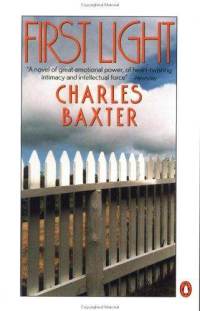
First Light by Charles Baxter

I discovered this out of print gem and managed to find a second hand copy. Charles Baxter’s short stories have appeared in the Best American Short Stories and in two of his own collections. This novel, his first, was supported by a Guggenheim Foundation grant. He takes us backwards through the lives of Hugh and Dorsey Welch who are brother and sister. We meet them as adults, while Hugh is a Buick salesman and Dorsey is an astrophysicist, and discover their dark and difficult pasts. The author traces their paths back to the day of Dorsey’s birth with an unusual subtlety. His opening paragraph includes this vivid description: ‘Hugh keeps both hands near the top of the steering wheel the way cautious men often do, and he does not turn to argue with her, not at first.’

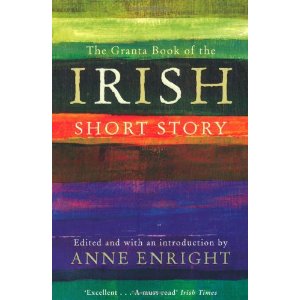
The Grant Book of the Irish Short Story

I am reading both the Irish Short Story collection and the Best American Short Stories, but I wanted to focus on this collection in particular, edited by Anne Enright. Ireland has produced some of the world’s most celebrated short story writers and this, a collection of the best works of contemporary Irish short fiction writers, includes works by  Roddy Doyle, William Trevor, Colm Toibin and Kevin Barry. It  begins and ends with a road accident. The first, which proves fortuitous, involves an out-of-work labourer and a carload of nuns; the second – which is fatal – occurs when a mechanic decides to earn a few extra euros ferrying tourists to a shrine where a statue of Mary is said to weep. Between these two tales we meet a mother who finds her son suspected of abuse and we glimpse the consequences of Irish abortion law. The subjects are heavy and, sometimes dark, but the writing is tight and distinctive. My favourite story so far is John Banville’s Summer Voices. His book, The Sea, won the Man Booker Prize in 2005 and his short story is carried off with the same elegance of style with phrases such as these: ‘The radiance of the summer afternoon wove shadows about him.’ The story follows a young boy and girl who discover a body in amongst an almost eerie description of the landscape.