What I’m currently reading and watching

There have been some wonderful new book releases and crime thriller series, so I thought I’d share some of my recent reads, books on my Wishlist and things I’ve watched and enjoyed.

CURRENTLY READING

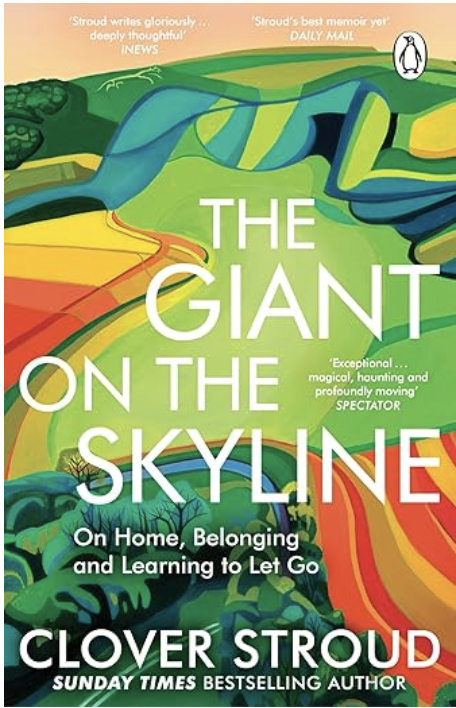
The Giant on the Skyline, by Clover Stroud, is a memoir on home, belonging and learning to let go. It’s meditative, restless and unafraid to ask the difficult questions of life. Stroud’s ‘what ifs’ and ‘maybes’ are loud and resonant. I’m looking forward to seeing where the story will take me. I would recommend it from what I have read so far.

NEXT ON MY BOOKLIST

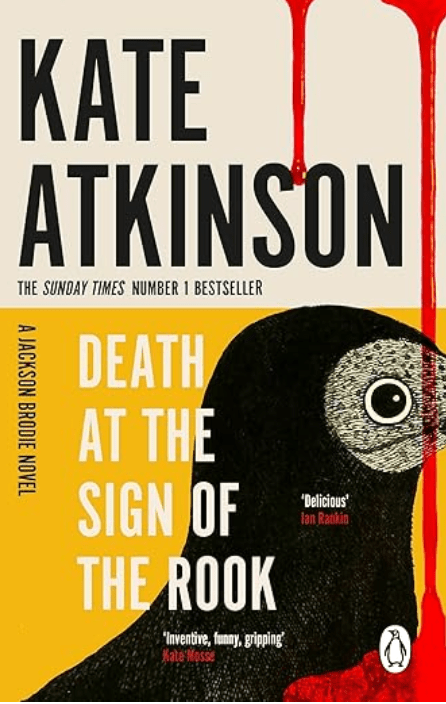
Kate Atkinson is a wonderful writer. In Death at the Sign of the Rook, Ex-detective Jackson Brodie is called to a Yorkshire town over a stolen Turner painting.

Once a grand country house, Burton Makepeace, Lady Milton’s home, has been converted into a hotel, hosting Murder Mystery weekends. As guests, including a vicar, an ex-army officer, aristocrats, we are taken on a Agatha Christie-style mystery tour.

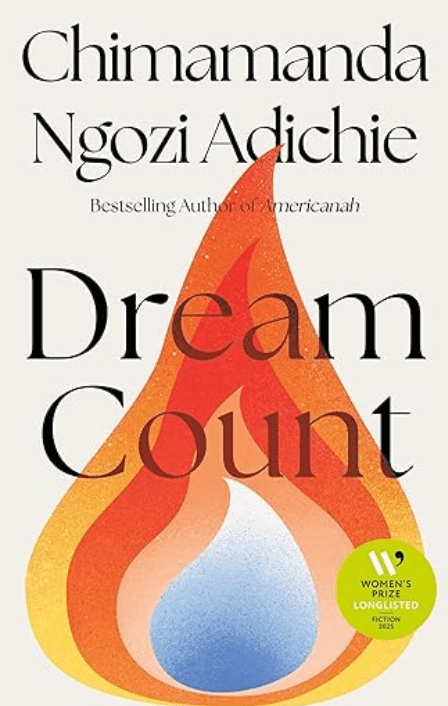
Dream Count is the searing new novel from the author of Americanah, Chimamanda Ngoni Adichie. The Times hails this as a “feminist War and Peace.”  It tells the story of four women and their loves, longings and desires.

Adichie tells the stories of these women while leading the reader to consider the choices we make and those made for us and on our interconnected world. Dream Count presents unflinching observations on the human heart, in language that soars.

WHAT I’VE WATCHED

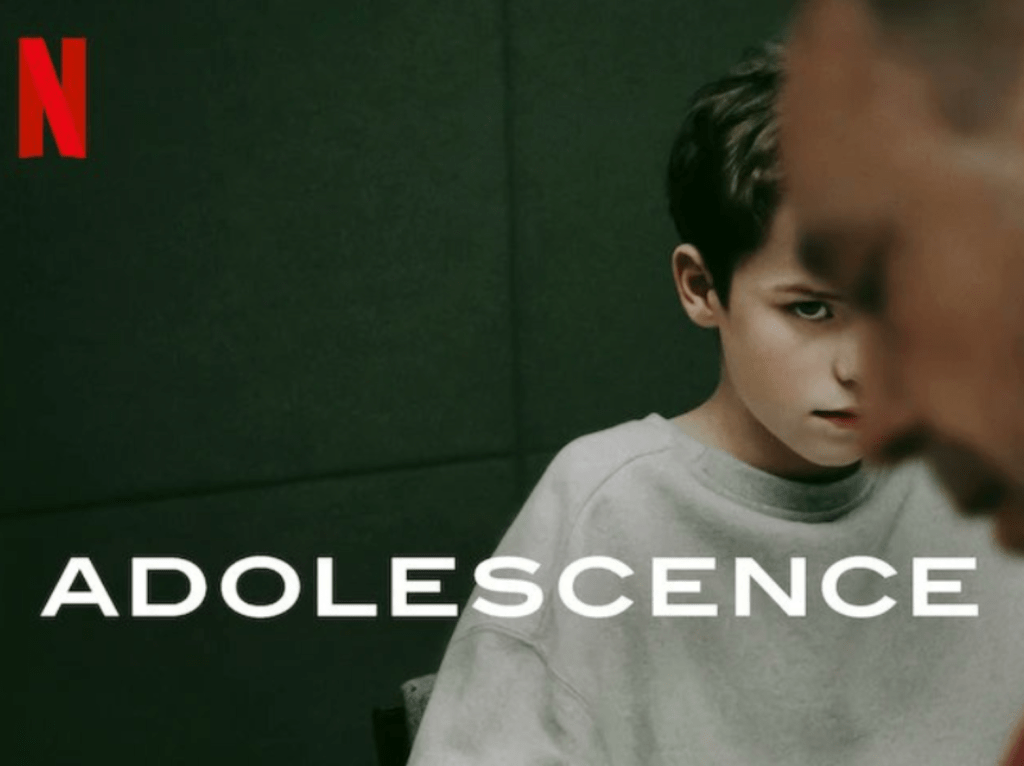
Adolescence is a four-part crime drama series that will make you feel you are living the nightmare that 14 year old Jamie Miller’s family are enduring, as we are thrown into his arrest for killing school girl and fellow classmate, Katie.

This is a gripping and timely drama that runs close to real life, telling a story of violence and shame, as we watch the story unfold in their home, on the streets, in the police station, an in a chilling interview with a psychologist.

In this fast-moving crime thriller, Black Work, police officer, Jo Gillespie, is left with unanswered questions surrounding the death of her husband, who is shot dead in the line of action as an undercover officer. Jo has to work out who to trust and retrace his steps, as she is left to confront issues in her marriage in order to discover who killed her husband.

What We Can Learn About Plot Writing From Thriller Series, Vigil

Photo: BBC

Plot is arguably one of the most important elements of fiction writing – from it stems, the characters, the mood, the pace. It sets the scene for the whole tone of a fiction novel, so it’s important to get it right. When you’re writing crime or thriller novels, it is absolutely key, and there are ways of raising the stakes to keep your reader hooked.

Here are a few that I noticed, while watching the BBCs recent new thriller, Vigil. If you haven’t seen it, you can watch it on catch-up. As a writer, it’s difficult not to consider plot, when watching high-tension drama on television and and in Film!

  1. Put your characters in a challenging environment or physical danger.
  2. Introduce vulnerabilities and character flaws.
  3. Create secondary characters to add new tensions to the plot.
  4. Allow tension to ebb and flow.
  5. Create obstacles and conflict between characters.
  6. Keep raising the stakes.
  7. Make the viewer (reader) ask questions.
  8. Create internal and external conflict.
  9. Leave things unresolved until close to the end.
  10. Remind the reader of the stakes.
Photo: imdb

The plot hinges on a Detective Chief Inspector Amy Silva (played by Suranne Jones). DCI Silva works for the Scottish Police Service and is sent to HMS Vigil, a Trident nuclear submarine, by helicopter for three days, at first, to investigate. Shortly after the mysterious disappearance of a Scottish fishing trawler, a member of the crew on Vigil is murdered, and DCI Silver has been sent to investigate. The series takes viewers on a journey into a world of submarine warfare and security threats.[Skip ahead to the next paragraph to avoid a plot spoiler] Having lost her husband in a car crash, where the car is submerged in water, Amy manages to rescue only her daughter. She suffers from flash-backs, depression and anxiety, for which she is taking medication.

Much like Carrie, in Homeland (a highly-skilled, but bipolar CIA operative), it’s this vulnerability that makes Silver so likeable and her achievements all the more impressive as the plot unfold (see no. 2 in raising the stakes). Finding character flaws and vulnerabilities draws the reader to the character. The human need to connect through vulnerability is best illustrated in Brené Brown’s TEDxHouston Talk, The Power of Vulnerability. In this twenty minute TED talk, she describes vulnerability as uncertainty, risk and emotional exposure, but says that vulnerability is not weakness; it’s our most accurate measure of courage. It’s this courage, despite character flaws and vulnerabilities, that makes the best protagonists so appealing and keeps viewers and readers hooked.

DCI Silver’s investigations, along with her team on land, create conflict between the police, the Royal Navy and MI5 (see no.5 in the list of raising the stakes). She is in a challenging physical environment (see no.1) in a confined space, away from her daughter, her normal routine and recent partner, DS Kirsten Longacre (Rose Leslie), leaving her conflicted.

While there were a few plot holes and inconsistencies in places, it was a gripping series, with tensions ramping up towards the end. The finale provided both the tension and resolution that viewers were hoping for, with some impressive redemptive qualities.

Photo: imdb

You can find out more about plot, tension and story arcs, from several of my other posts (links below):

Narrative Arc: Shaping Your Story (one of my most read post’s with almost 15,000 views)

Plot, Characters, Homeland, and What You Need to Achieve to Keep Readers Engaged

What we can learn from Beauty and the Beast About Plot, Tension and Obstacles

What we can learn from Beauty and the Beast About Plot, Tension and Obstacles


Disney’s much hyped adaptation of Beauty and the Beast was released at the weekend. The film broke box office records with an estimated $170 million, making it the seventh largest opening weekend of all time. It’s a story that engages your emotions and keeps you hooked to the end. I was discussing the film with someone today who wanted to go and see it. She said it was her favourite fairytale and we were talking about what makes this particular story stand out. It occurred to me that part of the pull is the constant tension throughout the story, the conflict of interests, and the fact that the Beast is somehow flawed as a love match for Belle.

We all know the plot – an arrogant young prince and his servants fall under the spell of a enchantress, who turns him into the Beast until he learns to love and be loved in return. The headstrong village girl Belle enters the Beast’s castle after he imprisons her father Maurice. With the help of his servants, Belle begins to draw the cold-hearted Beast out of his isolation.

There is a tension between Gaston’s claims that he will marry Belle, and her desire for independence and dislike of his puffed up ego. Part of her appeal is the fact that she doesn’t want a relationship and is a strong and independent girl. She loves books, loves her father and, unlike the other girls in the village, refuses to fall for Gaston’s false charm.  There is a tension between either Belle or her father being held prisoner in the tower.

There are obstacles in the way, in the form of wolves, Gaston, the villagers when they storm the castle, Belle’s need to rescue her father, and the Beast’s appearance and initial hostility. Every time you come up for air, another obstacle presents itself. Life can feel like this at times, but it is used as part of a plot to ramp up the tension and keep the viewer engaged and rooting for the main characters.

The fact that the Beast sees himself as unlovable and flawed because of the curse put on him, appeals to us because most of us feel flawed in some way, however big or small, aware of our less-than-perfect self. Yet, he wins her affection despite his appearance, which has kept him in his tower. It is in part because of this that we want their relationship to work.

I want to leave you with one of the highlights of the film…the library!

Beauty and the Beast


What Do Authors Have in Common with Orchestra Conductors?

Philharmonic Orchestra of Jalisco (Guadalajara...
Philharmonic Orchestra of Jalisco (Guadalajara, Jalisco, Mexico) (Photo credit: Wikipedia)

The more I write, the more I am aware of  the variety of elements involved in creating a compelling story. These elements are all individual parts but they have to be pulled together to work effectively.  Alone, each part would sound  musical, lyrical, but together they create a depth of sound which cannot be created alone.

I used to play the clarinet in various orchestras and jazz bands and, while I also enjoyed playing music alone, nothing matches the sound of an entire section, woodwind in my case, or a whole orchestra. Some sections alone sound fragmented, have you ever listened to a double bass playing an orchestra piece without the rest of the string section? Unless it’s a jazz improvisation it might sound staccatoed and uncomfortable.

When you create a book you look at the story arc, the balance of dialogue and narrative, points of view, pace, action, language. When you conduct an orchestra, you need to see the different sections: string, wind, brass and percussion. Within each section are the individual groups of instruments. In the strings you would hear the violins, violas, chellos, double basses, and so the list would go on with each of the other sections. The conductor needs to be able to hear each section and filter out the other sounds as well as to be able to hear the collective sound. He or she needs to pull the instruments in at the right time, control the tempo and the volume, and to be able to create an even balance.

In the same way an author needs to be able to look at the different sections of the book, and to hear the sounds and feel the rhythm of the story; to be able to create balance in pace and point of view, a balance between high emotion and lower points of tension, a balance between dialogue and narrative prose.

The threads within a story weave together in a similar way to the instruments within an orchestra. If anything sounds off it can run the risk of throwing the rest of the story off kilter. There is a delicate balance between the threads, requiring the skill of a competent author or conductor, and at different points in the story and the music there will be certain elements that will be louder and clearer, more dominant, while others subside. The balance can make or break the overall sound and quality.

Sewing the Seeds of an Idea: When to Start Planting

Different seed samples await germination testi...

Long before the first word of a novel is written down, there is an original seed, a thought, a scene which plants itself in the author’s mind. Once there, it grows and evolves into possibly a longer scene, a chain of ideas, a few characters and events, and maybe a whole novel.

The question is when do you start to plant the seeds in soil, water them and let them grow? When do you put the first words of the very first chapter down on to paper? It might seem like a strange question because most people imagine that the whole story just comes to you, like the carousel in Mary Poppins, and then you just sit down and write. But it’s an important question because the process of forming a story and growing a seed, if you like, is the bedrock of the whole narrative. The when of starting a story is often overlooked, but starting in the right place at the right time can save hours of painstaking editing and redrafting.

The answer, I have come to realise, is as late as possible. This is different to starting a story as late as possible in the plot and avoiding back story or long chunks of scene setting. It is waiting until your ideas have formed more than just a thought or an image, but a theme, a reason for the story, a conflict or a desire of your protagonist.

I have found the same thing applies with writing short stories, although the process is considerably shorter and you can afford to play around more with the text and change direction if you need to.

With a novel, the longer you leave the seeds to germinate, the more ready they will be to plant and grow in to the full and final plant product. It may seem counter productive to wait, and it might feel like a waste of time, but if you can wait until the ideas are more fully formed it will save heart ache in the long run and give you a clearer picture of the full story.

corn seedling