Creating Believable Characters

images (3)        images (2)        images (4)


“Plot is no more than footprints left in the snow after your characters have run by on their way to incredible destinations.”

― Ray BradburyZen in the Art of Writing

Character description is crucial to a good story that is both readable and convincing. For a reader to get inside your story, the characters have to seem real. They need to have characteristics which are compelling and hook a reader at an early point in the story. As writers, there are so many elements to plotting a novel which need to be considered, that it can at times be head spinning.

You have to focus on scene setting, dialogue, narrative, pace, story arc, point of view, voice and many other aspects. Without good characters, involving skillful characterisation from the author, the story will fail to bring the reader to the last page. So how do you pen characters who are enticing, captivating, abrupt, frustrating, lovable or frightening?

Study real people – Watch people’s behaviour, body language and conversations. Fictional characters need to take elements from real life. Even sci-fi has elements that can be observed from  every day life. Study human behaviour and you will be much closer to creating characters who resonate with the reader.

“By the end, you should be inside your character, actually operating from within somebody else, and knowing him pretty well, as that person knows himself or herself. You’re sort of a predator, an invader of people.” ― William Trevor

Watch films – They can be a good way of observing character traits and provide ideas for your characters. Look for what is not being said, look at the body language and each character when put into different situations and learn from great scriptwriters. Remember that you have to put together in words what a director will create with images and action. The two forms are similar but the difference is that you have a blank canvas with the reader’s imagination. Create atmosphere through your characters.

“As a writer, I demand the right to writer any character in the world that I want to writer. I demand the right to be them, I demand the right to think them and I demand the right to tell the truth as I see they are.” – Quentin Tarantino

Read books (classics, if you enjoy them) – The classics are still being read because they are timeless and because they contain characters who readers can relate to, characters they love and hate. This is the essence of good story telling.

“I wish we could sometimes love the characters in real life as we love the characters in romances. There are a great many human souls whom we should accept more kindly, and even appreciate more clearly, if we simply thought of them as people in a story.” ― G.K. Chesterton

Write character profiles – Imagine that your character needs a curriculum vitae for a job interview. What would you write for each one? Think about their individual skills and experiences. Push it further and consider locations or events which might have affected them and shaped their character.

“The characters in my novels are my own unrealised possibilities. That is why I am equally fond of them all and equally horrified by them. Each one has crossed a border that I myself have circumvented.” ― Milan Kundera

Put together a pin board of images – this helps if you are very visual. I use Pinterest for this and I find it also engages readers who are interested in your work. Having a selection of portraits can help to remind you of features and posture, if you wish to use this method. Some people would rather writer freely with no prompts and therein lies the truth that no two writers work the same way.

“Be sure not to discuss your hero’s state of mind. Make it clear from his actions.” (Letter to Alexander Chekhov, May 10, 1886)” ― Anton Chekhov

Related articles:

Andrew Miller, Booker and Whitbread shortlisted author, wrote a Guardian article on Creating Characters.

Melissa Donovan has written a good blog post on tips for character writing.

Writer’s Digest wrote an article on How to Craft Compelling Characters.

How You Can Use Your Reading Experience to Shape Your Writing

I was asked to write a guest blog post on Marianne Wheelaghan’s writing blog which is full of useful writing tips. She teaches creative writing classes at www.writingclasses.co.uk and is the author of two books. I would recommend reading some of her articles and getting to know her on twitter and on the blog.  My post is on How You Can Use Your Reading Experience to Shape Your Writing. It is a subject which I think is important for writers. Many people struggle with time to read but if you are a writer is is a necessary part of building your craft and learning skills and techniques. Do leave a comment on the post and I hope you find it useful.

Writing, Art and Outlining

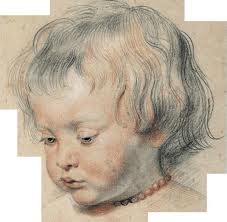
Nicholas by Rubens

       Rubens’ son, Nicholas, 1916.

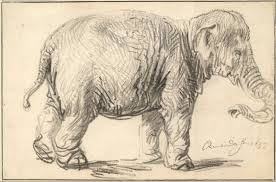
          Elephant by Rembrandt

        Rembrandt’s Elephant, 1637.

I took the opportunity to see an exhibition at the Albertina Gallery in Vienna at the weekend. It is part of the Hofburg Palace and was built during the Hapsburg dynasty. The building itself is beautiful and the exhibitions are varied and interesting. While also viewing an exhibition of black and white landscape photos and an Impressionist exhibition, it was this temporary exhibition of Rubens and Rembrandt which caught my eye and got me thinking about outlining. 

I love art and can happily while away hours in galleries given the opportunity. I have painted a great deal in the past, but setting up a canvas and oils takes time and space so I haven’t painted for a while. These drawings are a collection of 170 pieces of Dutch art and were penned or (penciled) at over a period of time, but in the 1900s, drawing was becoming an art form in its own right, as opposed to being used as a preparation for larger paintings.

Outlining is an important part of the writing process and, as I wandered around the gallery gazing at the drawings, I was struck by the similarities between the two forms: Writing and Art.

Writing and Outlining

Many would argue that writing needs an outline, although not every writer works this way, and that it is an important part of the process of your work. I recently wrote a post on structure and plotting.

Outlining your work can be really helpful and speed up the process of novel writing, avoiding the need for major editing towards the end. An outline is a sketch, if you like, for the finished painting and an image of how your story will hang together, how it will look in the final stages, with its cover.

Art and Outlining

Although these sketches in the exhibition were mixture of both drawings in their entirety and preliminary sketches for a finished painting, I thought about how an outline is needed in both cases. If you look closely as many impressionist paintings, you will see the outline drawn or painted onto the canvas before the layers of oil paints are added with a brush or a pallet knife.

This process is similar to the layering effect of writing a book. You begin with the bare bones and the image in your mind, and then go back and add detail, scene setting, character idiosyncracies, plots twists and, in some cases, flashbacks.

The similarities between outlining in art and writing interweave in a way that clarified the process for me in writing.

Do you outline? If so, what are your methods and do you have a clear idea in your mind of where you are going? Can you see the finished picture?

Writers and Their Creative Spaces

Some of you may have noticed the blog header change. It is a photograph I took of  W. H. Auden’s desk and typewriter at his summer house in Kirchstetten, Austria, not so far from where I live. The previous header was an image of his bookshelves which are upstairs in his study. I visited Auden’s summer house last Autumn, just as Take Me to the Castle was about to be released and just as I began to creep into the world of social media as a writer. If you searched for F. C. Malby prior to September 2012, you would not have found a thing.

IMG_9580

W. H. Auden’s study in the upper rooms of his summer house – Kirchstetten, Austria.

I have been interested in writing spaces for a while for several reasons:

They form the inspiration for the work of each writer, whether the space is a small desk in the corner of a room, a pocket of a cafe, a library, or a large wood desk in a grander room. Writers are natural sponges of their immediate surroundings – the views, the conversations, small objects or buildings. All of these things help to form the ideas which swirl around in our minds.

They are a slice of history. Visiting this beautiful house in a remote village, where Auden penned gems such as Stop all the Clocks, I felt a sense of anticipation as I scanned his bookshelves, coffee pots, vodka bottles, memorabilia, even his slippers left by the chair. It was almost as though he could have walked into the room at any moment. Everything he read and used has been left as it was and turned into a small museum. I sat in the chair by the desk and looked out of the window wondering what he might have thought as he looked out towards the woods.

The books say much about the author. Auden had a small selection of his own books in amongst shelves of writers such as Wodehouse, Shakespeare, Twain, Waugh, Keats and Golding, as well as a collection of atlases and books on psychology and philosophy. I looked at the books closely because I believe that what each writer reads will influence his or her writing and style to a great extent.

I have been to the Isle of Jura on the West coast of Scotland but have yet to visit the rented house where Orwell penned Nineteen Eighty Four.  He apparently worked without electricity or running water on a remote end of the isle.

If you are interested in finding out more about writers and their creative spaces, I have a board on Pinterest of well known writers, with many in their work environment.

chrstie

Agatha Christie’s study

louis de berniers

Sebastian Faulks’ garden work space

austenroom2

 Jane Austin’s tiny walnut table

Agatha Christie surrounded herself with art. I also find art galleries a source of inspiration for some of my writing.

Beatrix Potter surrounded herself with animals as she wrote and illustrated her famous Peter Rabbit books.

E. B. White worked in a boathouse. Imagine the waves lapping against the boathouse walls as he wrote and a view into a horizon where the ocean meets the sky.

Sylvia Plath took her typewriter in the great outdoors, sitting on a stone wall with her typewriter balanced on her lap.

Louise de Bernieres writes in a shed in the garden over looking a vegetable patch with a view of pheasants, listening to music.

Sebastian Faulks uses a small room fifteen minutes from his house. He has a small cameo of Tolstoy that he bought in his house in Moscow and a bronze relief of Dickens. For each book he invokes a sort of patron saint. For A Week in December it was George Orwell.

Jane Austin worked on a fragile 12-sided piece of walnut on a single tripod, which must be the smallest table ever used by a writer. She established herself as a writer whilst working here after a long period of silence. Her early novels had been written upstairs in her father’s Hampshire rectory.

Let Me Tell You About The Creative Writing Gene

Today’s guest post is by author Marianne Wheelaghan, co-founder of the online creative writing school, Writing Classes. She is an informative and supportive voice in the online writing community and I have enjoyed getting to know her over the past few months. I highly recommend her writing blog and her twitter feeds are full of good writing tips.

For the first half of my working life I was a croupier, a Brussels sprouts picker and a marketing manager for a company that sold warm air hand driers and soap dispensers, but most of the time I was an English teacher. Then someone I knew died in a terrible accident. I wanted to write a story about what had happened but I didn’t know how to. Being a big believer in education, I enrolled in a creative writing night class. But when I finished the course I still didn’t know how best to write my story. I asked my tutor for advice. She muttered something about “creativity not being something you can teach.”

I tried another class. Again I struggled to write my story. I asked my new tutor why writing was so difficult?  She smiled kindly and said  “not everyone has a creative writing gene, my dear.”  I was astounded. Could there really be a creative writing gene, and I didn’t have it? I wanted to give up but the stubborn side of me refused.  I carried on writing alone. At some point I saw an advert to do a Masters degree in Creative Writing at Lancaster University. I applied and my portfolio was  accepted. I wrote and studied and learned and was encouraged to take risks. My writing flourished and I learned five very valuable things about writing:

1. There is no creative writing gene. Being successful in creative writing is more to do with an attitude than an attribute: we have to work hard, yep, it’s that thing about 1% inspiration and 99% perspiration; we must not be afraid to take risks and we must have something to say – even if, like Flannery O’Connor, we don’t necessarily know what that is at first.

“I write because I don’t know what I think until I read what I say.” Flannery O’Connor

2. While “being creative” is something that cannot be taught, it is something that can be encouraged and nurtured and coaxed – and as the wonderful Maya Angelou said,

“You can’t use up creativity. The more you use, the more you have.”

3. A story does not arrive fully formed, like he Goddess of Athena popping out of her father Zeus’s head. A story is created by working out the different ways of telling it by rewriting and cutting and rewriting again – it is often only through the rewriting that we discover what it is we want to say and how we want say it.

4. There are writing techniques you can learn which can help you develop your writing skills.

5. All writers – beginners and experienced writers alike – are nervous about facing the blank page, but for some of us there is nothing more rewarding than creating our very own story from nothing.

When I finished my degree I was determined to share what I knew with others – setting out on the rocky road to becoming a writer requires a big leap of faith, but there are techniques and skills we can learn to help it make it less scary.  I wrote a course for beginners – the kind of course I would have liked to have been able to take. It included lots of advice on writing techniques and lots of writing opportunities for beginners to take risks and make mistakes and learn by them.

Next I sought out some tech support because my new course was going to be all online. I’d studied for my masters degree online. It had meant I could join in from the comfort of my home, at a time that was convenient to me, which was usually late at night after I’d finished work and my children were in bed. There was no time wasted getting to and from classes. No worrying about talking in front of others. No having to get baby sitters. No being late or early or missing classes because the virtual classroom is always open. It was a magical world within a world. I wanted to recreate this world for the beginner writer.

After much research my techy helper found a reliable, affordable, easy-to-use conference programme. I was ready. Armed with a five year business plan and a lot of brass neck, I approached various bodies for funding. And I got some! Writingclasses.co.uk was born. I now have six wonderful, encouraging tutors and offer six courses – including one for experienced writers wanting to finish that novel, and a poetry and magazine article writing course. We have thousands of students pass through our virtual doors and they are all too distracted developing their writing skills, and working around the different ways of telling their story, to worry about whether they have a creative writing gene or not.

‘It may not look like pleasure, because the difficulties can make me morose and distracted, but that’s what it is – the pleasure of telling the story I mean to tell as wholly as I can tell it, of finding out in fact what the story is, by working around the different ways of telling it.’ Alice Munro.

marianne1Marianne left Edinburgh, her home town, when she was 17 and returned after 30 years when she founded the online writing school, www.writingclasses.co.uk. Her first novel, The Blue Suitcase, is based on her mother’s life and tells the disturbing story of a Christian girl growing up in Nazi Germany. Food of Ghosts is her debut crime thriller and features Scottish detective Louisa Townsend – feisty, fearless, vulnerable and on Tarawa, a remote coral atoll, where she has a week to find a serial killer. She is presently working on a sequel to The Blue Suitcase and a second DS Louisa Townsend novel.

You can find her on twitter @MWheelaghan and @sol0vewriting and at http://www.mariannewheelaghan.co.uk

Her books are also available on Amazon.