Understanding Subplots: The Key to Storytelling

I’ve had lots of questions and about plotting stories, and my articles on plot and structure continue to be among my most read posts.

What is a Subplot?

A subplot is a secondary storyline which runs alongside the main plot. It often involves supporting characters, additional conflicts, or personal struggles that relate directly or indirectly to the protagonist’s journey. Some of the best subplots connect to the main narrative, either by reinforcing the theme, revealing character traits, or influencing the main plot’s outcome.

Why We Need Subplots?

Whether you are writing scripts, short stories or novels, having multiple plot strands creates a necessary expansion of the main themes and layers your stories. Subplots add depth, complexity, and emotional resonance to a story. They transform a simple narrative into a layered experience that feels more realistic and engaging. Understanding how and why to use them strengthens your writing.

Subplots Add Depth to Characters

One of the greatest strengths of subplots is their ability to develop characters beyond the main storyline. The main plot often focuses on a specific external goal: solving a mystery, defeating an antagonist, or achieving a dream. Subplots, however, often explore the internal lives of characters: their relationships, fears, and motivations. This creates intrigue and insights for the reader, which might be missed through the main plot line.

Creating More Realistic Worlds

Real life rarely follows a single narrative thread. People juggle relationships, responsibilities, and individual struggles. Subplots highlight this layering effect by weaving multiple storylines together. This creates a world which feels more realistic. Supporting characters also show their own motivations and story arcs rather than existing solely to support the protagonist. This creates a richer, more immersive experience for the reader.

Subplots Strengthen Themes

Subplots are powerful tools for reinforcing the central themes of a story. A well-designed subplot often mirrors, contrasts, or adds complications to the central plot. If the main plot explores trust, a subplot might show a different character grappling with betrayal in a different context. These variations allow readers to view themes from multiple angles, making the story feel more authentic.

Change of Pace

A single storyline moving at full intensity from beginning to end can become exhausting for readers. Bringing in subplots shift the focus and builds gradual tension, creating breathing space between key points in the plot. They can also act as narrative bridges which keep readers engaged, while the main plot builds toward a pivotal turning point.

Subplots Drive the Main Plot Forward

Although subplots are secondary, they often have direct consequences for the main storyline. A subplot might influence a character’s choices during a critical moment, or reveal information which changes the direction of the main conflict. When subplots intersect with the main narrative, the story feels more interconnected.

Some Examples in Films

If you’ve ever watched the film, Crash, you’ll see how well subplots are used to increase tension and keep the viewer hooked. Set in LA over several days, we see the stories of different characters interweaving. Its impact is intense. Layering is important, and an interweaving of plot and subplot creates a richer, more diverse experience.

In the film, Shawshank Redemption, the role of Brooks as Red’s negative mentor, tricking the viewer into expecting Red will follow the same path towards destruction.

What about Bilbo Baggins, who saves the dwarves from the spiders in The Hobbit. Baggins is a good example of creating conflict through a subplot to illustrate growth in a character.

The Power of Character-Driven Stories

One of the questions I’m most frequently asked as a writer is, ‘do you focus on plot or character?’ I predominantly write thrillers, so character is particularly important and often drives the story line (the plot). Jana in Take Me to the Castle and Leisl in Dead Drop are strong female protagonists. Their thoughts, lives and actions drive the plot.

It works well for short stories, particularly given the brevity of the craft and the constraints of needing to hook a reader quickly, drawing them into a story. When the reader is engaged with the character, they are more likely to engage with the story and understand the motives driving the character’s decisions and actions.

When a reader knows what a character has experienced and understands their weaknesses and specific character traits, the story makes more sense and the reader wants to go on the journey with them.

Who your characters are is much more intriguing than what they do in a character driven story. We don’t engage with perfection as readers, we engage with vulnerability. Vulnerability leads to trust and connection.

It works with fictional characters in the same way as in real life. The writer’s job is to make the reader care, and the most effective way to do this is to highlight a character’s fears, vulnerabilities, and internal conflicts. I’ve written more about this in other posts on plot writing here and here, as well as on the narrative arc.

Examples of character driven stories…

Of Mice and Men

Crime and Punishment

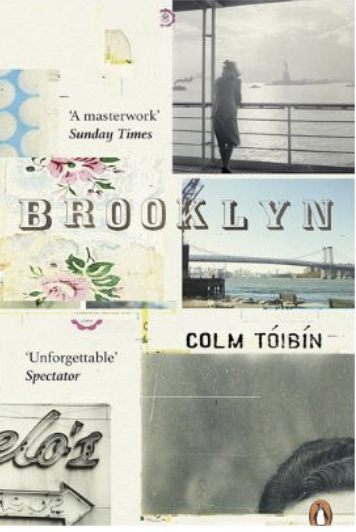
Brooklyn

A Man Called Ove

Eleanor Oliphant is Completely Fine

What We Can Learn About Plot Writing From Thriller Series, Vigil

Photo: BBC

Plot is arguably one of the most important elements of fiction writing – from it stems, the characters, the mood, the pace. It sets the scene for the whole tone of a fiction novel, so it’s important to get it right. When you’re writing crime or thriller novels, it is absolutely key, and there are ways of raising the stakes to keep your reader hooked.

Here are a few that I noticed, while watching the BBCs recent new thriller, Vigil. If you haven’t seen it, you can watch it on catch-up. As a writer, it’s difficult not to consider plot, when watching high-tension drama on television and and in Film!

  1. Put your characters in a challenging environment or physical danger.
  2. Introduce vulnerabilities and character flaws.
  3. Create secondary characters to add new tensions to the plot.
  4. Allow tension to ebb and flow.
  5. Create obstacles and conflict between characters.
  6. Keep raising the stakes.
  7. Make the viewer (reader) ask questions.
  8. Create internal and external conflict.
  9. Leave things unresolved until close to the end.
  10. Remind the reader of the stakes.
Photo: imdb

The plot hinges on a Detective Chief Inspector Amy Silva (played by Suranne Jones). DCI Silva works for the Scottish Police Service and is sent to HMS Vigil, a Trident nuclear submarine, by helicopter for three days, at first, to investigate. Shortly after the mysterious disappearance of a Scottish fishing trawler, a member of the crew on Vigil is murdered, and DCI Silver has been sent to investigate. The series takes viewers on a journey into a world of submarine warfare and security threats.[Skip ahead to the next paragraph to avoid a plot spoiler] Having lost her husband in a car crash, where the car is submerged in water, Amy manages to rescue only her daughter. She suffers from flash-backs, depression and anxiety, for which she is taking medication.

Much like Carrie, in Homeland (a highly-skilled, but bipolar CIA operative), it’s this vulnerability that makes Silver so likeable and her achievements all the more impressive as the plot unfold (see no. 2 in raising the stakes). Finding character flaws and vulnerabilities draws the reader to the character. The human need to connect through vulnerability is best illustrated in Brené Brown’s TEDxHouston Talk, The Power of Vulnerability. In this twenty minute TED talk, she describes vulnerability as uncertainty, risk and emotional exposure, but says that vulnerability is not weakness; it’s our most accurate measure of courage. It’s this courage, despite character flaws and vulnerabilities, that makes the best protagonists so appealing and keeps viewers and readers hooked.

DCI Silver’s investigations, along with her team on land, create conflict between the police, the Royal Navy and MI5 (see no.5 in the list of raising the stakes). She is in a challenging physical environment (see no.1) in a confined space, away from her daughter, her normal routine and recent partner, DS Kirsten Longacre (Rose Leslie), leaving her conflicted.

While there were a few plot holes and inconsistencies in places, it was a gripping series, with tensions ramping up towards the end. The finale provided both the tension and resolution that viewers were hoping for, with some impressive redemptive qualities.

Photo: imdb

You can find out more about plot, tension and story arcs, from several of my other posts (links below):

Narrative Arc: Shaping Your Story (one of my most read post’s with almost 15,000 views)

Plot, Characters, Homeland, and What You Need to Achieve to Keep Readers Engaged

What we can learn from Beauty and the Beast About Plot, Tension and Obstacles

What we can learn from Beauty and the Beast About Plot, Tension and Obstacles


Disney’s much hyped adaptation of Beauty and the Beast was released at the weekend. The film broke box office records with an estimated $170 million, making it the seventh largest opening weekend of all time. It’s a story that engages your emotions and keeps you hooked to the end. I was discussing the film with someone today who wanted to go and see it. She said it was her favourite fairytale and we were talking about what makes this particular story stand out. It occurred to me that part of the pull is the constant tension throughout the story, the conflict of interests, and the fact that the Beast is somehow flawed as a love match for Belle.

We all know the plot – an arrogant young prince and his servants fall under the spell of a enchantress, who turns him into the Beast until he learns to love and be loved in return. The headstrong village girl Belle enters the Beast’s castle after he imprisons her father Maurice. With the help of his servants, Belle begins to draw the cold-hearted Beast out of his isolation.

There is a tension between Gaston’s claims that he will marry Belle, and her desire for independence and dislike of his puffed up ego. Part of her appeal is the fact that she doesn’t want a relationship and is a strong and independent girl. She loves books, loves her father and, unlike the other girls in the village, refuses to fall for Gaston’s false charm.  There is a tension between either Belle or her father being held prisoner in the tower.

There are obstacles in the way, in the form of wolves, Gaston, the villagers when they storm the castle, Belle’s need to rescue her father, and the Beast’s appearance and initial hostility. Every time you come up for air, another obstacle presents itself. Life can feel like this at times, but it is used as part of a plot to ramp up the tension and keep the viewer engaged and rooting for the main characters.

The fact that the Beast sees himself as unlovable and flawed because of the curse put on him, appeals to us because most of us feel flawed in some way, however big or small, aware of our less-than-perfect self. Yet, he wins her affection despite his appearance, which has kept him in his tower. It is in part because of this that we want their relationship to work.

I want to leave you with one of the highlights of the film…the library!

Beauty and the Beast


Story is Everything

Here are 25 thoughts on creating stories, in no particular order:

  1. A lot of things have beginnings, middles and ends — but that doesn’t make them stories.
  2. True stories have two parts: first something bad happens, second something bad is fixed (or a fix is at least attempted)
  3. Plot-driven and character-driven stories don’t really exist; all stories are conflict/tension driven.
  4. Suspense, tension, conflict — these things shouldn’t be limited to specific genres.
  5. Asking what happens next is probably the wrong question.
  6. Asking what is my character’s goal (or what does my character want) is probably a better question.
  7. Better yet: what can go wrong now?
  8. Ticking clocks give your story a deadline and a destination. Also, tension. Can’t ask for much more.
  9. Give your characters some story-level goals, i.e., decide what it is they want, have them go after it, and the plot will almost fill itself in.
  10. Storytelling is a timeless human instinct — trust and embrace your natural ability.
  11. Tell your stories like you’re talking to just one person — an audience of one is the right number.
  12. Start with the end, and you’ll stay on track.
  13. Most stories start too early.
  14. Many stories end too late.
  15. Stakes are essential. Usually the higher the better.
  16. In real life, we avoid conflict because it sucks. In your stories, you must embrace, chase it even.
  17. Things can always get worse — we’ll probably enjoy reading that more anyway.
  18. Not all stories have to have happy endings, neat little bows are for packages.
  19. A good story doesn’t preach or moralize — it connects and resonates.
  20. Good stories leave out the unimportant parts.
  21. You have more stories to tell than you realize. Trust. Yourself.
  22. Complex isn’t necessarily better. Some of the most powerful stories and pretty simple.
  23. Trying for theme will kill a story — theme comes last.
  24. Plot is as simple as putting one foot in front of the other.
  25. And then? Keep asking until you figure it out.

This is reblogged from Justin Mclachlin’s blog.