First Drafts

writer's notes

The previous post about blogging received a record level of traffic and an unprecedented response, given this blog’s short life span, so I’ll come back to it and write more on the topic soon. It is clearly a subject that people feel strongly about and I had not realised the level of passion and dedication behind so many blogs.

First drafts is the issue I’d like to tackle today.  I am in the stage of the first draft of my next novel and I have been thinking about the changes through each stage of writing up to final publication. There is something unique about a first draft; a freshness, an expectation, a certain level of hope.

The first draft is the place of mountain peaks and valleys, it is the place of the Eureka moments and the what ifs, it is the place of ‘first thought’ excitement and of apprehension, the place of originality and of doubt.

In writing your book for the first time, before you go through rounds of editing and rewrites ad infinitum, there is an enthusiasm about where you will take the reader, in fleshing out your characters and plot, in travelling to new places. There is also an apprehension surrounding your words; questions, doubts, fears. Will I be able to keep up the tension and the pace? Will people want to read it? Will I be able to finish it? Is it going to be too long/short? Did I choose the wrong topic/genre/setting? Do the scenes link up? Is there enough cohesion and consistency?

There are endless questions that seek to counter balance the moments where you get lost in the the sentences, your fingers running away with themselves, tapping furiously at the keyboard and you forget to eat.

What is it about first drafts that make them so enticing, yet so difficult to wrestle with? Give an artist a blank canvas and paints, give a singer a microphone and close them in to a sound proof recording studio, give a dancer a stage and a preview audience. There will always be fears surrounding your ability, your audience’s reaction, the longevity of your career (if you are thinking long-term). All art forms are highly subjective, creating a range of responses. I recently scanned some well promoted and popular books, only to find a great and confusing diversity of reviews. This, I think, reflects the fact that no two people will love the same books, music or art. Although there are varying levels of skill among writers, the result, as the publishing industry well knows, can be unpredictable.

How, then, do you wrestle with the first draft to produce your best work? I have struggled with nagging thoughts of what people will think when they read it, much more so now than with any of my short stories or my first novel. I think it is partly down to the fact that there is more pressure with each book that you write to make it better than the last, to keep up reader interest, and to prove that you want to be able to keep writing. There are several people in publishing who are waiting to read my current novel and, whilst it is encouraging, it is also nerve-wracking. When I self-published my previous novel I had complete control over the process and the outsourcing; the deadlines, the cover design, the editing, and it felt safe in many ways. Now I feel a sense of pressure and, sometimes, of impending doom. I have felt paralysed by the need for the first draft to be perfect and to be commercially viable. The truth is no first draft will ever be perfect and nobody can predict what will sell.  Whilst I have been surprised by the sales of my first book, I am under no illusions about the state of flux in which different types of books remain.

My response  to these doubts when they creep up on me, as they always will, is to write as though noone will read it. That’s it. It’s really that simple. Write your book without wondering how good it will be or if it will sell. Imagine that it will never be read and write it for yourself. You do need to be aware of your audience when planning, but I have found that since I made the decision to stop thinking about reader response and beyond, I have moved from writing around 500-800 words a day to up to  2,000 or 3,000. I know it won’t happen every day but it is liberating and freeing. So, here’s to days of carefree writing before you apply a scalpel to the parts that you won’t need, before you carve and sculpt your work. Here’s to writing for the love of writing.

Photo credit: A Leonardo da Vinci notebook with diagram of a potter’s wheel, c. 1508-1509. Flavorwire

Is Blogging Worth the Time and Effort?

blogging

I have just received a second ‘Sunshine Award’ for my blog. Thank you to fminuzzi and to KirkyKoo for the earlier award. Both are much appreciated. It made me think about the naysayers who tell you that blogging is not worth the time and effort, especially if you write fiction. The argument goes that if you write non-fiction it is important to write about your topic and to build a following but that if you are writing fiction you are wasting your time, especially if you decide to write about the craft of writing itself.

Well, I beg to differ.

Firstly, I don’t just blog to build a following, to increase my social media platform, or to sell books or to raise my profile as a writer. These are words you’ll hear media savvy writers using but I’m not keen on them.

And here’s the thing…I blog because I love to write.

I love to write short stories, I love writing novels (despite the frustrations and the hours involved in creating carefully crafted sentences) and I really enjoy writing blog posts. My blog is an outlet for the hundreds of ideas that are sparked as I speak to people, or read other posts, or hear something that I want to comment on in more than just a thread.

Here’s the other thing (never use the word, ‘thing.’ It’s as good as using, ‘like,’ ‘just,’ or ‘somewhat.’ Don’t use those words)…

I blog because I like to connect with people, to link to articles and to provoke discussion.

I really appreciate the comments and feedback. Some of the suggestions from blog readers have been really helpful to me. I enjoy the engagement with you, my blog readers, and I appreciate the range of ideas. It is important to me that you are enjoying the posts and finding a nugget of useful new information.

Of all the social media sites (and there are many, too many to keep up with to any great extent) blogging is my favourite for it’s sheer freedom and for the more personal interaction with people. Anyone else with me on this?

Here’s the other thing… blogging gives you a blank canvas that (don’t use the word ‘that’ either) is shorter than a novel but long enough to express an idea succinctly, adding images, links and graphics if you wish.

I enjoy posts with images, videos, book trailers, statistics and links to other useful posts, either on the same blog or elsewhere on the web. Blogging is a great way to raise the profile of other bloggers, to share interviews or book reviews, to encourage others and to share useful information. I have purchased several books recently, purely because they have been mentioned on the blogs of people who I like and trust.

I read blogs written by book reviewers, publishing houses, photographers, travellers, self-published authors, marketing experts (despite their use of terms such as ‘platform,’ or ‘sales’). There is a huge range of topics. Some are highly specific, others are more general, but if you took blogging away from me there would be a dimension missing.

There are those who would argue that blogging takes up valuable writing time. Really? What do you do when you are not writing? Watch TV? Read? Go out? Well, I have an evening of writing ahead of me just because I am on a roll and because I have the time, but I wanted to write this post FIRST to say that blogging IS absolutely worth the time and effort. It is worth it because (and I run the risk of beginning to sound like a l’Oreal advert here) I enjoy the writing and because I learn so much from others.

Please, don’t let anyone stop you blogging if you enjoy it.  

Here is a list of brilliant blogs which I read regularly. They are by no means exhaustive, I do read many more, and blogs are about sharing so here you are:

Authors:

Mystery Writing is Murder

Marianne Wheelaghan

Tom Gething

Aliventures

Anne R. Allen’s Blog

Rebecca Bradley

Short story authors and links to journals/competitions:

Paul McVeigh

Tania Hershman

Book bloggers and author interviews:

Pam Reader

A Little Blog of Books and Other Stuff

Therapy Through Tolstoy

Strange Alliances

Literary agents:

Books and Such

Carly Watters

Industry news and general interest:

Brain Pickings

Writer Unboxed

Jane Friedman

Do drop by and let me know if you blog and what your gain from blogging, or add to the list of good blogs to share.

And have a lovely weekend.

Interview with Strange Alliances

This is just a quick post to let you know that my interview with Elaine Aldred is over at her blog, Strange Alliances: F.C. Malby. Literally Engaged With Her Writing. We discuss my teaching experience in the Czech Republic just after the fall of communism, and various aspects of writing and publishing.

Many thanks to Elaine for taking the time to interview me. She is a wonderful support to writers and her backlist of author interviews is well worth the read. Do leave comments and feel free to ask any questions.


The Fine Art of Bookselling

Christina James is a crime thriller writer of the literary variety. Her novel In the Family was published in November 2012 and her next DI Yates novel is due to be released in June 2013. She has written a guest blog post today on her experiences as a bookseller. Thank you, Christina.

 9781844718771frcvr.indd                              9781907773464frcvr.indd

You might think that bookselling is like any other retail activity and, up to a point, you would be correct.  Bookselling consists of acquiring the right ‘product’, setting it out in an attractive manner and making sure that people who are interested in it are able to find and purchase it – and that throughout the process they are treated with unfailing helpfulness and courtesy from the moment that they walk into the shop.  You could say the same of selling cheese or hats or computer games.

Booksellers, however, have always known themselves to be special.  There are numerous reasons for this, some of them valid.  Booksellers are part of that small, select band – its other members include jewellers, posh dress-shop proprietors and some other sellers of luxury products – commonly classified by marketing gurus as ‘high-end retailers’.  It is not unknown for some booksellers to consider themselves a cut above even these illustrious peer-group members, on the grounds that what they sell feeds the mind.  Therefore, the argument runs, their customer service aspirations are of a different order from those of a jeweller who seeks to make a couple happy by conjuring up the perfect engagement ring or the chocolatier who provides the crowning accompaniment to a romantic date.

So far, so bad.  I am a great fan of booksellers in general – I do believe that they are among the great unsung heroes of civilisation – and probably of 95% of booksellers in particular.  But it is true that there is an annoying minority of booksellers who ponce around giving themselves airs, thus ensuring that all but the most erudite and determined customer is either too scared to enter the shop in the first place or, faced with silence or a supercilious greeting, beats a hasty retreat.  It’s amazing how every fresh generation of booksellers seems to breed a few of these – and how, against all odds, on the whole they manage to survive.

Anyway, back to what booksellers do.  Acquiring the right product is not as easy as it sounds when there are more than a million items to choose from UK publishers alone.  No bookshop can stock more than a fraction of these.  An average bookshop may hold 25,000 titles, a large one twice this figure.  ‘So what,’ you might think, ‘I can’t get every brand of T-shirt in Debenhams or even every brand of deodorant in Boots.’  That’s true, but the difference is that a bookseller’s customers expect to be able to find every book that they want in their local bookshop.  Of course, it’s not possible for the bookseller to fulfil all their expectations, however obscure, but he or she does have to get to know the (constantly-changing) preferences of the local community well enough to be able to score a good hit-rate and also to have an efficient, speedy ordering service in place for the titles that, inevitably, aren’t in stock.

Making the product look attractive is what retailing is all about.  No room for special pleading there, perhaps; except that a bookshop contains hundreds of items that have been arranged according to a system (by category, alphabetical order, Dewey decimal, whatever) and the more successful the shop is in attracting customers, the more likely it is that these items will be lifted out for inspection and returned to the wrong place.  The staff of a sizeable bookshop spends a large percentage of its time just tidying up the shelves.  Then there is the risk of damage.  No bookseller wants to stop a customer from browsing – it is what gives bookshops their unique feel; what makes them, in jargon parlance, ‘destination stores’ – but at the same time repeated handling is bound to leave some of the stock grubby, dog-eared or broken-backed. (One of my pet hates is to see someone callously ‘back’ a paperback.  The screeching of gum and binding as this evil act is perpetrated and the resulting mutilation is as hard to bear as watching a butterfly being broken on a wheel.)  Finally, there is the problem of outright theft – again, the curse of all retailers, but particularly difficult to control when the items being pilfered will slip easily into a bag or pocket.  Security systems help, but they are not infallible.  Bookselling margins are already tiny before being further eroded by ‘shrinkage’.

Finally, there is the challenge of making sure that the customer finds the book that she or he wants, or is even surprised and delighted by being offered a book that pleases but of whose existence s/he has been previously unaware.  In order to achieve this, a bookseller needs not just to understand  the local market, as already mentioned, but to have an almost encyclopaedic knowledge of both backlist and forthcoming titles, along with a highly-developed power of recall.  This is much more difficult than it sounds and is where the bookselling profession really comes into its own.  Booksellers make serendipitous links between what the customer likes and what is on the shelves, dozens of times a day.  Unfortunately, you only get to hear about the times when they drop the occasional stitch.  For example, one of the national newspapers once ran a prominent story on how its reporter had gone into a well-known bookshop and asked for Amsterdam, the novel by Ian McEwan, only to be directed to the travel section.  The member of staff in question was a Saturday girl and, needless to say, she was mortified.

Apart from the three great planks upon which bookselling is constructed – getting the books, displaying them, connecting them with the right customers – there is a myriad of other tasks associated with running a good bookshop, from handling goods-in and returns to keeping the shop floor areas clean and hazard-free to managing complex staff rotas, meeting publishers’ representatives and organising events.

I think that I have just proved the case that good booksellers are special.  And the real crème de la crème of the bookselling industry reinforce their specialness by keeping this to themselves.  They take a modest delight in practising their skills in an understated way, knowing full well that the best way to win and keep customers is by understanding that ars est celare artem.

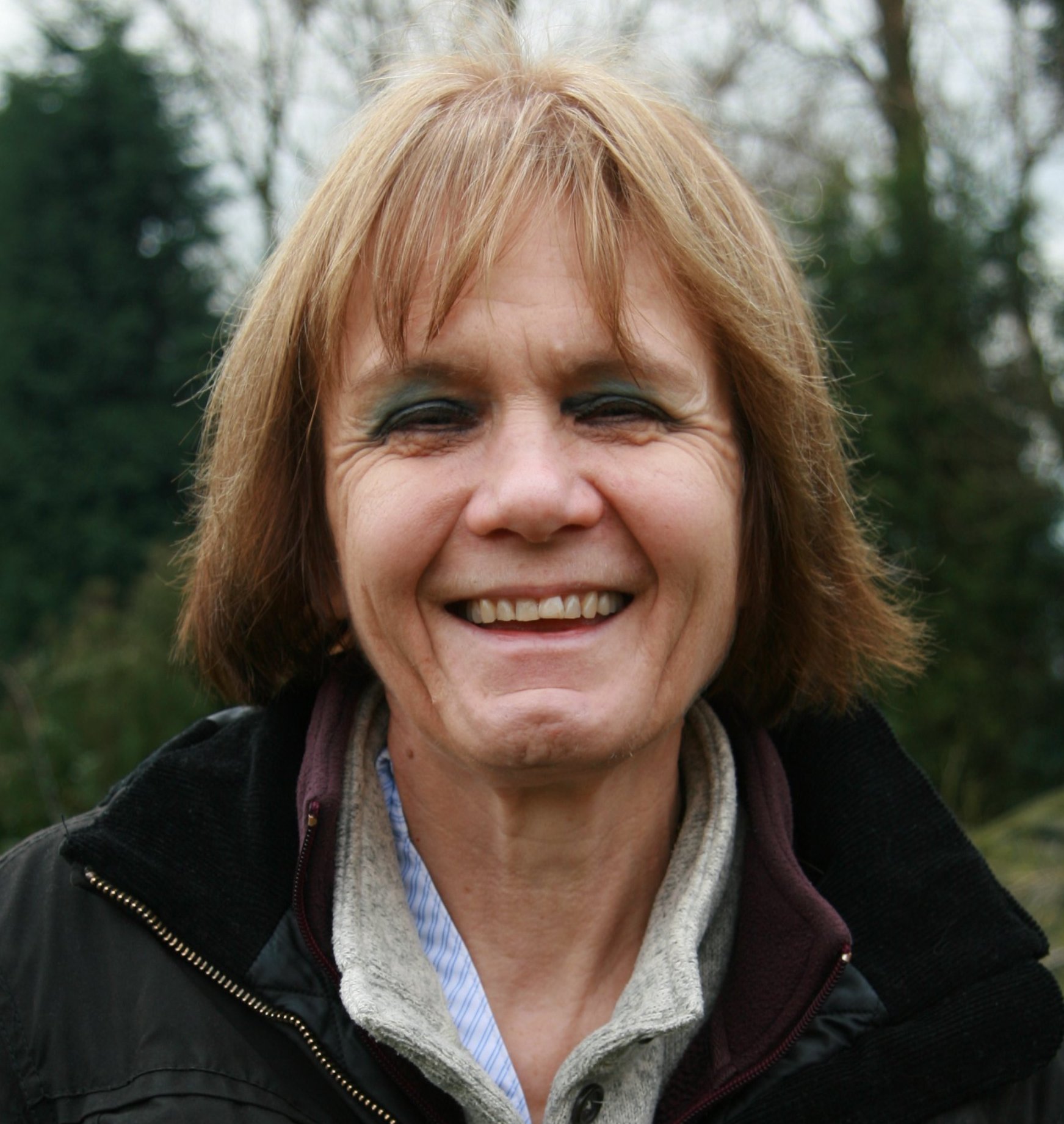
Christina James Gravatar (1)Christina James was born in Spalding and sets her novels in the evocative Fenland countryside of South Lincolnshire.  She works as a bookseller, researcher and teacher.  She has a lifelong fascination with crime fiction and its history.  She is also a well-established non-fiction writer, under a separate name. You can follow Christina on her blog at www.christinajamesblog.com and on twitter @CAJamesWriter.