Understanding Subplots: The Key to Storytelling

I’ve had lots of questions and about plotting stories, and my articles on plot and structure continue to be among my most read posts.

What is a Subplot?

A subplot is a secondary storyline which runs alongside the main plot. It often involves supporting characters, additional conflicts, or personal struggles that relate directly or indirectly to the protagonist’s journey. Some of the best subplots connect to the main narrative, either by reinforcing the theme, revealing character traits, or influencing the main plot’s outcome.

Why We Need Subplots?

Whether you are writing scripts, short stories or novels, having multiple plot strands creates a necessary expansion of the main themes and layers your stories. Subplots add depth, complexity, and emotional resonance to a story. They transform a simple narrative into a layered experience that feels more realistic and engaging. Understanding how and why to use them strengthens your writing.

Subplots Add Depth to Characters

One of the greatest strengths of subplots is their ability to develop characters beyond the main storyline. The main plot often focuses on a specific external goal: solving a mystery, defeating an antagonist, or achieving a dream. Subplots, however, often explore the internal lives of characters: their relationships, fears, and motivations. This creates intrigue and insights for the reader, which might be missed through the main plot line.

Creating More Realistic Worlds

Real life rarely follows a single narrative thread. People juggle relationships, responsibilities, and individual struggles. Subplots highlight this layering effect by weaving multiple storylines together. This creates a world which feels more realistic. Supporting characters also show their own motivations and story arcs rather than existing solely to support the protagonist. This creates a richer, more immersive experience for the reader.

Subplots Strengthen Themes

Subplots are powerful tools for reinforcing the central themes of a story. A well-designed subplot often mirrors, contrasts, or adds complications to the central plot. If the main plot explores trust, a subplot might show a different character grappling with betrayal in a different context. These variations allow readers to view themes from multiple angles, making the story feel more authentic.

Change of Pace

A single storyline moving at full intensity from beginning to end can become exhausting for readers. Bringing in subplots shift the focus and builds gradual tension, creating breathing space between key points in the plot. They can also act as narrative bridges which keep readers engaged, while the main plot builds toward a pivotal turning point.

Subplots Drive the Main Plot Forward

Although subplots are secondary, they often have direct consequences for the main storyline. A subplot might influence a character’s choices during a critical moment, or reveal information which changes the direction of the main conflict. When subplots intersect with the main narrative, the story feels more interconnected.

Some Examples in Films

If you’ve ever watched the film, Crash, you’ll see how well subplots are used to increase tension and keep the viewer hooked. Set in LA over several days, we see the stories of different characters interweaving. Its impact is intense. Layering is important, and an interweaving of plot and subplot creates a richer, more diverse experience.

In the film, Shawshank Redemption, the role of Brooks as Red’s negative mentor, tricking the viewer into expecting Red will follow the same path towards destruction.

What about Bilbo Baggins, who saves the dwarves from the spiders in The Hobbit. Baggins is a good example of creating conflict through a subplot to illustrate growth in a character.

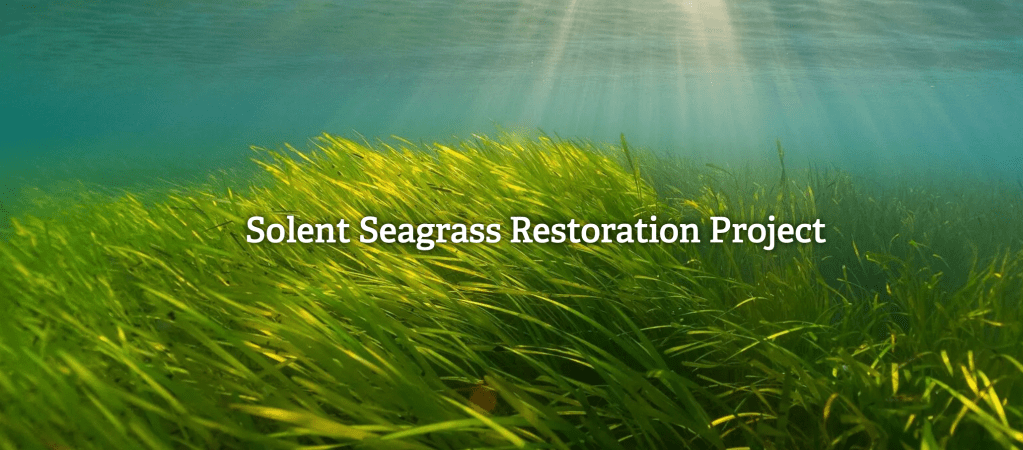
Wild Seas, Wilder Cities raises £5,500 for Solent Seagrass Restoration Project

EXCITING NEWS!

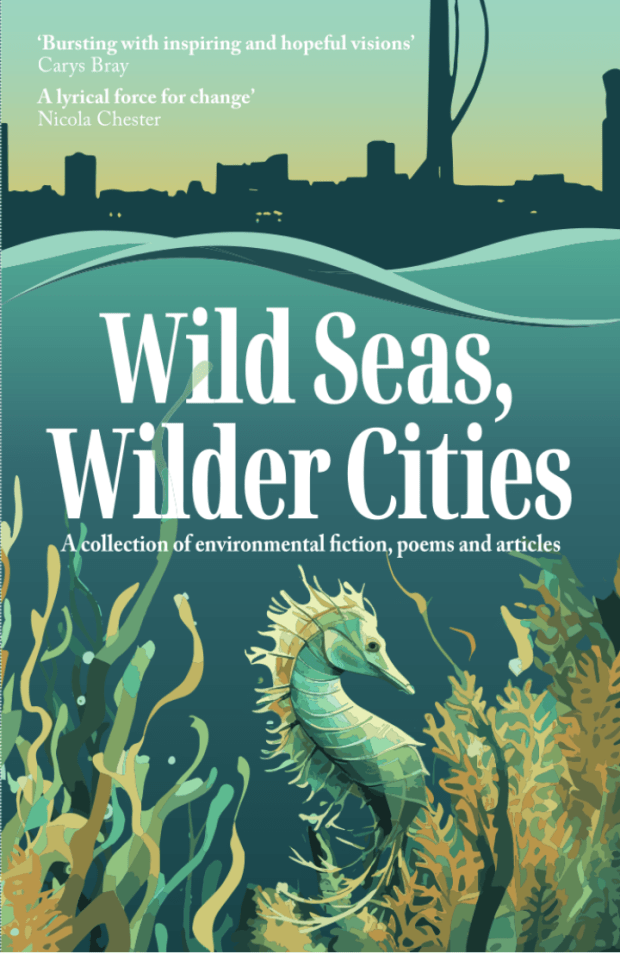
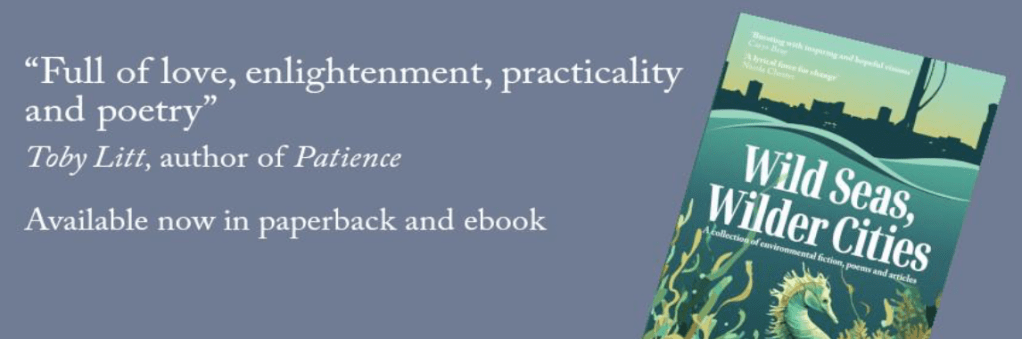
My short fiction piece, ‘Prolific,’ was published in the Pens of the Earth Anthology, Wild Seas, Wilder Cities, alongside some wonderful authors in 2025. Since then, a whopping £5,500 has been raised for the Solent Seagrass Restoration Project. The money raised comes both from book sales and related activities. Find out more about the collection.

ABOUT THE COLLECTION

Wild Seas, Wilder Cities is a “wild-seeded” collection of short stories, poems, memoirs, environmental articles and illustrations from 54 unique contributors, all concerned with showing the positive side of our relationship with the earth.

Wild Seas, Wilder Cities is a “wild-seeded” collection of short stories, poems, memoirs, environmental articles and illustrations from 54 unique contributors, all concerned with showing the positive side of our relationship with the earth. 

Dive into the depths of Wild Seas, Wilder Cities and let your imagination be fired by the many wonderful projects already making a difference to our world, by stories of hope, celebrations of nature, inspirational people (both real and fictional) and by the local action that every one of us can undertake. A few small differences in your life will ensure you are part of the ever-growing global community dedicated to protecting our precious planet. Let us inspire you!

RESTORATION PROJECT

“The many writers and poets represented in this book have all given their work freely to support the vital work of the Hampshire & Isle of Wight Wildlife Trust in its repair and maintenance of the Solent seagrass meadows.” Pens of the Earth

The Restoration Project is working towards a vision of a wilder future and 30% of land and sea restored for nature. Seagrasses do as much to keep the planet cool as rainforests, so raise your spirits and help us plant the seeds of change.

All profits from this book are donated to the Solent Seagrass Restoration Project.

REVIEWS

‘Bursting with inspiring and hopeful visions’ Carys Bray, author of A Song for Issy Bradley

‘A lyrical force for change’ Nicola Chester, writer for The Guardian

‘Full of love, enlightenment, practicality and poetry’  Toby Litt, author of Patience

‘This collection, evolved from the inspirational Pens of the Earth, shows how meaningful, themed narratives can make a shift towards change’ The London Magazine Review, by Judy Waite, Award-winning author and Senior Lecturer in Creative Writing, University of Winchester.

‘We bear witness to the natural world in many ways, and the pieces come in all shapes and sizes, carrying messages of determination, love for nature, positive actions and the power of community.’ Sarah Jane Butler, author of Starling

A delightfully encouraging collection of writings on the ways we can help make the world wilder again, how we can change the narrative on climate change. Vibrant and alive, these are wonderful tales told of renaturing – of striving to support life in all its glorious forms on the earth, of restoring hope for the future.’ Dr James Canton, Director of Wild Writing, University of Essex

Pens of the Earth have a number of activities coming up this year, including online and in-person workshops (check out Tamsin’s Mar 2nd Portsmouth BookFest workshop), the launch of an audiobook, and further book sales, to continue to raise money.  

In the meantime, listen to Pens of the Earth in conversation on Radio Victory‘s Between the Lines, this Sunday, at 6pm. Rachel Birchley will be chatting with Loree and Matt about environmental writing, Tamsin’s forthcoming BookFest workshop and what it takes to put a good anthology together. It will also be available on catch up: https://radiovictory.co.uk/betweenthelines.

My Writing Journey: From Novels to Short Stories

Photo credit: Patrick Fore

WordPress sends these milestone reminders, and it’s often a good time to take stock and realise how far you’ve come as a writer. I began writing my debut novel, Take Me to the Castle, in 2007. It was published in 2012 and won The People’s Book Awards in 2013. I began writing short stories with several going on to be published in literary journals. Some won writing competitions and I was inspired by so many other writers and their stories…Alice Munro, Lydia Davis, Hilary Mantel, David Gaffney, Raymond Carver, Franz Kafka, Anton Chekhov, Ernest Hemingway.

It’s been a journey! Eight books (including two novels, two short stories and work in four anthologies) later and I still get a buzz from writing down the first words of a story, a poem, or a novel. I don’t know where the last 12 years have gone, but it’s been quite a journey. Writing, the grit required to keep going and hone your craft, along with the journey to publication, requires motivation and determination. It demands new learning and a level of discipline, but it’s also a lot of fun. The creativity, the process, it’s all part of the draw to write.

I’ve learned that you will always surprise yourself, and others. You’ll never quite know where you are going. This applies even to the most tightly planned plot! You can read more about planning, plot and structure in these posts:

Warning: Structural Work Needed – Plotting Your Novel

Permission To Not Write In A Linear Fashion?

Narrative Arc: Shaping Your Story

What’s Your First Draft Like? Author Interview

I get asked lots of questions on where I find my ideas and how I write. It’s different for poetry, short stories, flash fiction and novels. Novel writing is a marathon, not a sprint, but it also allows you more space for a story to unfold. Short stories and flash fiction, in particular, are less forgiving and no word can be wasted. You need to grab your reader in just a few hundred words, or more, or less!

I love writing. I love it as much now as I did 12 years ago. Blogging has also been a really helpful way of sharing my journey and what I’ve learned. I’ve been able to encourage new writers, connect with readers, network with people, interview authors and be interviewed. Thanks for joining me on the journey, whether you’ve just arrived (welcome!) or if you’ve been here a while. Drop any questions in the comments.

PUBLICATION DAY

The day has arrived. It’s the release of my long-awaited second collection of short stories. Lots of you have asked when they will be available to buy and the wait is over. I’m thrilled to announce the release of a new collection of stories, many of which have been placed in competitions and published in international literary journals. Two of the stories can be found in anthologies – You Fold Yourself into Tiny Spaces was Longlisted in the Reflex Press Quarterly International Flash Fiction Competition and published in In Defence of Pseudoscience: Reflex Fiction Volume Five. Prolific was published in Pens of the Earth and is forthcoming in a Pens of the Earth Anthology in October 2024. Some of my favourite stories are new to this collection.

“Intense, beautifully realised and ice-sharp”

ABOUT THE COLLECTION:

The sentences we leave unfinished, questions surrounding sudden loss, a decision on a train. This second collection covers themes of relationships and memory, exploring what happens when memory fails. It looks at beginnings and endings, weaving through themes of generations, family, uncertainty, and what happens when experiences change us.

“F C Malby’s stories capture characters teetering on the edge of precipices in their lives, sometimes literal, sometimes metaphorical, as they decide whether or not to take a leap of faith into the unknown. These intense, beautifully realised and ice-sharp stories momentarily suspend us over an Everestian abyss.” Jonathan P Taylor, author and Senior Lecturer in Creative Writing, University of Leicester

“In this impressive collection of 65 short and very short stories, F C Malby gives us sharply honed glimpses into the profundity of the ordinary and the impact of the extraordinary. Malby’s characters deal with choices and their consequences, with themes of life passages, nature and the sea. Her prose is strong with much implied and left to the interpretation of the reader. Highly recommend.” Barbara Byar, novelist, short story author and Fiction Editor, Variant Literature

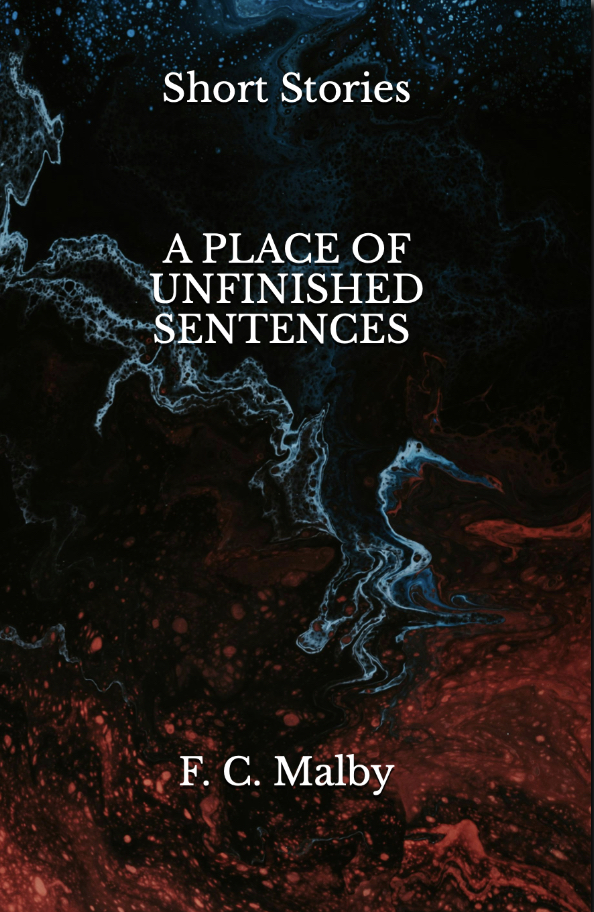
You can purchase my second collection of short stories, A Place of Unfinished Sentences, in paperback and as an eBook https://www.amazon.co.uk/dp/B0DFW6BPMW

Two forthcoming Book Releases in 2024

I have some exciting news! There are two new books being released this year, both include my short stories. As an author, it’s such an amazing feeling when your work is about to be released into the hands of readers around the world. I love hearing reader feedback and discovering what resonates with individuals.

Since the release of my first novel in 2012, I have had a second novel published, a short story anthology (soon-to-be two) and work published in three anthologies (soon-to-be four) I have also had many stories and poems published in literary journals worldwide and some competition winners. I was asked to read for a writing competition for a journal and have given readings and led writing workshops. It never gets odd. I still love writing and engaging with readers.

The first book is my second collection of short stories, A Place of Unfinished Sentences.

The sentences we leave unfinished, questions surrounding sudden loss, a decision on a train. This second collection covers themes of relationships and memory, exploring what happens when memory fails. It looks at beginnings and endings, weaving through themes of generations, family, uncertainty, and what happens when experiences change us.

“F C Malby’s stories capture characters teetering on the edge of precipices in their lives, sometimes literal, sometimes metaphorical, as they decide whether or not to take a leap of faith into the unknown. These intense, beautifully realised and ice-sharp stories momentarily suspend us over an Everestian abyss.” Jonathan P Taylor, author and Senior Lecturer in Creative Writing, University of Leicester

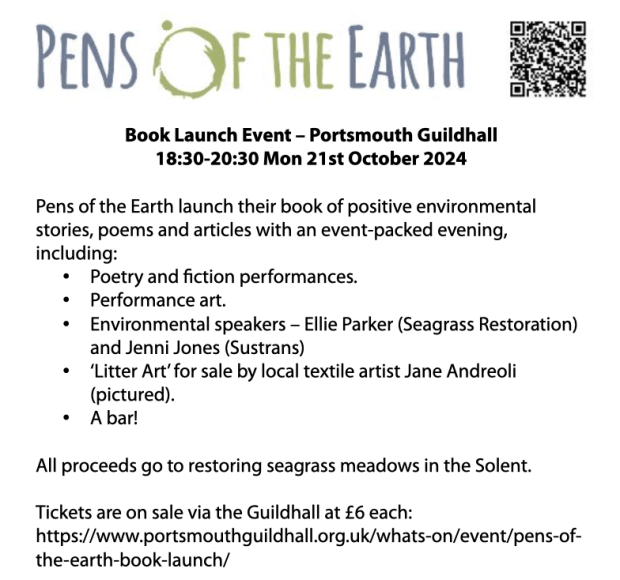
The second book that I want to share with you will be published by Pens of the Earth, who are launching a collection of stories, poems and environmental articles on 21st October 2024. My short story, Prolific, will be in with many others with all profits from book sales going to the Solent Seagrass Restoration Project.