F. C. Malby is a novelist, poet and short fiction author. Her debut novel, Take Me to the Castle, won The People’s Book Awards. She is a contributor to four print anthologies, and her stories and poems have been widely published internationally online and in print.
He strides across the room, ignoring your sentences. “I’ll chat to you about the job tomorrow?” You say, almost as a question. He waves an arm, mouth full of food, and leaves the room. You have tried to talk for several nights, but he has been preoccupied. A child is crying upstairs. He is rarely ever in; tonight he is on his phone in the kitchen, calls out and asks you to go. You head up, because that’s what you do. Your daughter wants a cuddle. You settle her, stroking her curls, and go to bed alone.
Who or what inspired you to write short stories and when did you begin writing?
All the writers I read and digested inspired me to write. I was a voracious reader as a child. I started writing when I was in middle school. Some of those stories were written for competitions held at school and some stayed on the pages of my notebooks. I’ve loved books ever since I can remember. Reading stories was such a pleasure and a fascinating voyage of discovery—of other lives and worlds—and I couldn’t resist the temptation of trying my hand at writing them. I was enthralled as a reader and I wanted to see if I could write stories to recreate that immersive and magical experience for my readers.
How has living in various places – New York, Delhi and Taos affected your writing? Do you think travel helps to inspire your work?
Every place I’ve lived in or visited shapes my writing in particular ways. The energy of a place—inspiring, soothing, manic or comatose—rubs off on me. The essence of a place stays in my heart long after I say goodbye. The people I meet and the stories they tell, the sights, sounds, skies, and hidden histories of a place all spark my fiction. Travel is inextricably linked to my process. New places jumpstart my imagination. The memories they gift me are fertile ground for stories to germinate.
Do you create a structure for your stories before you begin or are they more fluid?
I tend to write short stories and flash fiction in a fluid way. I have a basic idea of the flow of the story, but it’s not strictly structured before I begin. Whereas with my novel, which I’m currently working on, I found that I had to create a solid structure before I started.
What advice would you give to writers wanting to submit work to literary journals?
Get your story into the best shape possible. Rewrite, refine, edit and polish vigorously before you submit. Keep at it inspite of rejections. Appreciate the feedback editors give you and incorporate it into your work. Acceptances will eventually come your way.
How has winning writing competitions affected your journey as an author?
Writing competitions come with strict deadlines and they force me to sit down at my desk and finish a story on time. Competitions make me a more disciplined writer in this sense. Winning a competition makes me feel my hard work is being appreciated. That’s a wonderful boost for a writer. It gives you reason to believe in yourself and your art and to carry on writing in a world which is largely indifferent to creative endeavours.
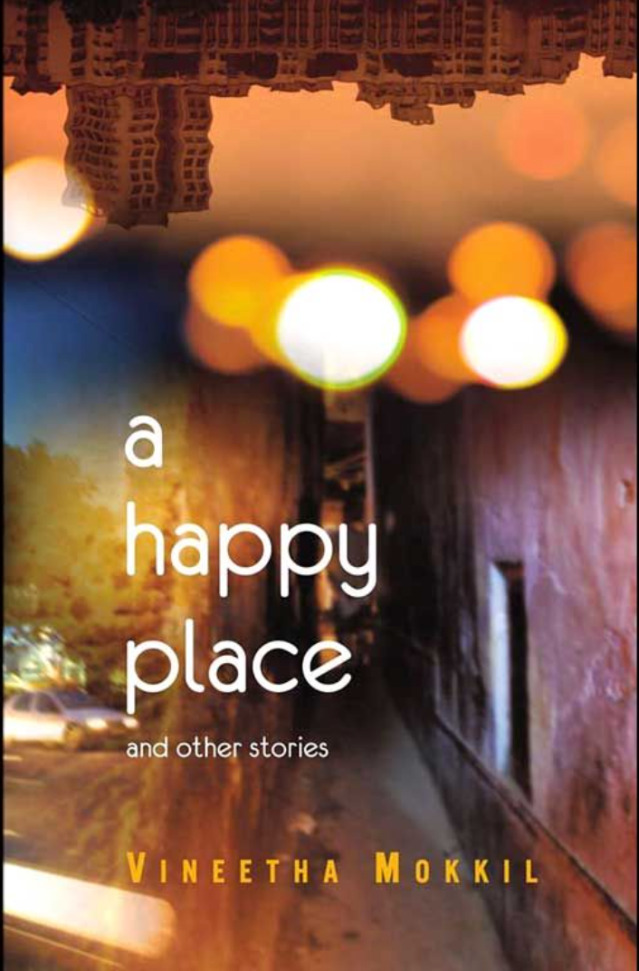
Can you tell us about your collection, A Happy Place, and your route to publication with Harper Collins?
I didn’t start out with a collection in mind. The stories were written one at a time. The title story was published in the Santa Fe Writers’ Project Journal. My eternal gratitude to the editors for that acceptance! Then, a few more of my stories got published in literary journals and magazines, and that gave me the confidence to consider putting together a collection. Once I had enough stories, the hunt for an agent started. It was not easy. Some agents loved my writing, but they were running scared of taking on short stories. It took a lot of effort and patience to find an agent who believed in the collection’s possibilities. She sent it out to several publishers and I was thrilled when HarperCollins said yes to it.
Who are your favourite short story authors?
It’s a long list. To name a few: Chekhov, O. Henry, TC Boyle, Anita Desai, Lucia Berlin, Anne Enright, EL Doctorow, Akil Kumarasamy, Chimamanda Adichie, KJ Orr, Deborah Eisenberg.
What do you think is the essence of a good piece of short fiction?
Telling detail, tension, humour, nuance, startling imagery, and the ability to make a word resonate in different registers at the same time.
What are you currently reading and which book would you take to a desert island, and why?
I am currently devoting all my time to working on my novel, though it’s a tough challenge to resist the call of my very attractive to-read pile. The last book I read and was bowled over by was The Friend by Sigrid Nunez, an incredibly perceptive and well-written novel about friendship, loyalty, loss, and grief. My desert island pick would be Michael Ondaatje’s The English Patient. The copy I own is falling apart because I’ve re-read it so many times. This novel surprises me every time I read it. It is so lyrical, insightful, wise, and immense in scope—I’d be delighted to be marooned on an island with it.
Vineetha Mokkil is the author of the short story collection, A Happy Place and other stories (HarperCollins), which was listed as one of the Ten Best Works of Fiction by The Telegraph. She was shortlisted for the Bath Flash Award June 2018, shortlisted for the Desi Writers Lounge Short Story Contest 2018, and is the winner of the New Asian Writing Short Story Competition 2018. She was a nominee for Best Small Fictions 2019. Her fiction has appeared in Barren, Cosmonauts Avenue, Fictive Dream, The Best Asian Short Stories 2018 (Kitaab, Singapore), Gravel, Jellyfish Review, Quarterly Literary Review Singapore and chosen for the Longform fiction pick-of-the-week.
You previously worked for the NHS, what did it take for you to move into the arena of writing, and can you tell us about your journey?
It was a long-ish process of realising that I would never be truly fulfilled while my writing was taking second place to my NHS career. As I got more senior in my post in a children’s hearing service in South East London, I found I had less time at the end of the working day, and more importantly, less energy for my writing. It was making me miserable, as I’d always wanted to write and publish novels and that dream was slipping further away. So I decided to go part time in a more junior job and use the rest of the time to write. I told myself I’d give it a couple of years of really throwing my energy into writing and then assess how it was going. Not long after that, I enrolled on a creative writing course at the Faber Academy, and started work on the book that would become Before I Go to Sleep.
Your debut novel, Before I Go to Sleep, was turned into a film staring Nicole Kidman and Colin Firth, how closely did it remain to the storyline of the novel, and how much input did you have in the script?
I had no input, directly, but I had a good working relationship with Rowan Joffe who wrote and directed it, and also Liza Marshall who was the producer. So they ran ideas past me and checked I was happy with what they were doing, which was great, and in almost all cases I was. It was like having the best of both worlds – creative input without responsibility! But for the main part I let them get on with realising their vision – I see the movie as being like a cover version of a song. It’s a different piece of work, Rowan’s job was to take something that worked as a 350 page book and make it work as a 90 minute film. So, while it doesn’t incorporate every element of the book, and some things have been changed to make it more filmic, it’s very much true to the story.
Do you have a writing routine and what is your workspace like?
I try to do my creative work in the mornings, with afternoons left for admin and ‘life maintenance’ tasks, though if my writing is going well I’ll find it bleeds into the afternoon. I don’t work well with rigid boundaries, I prefer having a vague plan for the day. It depends on what I’m working on, too, and what stage I’m in. When I’m drafting I aim to write at least 1000 words, at least five days a week. Sometimes it’s much more, when it’s going well, but when it’s not I’ve learned not to force it. It’s important to trust what the work is telling you. When I’m editing I can get through a lot more in a day, though much of that is cutting and rewriting. I’ll often do that in the evenings, when I seem to have more of a critical head on.
My workspace is messy. There are books, notebooks, post-its, pens, ink, receipts, bills, plus of course my laptop and keyboard and so on. I’d like to be someone who keeps it tidy, or who refreshes it at the end of the day, but I’m… not. And I’ve accepted that, now.
Do you plan the structure of a novel, and do you begin with the plot or the characters?
I’m getting to be more of a planner with each novel. Before I Go to Sleep was very much ‘dive in and see where I end up’, whereas Final Cut, my new book, was planned fairly meticulously. I like to leave some room for the book’s own alchemy to take hold though, space for the unforeseen bit of magic. I usually begin with an idea, an area I want to work in or explore, and from there I think, ‘what could happen?’ and also, ‘what kind of person would that thing happen to?’ So, I suppose I’m thinking of the two things in parallel. A book can’t really happen for me until the characters are up and walking and talking, though, so that becomes the main thing.
What can you tell us about your forthcoming third novel, Final Cut, and the inspiration behind the story?
Final Cut I was inspired by several different things. I’d been thinking about voyeurism and filmmaking, and I started to become fascinated by documentaries, particularly those dealing with ‘ordinary life’, and reality TV. I was thinking about the everyday moments, dramatic and otherwise, which make up a life. Alongside that, I’ve long been interested in the modern-day urge to document, to record and share everything, almost as if otherwise it doesn’t seem real. When I was growing up I took 24 or 36 photos a year, on my annual holiday, now some people get through that many a day. These ideas coalesced into a narrative about an ordinary town in which dark secrets were hiding under the surface, which would be brought to light as a documentary filmmaker examined the village.
So this was the surface, but underneath my subconscious was also working away, and when I came to write the book I realised that my main character, Alex, was someone who once again only had a partial understanding of who she was. So, like Before I Go to Sleep, I was once again looking at the realm of memory and identity, albeit through a different lens and in a very different story.
Can you share something about the book, or about you, that readers won’t know?
I scrapped an entire book before writing Final Cut. I liked it, and loved the characters, but in the end decided it just wasn’t good enough.
Which book has had the greatest impact on your life, and why?
That’s sort of easy, and sort of impossible. Before I Go to Sleep changed my life completely, in almost every imaginable way. But I suspect you mean a book written by someone else! It’s so hard to choose one, but I’d probably say either The Lord of the Rings, which I read as a child and which first made me want to write, or The Handmaid’s Tale. The latter isn’t even my favourite Atwood novel, but it’s the book that, when I read it about fifteen years ago, made me realise I needed to revisit that childhood ambition and take it seriously.
What advice would you give to writers wanting to get a book published, and what do you enjoy most about the publication process?
I’d say, concentrate on writing the best book you can. When I speak to groups of aspiring writers I always ask why they think most books aren’t published. Too often they say it’s because the writer hasn’t got a big enough social media profile, or they’re not famous in a different field, or whatever. The truth is, the books that most people write aren’t good enough. So an aspiring writer needs to concentrate less of their energy on ‘getting published’ and more on being the best writer they can be. Once their book is unassailably good, then is the time to start to think about getting it into the hands of readers, or agents, or whatever. That bit is relatively easy, believe it or not. Agents are looking for books to represent just as much as writers are looking for agents. The tricky thing is that the books have to be amazing.
There are lots of really special moments along the way in the publishing process – seeing the book typeset for the first time, seeing the jacket the designer has come up with, when it first appears on your doormat in physical form. But I think I love meeting readers the most. It’s always lovely to hear how people have connected with the work. It’s going to be very different this time round, with most festivals having to be online. I shall miss it.
With photography as an interest outside writing, and an Instagram page of creative photography, does this link with or inspire your writing?
Very much so. When I’ve been writing intensively I’ll go out and take some street photographs, and when I’ve done that for a few hours I return to my desk energised. Each seems to feed the other. One is physical, one sedentary, and both require intense observation, but also I think it’s because they’re almost exact opposites. In writing fiction I’m trying to take a narrative and from it create images in someone’s head, whereas in photography I’m trying to weave a story out of a still picture. So each compliments the other – they’re ultimately both narrative arts. Or maybe I just love both because I’m incredibly nosy.
S J WATSON’s first novel, Before I Go To Sleep, became a phenomenal international success and has now sold over 6,000,000 copies worldwide. It won the Crime Writers’ Association Award for Best Debut Novel and the Galaxy National Book Award for Crime Thriller of the Year and has been translated into more than 40 languages. The film of the book, starring Nicole Kidman, Colin Firth and Mark Strong, and directed by Rowan Joffe, was released in September 2014. S J Watson’s second novel, Second Life, a psychological thriller, was published to acclaim in 2015, and his forthcoming novel, Final Cut, will be published in August 2020.
I hope everyone has survived lockdown. We are not out of the woods yet, but it’s good to have a little more contact with the outside world. I have had a recent flurry of writing and four short story acceptances this week! Stories forthcoming in Burnt Breakfast Magazine (July 2020), Fully Lit Magazine (July 2020), Lunate Fiction (August 2020)
I had a lovely acceptance letter from all of the above journals, but wanted to share the words from Lunate Fiction about my story, A Place of Unfinished Sentences:
“It is a rich and complex story, once that requires focus and attention from a reader in order to bring out the full story, and even then, as the title suggests, we are not given all the pieces of the puzzle! Your use of narrative voice is exceptional in this piece, as is your careful use of minor detail which draws the reader’s attention and acts almost as a smoke-screen for the wider picture. It is a remarkable flash fiction.”
And in other news, my story, Someone Once Told Me That Delia Is Outdated, was published by Reflex Fiction, May 2020. You can read an extract below and follow the link to read the complete story at Reflex Press.
When paranoia sets in, I mentally search for the fire escape. Is it in the hallway? Is it on the second floor? What if I feel the urge to jump from the balcony? A short man with a balding head walks past me and winks. He is holding a book on golf. My stomach turns. I am in the self-help section, looking for something that might fix my mind, but it is not there. There is no book that can erase memories. Maybe the cookery section might help, something from Jamie Oliver or Mary Berry. Someone once told me that Delia is outdated. I have acquired lots of books on how to bake cupcakes and muffins, which I would happily make all day, but sometimes you need to get into the meaty stuff, the grit of life….read more at Reflex Press.
Taylor is a black, fun-sized Chicago native currently living in Cincinnati, Ohio. She received a Bachelor’s Degree with Honors in English and a Master’s in English, Creative Writing from the University of Alabama, Birmingham. She is now a second year Creative Writing PhD student and Yates scholar at the University of Cincinnati. Her work appears, or is forthcoming, in New Ohio Review, Borderlands Texas Poetry Review, Jellyfish Review, Iron Horse Literary Review, Another Chicago Magazine, Empty Mirror and others. She has been nominated for two Pushcart Prizes, and Best New Poets 2020.
1. How did your writing journey begin and did anything in your life particularly influence this?
I’ve been writing since I was much younger, probably in my early teens. I used to write poems in the middle of my diary entries, so I always had a love for poetry. When I went to college at the University of Alabama, Birmingham, I was an English major with a Creative Writing concentration, but back then I focused more on Fiction. I was still writing poems, but I wasn’t really studying and reading it outside classes. In my senior year, I took an Ekphrastic Poetry class, and that was what caught my attention. Looking back, I was in a really terrible romantic relationship at the time, and my father was starting to become more noticeably abusive around that time, so I think poetry saved me during a really hard time in my life. After that class I switched my concentration to Poetry for my Master’s degree, and I’ve been dedicated to writing it ever since. Of course, I branch out and write other things, but writing poetry is essentially second nature to me now.
2. What have you learned from your Bachelor’s and Master’s degrees in English, and has this changed the way you write?
Since my Bachelor’s degree was so heavily focused on fiction, my poetry is often narrative-driven and it’s really important for me to get the details right. I’m almost always trying to tell a complete story within a poem and to tell it so vividly that my reader is right there with my speaker. When I was writing poetry during my Master’s degree, I was still finding my voice as a poet. Those two years were me figuring out how to make a poem as strong as I possibly could. How can I make these line breaks have more impact? How can my verbs do more work, so I can then spend less time describing things? How do I write about the subjects things with a fresh twist? My Master’s was really a two year study in making my language come alive on the page.
3. What is the area of study for your PhD?
I am currently pursuing a PhD in Creative Writing at the University of Cincinnati, focusing on poetry.
4. Can you tell us a bit about your poetry and your creative non-fiction work?
Lately, I’ve been writing more heavily about race and thinking about what it means to be a Black woman in this world. My first completed poetry manuscript touches on themes of ancestry and black womanhood, and I believe those threads run through everything I write, and will continue to be currents running through my work throughout my career. The poetry that I’m writing now in this moment is essentially a part of this larger project, to write the kind of poems I wish I had read when I was a younger Black girl. I think I would have come to poetry much sooner if I was reading poetry in which I could see myself. So the poems I’m writing now are about being in love, having a difficult family, loving my body, and experiencing racism. My creative non-fiction work has been a space where I’ve given myself permission to write about some of the more traumatic things in my life, such as my alcoholic father and body dysmorphia. I want to eventually complete a collection of essays looking at all of the things that have shaped me and made me the woman and writer I am today, and I think a big part of that is looking at the obstacles I’ve overcome along the way.
5. How has being nominated for two Pushcart Prizes and Best New Poets 2020 affected your profile as a writer?
Being nominated for two Pushcarts and for Best New Poets was such a shock. I’m not sure if it has necessarily affected my profile as a writer, but it did wonders for my own personal view of my writing. It’s been a little over a year now that I’ve started submitting my work, so to get those nominations right away confirmed that I was doing something right. This time last year, I was getting ready to start a PhD program with writers who were older than me, more accomplished, had awards, books and tours. I was joining the program with only a handful of publications to my name. I know that playing the comparison game is never a good idea, but impostor syndrome was very real. Those nominations were like a voice that said, “keep going,” during a time when I wasn’t sure I belonged in this world.
6. What advice would you give to new writers?
Write about what matters to you. There is no right or wrong way to write a poem. Don’t just read poetry, read things outside your genre, outside of your interests. Always shoot for the stars, you miss every shot you don’t take!
7. Who or what are your inspirations?
This is such a hard question because there are so many writers publishing some really amazing writing. One of the writers who completely changed my life was Erica Dawson. I was introduced to her during my Master’s and that was the first time that I realised I could write about what mattered to me. I could write about being black, I could write about my grandmother, I could write about getting my hair done. I also admired the way Erica wrote in form, and I’m now a formalist at heart myself. She definitely changed the entire landscape of what I thought poetry could be for me. Danez Smith is another poet who continues to stun me with the way they use language (Danez is non-binary). Their poetry manages to be joyous even while being about heavy subjects. They have a gift for rhythm, for music. They put words to feelings that I never knew I had. I am always connecting to their work and feeling seen in their work and that’s so important to me. Two other really incredible Black female poets that come to mind are Ashley M. Jones and Tiana Clark. Ashley is unapologetic in the way she writes about race and blackness and it’s so admirable. Tiana transports me into another universe every time I read her work.
8. This is a difficult but necessary question – How has being Black affected your life?
I would say that the area that is probably most affected by my race is education. I didn’t have teachers who looked like me until I got to college. The texts I read throughout high school were mostly by white, male authors. My knowledge of black history is nowhere near where it should be, and I’m doing the work of catching up on my own, and even writing about those gaps in education in my poetry. In my Catholic high school and middle school I experienced racism from my teachers. An 8th grade teacher equated sounding unintelligent with “talking black.” In high school, black students were drug tested far more often than white students, and the school tried to penalise students with false positive test results. When I lived in Birmingham, I was called a “nigger” at the gas station the morning after Trump was elected president. When I was dating a white man, I ended the relationship because I didn’t feel like he would fully understand my position and the position of our children in a world like this. In the world of academia, I often have to be twice as impressive as my white peers and counterparts. I’m fortunate to be on a PhD course where I have other women of color as peers, but I know that other PhD courses aren’t as diverse as mine. I worry about what life may be like in the future if I work in academia, and if the environment will be one in which I’m constantly fighting to prove my worth and be heard. I go back and forth on whether I want to bring children into this world. Just within the past few days, the #PublishingPaidMe hashtag has put a spotlight on the disparities between how writers of colour and white writers are paid for their work, which has been a little disheartening to see. It bleeds into everything. But I’m so proud to be Black. I love being Black. I wouldn’t change it for anything.
9. Can you recommend any good literary journals run by Black editors or Black writers that we can read, support and follow?
A poet I follow on Twitter, Natalie Eilbert, compiled a really wonderful list. I would suggest Borderlands Texas Poetry Review, Fiyah Lit Mag, The Hellborne, and Kissing Dynamite, to name just a few.



 F C MALBY
You must be logged in to post a comment.