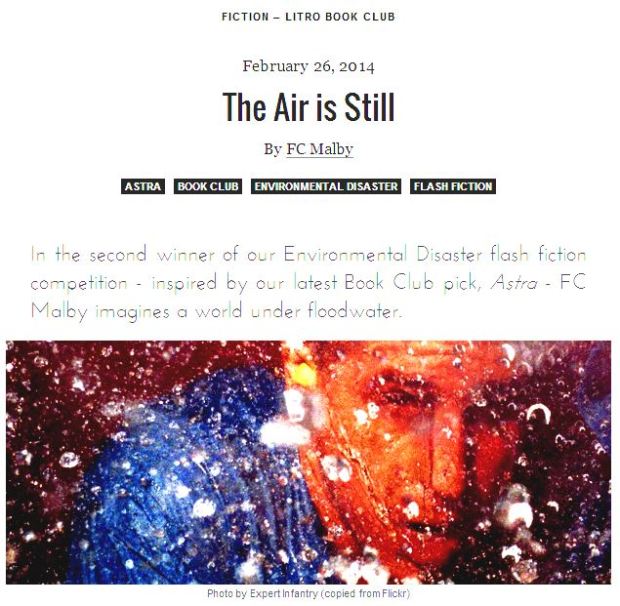
A recent piece of short fiction, The Air is Still, has just won the Litro Magazine Environmental Disaster competition, and is published online at Litro.
A recent piece of short fiction, The Air is Still, has just won the Litro Magazine Environmental Disaster competition, and is published online at Litro.
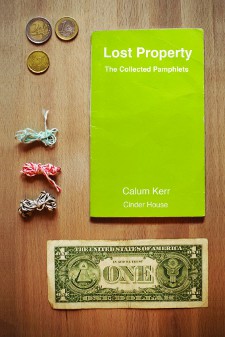
I am pleased to welcome the Director of National Flash Fiction Day, Calum Kerr, for a guest post on the short fiction form. His new collection, Lost Property, brings together four brand new pamphlets of flash fiction, featuring Singsong, Soaring, Burning and Citadel. The collection contains 83 stories that move from the hilarious to the sinister and demonstrates the unique nature of ultra-short fiction.
If you are a writer of flash-fiction, short-stories, possibly poetry and maybe even non-fiction, this is a question which may be familiar to you. The person posing the question might be a complete stranger, maybe at some reading or signing event, but is more likely to be a friend or even a relative. You proudly show them your collection of stories or poems, or your book on how to knit cartoon characters, learn economics or install a Linux system on your PC, and they glance through it, nod appreciatively, and then they work their way towards the question.
“So. Well done. This looks good, doesn’t it?” is the opening move.
“Yes. I’m very pleased with it. I think it’s come out very nicely,” is your response.
“Must have been a lot of work.”
“Yes. But enjoyable. Apart from the editing, ha ha…”
“Ha ha, yes.” They nod and look through the book again, then up at you. “So…” they start, and this is where you should stop them, because you know what’s coming next.
“It is a proper book. It has a cover. It has loads of words in it. I did research and everything. People will buy and read it – okay, not in JK Rowling numbers, maybe, but some of them. It has an ISBN number and can be bought from Amazon and those funny old places that people used to go into. You know, bookshops.” Is what you want to say. But you don’t. Instead you let them continue.
“So… when are you going to write a proper book, then?” they ask, and you somehow restrain yourself from swinging for them.
Because, of course, they don’t mean to say that your collection or non-fiction opus is not a ‘proper’ book. They mean ‘when are you going to write a novel’. That’s what it’s all about, after all, isn’t it? Collections of things are nice, but they’re just little stories or poems, not a good chunky page-turner. Non-fiction books are useful, but you don’t settle down on the sofa on an autumnal afternoon to read them. They live on shelves until you have occasion to reach for them. No, they’re talking about the All-Powerful Novel and the place it holds in the public imagination as the pinnacle of writing and the thing that every writer is surely aiming for.
And this is the problem for writers, especially of flash-fiction or short stories. Because each of the small parts looks inconsequential; trivial. There might be many of them, and they might make up a 200 page collection containing 60-70,000 words, but still, you can see the joins; you can see where the writer started and stopped. Not like the seamless flow of a novel (which was surely written in a single, sleepless week of endless typing). And, of course, you are writing prose fiction, so surely you must be working your way up from these little things to try and join the big boys with their ‘proper’ books.
Now, don’t get me wrong, many flash-fiction and short story writers do have aspirations to be novelists, or at least have found an idea coming to them which is too big to cover in just a few hundred or few thousand words, and so are working towards a much longer piece. But that does not mean that they have finally, in some indefinable way, graduated to the big leagues. They have not left behind their childish play with those tiny tales and taken the brave step to write longer. They are simply following their muse where it takes them, and sometimes your muse takes you longer.
But all of those same flash-fiction and short story writers who are dabbling in the world of novels, at least those I know, still love and respect the short form. They are not what we write because we can’t manage the long things. They are the things we write because there is a value to a short story or a flash-fiction, an intensity, a chance at experimentation, and a specific purpose that you simply can’t achieve in the novel.
We don’t write stories because we are waiting for our turn to write a ‘proper’ book. We write stories because they need to be written, and because we love what they can do that all of your ‘proper’ books can’t.
So next time someone looks at your collection of flashes, poems, or your non-fiction work and seems about to ask that fateful question, stop them, point to the cover and ask them: “So, when are you going to read a proper book, then?”
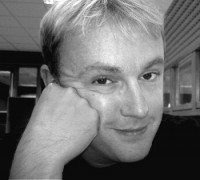 Calum Kerr is a writer, editor, lecturer and director of National Flash-Fiction Day in the UK. He lives in Southampton with his wife – the writer, Kath Kerr – their son and a menagerie of animals. His new collection of flash-fictions, Lost Property, is now available from Amazon, or direct from the publisher, Cinder House.
Issue three of the Flash Flood Journal, an international flash fiction literary journal, is published today on their blog with some wonderful works of short fiction. I would really recommend reading some of the stories as they are varied in topic, style and genre, and are really interesting. My short story, I.P, is also there if you are interested in reading it. Do leave your comments if you enjoy mine or any of the other stories.
The journal is being published to help launch this year’s National Flash-Fiction Day, which is taking place on 22nd June 2013. It will also take place in Australia, New Zealand, Ireland, the USA and elsewhere. If you want to join in, you can find out more details about the day in the following places:
Happy reading and enjoy the weekend.
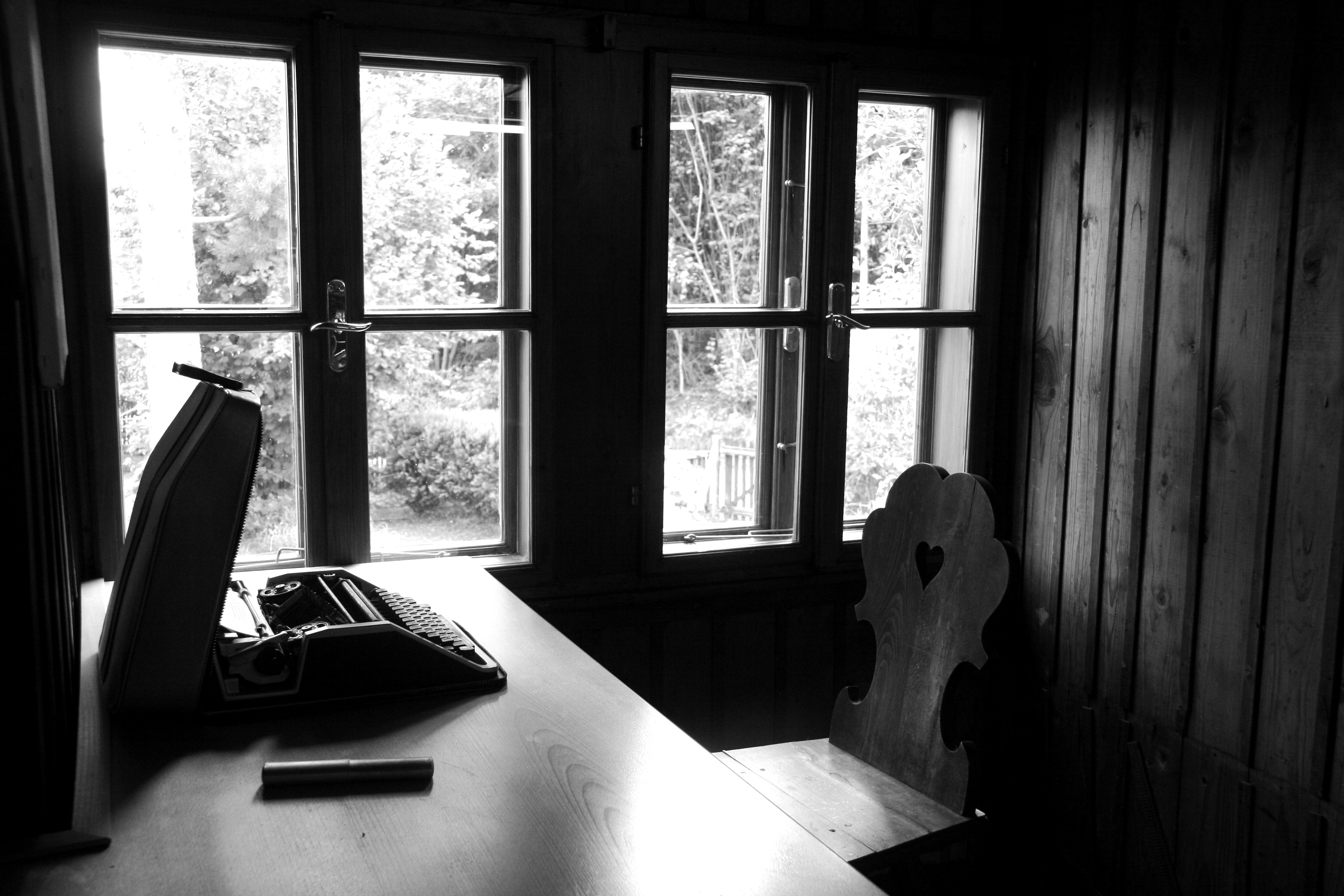
W.H. Auden’s Desk (copyright F.C. Malby)
I know there are many lists of ‘to to-dos’ and ‘not-to-dos’ for writing and endless amounts of advice, but I just wanted to add a few things which I have found really helpful (some of them dietary!)
This year has been a whirlwind of editing, marketing and publishing for me, a year where I started to build a platform and an internet presence as a writer – something which is a necessity for both traditionally published and self-published writers. It might sound familiar to many of you, but if I tell you that for the past five years I have been tucked away writing, with no sign of my name on Google and no contact with other readers and writers, you can imagine how much things have changed.
I winced at the thought of loading my photo and sharing ideas from my heart about my passions, and what I enjoy reading and writing. I shuddered at the idea of my thoughts being public, but what I have discovered is that the relationships you build online overtake any fears. The people I have met here, on facebook, twitter, and goodreads have been interesting, inspiring, and encouraging. These are all people who are passionate readers, a range or writers over all types of genres, and marketers with a vast experience of online communication.
So, now that we are nearing the end of 2012, I have been thinking about my goals for 2013. I haven’t had time to come up for air but my mind is always full of writing ideas and next steps, it is constantly wanting to create.
Having spent several years crafting ‘Take Me to the Castle,’ a novel which I am pleased to release, with the kindle version on special offer over Christmas and the New Year, I now want to spend next year reading and writing short stories and flash fiction. I wrote many of both types of story as I neared the end of the edits of my book, as I was craving some writing time. Editing and writing are two entirely different processes and I defy you to find any author who prefers editing to writing. The first draft goes through many many changes and morphs into a different form to the original version. This is a good thing – first drafts can sometimes miss essential ingredients, have too many unnecessary words, or just not be tight enough for a compelling story.
Short stories and flash fiction:
I found in these a style of writing which suits my writing. I love the condensing or framing of a story into 350 words or 3000 words. You can create so much suspense and exagerate themes in a way in which they would be lost in a longer piece of prose. I read many different stories, mainly short stories, and wrote many which I will be publishing next year.
I wanted to share with you two books which are on my table to read over Christmas and into the New Year:
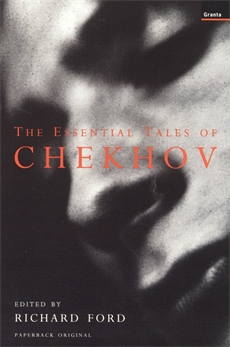 I love Chekhov’s short stories, they are powerful, full of enticing detail, and captivating. His literary genius is timeless; he wrote in a way that makes his tales just as readable now as they were in the 1800s. Anton Chekhov was a Russian playwright and short story author. As a doctor, also, who helped the poor, he was disturbed by the darker aspects of society. His father was a tyranical figure, and this has cast its shadows in his writing. I have already dipped in to ‘The Essential Tales of Chekhov,’ and am hugely enjoying the stories. There is a really interesting account of his life in the Guardian if you are interested in further reading…
http://www.guardian.co.uk/books/2010/feb/06/anton-chekhov-short-stories

In time for this year’s National Short Story Week, ‘Overheard: stories to read aloud,’ was released. It is edited by Jonathan Taylor and, wrapped within it’s beautiful cover, are a collection of stories from over 30 of the UK’s most popular storytellers, including Louis De Bernières, Blake Morrison, Kate Pullinger, Salman Rushdie, Ian McEwan, Adele Parks and Hanif Kureishi.
I bought this as it was released in November of this year, as I really enjoy reading books by Louis De Bernières and Ian McEwan. It is now tucked it away for the cosy (post editing) winter evenings.
So my goals are to read and write many short stories in the coming year. What are your goals for books to read, or ideas to write?
 F C MALBY
You must be logged in to post a comment.