Author Jon Rance is guest posting today on the creative process of his writing. His book, This Thirtysomething Life, published by Hodder and Stoughton, is a love story about what happens after we’ve fallen in love, when we’ve swapped frolicking in the bed for cigarettes in the shed and Match of the Day for Mothercare. Brutally honest, laugh-out-loud funny and heart-warming, this is a diary about one man’s bumbling journey on the road to adulthood. If you like Nick Hornby, you’ll enjoy this. Thank you, John.
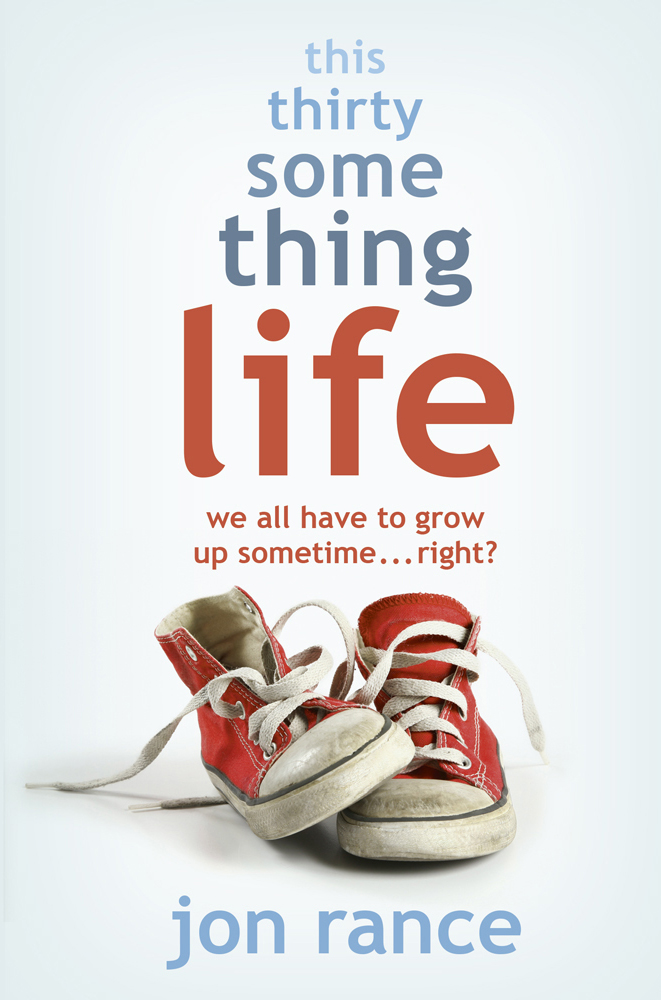
Firstly, a big Thank You to Fiona for letting me loose on her blog. She’s a brave lady indeed! For those of you who don’t know me, I’m Jon Rance, author of the romantic comedy novel, This Thirtysomething Life. I approached Fiona and asked her if I guest blog on her site. Luckily she agreed and so here I am.
Being a writer, people often ask me the same sort of questions. Where do you get your ideas? How do you write? Where do the characters come from? I guess what they want to know is what my creative process is. It’s an interesting concept and I’m sure different for every author. Mine is a bit haphazard if I’m honest. I read about authors who meticulously plan out books down to the last full-stop. I don’t.
When I start a novel I need the following things. A title. Main characters. Motivation. An ending. I think having a title from the off helps bring the whole thing together. I often think of the title before I know anything about the book. I need to know who the main characters are. By this I just mean a brief bio, name and what they look like. Motivation is what will drive the book forwards. In This Thirtysomething Life, I knew from the beginning that the story was going to be about a guy having a hard time growing up and coming to terms with becoming a father. Right from the word go everything else stemmed from this idea. An ending. Endings can change during the book, it happens, but I think it’s important to know at the beginning where the story is going. The journey is something else, but a destination is important, whether it’s a scene you have in mind, a sentence or just where the character is emotionally.
Once I have those I just start writing. For me writing is a very organic process. I need a few chapters to really get to know the characters properly. I often find that once I know them better, the plot is formed mostly in part by them and the choices they make. My writing has always been character based. I think in my genre of commercial fiction, characters are the base of everything. Plot is important, but for me the first draft is where I get to know the characters. Once I have the first draft down, the second, third, fourth – fifteenth are mainly about tweaking the structure and the plot. I often think writing a novel is like building a house. The first draft is building the structure. Every other draft after that is about making it look nice. The last draft is the one where you get to hang up the paintings, pop the interesting sculpture you bought from the market on the mantelpiece and then sit down on the comfy sofa and marvel at what you’ve accomplished.
I’ve definitely improved as a writer with every book. I wrote four complete novels before This Thirtysomething Life was picked up and published by Hodder. Those four novels were my learning curve. I made some mistakes, but more importantly, I learnt about my creative process. I think it’s a very personal thing. We can learn from others, read books about writing, get hints and tips, but at the end of the day, we all have to learn our own creative process. I used to think mine was ridiculous and that I should change and be more organised, but what I’ve come to realise is that it doesn’t matter how you write, as long as you do it your way because writing is about being creative, it isn’t painting my numbers and checking boxes. Think of the creative process as your friend rather than your enemy. It’s taken me a long time, but I love mine now because it is all mine and I couldn’t do it any other way.
 Jon Rance is the author of the romantic comedy novel, THIS THIRTYSOMETHING LIFE, which was a Top Ten best-selling book on the Amazon chart. Born in Southampton in 1975, he studied English Literature at Middlesex University, London, before going travelling and meeting his American wife in Australia. He is currently working on his second novel, HAPPY ENDINGS. Outside of writing Jon loves travelling, music, sit-coms, art and watching football (but not playing anymore due to dodgy knees).
Both THIS THIRTYSOMETHING LIFE and HAPPY ENDINGS are published by Hodder and Stoughton. Jon is represented by Ariella Feiner at United Agents.
His website can be found at www.jonrance.com
You can also follow him on Twitter @JRance75



 F C MALBY
You must be logged in to post a comment.