Writing Advice And Inspiration

download‘A story needs rhythm. Read it aloud to yourself. If it doesn’t spin a bit of magic, it’s missing something.’ Esther Freud

download (6)‘Always carry a notebook. And I mean always. The short-term memory only retains information for three minutes; unless it is committed to paper you can lose an idea for ever.’ Will Self

Nobel-Prize-Literature‘I always have to know my characters in a lot of depth–what clothes they’d choose, what they were like at school, etc . . . And I know what happened before and what will happen after the part of their lives I’m dealing with.’ Alice Munro

download (7)‘Never use a metaphor, simile, or other figure of speech which you are used to seeing in print. This sounds easy, but in practice is incredibly difficult… Common phrases have become so comfortable that they create no emotional response. Take the time to invent fresh, powerful images.’ George Orwell

images (10)‘Protect the time and space in which you write. Keep everybody away from it, even the people who are most important to you.’ Zadie Smith
download (8)‘Keep your exclamation points under control. You are allowed no more than two or three per 100,000 words of prose. If you have the knack of playing with exclaimers the way Tom Wolfe does, you can throw them in by the handful.’ Elmore Leonard
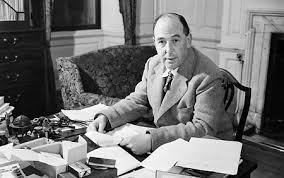
images (11)‘Don’t say it was delightful; make us say delightful when we’ve read the description. You see, all those words (horrifying, wonderful, hideous, exquisite) are only like saying to your readers Please will you do the job for me.’  CS Lewis
images (12)‘Be daring, take on anything. Don’t labor over little cameo works in which every word is to be perfect. Technique holds a reader from sentence to sentence, but only content will stay in his mind.’ Joyce Carol Oates
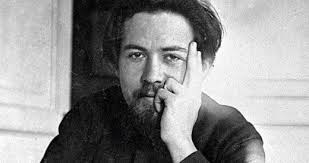
images (13)‘My own experience is that once a story has been written, one has to cross out the beginning and the end. It is there that we authors do most of our lying.’ Anton Chekhov
download (11)‘Don’t sit down in the middle of the woods. If you’re lost in the plot or blocked, retrace your steps to where you went wrong. Then take the other road. And/or change the person. Change the tense. Change the opening page.’ Margaret Atwood
download (7)‘Don’t bend; don’t water it down; don’t try to make it logical; don’t edit your own soul according to the fashion.’ Franz Kafka
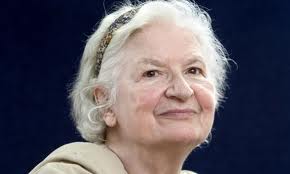
images (15)‘Open your mind to new experiences, particularly to the study of other ­people. Nothing that happens to a writer – however happy, however tragic – is ever wasted.’ PD James

What Do Authors Have in Common with Orchestra Conductors?

Philharmonic Orchestra of Jalisco (Guadalajara...
Philharmonic Orchestra of Jalisco (Guadalajara, Jalisco, Mexico) (Photo credit: Wikipedia)

The more I write, the more I am aware of  the variety of elements involved in creating a compelling story. These elements are all individual parts but they have to be pulled together to work effectively.  Alone, each part would sound  musical, lyrical, but together they create a depth of sound which cannot be created alone.

I used to play the clarinet in various orchestras and jazz bands and, while I also enjoyed playing music alone, nothing matches the sound of an entire section, woodwind in my case, or a whole orchestra. Some sections alone sound fragmented, have you ever listened to a double bass playing an orchestra piece without the rest of the string section? Unless it’s a jazz improvisation it might sound staccatoed and uncomfortable.

When you create a book you look at the story arc, the balance of dialogue and narrative, points of view, pace, action, language. When you conduct an orchestra, you need to see the different sections: string, wind, brass and percussion. Within each section are the individual groups of instruments. In the strings you would hear the violins, violas, chellos, double basses, and so the list would go on with each of the other sections. The conductor needs to be able to hear each section and filter out the other sounds as well as to be able to hear the collective sound. He or she needs to pull the instruments in at the right time, control the tempo and the volume, and to be able to create an even balance.

In the same way an author needs to be able to look at the different sections of the book, and to hear the sounds and feel the rhythm of the story; to be able to create balance in pace and point of view, a balance between high emotion and lower points of tension, a balance between dialogue and narrative prose.

The threads within a story weave together in a similar way to the instruments within an orchestra. If anything sounds off it can run the risk of throwing the rest of the story off kilter. There is a delicate balance between the threads, requiring the skill of a competent author or conductor, and at different points in the story and the music there will be certain elements that will be louder and clearer, more dominant, while others subside. The balance can make or break the overall sound and quality.

Sewing the Seeds of an Idea: When to Start Planting

Different seed samples await germination testi...

Long before the first word of a novel is written down, there is an original seed, a thought, a scene which plants itself in the author’s mind. Once there, it grows and evolves into possibly a longer scene, a chain of ideas, a few characters and events, and maybe a whole novel.

The question is when do you start to plant the seeds in soil, water them and let them grow? When do you put the first words of the very first chapter down on to paper? It might seem like a strange question because most people imagine that the whole story just comes to you, like the carousel in Mary Poppins, and then you just sit down and write. But it’s an important question because the process of forming a story and growing a seed, if you like, is the bedrock of the whole narrative. The when of starting a story is often overlooked, but starting in the right place at the right time can save hours of painstaking editing and redrafting.

The answer, I have come to realise, is as late as possible. This is different to starting a story as late as possible in the plot and avoiding back story or long chunks of scene setting. It is waiting until your ideas have formed more than just a thought or an image, but a theme, a reason for the story, a conflict or a desire of your protagonist.

I have found the same thing applies with writing short stories, although the process is considerably shorter and you can afford to play around more with the text and change direction if you need to.

With a novel, the longer you leave the seeds to germinate, the more ready they will be to plant and grow in to the full and final plant product. It may seem counter productive to wait, and it might feel like a waste of time, but if you can wait until the ideas are more fully formed it will save heart ache in the long run and give you a clearer picture of the full story.

corn seedling

Creating Believable Characters

images (3)        images (2)        images (4)


“Plot is no more than footprints left in the snow after your characters have run by on their way to incredible destinations.”

― Ray BradburyZen in the Art of Writing

Character description is crucial to a good story that is both readable and convincing. For a reader to get inside your story, the characters have to seem real. They need to have characteristics which are compelling and hook a reader at an early point in the story. As writers, there are so many elements to plotting a novel which need to be considered, that it can at times be head spinning.

You have to focus on scene setting, dialogue, narrative, pace, story arc, point of view, voice and many other aspects. Without good characters, involving skillful characterisation from the author, the story will fail to bring the reader to the last page. So how do you pen characters who are enticing, captivating, abrupt, frustrating, lovable or frightening?

Study real people – Watch people’s behaviour, body language and conversations. Fictional characters need to take elements from real life. Even sci-fi has elements that can be observed from  every day life. Study human behaviour and you will be much closer to creating characters who resonate with the reader.

“By the end, you should be inside your character, actually operating from within somebody else, and knowing him pretty well, as that person knows himself or herself. You’re sort of a predator, an invader of people.” ― William Trevor

Watch films – They can be a good way of observing character traits and provide ideas for your characters. Look for what is not being said, look at the body language and each character when put into different situations and learn from great scriptwriters. Remember that you have to put together in words what a director will create with images and action. The two forms are similar but the difference is that you have a blank canvas with the reader’s imagination. Create atmosphere through your characters.

“As a writer, I demand the right to writer any character in the world that I want to writer. I demand the right to be them, I demand the right to think them and I demand the right to tell the truth as I see they are.” – Quentin Tarantino

Read books (classics, if you enjoy them) – The classics are still being read because they are timeless and because they contain characters who readers can relate to, characters they love and hate. This is the essence of good story telling.

“I wish we could sometimes love the characters in real life as we love the characters in romances. There are a great many human souls whom we should accept more kindly, and even appreciate more clearly, if we simply thought of them as people in a story.” ― G.K. Chesterton

Write character profiles – Imagine that your character needs a curriculum vitae for a job interview. What would you write for each one? Think about their individual skills and experiences. Push it further and consider locations or events which might have affected them and shaped their character.

“The characters in my novels are my own unrealised possibilities. That is why I am equally fond of them all and equally horrified by them. Each one has crossed a border that I myself have circumvented.” ― Milan Kundera

Put together a pin board of images – this helps if you are very visual. I use Pinterest for this and I find it also engages readers who are interested in your work. Having a selection of portraits can help to remind you of features and posture, if you wish to use this method. Some people would rather writer freely with no prompts and therein lies the truth that no two writers work the same way.

“Be sure not to discuss your hero’s state of mind. Make it clear from his actions.” (Letter to Alexander Chekhov, May 10, 1886)” ― Anton Chekhov

Related articles:

Andrew Miller, Booker and Whitbread shortlisted author, wrote a Guardian article on Creating Characters.

Melissa Donovan has written a good blog post on tips for character writing.

Writer’s Digest wrote an article on How to Craft Compelling Characters.

Warning: Structural Work Needed – Plotting Your Novel

Dilapidated Room

I drove past a beautiful old building this morning with incredible detail around the windows. When I looked again, the inside had been completely demolished and was being gutted and restored. From the outside it was a beautiful picture of fine architecture and decadence, an eye-catching building which stood out from the rest, but from the inside there was nothing, just rubble and empty space.

It was a strange sight in some ways and it reminded me of building a novel and the differences in how writers construct their work. I have spoken to people who work in any one of the following ways:

Inside Out Model – Beginning with the bare bones, getting the story down onto paper, and then going back and layering it with detail and links, flashbacks and subtle hints of what is to follow.

Outside In Model – Constructing the outside, the look and feel, the genre, narrator, tense, style and character of the novel, and then working inwards to develop the structure, the chapters and the story arc.

Scatter Graph Model – Starting to write chapters, in no particular order, filling in the gaps as and when the inspiration strikes. This method is often discouraged by agents and editors as it is less structured but some of the most creative writers work this way.

Sprint Runner Model – Beginning in great detail with a clear idea of your central character, racing through the first 1,000 words or so and then drifting as you get further into the plot, not being sure where the novel will end. Instead of it being a slower and more steady pace throughout, the writing decreases in speed as the ideas thin out. 

Foregone Conclusion Model – Knowing exactly how the novel will end, much like a science experiment with an expected outcome, but struggling to begin or sagging  in the middle.

These are just some of the many ways in which authors work and there are many cross-overs in their method. I was impressed by Will Self’s ability to do away with chapters completely in his Booker Prize Shortlisted novel, Umbrella. He is not the first author to do this and I am sure he won’t be the last. Some authors prefer fine structure, plotting meticulously before beginning a single sentence, then there are those who are somewhere in between.

There is no right or wrong way to plot a novel and to construct a story, although there are books which tell you otherwise. You have to experiment with what works. Every writer has a preferred way of working and it changes and develops with time.

I’ll leave you with some interesting quotes from the various writing handbooks:

“A basic structural design underlies every kind of writing. Writers will in part follow this design, in part deviate from it, according to their skills, their needs, and the unexpected events that accompany the act of composition. Writing, to be effective, must follow closely the thoughts of the writer, but not necessarily in the order in which those thoughts occur.”  The Elements of Style, Strunk and White

“Very few writers really know what they are doing until they’ve done it. Nor do they go about their business feeling dewy and thrilled. They do not type a few stiff warm-up sentences and then find themselves bounding along like huskies across the snow.”  Bird by Bird, Anne Lamott

“Writers of literary and much mainstream fiction usually begin by imagining a character…some writers can’t help starting out with a theme that obsesses them. They imagine characters whose lives might involve the theme, or they work out a plot first. If their allegiance is to character, their theme-based story has a better chance of survival.”  Stein On Writing, Sol Stein

“If there are no rules, or none worth [the writer’s] attention, where is the beginning writer to begin?”  The Art of Fiction, John Gardner