Why You Should Try Writing in Second Person

First person and third person—you’ve been there, done that. But what about writing in second person? It may seem strange, unconventional, or confining, but playing with point of view is one way to transform a story.

Point of view affects a story in that it allows readers to gain a very specific perspective. The second person is no different. Here are three reasons why you should try writing in second person:

Photo by Rick Seidel

Photo by Rick Seidel

You, Your, and Yours

1. Second person pulls the reader into the action.

Especially if you write in the present tense, second person allows the reader to experience the story as if it’s their own. To avoid a “choose your own adventure” feel or an aggressive tone, mix up sentence structure and add in description and dialogue. Using the pronoun “you” and describing action as it happens supplies a personal sense of urgency, propelling the story—and the reader—forward.

Example: You’re late. Heart pounding, you race up the stairs as the train enters the station. You weave around the slow-moving people milling on the platform and dash towards the train, throwing your body through the doorway with only a moment to spare.

2. Second person gets personal.

One way to experiment with second person is to write as if the story is a letter from the narrator to “you,” reflecting on past events and current feelings, asking questions. (It doesn’t have to be in an actual letter form; the idea of a letter is simply a way to describe the intimate tone.) This technique isn’t necessarily “pure” second person, as it pairs “you” with the narrator’s first-person point of view, but it allows you to dip a toe in the second-person perspective. At the same time, it gives readers a peek into a relationship, a memory, and a character’s emotions.

Example: You told me to meet you at the bar. Things hadn’t been going well, but I couldn’t put my finger on what exactly was wrong. Did you plan on breaking my heart that night? We locked eyes as I walked through the entrance, and I knew things were coming to an end.

3. Second person stretches your skills and surprises readers.

Because it’s not often used, the second person point of view feels fresh to readers. And for writers, it means a new way of telling a story, a different way of revealing character. In this way, it offers a new perspective for writers and readers alike.

(Reblogged from The Write Practice)


Step Away From The Vehicle

Step away from the vehicle – and put your novel in a drawer

step away

This is the final piece of advice I wanted to share with you from Zadie Smith in this series on writing wisdom.

When you finish your novel put it in a drawer for as long as possible. A year or more is ideal, says Smith, but even three months will do. Step away from the vehicle. The secret to editing your work lies in the fact that you must become a reader instead of a writer. Smith says that there have been many times where she has sat backstage with a line of novelists at a literary festival, all with red pens in hand, frantically editing their published novels so that they might go onstage and read from them. Unfortunately the perfect state of mind to edit your own novel is apparently two years after it is published! And ten minutes before you go onstage at a literary festival. At that moment every redundant phrase, each pointless metaphor, all the pieces of deadwood are distressingly obvious to you as a writer.

Several years previously, when the proofs arrived, you looked at the same page and couldn’t see a comma out of place. And by the way, that’s true of the professional editors, too; after they have read a manuscript multiple times, they stop being able to see it. You need a certain head on your shoulders to edit a novel, and it’s not the head of a writer in the thick of it, nor the head of a professional editor who’s read it in 12 different versions. It’s the head of a smart stranger who picks it off a bookshelf and begins to read. You need to get into the head of that smart stranger and forget you ever wrote that book.

Personally, I left my novel for three months and began a Masters in Theology. Needless to say, the theology fell by the wayside once I picked up the book again, cut out a whole family, added two chapters, released it into the hands of my editors and completed the edits once they had finished their job. You don’t need to change course or take up something new, but at least begin some other writing and let it rest.

Here are some of my previous articles which you mind find helpful for editing your work:

https://fcmalby.wordpress.com/2012/10/10/3-things-to-remember-when-editing-your-book/

https://fcmalby.wordpress.com/2012/10/16/editing-and-ove-ruse-of-words-make-each-word-count/

https://fcmalby.wordpress.com/2012/11/09/one-of-the-most-effective-ways-of-editing-your-work/


Some interesting articles on leaving a gap between finishing your book and editing your work:

http://www.wiseinkblog.com/planning/at-first-draft-the-6-minimal-steps-to-revising-your-manuscript-before-submission/

http://www.writersdigest.com/qp7-migration-books/wgf-revision_excerpt

http://www.write4kids.com/feature4.html

http://theliteraryhub.blogspot.co.at/2011/10/top-10-tips-for-revising-your.html

http://www.scriptmag.com/features/rewriting-is-writing (this advice is for screenwriting but it applies equally to novels.)

Writer’s Block: 5 Top Tips for Finding Inspiration

#ds139 "Writer's Block"

There are those who say ‘Don’t look for inspiration, just write.’ What about the days when you are stuck with a scene that feels clunky or one of your characters doesn’t seem consistent or exciting enough. Maybe you are are about to embark on a new book, a first book, a short story, or a poem…and the list goes on. Finding ideas for blog posts can sometimes be difficult when many key topics have been covered from all angles.

Here are 5 top tips:

Go for a walk. Get out and stretch your legs. Writing can keep you pinned to a chair for longer than you realise and the exercise alone will get the blood circulating to your brain. Einstein came up with the Theory of Relativity while riding a bike. Emerson said of Thoreau: ‘The length of his walk uniformly made the length of his writing. If shut up in the house, he did not write at all.’ Haruki Murukami runs 10K a day when in writing mode and says, ‘Physical strength is as necessary as artistic sensitivity.’ The Neuroscience of Imagination is a really interesting article on this topic.

See a film. It is a good idea to see films which stretch your imagination, especially if it is a difference genre to your own writing. The visual stimulus and the way the characters are played out often spark ideas for characterisation or scene setting and plot momentum.

Read. Read as much as you can of as many different genres as you can get your hands on. Ian McEwan writes all morning and reads all afternoon. Some agents recommend reading at least as many words as you write each day! With the rise of ereaders it is quick and easy to access a vast range of books.

Pick up a paper if you want to find inspiration from non-fiction.

Dip into a short story if you want a short burst of inspiration. They are packed full of description and swift characterisation. See my recent post on short stories.

Head to a cafe. Go somewhere which is guaranteed to be full of people! You are most probably writing about people, so study them. Watch people’s body language, the way they dress, how they talk. Go and write or meet a friend and observe. You’ll be amazed by how much it helps. I was writing a difficult scene in my novel in a cafe. The scene involved a particular character and, by chance, a guy with similar features and mannerisms to my character sat down at a table nearby. Needless to say the scene was wrapped up by the time I had finished my coffee. It was a complete coincidence but you never know who will walk by or sit down and inspire a particular character in your writing.

Go to a gallery. Or a football match, or any thing that you enjoy and find inspiring. I love art galleries and there is something about art which, for me, crosses over into writing and ideas. I see a painting and think of a story behind the image or wonder about the life of the artist. The biographies on the wall often inspire ideas about a different time frame or issue.

So, go and be inspired then come back and tell us what it is that helps you to get around writer’s block. Do you have any tips for inspiration?


Developing Conflict and Tension

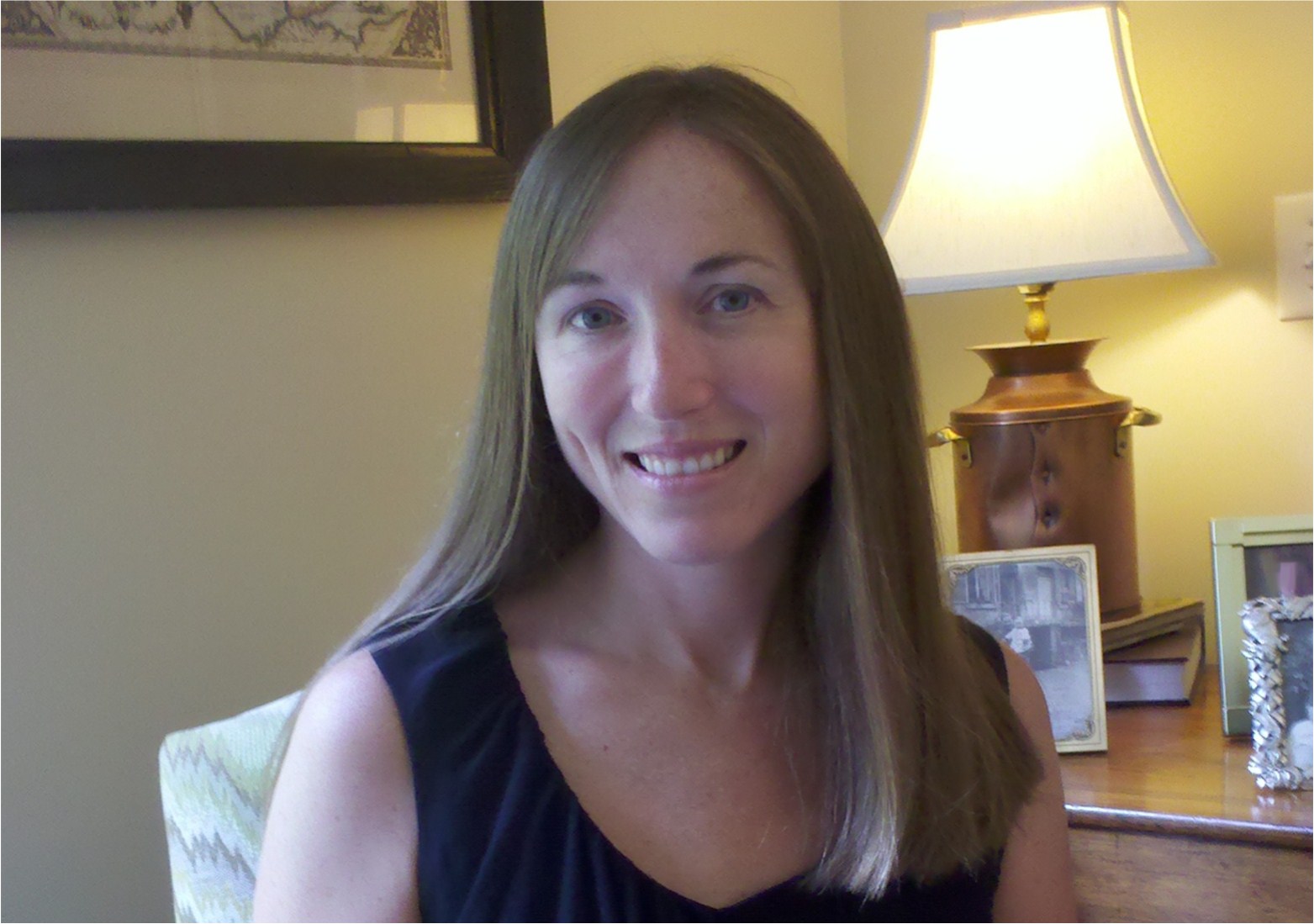
Today’s guest post is written by Elizabeth Craig who writes the Memphis Barbeque series for Penguin/Berkley (as Riley Adams), the Southern Quilting mysteries (2012) for Penguin/NAL, and the Myrtle Clover series for Midnight Ink.

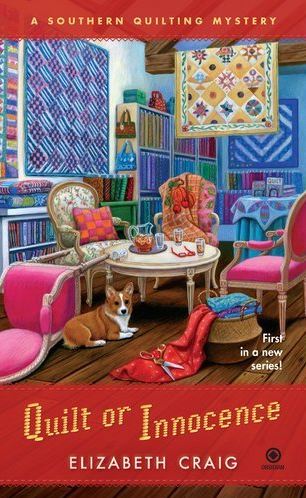
She blogs daily at Mystery Writing is Murder, which was named by Writer’s Digest as one of the 101 Best Websites for Writers for 2010, 2011, and 2012. Her most recent releases are Quilt or Innocence (June 2012) , Hickory Smoked Homicide (a November 2011 release), and A Dyeing Shame a Myrtle Clover mystery (December 2011).  Her next release will be February 5, 2013–Knot What it Seams.

Elizabeth is active in the online writing community.  She shares writing-related links on Twitter as @elizabethscraig and posts on craft and the publishing industry on her blog, Mystery Writing is Murder. She and Mike Fleming of Hiveword also manage the Writer’s Knowledge Base–a free search engine to help writers find resources.

Developing Conflict and Tension in Our Story

Conflict is one of the elements of an interesting story.  As much as we love our characters, if everything goes smoothly for them, then it’s hard to keep our readers reading.  After all—if it’s just an ordinary day for our protagonist, then we really don’t have much of a story.

A few tips for developing conflict and tension:

Quickly introduce conflict into your story.  If it’s delayed too long, the reader might start flipping ahead through the set-up and back story to see where the story really gets started.

Use both larger conflicts and smaller ones.  A lower level of conflict can be easily maintained by introducing tension in our story.  Maybe we’ve got a character who lost his job and is struggling to make ends meet.  He finally snares a job interview—and it’s for his dream job.  His car breaks down on the way to the interview. He was in a hurry when he left, and forgot his phone.  This approach can resonate with readers, too—it’s realistic and relatable. It can also give us an opportunity for us to display a character’s personality to our readers…when we show how the character reacts to the problem.

Provide conflict through other characters.  Here we do need to watch our character motivation and know our character and what matches his personality.  Who rubs our character the wrong way and why can tell us a lot about the protagonist as well as the other character.  We could bring in an ex-wife, an overprotective father, an annoying neighbor, or a backstabbing co-worker.  Every time we have a scene with one of the troublesome characters, we have the opportunity for tension.

Use both internal conflict and external conflict. What are our character’s inner demons?  What’s our character fighting with himself over?  Consider how his internal conflict can shape the story and his reaction to events. What external conflict prevents him from obtaining his goal?

Raise the stakes to create a faster pace.  Raising the stakes and making the conflicts and outcomes increasingly dire for the protagonist is one way to increase our story’s pace and keep readers turning pages.

Try to delay resolution. One thing that’s been difficult for me as a writer is delaying resolution of the protagonist’s problems.  I’m a problem-solver in life and I want to solve my character’s problems, too.  But letting problems spiral out of control and allowing them to gnaw at my protagonist can add excitement and tension to a story.

Give readers some breathing room.  Some of this is personal taste, but as a reader, I really enjoy having breaks in the tension and conflict.  This break can be accomplished through humor, or a subplot that’s moving along the path to resolution when hope in the main plot seems to be lost.

Make the protagonist’s external conflict and internal conflict collide.  What if our character had to sacrifice what’s most important to him in order to accomplish his main goal?  What if he’s got to face his inner demons to save the world?

Tension and conflict are two ways to keep readers turning pages.  What tips have you got for developing them in a story?

Writer’s Knowledge Base–the Search Engine for Writers

Twitter: @elizabethscraig