So When Are You Going To Write A Proper Book, Then?

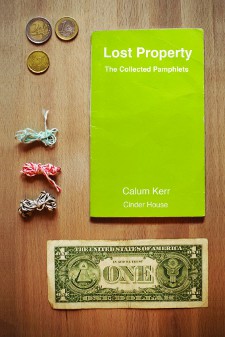
I am pleased to welcome the Director of National Flash Fiction Day, Calum Kerr, for a guest post on the short fiction form. His new collection, Lost Property, brings together four brand new pamphlets of flash fiction, featuring Singsong, Soaring, Burning and Citadel. The collection contains 83 stories that move from the hilarious to the sinister and demonstrates the unique nature of ultra-short fiction.

lostpropertyfrontsm

If you are a writer of flash-fiction, short-stories, possibly poetry and maybe even non-fiction, this is a question which may be familiar to you. The person posing the question might be a complete stranger, maybe at some reading or signing event, but is more likely to be a friend or even a relative. You proudly show them your collection of stories or poems, or your book on how to knit cartoon characters, learn economics or install a Linux system on your PC, and they glance through it, nod appreciatively, and then they work their way towards the question.

“So. Well done. This looks good, doesn’t it?” is the opening move.

“Yes. I’m very pleased with it. I think it’s come out very nicely,” is your response.

“Must have been a lot of work.”

“Yes. But enjoyable. Apart from the editing, ha ha…”

“Ha ha, yes.” They nod and look through the book again, then up at you. “So…” they start, and this is where you should stop them, because you know what’s coming next.

“It is a proper book. It has a cover. It has loads of words in it. I did research and everything. People will buy and read it – okay, not in JK Rowling numbers, maybe, but some of them. It has an ISBN number and can be bought from Amazon and those funny old places that people used to go into. You know, bookshops.” Is what you want to say. But you don’t. Instead you let them continue.

“So… when are you going to write a proper book, then?” they ask, and you somehow restrain yourself from swinging for them.

Because, of course, they don’t mean to say that your collection or non-fiction opus is not a ‘proper’ book. They mean ‘when are you going to write a novel’. That’s what it’s all about, after all, isn’t it? Collections of things are nice, but they’re just little stories or poems, not a good chunky page-turner. Non-fiction books are useful, but you don’t settle down on the sofa on an autumnal afternoon to read them. They live on shelves until you have occasion to reach for them. No, they’re talking about the All-Powerful Novel and the place it holds in the public imagination as the pinnacle of writing and the thing that every writer is surely aiming for.

And this is the problem for writers, especially of flash-fiction or short stories. Because each of the small parts looks inconsequential; trivial. There might be many of them, and they might make up a 200 page collection containing 60-70,000 words, but still, you can see the joins; you can see where the writer started and stopped. Not like the seamless flow of a novel (which was surely written in a single, sleepless week of endless typing). And, of course, you are writing prose fiction, so surely you must be working your way up from these little things to try and join the big boys with their ‘proper’ books.

Now, don’t get me wrong, many flash-fiction and short story writers do have aspirations to be novelists, or at least have found an idea coming to them which is too big to cover in just a few hundred or few thousand words, and so are working towards a much longer piece. But that does not mean that they have finally, in some indefinable way, graduated to the big leagues. They have not left behind their childish play with those tiny tales and taken the brave step to write longer. They are simply following their muse where it takes them, and sometimes your muse takes you longer.

But all of those same flash-fiction and short story writers who are dabbling in the world of novels, at least those I know, still love and respect the short form. They are not what we write because we can’t manage the long things. They are the things we write because there is a value to a short story or a flash-fiction, an intensity, a chance at experimentation, and a specific purpose that you simply can’t achieve in the novel.

We don’t write stories because we are waiting for our turn to write a ‘proper’ book. We write stories because they need to be written, and because we love what they can do that all of your ‘proper’ books can’t.

So next time someone looks at your collection of flashes, poems, or your non-fiction work and seems about to ask that fateful question, stop them, point to the cover and ask them: “So, when are you going to read a proper book, then?”

calum-200x180   Calum Kerr is a writer, editor, lecturer and director of National Flash-Fiction Day in the UK. He lives in Southampton with his wife – the writer, Kath Kerr – their son and a menagerie of animals. His new collection of flash-fictions, Lost Property, is now available from Amazon, or direct from the publisher, Cinder House.

Blogging for Readers

photo 1

Last week’s post was on blogging for writers and I promised a post this week on blogging for readers. They deserve two separate posts in order to do them both justice. I post a few reviews, in amongst author interviews and I discuss different aspects of writing. Book bloggers do a wonderful job of reviewing and sharing books. I have bought several books based on the recommendations of bloggers whose opinions I trust. Some bloggers share books in one genre, be it crime, historical romance, literary fiction, young adult or science fiction, others read and review a vast range of books in one blog. In a previous post I shared a list of bloggers who I follow and whose posts are varied and informative.

So, what do you write and how?

I don’t want to be formulaic because the joy of different blogs lies in their individuality and their unique voice and layout. But the key points are important:

Book Cover

Ask the author or publisher for a high resolution image of the book, and make sure that it is clear and not too large or small for the post. Thumbnails can get lost in amongst your words but a billboard sized image can overtake the review.

Book Information

Include the ISBN number, publication date and publisher information to make it easy for people to locate the book. The genre of the book can also be a helpful indication for the reader. If a reader really enjoys, or doesn’t enjoy, a particular genre, it can help them to make a quick decision about whether to read your review or buy the book.

Synopsis

This is a crucial part of the review and, if you don’t want to include a whole synopsis, at least give a snapshot of the book to frame it for the reader. You probably wouldn’t see a film or a play unless you had a rough idea of the plot or the style, especially if you haven’t previously heard anything about it. Most people go on recommendations before they watch or read anything new, and your introduction can make or break their decision to read a book. Either take the full review or give an outline, and preferably before you give your candid opinion.

Your review

This is the meat of the post. It is your take on the book, your view of the style, the language and the story. Be honest, but it is best to avoid scathing comments. Some bloggers are asked by agents or publishers to review books, and others pick up books to review themselves. If you have been asked to review a book that you don’t connect with, be honest about what didn’t work and try to find the positives. If you really enjoyed the book your enthusiasm will be clear, and hopefully it will encourage others to pick up the book. Try to look at different aspects: the characters, their interaction with each other and the situations in which they are placed, the pace and style, the plot with it’s twists and turns, or the descriptive prose. Have fun and let your journalist’s hat run free.

Other reviews

Has the book been reviewed by the national press or magazines? Are there reviews by other well-known authors? These are worth sharing as they give the reader a better idea of the substance of the book. Quote from other reviews or from the press release. Most books have these quotes on Amazon, which will make them easier to find.

Author info

Does the author have credits or other publications? It is always interesting, although not essential, to gain some background knowledge on the person behind the cover. Do they enjoy travel? Do they have a PhD in an unusual subject? Have they previously been involved in an interesting job? Part of the reason why people enjoy author interviews is because we are all essentially curious (nosey) and it is intriguing to find out about the author or their reasons for writing the book. If readers enjoy the book, they will want to know where to find other material by the writer. Some readers find novels through reading short stories that they enjoy and then searching for books by the same author, and sometimes it works the other way around.

Contact info

This is helpful but not essential. In an age of what I would call ‘the social media explosion,’ many authors have blogs and websites and are on twitter, Facebook, Pinterest or any of the other social media sites. Readers like to connect with authors. Some authors are fiercely private, and little can be found out about them or their lives and writing, but most will at least have a website. Many author websites will have widgets which take you to their other sites.

Can you recommend any good book blogs? Do you review books? How has it helped you to find what you are looking for or, perhaps, surprise you with something new?

Blogging for Writers

blog

My earlier post about blogging received a huge amount of interest and it appears to be a subject close to the hearts of many readers. I promised to come back to it, so I’d like to start with a post on blogging for writers. I’m aiming to look at blogging for readers in a separate post.

Many people warn against blogging about writing, or blogging at all if you write fiction. I would disagree, for the following reasons:

I have gained a huge insight into writing and publishing from a range of authors who blog about the process of writing, editing or publishing. I have learned about both self-publishing and traditional publishing. Some agents and agencies also blog and their comments can be really helpful in finding your way through the rabbit warren that is the publishing industry.

Drawing in other writers who understand the process, and can support you, is essential. I would go so far as to say it as essential as gaining readers. Writing can be an isolating business and blogging can help you to connect with others with a certain level of freedom. I have gained so much from the comments on this blog from other writers, and by following blogs written by writers.

It limbers you up and keeps your words flowing. The process of writing for a blog is very different to the process of novel writing and it can teach you things that you won’t necessarily learn from writing your manuscript.

Reader responses are immediate and interactive. I would say that this is one of the biggest joys of writing blog posts. I really enjoy the comments and suggestions. I like to meet new blog readers and discover new blogs and books. The debates which are sometimes struck up from a particular topic can be really invigorating and will challenge your various perceptions.

Although you can blog about your subject area – crime, if you are a crime writer; relationships, if you write women’s commercial fiction; a specific area of expertise if you write non-fiction – I find that blogging about writing helps me to formulate ideas and to share what I have learned with others who are travelling along the same path.

I find that readers are also interested in finding out about the writing process and I receive emails from people who are just starting out or who would love to write but are nervous about putting their ideas down onto paper. Some readers are just interested in how writers tick and like to know what goes on behind the pages.

Any thoughts? Do any of you find blogging about writing helpful?

Author Interview with Matt Haig

The Humans
From your experience of journalism, as well as novel writing, has one fed in to the other in any way?

Journalism teaches you to be economical with words. It tells you not to be too self-indulgent.

What do you most like to read and are there any books you have read recently that have stood out or changed you?

I read all kinds of stuff. I have been re-reading Graham Greene recently. I studied him at university. Did a whole module on him. I think, from the outside, my books are nothing like his, but I consider him my greatest influence.

What have been the most difficult things to write about and why?

There is some mathematics in my new novel, and I had to look like I knew what I was talking about, so I researched, and I quickly saw how so many mathematicians go crazy.

You have said that The Humans, your new book, is the one work you would most like to be remembered for. Although you have written several other books, what has given you confidence in this project in particular?

Because I totally cut loose. A part of me used to play the game. You know, I used to be trying to be highbrow, or taken seriously, and that somehow got in the way. With this, I knew it was probably going to be published whatever (as my last book did quite well) so I just went for it. Comedy, science-fiction, sentimentality – all those illegal things.

What advice would you give to new writers on their path to publication?

Be brutal with your writing. Don’t let yourself have it easy. And then be persistent, and thick-skinned, for everything that follows.

What do you enjoy doing outside writing and reading?

Being with my kids, toast and peanut butter, running, holidays. I am not into fancy things, but I am into fancy holidays.

If you could meet any well-known figure, living or dead, who would it be and why?

Emily Dickinson, without a doubt. Amazing mind, intriguing person. She’d be too shy to open her front door though, so that’d be a problem.

Matt Haig

Matt has written novels, screenplays, children’s novels and worked as a journalist, collaborating with The Guardian, The Sunday Times and The Independent. He has won a range of awards, including the Yorkshire Young Achievers ‘Achievement in the Arts’ Award in 2009, and his novels have been translated into 29 languages. The film rights for his first novel, The Last Family in England (2004), have been sold to Brad Pitt’s production company. His previous novel, The Radleys, won an ALA Alex Award in America, has been shortlisted for the Portico prize and nominated for the Carnegie Medal. It won the TV Book Club Summer Read. He was born in Sheffield, Yorkshire in 1975. Since then he has lived in Nottinghamshire, Ibiza and London. He studied English and History at Hull University and then did an MA at Leeds, and now lives in York with author Andrea Semple and their two children.

www.matthaig.com

Two New Short Story Publications

It has been encouraging to receive such a positive response to my first published short story, The Bench. Take Me to the Castle is continuing to sell well, both in paperback and eBook formats. Several readers have been asking when the next short story will be released. I am pleased to announce the publication of two short stories: BLOOD RED and BIRD. You can download copies by clicking on the images on the side bar at the right. Here is a little information on each one.

Blood Red

Blood red cover final

This short story set in India reveals the hidden tension in the mind of a young boy as he has to let go of the girl he loves for an unknown young bride chosen by his parents. But as the wedding day approaches, will he be able to follow his parents’ wishes in the face of his passion and quiet desperation?

Bird

Bird cover
A caged bird, an aging mother and a family loss that noone will talk about. This short story delves into the pain and longings of a girl caring for her mother with an insight into the world through her unspoken wishes.