
What I’ve learned after 14 years as a published author

I get lots of questions from new and aspiring writers. So, after four published books and stories in five international anthologies, here are my thoughts.

Finding your style takes time

You will write many words that you throw away or put in a drawer. The more you write, the better you will become at the craft. Don’t give up at the beginning. Blogging is also a great way of honing your craft (and gathering an audience). It’s also a solid platform, as social media sites come and go, or shift. I’ve had almost 142,000 readers on my site since I began – your readership is cumulative. Views have doubled in two years.

Consistency is important

You don’t have to spend hours every day, but find what works and stick with it. I try to write regularly, and when I’m writing a novel, I spend several hours each day writing. For you, it might just be journaling once or twice a week, or working on a short story or a novel for an hour a day or a few hours a week. Writing can fit around your schedule.

Take breaks when you need to

If you feel dry or uninspired, it’s absolutely fine to step away or switch gears and switch from stories to poetry or blogging, or letter-writing. There are so many ways of writing, so don’t limit yourself to a huge manuscript, which can feel daunting. I began with short stories, then later began my debut novel. I started writing poetry many years ago, but only returned to it in more recent years, only beginning to send work off for publication more recently.

Find what inspires you

Go for a walk, use images as writing prompts, or work in a cafe if you work better with noise and other people around you. I wrote some of my last novel with a writing partner, both online and in person in cafes. Find what works for you personally and don’t be afraid to experiment.
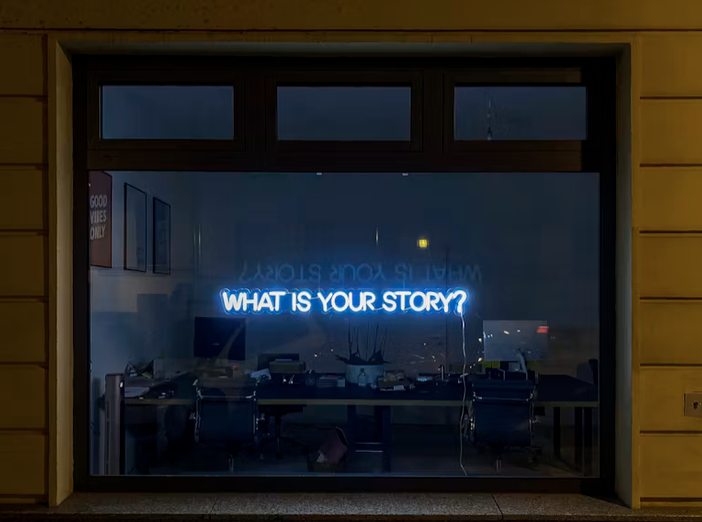
Create a writing space

I can’t stress this enough. Find a space that’s yours, a space that’s comfortable (because you spend hours in it), and a space where you won’t keep being interrupted. Writers’ spaces have been some of my most popular blog posts. You can find them here and here.

Read, read, read

Read as much as you write, if not more. Reading both within and outside your genre will give you inspiration and help you to find what works and what doesn’t. It also breaks up your writing time. In an age of fast information and scrolling, it can be hard to focus, but you need that focus to be able to write. Whether you prefer an eBook or a paperback is up to you, but I prefer to read physical copies, as I spend a lot of time using screens for work and writing. It’s a controversial topic, but I don’t think you can beat a fresh hardback book!

What I’ve Learned about Social Media & Blogging on Writing for 12 Years with Over 75,000 views

Photo: W.H. Auden’s Summerhouse in Kirchstetten, Austria. F. C. Malby.

75,000 views in 12 years – 6,000 views a year – an average of 500 views a month.

That’s far more than I ever expected, especially as there have been years when I haven’t been able to post as often. But, I consistently show up and that’s the bottom line. So, what have I learned?

1. Social media isn’t dead, and neither are blogs

Despite the rumours swirling around about various different social media platforms dying off, I believe they are here to stay. Even though they morph and change – as some do lose popularity, others will inevitably pop up in their place. Your blog can feed into different social media platforms, but it is also a platform in its own right, and it’s a good one. I wrote a post asking Is Blogging Worth the Time and Effort? I still believe that it is.

2. People will continue to follow you if they feel invested in what you are writing

It’s much to my surprise that people who followed me 12 years ago (is it really that long?) remain engaged with what I post today. So, make it interesting and varied. I love hearing your thoughts and comments, and I’m still connected with many authors who I interviewed when I began blogging. Author interviews are popular. You can read my interviews with authors Matt Haig and S J Watson on their writing process and background, as well as some of the challenges they have faced.

3. Surprisingly, I get most of my traffic from Pinterest

Yes, I expected Pinterest to die off, but it remains ever popular, particularly in sharing content about books and bookshops. I wrote a post on How To Use Pinterest To Improve Your Writing, which talks about how useful it can be to pin ideas to boards for inspiration and to share content. Have a look at my boards, which include a TBR Pile, Book Reviews and Author Interviews, as well as information on writing and more. It still gets 2,000 monthly views.

4. Readers like variety, whether it’s author interviews, book news and reviews, tips on writing or pictures of beautiful libraries

Variety, as they say, is the spice…(you know the rest). I try to vary my blog posts. No one wants the same content every time. Mine, as an author, is on books and fiction writing. Staying within your niche is important, but variety keeps things more interesting, so I mix it up. The second most popular category, after writing tips, is libraries around the world, with Space to Read and Relax: Bookshop Cafés and Bars Around the World… and 30 Amazing Libraries and Bookshelves. So, what can I learn about my readers? They’re writers, aspiring writers, readers and book lovers.

5. Keep it visual. Images capture what you are writing about and grabs people’s attention

See number 3. The visual nature of Pinterest draws people in and so do the visuals on blog posts. One of my recent blog post photos of my TBR book pile ended up in the Durham University Student Newspaper! We’re visual creatures, so creative visuals, as well as written content is important.

6. Blogging draws people to your website

75,000 have come to my site as a result of my blog posts. That’s on top of usual website traffic. This means I get to engage with so many more people, and it’s led to author interviews and book recommendations. It’s a network. I write a lot about short stories, as an author of short stories and flash fiction. This guest post from Cary Bray on The Magic of Short Stories is a popular read.

7. People will read and re-read your writing over the years as you build up your content

Once your content is up, it’s there to stay for as long as your site exists, which gives it longevity. My most read post about the Narrative Arc has been viewed 16,000 times and is on my top 5 list of most read posts, alongside Kurt Vonnegut and the Myth of Talent, Writing Prompts, What we can learn from Beauty and the Beast About Plot, Tension and Obstacles and Hemmingway’s Tip Of The Iceberg: Omit What the Reader Knows.

8. Blogging is a creative outlet other than writing stories, books or poetry

It’s a way of sharing ideas that don’t go into books and journals. For example, this infographic on Quentin Blake’s Rights of the Reader Illustrations, which I shared on World Book Day is too good not to share.

9. It connects you with others

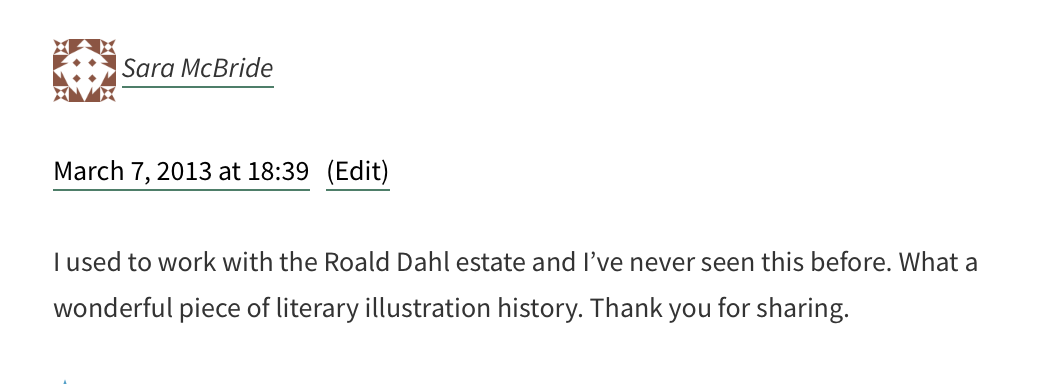
Like this reader response to the above Quentin Blake post:

What a lovely connection!

10. I really enjoy it!

I love writing, and I really like to be collaborative and share information and what I know, especially if it helps others. Whether that might be finding a new book to fall in love with, or discovering a new author, or helping people find beautiful libraries, or giving writing tips. Sharing things that you find, and your ideas, has a ripple effect and sparks creativity in others. I also find new readers for my own work, but this is not the primary reason for writing blog posts. For me, it’s secondary to everything else that I do.

Sharing things that you find, and your ideas, has a ripple effect and sparks creativity in others.

Blogging for Writers

blog

My earlier post about blogging received a huge amount of interest and it appears to be a subject close to the hearts of many readers. I promised to come back to it, so I’d like to start with a post on blogging for writers. I’m aiming to look at blogging for readers in a separate post.

Many people warn against blogging about writing, or blogging at all if you write fiction. I would disagree, for the following reasons:

I have gained a huge insight into writing and publishing from a range of authors who blog about the process of writing, editing or publishing. I have learned about both self-publishing and traditional publishing. Some agents and agencies also blog and their comments can be really helpful in finding your way through the rabbit warren that is the publishing industry.

Drawing in other writers who understand the process, and can support you, is essential. I would go so far as to say it as essential as gaining readers. Writing can be an isolating business and blogging can help you to connect with others with a certain level of freedom. I have gained so much from the comments on this blog from other writers, and by following blogs written by writers.

It limbers you up and keeps your words flowing. The process of writing for a blog is very different to the process of novel writing and it can teach you things that you won’t necessarily learn from writing your manuscript.

Reader responses are immediate and interactive. I would say that this is one of the biggest joys of writing blog posts. I really enjoy the comments and suggestions. I like to meet new blog readers and discover new blogs and books. The debates which are sometimes struck up from a particular topic can be really invigorating and will challenge your various perceptions.

Although you can blog about your subject area – crime, if you are a crime writer; relationships, if you write women’s commercial fiction; a specific area of expertise if you write non-fiction – I find that blogging about writing helps me to formulate ideas and to share what I have learned with others who are travelling along the same path.

I find that readers are also interested in finding out about the writing process and I receive emails from people who are just starting out or who would love to write but are nervous about putting their ideas down onto paper. Some readers are just interested in how writers tick and like to know what goes on behind the pages.

Any thoughts? Do any of you find blogging about writing helpful?