First Drafts

writer's notes

The previous post about blogging received a record level of traffic and an unprecedented response, given this blog’s short life span, so I’ll come back to it and write more on the topic soon. It is clearly a subject that people feel strongly about and I had not realised the level of passion and dedication behind so many blogs.

First drafts is the issue I’d like to tackle today.  I am in the stage of the first draft of my next novel and I have been thinking about the changes through each stage of writing up to final publication. There is something unique about a first draft; a freshness, an expectation, a certain level of hope.

The first draft is the place of mountain peaks and valleys, it is the place of the Eureka moments and the what ifs, it is the place of ‘first thought’ excitement and of apprehension, the place of originality and of doubt.

In writing your book for the first time, before you go through rounds of editing and rewrites ad infinitum, there is an enthusiasm about where you will take the reader, in fleshing out your characters and plot, in travelling to new places. There is also an apprehension surrounding your words; questions, doubts, fears. Will I be able to keep up the tension and the pace? Will people want to read it? Will I be able to finish it? Is it going to be too long/short? Did I choose the wrong topic/genre/setting? Do the scenes link up? Is there enough cohesion and consistency?

There are endless questions that seek to counter balance the moments where you get lost in the the sentences, your fingers running away with themselves, tapping furiously at the keyboard and you forget to eat.

What is it about first drafts that make them so enticing, yet so difficult to wrestle with? Give an artist a blank canvas and paints, give a singer a microphone and close them in to a sound proof recording studio, give a dancer a stage and a preview audience. There will always be fears surrounding your ability, your audience’s reaction, the longevity of your career (if you are thinking long-term). All art forms are highly subjective, creating a range of responses. I recently scanned some well promoted and popular books, only to find a great and confusing diversity of reviews. This, I think, reflects the fact that no two people will love the same books, music or art. Although there are varying levels of skill among writers, the result, as the publishing industry well knows, can be unpredictable.

How, then, do you wrestle with the first draft to produce your best work? I have struggled with nagging thoughts of what people will think when they read it, much more so now than with any of my short stories or my first novel. I think it is partly down to the fact that there is more pressure with each book that you write to make it better than the last, to keep up reader interest, and to prove that you want to be able to keep writing. There are several people in publishing who are waiting to read my current novel and, whilst it is encouraging, it is also nerve-wracking. When I self-published my previous novel I had complete control over the process and the outsourcing; the deadlines, the cover design, the editing, and it felt safe in many ways. Now I feel a sense of pressure and, sometimes, of impending doom. I have felt paralysed by the need for the first draft to be perfect and to be commercially viable. The truth is no first draft will ever be perfect and nobody can predict what will sell.  Whilst I have been surprised by the sales of my first book, I am under no illusions about the state of flux in which different types of books remain.

My response  to these doubts when they creep up on me, as they always will, is to write as though noone will read it. That’s it. It’s really that simple. Write your book without wondering how good it will be or if it will sell. Imagine that it will never be read and write it for yourself. You do need to be aware of your audience when planning, but I have found that since I made the decision to stop thinking about reader response and beyond, I have moved from writing around 500-800 words a day to up to  2,000 or 3,000. I know it won’t happen every day but it is liberating and freeing. So, here’s to days of carefree writing before you apply a scalpel to the parts that you won’t need, before you carve and sculpt your work. Here’s to writing for the love of writing.

Photo credit: A Leonardo da Vinci notebook with diagram of a potter’s wheel, c. 1508-1509. Flavorwire
Short Story Publications

This is just a short post with some news, written mainly because of several messages I have had from people about short story writing.  I am hearing from an increasing number of authors who enjoy writing novels, but feel intimidated by short stories, or worry that the form is so different that it would be hard to adapt to the change of style and, obviously, the length of prose.

I published a post on short story writing earlier this morning which might be useful, and I wanted to let you know that several pieces of my short fiction have just been published online. They have all been written in the past six months, so I am fairly new to the form, but it is clear to say that I am hooked. Please let me know how you get on if you decide to try writing any short pieces. I would love to read them.

I normally only send publication news to those on my mailing list but, if you would like to read my published work online, you can find Berggasse 19 in The Puffin Review and I.P. in the Flash Flood Journal (many of you will have read it from an earlier post.)

I am also excited to be able to tell you that Ether Books have just this week published four pieces: Confessional, The Edge of Wandsworth Common, Tomatoes and Thicket, and Un/wanted. These can all be downloaded, free of charge, to your phone.


How You Can Use Your Reading Experience to Shape Your Writing

I was asked to write a guest blog post on Marianne Wheelaghan’s writing blog which is full of useful writing tips. She teaches creative writing classes at www.writingclasses.co.uk and is the author of two books. I would recommend reading some of her articles and getting to know her on twitter and on the blog.  My post is on How You Can Use Your Reading Experience to Shape Your Writing. It is a subject which I think is important for writers. Many people struggle with time to read but if you are a writer is is a necessary part of building your craft and learning skills and techniques. Do leave a comment on the post and I hope you find it useful.

5 Ways to Write More Effectively

IMG_9529

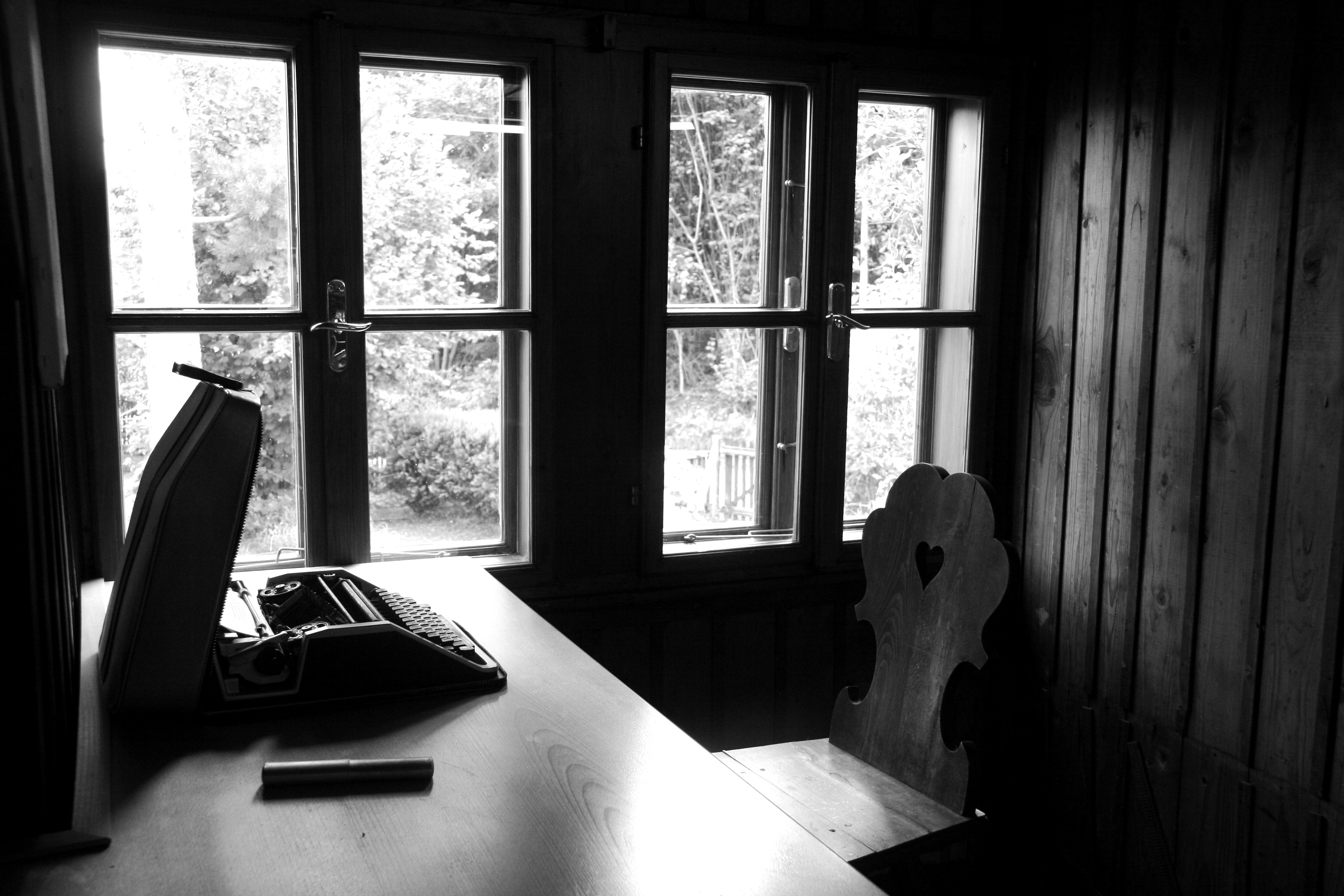
W.H. Auden’s Desk (copyright F.C. Malby)

I know there are many lists of ‘to to-dos’ and ‘not-to-dos’ for writing and endless amounts of advice, but I just wanted to add a few things which I have found really helpful (some of them dietary!)

  • Write first thing in the morning if you can. I know that people work to different schedules and many people are writing around full-time jobs and some, well into the night. If you have the time, though, I think the mornings are a time when your mind is fresh and uncluttered from everything you might have read on email, twitter, facebook, and the news. Interestingly, I have heard several writers this week saying that they are pulling back from the internet because it is hampering their creativity (but that is another post all together).
  • Cut out caffeine for a while. Yes, I really did say that. I know it sounds like a lot to ask and, believe me, I LOVE coffee but before Christmas I was feeling tired and lethargic and I realised that I was drinking far too much coffee in the form of very strong nespressos. I’m now having a detox for a few months and it really does help. I can only do this because I know that it won’t be forever. I wake up feeling less tired and my mind is much clearer. The difference to my writing output is phenomenal. Since the New Year, I have written 9 short stories, 9 pieces of flash fiction, and mapped out the next novel. I drink peppermint tea and water and I can’t tell you how much it has helped. Getting enough water is really important for brain function. When I teach, I can spot the children who haven’t had a drink in the mornings. They can’t focus.
  • Have a rough plan of where you are going. Whether you are a detailed planner or are more relaxed with your writing, it helps to know where you are heading for the day/week/month. I carved out time during January and February to write short fiction and have achieved my goals. Your targets can be large or small, long-term or short-term but I would encourage you to make some goals rather than to drift through the days.
  • Use visuals to help with details of characters and settings. I use mood boards and Pinterest to give me the fine details, especially for short fiction. See the article I wrote recently on using Pinterest to help your writing. To be able to see images, beyond what is already in your mind, can give a fresh perspective and trigger new ideas.
  • Take a break. You can’t really focus for more than 90 minutes without loosing a certain amount of efficiency and concentration. Some people use timers but you’ll have a clock on your screen/wrist/wall, so make sure that you get out of your seat and move around. It will get the blood flowing to your brain and your muscles, especially the leg muscles which have been squashed into a chair for longer than they were designed to handle.

The Creative Process

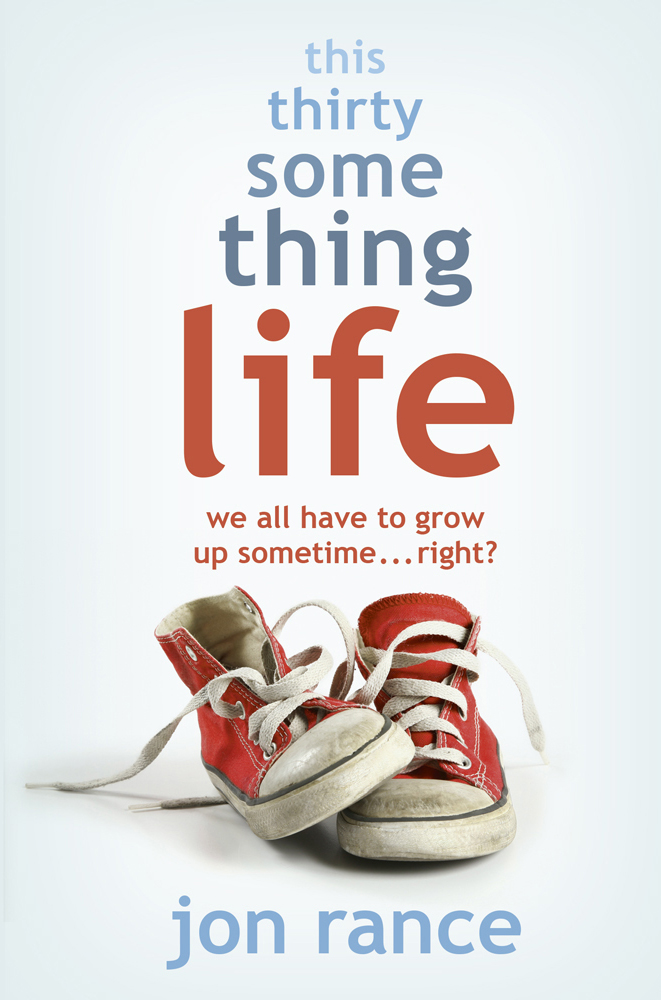
Author Jon Rance is guest posting today on the creative process of his writing. His book, This Thirtysomething Life, published by Hodder and Stoughton, is a love story about what happens after we’ve fallen in love, when we’ve swapped frolicking in the bed for cigarettes in the shed and Match of the Day for Mothercare. Brutally honest, laugh-out-loud funny and heart-warming, this is a diary about one man’s bumbling journey on the road to adulthood. If you like Nick Hornby, you’ll enjoy this. Thank you, John.

30something

Firstly, a big Thank You to Fiona for letting me loose on her blog. She’s a brave lady indeed! For those of you who don’t know me, I’m Jon Rance, author of the romantic comedy novel, This Thirtysomething Life. I approached Fiona and asked her if I guest blog on her site. Luckily she agreed and so here I am.

Being a writer, people often ask me the same sort of questions. Where do you get your ideas? How do you write? Where do the characters come from?  I guess what they want to know is what my creative process is. It’s an interesting concept and I’m sure different for every author. Mine is a bit haphazard if I’m honest. I read about authors who meticulously plan out books down to the last full-stop. I don’t.

When I start a novel I need the following things. A title. Main characters. Motivation. An ending. I think having a title from the off helps bring the whole thing together. I often think of the title before I know anything about the book. I need to know who the main characters are. By this I just mean a brief bio, name and what they look like. Motivation is what will drive the book forwards. In This Thirtysomething Life, I knew from the beginning that the story was going to be about a guy having a hard time growing up and coming to terms with becoming a father. Right from the word go everything else stemmed from this idea. An ending. Endings can change during the book, it happens, but I think it’s important to know at the beginning where the story is going. The journey is something else, but a destination is important, whether it’s a scene you have in mind, a sentence or just where the character is emotionally.

Once I have those I just start writing. For me writing is a very organic process. I need a few chapters to really get to know the characters properly. I often find that once I know them better, the plot is formed mostly in part by them and the choices they make. My writing has always been character based. I think in my genre of commercial fiction, characters are the base of everything. Plot is important, but for me the first draft is where I get to know the characters. Once I have the first draft down, the second, third, fourth – fifteenth are mainly about tweaking the structure and the plot. I often think writing a novel is like building a house. The first draft is building the structure. Every other draft after that is about making it look nice. The last draft is the one where you get to hang up the paintings, pop the interesting sculpture you bought from the market on the mantelpiece and then sit down on the comfy sofa and marvel at what you’ve accomplished.

I’ve definitely improved as a writer with every book. I wrote four complete novels before This Thirtysomething Life was picked up and published by Hodder. Those four novels were my learning curve. I made some mistakes, but more importantly, I learnt about my creative process. I think it’s a very personal thing. We can learn from others, read books about writing, get hints and tips, but at the end of the day, we all have to learn our own creative process. I used to think mine was ridiculous and that I should change and be more organised, but what I’ve come to realise is that it doesn’t matter how you write, as long as you do it your way because writing is about being creative, it isn’t painting my numbers and checking boxes. Think of the creative process as your friend rather than your enemy. It’s taken me a long time, but I love mine now because it is all mine and I couldn’t do it any other way.

hodder2Jon Rance is the author of the romantic comedy novel, THIS THIRTYSOMETHING LIFE, which was a Top Ten best-selling book on the Amazon chart. Born in Southampton in 1975, he studied English Literature at Middlesex University, London, before going travelling and meeting his American wife in Australia. He is currently working on his second novel, HAPPY ENDINGS. Outside of writing Jon loves travelling, music, sit-coms, art and watching football (but not playing anymore due to dodgy knees).

Both THIS THIRTYSOMETHING LIFE and HAPPY ENDINGS are published by Hodder and Stoughton. Jon is represented by Ariella Feiner at United Agents.

His website can be found at www.jonrance.com

You can also follow him on Twitter @JRance75