Fact and Fiction: How to Weave Both Elements into a Good Book

English: A panorama of a research room taken a...

While the general categories of fiction and non-fiction are distinct book categories in the publishing world, there is good reason to tie the two together in your novels. It will technically still be classed as fiction, but a combination of the two can be really powerful. My debut novel, Take Me to the Castle,  was a fictional story, written within the framework of communist Eastern Europe, and the resulting secret police activity and fractured family relationships. I wanted to use my research skills to bring the facts to life through the eyes of a young girl, Jana.

Mixing fact and fiction is no easy task because, while you have all the facts to hand after months or maybe years of research, you have to be careful not run the risk of any of the following temptations:

Information dump. Too many facts and the reader will switch off.

Twisting the facts. Inaccuracies will water down your plot and make the story less believable.

Lose your creativity. If you feel the need to stick too tightly to the facts, the plot risks being underdeveloped. You don’t want to become fenced in by tight constraints if you are writing fiction.

What is the best way to weave the two together?

It is important to make outlines after your research so that you have a clear idea of where you are going with the plot. If you begin to write before entering into the research you will end up doing a lot of painful rewrites. It’s best to avoid unnecessary rewriting if possible.

Strike a balance between the two, erring on the side of fiction rather than fact. Too much factual information, and you will end up writing non-fiction, which is fine as long as you are clear about defining your work.

Be creative and don’t be afraid to play with the facts. Use your imagination to fill in the gaps and show the reader your interpretation of the events from a unique angle.

Why will this work?

Given the constraints, you may wonder whether it is worth bringing fact into the arena of fiction at all. I would argue that there are many periods throughout history, and many key events in life, which need to be recorded and written down, and I believe this can be done really effectively through fiction.

Think of The Paris Wife and it’s subject, the first wife of Ernest Hemmingway. What has made the book so successful has been the fact that it gives you a window into the life a famous writer at at time that we know little about.

Magda has just been released in March, and tells the story of Magda Goebells in chilling reality but it is, in part, a fictional representation of the facts. It’s fascination lies in the fact that it covers the difficulties of mother/daughter relationships and the horrific period that was Nazi Germany. It gives an inside view into the life of Hitler’s propaganda minister, Joseph Goebells.

Two of my blog readers and fellow writers also wrote their books based on periods in history:

Tom Gething wrote Under a False Flag based on the overthrow of Marxist president, Salvador Allende, in Chile in 1973. The books is based on a series of recently declassified documents from the period and includes a wealth of historical research.

Marianne Wheelaghan published The Blue Suitcase in 2011, telling the story of her Grandmother, Antonia, through her diary as she grows up in Germany during and in the aftermath of World War II. 

Have you read any other good examples that you can add to the list? Many of these are political. Can you think of other examples?
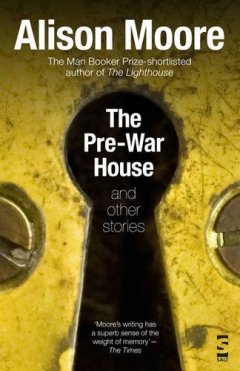
Book Review: The Pre-War House and Other Stories

50fac95bde404 (1)

I have eagerly awaited the publication of Alison Moore’s debut collection, The Pre-War House and Other Stories. As regular blog readers know, I am an advocate for short fiction and I read and write as much of it as time allows. It’s a real joy to be able to review this collection of short stories.  I was kindly given an advanced copy by Salt Publishing, for which I am very grateful. The Lighthouse, Moore’s debut novel, was shortlisted for the Man Booker Prize in 2012 and I read it in one sitting. I hoped for the same emotional tension, her attention to detail, and a surprising climax in her short stories, and this collection did not disappoint.

The short stories in Pre-War House are drawn from a selection of magazine and anthology publications over a period of twelve years, alongside new and recently published work. Moore’s stories have been shortlisted for more than a dozen different awards (see below) including the Frank O’Connor International Short Story Award 2013 for this collection.

The stories are evocative and often sinister, honing in on the details of everyday life with extraordinary insight into human nature and the many fears, often unspoken. Moore has a great sense of control over her prose, her language is understated and therein lies the power of her writing. She uses words which evoke a sense danger, of loss or unease.

I had previously read When the Door Closed, It Was Dark, and reading it again provided the same sense of threat and menace through the tightly written sentences as they wound their way towards an uneasy ending. There is something inherently satisfying in reading a story of this quality which makes you catch your breath as you turn the pages.

Overnight Stop left me gripping my seat as I read in disbelief. The plot lends itself to a novel length prose and this is no mean feat for a short story. This piece is a perfect example of Moore’s ability to play with your emotions and draw you in to the scene with frightening reality.

Seclusion lulls you into a false sense of security before packing a punch towards the end. The insight into one life is portrayed with telescopic accuracy.

Sleeping Under the Stars brings in details of Stargazy Pie, Liqourice laces and kirby grips with a layered story of the difficulties of fractured families. The ‘goosepimpled arms’ give a sense of foreboding, and words such as ‘queezy’ and ‘sickening’ provide a parallel for the emotional distress involved in the story.

Many of the themes centre around family, relationships, loss, and uncertainty. Some of the stories create a sense of claustrophobia as the characters become trapped in situations beyond their control. Each piece has its own unique style but the thread weaving through the collection is an intangible sense of anticipation. It is a delicious read and, having read some of the stories a few times, it is something I will keep going back to. A remarkable debut collection which comes highly recommended.

‘Overnight Stop’ (The Lampeter Review issue 7)
‘Sleeping Under the Stars’ (The Nottingham Short Story Anthology 2012)
‘A Small Window’ (The Warwick Review vol.6 no.4)
‘Jetsam’ (Ambit issue 211)
‘Seclusion’ (Paraxis volume 4)’If There’s Anything Left’ (The Yellow Room)
‘It Has Happened Before’ (Shadows & Tall Trees issue 4)
‘Trees in the Tarmac’ (The New Writer issue 112)
‘Sometimes You Think You Are Alone’ (The Screaming Book of Horror, 2012)
‘Small Animals’ (Nightjar Press, 2012)
‘The Yacht Man’ (The New Writer issue 111)
‘The Smell of the Slaughterhouse’ (The New Writer issue 111; Best British Short Stories 2013)
‘Glory Hole’ (The Lightship Anthology: 1)
‘The Egg’ (Murmurations: An Anthology of Uncanny Stories About Birds, 2011)
‘When the Door Closed, It Was Dark’ (Nightjar Press, 2010; Best British Short Stories 2011)
‘The Pre-War House’ (The New Writer issue 103)
‘Static’ (Manchester Fiction Prize 2009)
‘Monsoon Puddles’ (Quality Women’s Fiction issue 43)
‘Helicopter Jean’ (The New Writer issue 53)
‘Wink, Wink’ (Creative Writers’ Network magazine)
‘Humming and Pinging’ (Marches Literary Prize anthology 2000) 

What Do Authors Have in Common with Orchestra Conductors?

Philharmonic Orchestra of Jalisco (Guadalajara...
Philharmonic Orchestra of Jalisco (Guadalajara, Jalisco, Mexico) (Photo credit: Wikipedia)

The more I write, the more I am aware of  the variety of elements involved in creating a compelling story. These elements are all individual parts but they have to be pulled together to work effectively.  Alone, each part would sound  musical, lyrical, but together they create a depth of sound which cannot be created alone.

I used to play the clarinet in various orchestras and jazz bands and, while I also enjoyed playing music alone, nothing matches the sound of an entire section, woodwind in my case, or a whole orchestra. Some sections alone sound fragmented, have you ever listened to a double bass playing an orchestra piece without the rest of the string section? Unless it’s a jazz improvisation it might sound staccatoed and uncomfortable.

When you create a book you look at the story arc, the balance of dialogue and narrative, points of view, pace, action, language. When you conduct an orchestra, you need to see the different sections: string, wind, brass and percussion. Within each section are the individual groups of instruments. In the strings you would hear the violins, violas, chellos, double basses, and so the list would go on with each of the other sections. The conductor needs to be able to hear each section and filter out the other sounds as well as to be able to hear the collective sound. He or she needs to pull the instruments in at the right time, control the tempo and the volume, and to be able to create an even balance.

In the same way an author needs to be able to look at the different sections of the book, and to hear the sounds and feel the rhythm of the story; to be able to create balance in pace and point of view, a balance between high emotion and lower points of tension, a balance between dialogue and narrative prose.

The threads within a story weave together in a similar way to the instruments within an orchestra. If anything sounds off it can run the risk of throwing the rest of the story off kilter. There is a delicate balance between the threads, requiring the skill of a competent author or conductor, and at different points in the story and the music there will be certain elements that will be louder and clearer, more dominant, while others subside. The balance can make or break the overall sound and quality.

What Novelists Should Know About Short Fiction

Stack of magazines

When I first started writing seriously, all I wanted was to publish a novel.

I thought my intentions were honourable—that I wasn’t just another wannabe with dreams of making it big—but there was always that little part of me that still wasn’t ready to put in my dues.

I wanted it all, and I wanted it right away.

Then, something life-changing happened. An opportunity fell into my lap. I was asked by the publisher of a print magazine (who had been following my blog) if I would consider submitting a short story to their next issue. I hadn’t had much luck with my previous attempts at publishing short fiction, but I thought I’d give it a try.

A Writing Revelation

In order to be sure I was writing something that wouldn’t be rejected, I read and deconstructed a lot of short stories, listened to them on podcasts, and spent a painfully long period of time perfecting my piece. I really began to appreciate the things that short stories do best, and in the process of writing that story, I fell in love with short fiction.

My piece was accepted. It was then nominated for a Pushcart Prize, and later it was included in an anthology.

All of this changed the course of my writing forever. I put the novel aside for a while and focused more on short fiction. I still received plenty of rejections, but the acceptances became more and more frequent. Now that I’ve tackled some of the smaller indie mags and mid-range university journals, I have a much better chance of breaking in to some of the larger, more well-known publications.

And that could have a huge impact on my ability to write, sell, and market a novel.

If you consider yourself strictly a novelist, have you given some thought to whether short fiction can help you achieve your goals? Or, have you dismissed it as something that’s ‘just not for you’?

Consider:

1. Reading short fiction can make you a more knowledgeable writer.

You know how sometimes you hear the same authors’ names over and over, but have no real concept of who they are or what they write?

Short fiction gives you the opportunity to experience the work of some great writers without the commitment of reading through weighty novels each time. You might yawn at the prospect of reading Freedom by Jonathan Franzen, but you can still get to know his work by reading the short piece “Agreeable” (which is actually an excerpt from the novel, but it stands on its own). You have no time or inclination to push through Margaret Atwood’s Alias Grace or The Handmaid’s Tale, but in half an hour you can read “Stone Mattress.”

Reading short fiction offers an opportunity to become more widely read in less time. There are plenty of short fiction collections at your local library, and thousands upon thousands of stories available free online.

Start today: For one week, read a short story per day. You might do this during your lunch break or before bed, or you can even download an audio recording and listen to it while you exercise or commute to work.

Here are some stories I’ve enjoyed recently:

2. Writing short fiction can make you a more accomplished writer.

Writing short stories requires economy with words and focus on technique. Think—maximum learning experience with minimum time commitment.

Taking the time to write short fiction, set it aside, and polish it, all give you opportunities to work on your craft and get used to the feeling of completely finishing a piece of writing.

The biggest thing I’ve learned from writing short stories is the art of subtlety: how to be less obvious with symbolism or themes, how to choose subtle titles, and when it’s better to leave things unsaid.

Short fiction teaches you to make each word count, and that’s a definite advantage in writing a novel, especially when you need to hook your reader from the very first page.

Start today: Read the following first short story lines and use each as a starting point to create a piece of micro or flash fiction:

  • “They say every girl remembers that special day when everything starts to change.” (“Man and Wife,” by Katie Chase, The Missouri Review)
  • “For weeks, the rumours circled into town as if carried by wind.” (“Viaticum,” by Lauren Groff, Open Letters Monthly)
  • “What a burden it is to have seen wondrous things, for afterwards the world feels empty of possibility.” (“A Lovely and Terrible Thing,” by Chris Womersley, Granta)

3. Publishing short fiction can make you a more marketable writer.

With a portfolio of published work to my credit, when I do have a novel ready to submit to literary agents, my query letter will sound more confident and experienced than it would have a couple of years ago.

Getting your work published in just a few respectable journals can be a real asset to you as a writer. It shows you’ve put in the time to learn and practice your craft, and that you have the tenacity to keep submitting until you find a home for your work.

If literary fiction isn’t your thing, many popular authors are just as active in writing short stories (think about Stephen King, Jennifer Weiner, Neil Gaiman). For whatever genre you love, there are short-form markets to match.

Start today: Start a spreadsheet of places where you can publish short fiction. You’ll probably want to start with ones that don’t charge reading fees, do accept electronic and simultaneous submissions, and publish work similar to your own writing. Continue adding to the list as you come across new venues. When you’ve polished either one short story or a suite of micro/flash fiction, you’ll already have a tailor-made database of markets.

This post is reblogged from Writer Unboxed, written by Suzannah Windsor Freeman.


Creating Believable Characters

images (3)        images (2)        images (4)


“Plot is no more than footprints left in the snow after your characters have run by on their way to incredible destinations.”

― Ray BradburyZen in the Art of Writing

Character description is crucial to a good story that is both readable and convincing. For a reader to get inside your story, the characters have to seem real. They need to have characteristics which are compelling and hook a reader at an early point in the story. As writers, there are so many elements to plotting a novel which need to be considered, that it can at times be head spinning.

You have to focus on scene setting, dialogue, narrative, pace, story arc, point of view, voice and many other aspects. Without good characters, involving skillful characterisation from the author, the story will fail to bring the reader to the last page. So how do you pen characters who are enticing, captivating, abrupt, frustrating, lovable or frightening?

Study real people – Watch people’s behaviour, body language and conversations. Fictional characters need to take elements from real life. Even sci-fi has elements that can be observed from  every day life. Study human behaviour and you will be much closer to creating characters who resonate with the reader.

“By the end, you should be inside your character, actually operating from within somebody else, and knowing him pretty well, as that person knows himself or herself. You’re sort of a predator, an invader of people.” ― William Trevor

Watch films – They can be a good way of observing character traits and provide ideas for your characters. Look for what is not being said, look at the body language and each character when put into different situations and learn from great scriptwriters. Remember that you have to put together in words what a director will create with images and action. The two forms are similar but the difference is that you have a blank canvas with the reader’s imagination. Create atmosphere through your characters.

“As a writer, I demand the right to writer any character in the world that I want to writer. I demand the right to be them, I demand the right to think them and I demand the right to tell the truth as I see they are.” – Quentin Tarantino

Read books (classics, if you enjoy them) – The classics are still being read because they are timeless and because they contain characters who readers can relate to, characters they love and hate. This is the essence of good story telling.

“I wish we could sometimes love the characters in real life as we love the characters in romances. There are a great many human souls whom we should accept more kindly, and even appreciate more clearly, if we simply thought of them as people in a story.” ― G.K. Chesterton

Write character profiles – Imagine that your character needs a curriculum vitae for a job interview. What would you write for each one? Think about their individual skills and experiences. Push it further and consider locations or events which might have affected them and shaped their character.

“The characters in my novels are my own unrealised possibilities. That is why I am equally fond of them all and equally horrified by them. Each one has crossed a border that I myself have circumvented.” ― Milan Kundera

Put together a pin board of images – this helps if you are very visual. I use Pinterest for this and I find it also engages readers who are interested in your work. Having a selection of portraits can help to remind you of features and posture, if you wish to use this method. Some people would rather writer freely with no prompts and therein lies the truth that no two writers work the same way.

“Be sure not to discuss your hero’s state of mind. Make it clear from his actions.” (Letter to Alexander Chekhov, May 10, 1886)” ― Anton Chekhov

Related articles:

Andrew Miller, Booker and Whitbread shortlisted author, wrote a Guardian article on Creating Characters.

Melissa Donovan has written a good blog post on tips for character writing.

Writer’s Digest wrote an article on How to Craft Compelling Characters.