
Creating Intriguing Characters

Human male face made of several different people, artistic concept vertical collage

Creating interesting, engaging and intriguing characters can be most of the battle when it comes to writing fiction. It is the characters who draw the reader deep into the story and who make a compelling case for why the reader should care about the the people involved in the story. This is relevant for almost any genre of fiction and some non-fiction, although there may be some exceptions.

So how do you go about creating the kind of people who readers will be unable to leave behind? Some characters will be kind and generous, others spiteful or deceitful, some will resist elements of the plot and its events, others will be dislikeable but their flaws might resonate with the reader by exposing a certain vulnerability.

Think about the people who you have met, seen in films, read about in compelling books, or interacted with in business or by other means. Who do you remember and why? What sort of character traits make a person likeable or dislikeable? What has happened in their life to make them behave in a certain way? There are cultural differences to consider – how does the character’s ethnicity and cultural background shape them as a person?

Dig deep into the each character’s psyche and tease out the details of their life, their surroundings, family, experiences, passions, dislikes and fears. Often a character’s fears, especially that of your protagonist, will be rooted in an event or a set of events which might be familiar to people on a larger scale. Are they afraid of change, restrictions, loss, death, illness? Do they have an inability to make decisions?

Take time to profile your characters – brainstorm, make notes, paste photographs into a notebook or onto a Pinterest board (see my post on using Pinterest to improve your writing). Make sure that you know your characters to the very core and then let them loose in a situation, a setting, a crisis and you will know how they respond and why, you will know the decisions they need to make or are afraid to make.

Can you think of interesting characters you have read about recently? Do you have any tips on creating realistic and engaging characters?
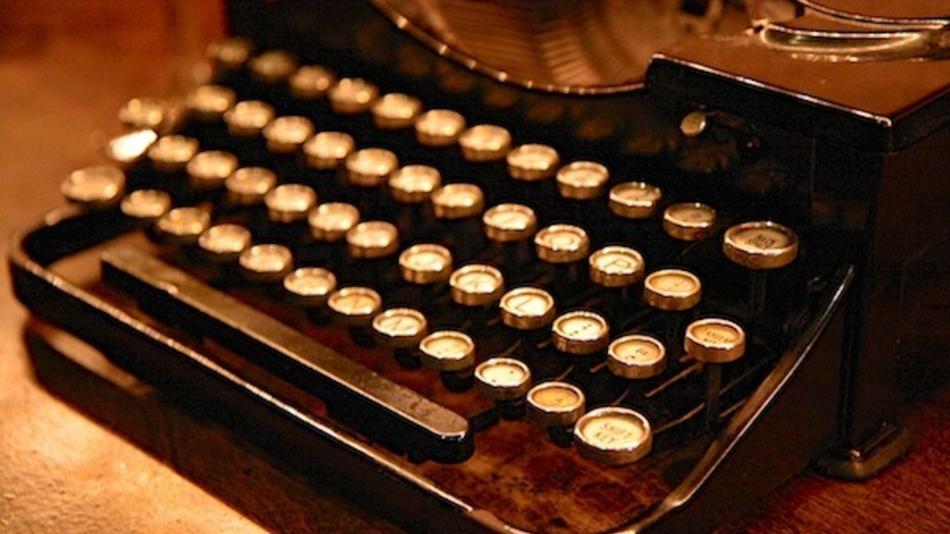
Kurt Vonnegut’s 8 Rules for Writing Fiction

typewriter

1. Use the time of a total stranger in such a way that he or she will not feel the time was wasted.

2. Give the reader at least one character he or she can root for.

3. Every character should want something, even if it is only a glass of water.

4. Every sentence must do one of two things — reveal character or advance the action.

5. Start as close to the end as possible.

6. Be a sadist. Now matter how sweet and innocent your leading characters, make awful things happen to them — in order that the reader may see what they are made of.

7. Write to please just one person. If you open a window and make love to the world, so to speak, your story will get pneumonia.

8. Give your readers as much information as possible as soon as possible. To heck with suspense. Readers should have such complete understanding of what is going on, where and why, that they could finish the story themselves, should cockroaches eat the last few pages.

Zadie Smith – Middle-of-the-Novel Magical Thinking

This video was filmed at the New York Public Library. Author Zadie Smith begins with this quote:

‘In the middle of a novel, a kind of magical thinking takes over. To clarify, the middle of the novel may not happen in the actual geographical centre of the novel. By middle of the novel I mean whatever page you are on when you stop being part of your household and your family and your partner and children and food shopping and dog feeding and reading the post—I mean when there is nothing in the world except your book, and even as your wife tells you she’s sleeping with your brother her face is a gigantic semi-colon, her arms are parentheses and you are wondering whether rummage is a better verb than rifle. The middle of a novel is a state of mind. Strange things happen in it. Time collapses.’

Here is a summary of the rest of her talk. I found it inspiring and very true:

You need to work hard and make choices that are meaningful.

By the nature of your sentences, you are expressing a belief about the way you see the world.

Your views will change with time.

Delve deep into the consciousness of the characters.

‘Magical thinking makes you crazy and renders everything possible. Incredibly knotty problems with structure now resolve themselves with inspired ease. See that one paragraph? It only needs to be moved and the whole chapter falls into place, but why didn’t you see it before. You randomly pick a poetry book off the shelf and the first line you reads becomes your epigraph. It seems to have been written for no other reason.’

This talk comes from a longer essay written by Zadie Smith. If you enjoyed it, I invite you  to come back on Thursday of this week and on Monday week, as I will cover some more of her key points for writing.

Short Stories and Flash Fiction

Having spent months editing Take Me to the Castle I have missed the writing process, which is what writers love. Editors scour written work for grammar, punctuation, style, consistency. Publishers focus on pulling a book together professionally and marketing it to readers. Writers love to craft novels and stories. I think we come unstuck when it is time to take a scalpel to the writing and cut out or change words, re-read, re-write, and change any inconsistencies. So I decided to take action and write some short stories and flash fiction. This has served two purposes – It has given me the opportunity to write in a shorter timescale than I would a whole novel, and it has sharpened my skills as a writer. I will keep you posted on the release of these. My aim is to publish an anthology in the future, with a collection of short stories and poems.

I have had some communication with the lovely Alison Moore, author of The Lighthouse, which was shortlisted for The Man Booker Prize for Fiction. She says that she began her journey into writing by writing short stories, and that it tightened her style and honed her craft. I had already read ‘When the Door Closed, It was Dark’ in The Best British Short Stories 2011 by Salt Publishing, and loved it. So I set to work on short story writing and have also written flash fiction, generally under 350 words. For the writer it teaches you to keep the essence of your story within limited boundaries, and for the reader it is a pleasure to read something which is short and intense – like a good espresso!

Before I get back to my coffee, I just want to leave you with an exclusive short story by Hilary Mantel, The Long QT. It is striking in so many ways. Let me know what you think.

What are your experiences with reading or writing short stories and flash fiction? Do you prefer these styles of writing to novel-length work or vice versa? Have your say and feel free to share any of your own reading or writing experiences with short stories or flash fiction.

Recommendations: