Lots of Reading: Flash Flood Journal – Short Fiction

National Flash Fiction Day

Issue three of the Flash Flood Journal, an international flash fiction literary journal, is published today on their blog with some wonderful works of short fiction. I would really recommend reading some of the stories as they are varied in topic, style and genre, and are really interesting. My short story, I.P, is also there if you are interested in reading it. Do leave your comments if you enjoy mine or any of the other stories.

Over the course of the next twenty four hours, until midnight tonight, flash-fictions from all over the world will be published online at Flash Flood. This year they are featuring over one hundred stories.

The journal is being published to help launch this year’s National Flash-Fiction Day, which is taking place on 22nd June 2013. It will also take place in Australia, New Zealand, Ireland, the USA and elsewhere. If you want to join in, you can find out more details about the day in the following places:

Flash Flood website at http://nationalflashfictionday.co.uk
Sign up to the mailing list at nationalflashfictionday@gmail.com.

Happy reading and enjoy the weekend.


An interview with author Peggy Riley

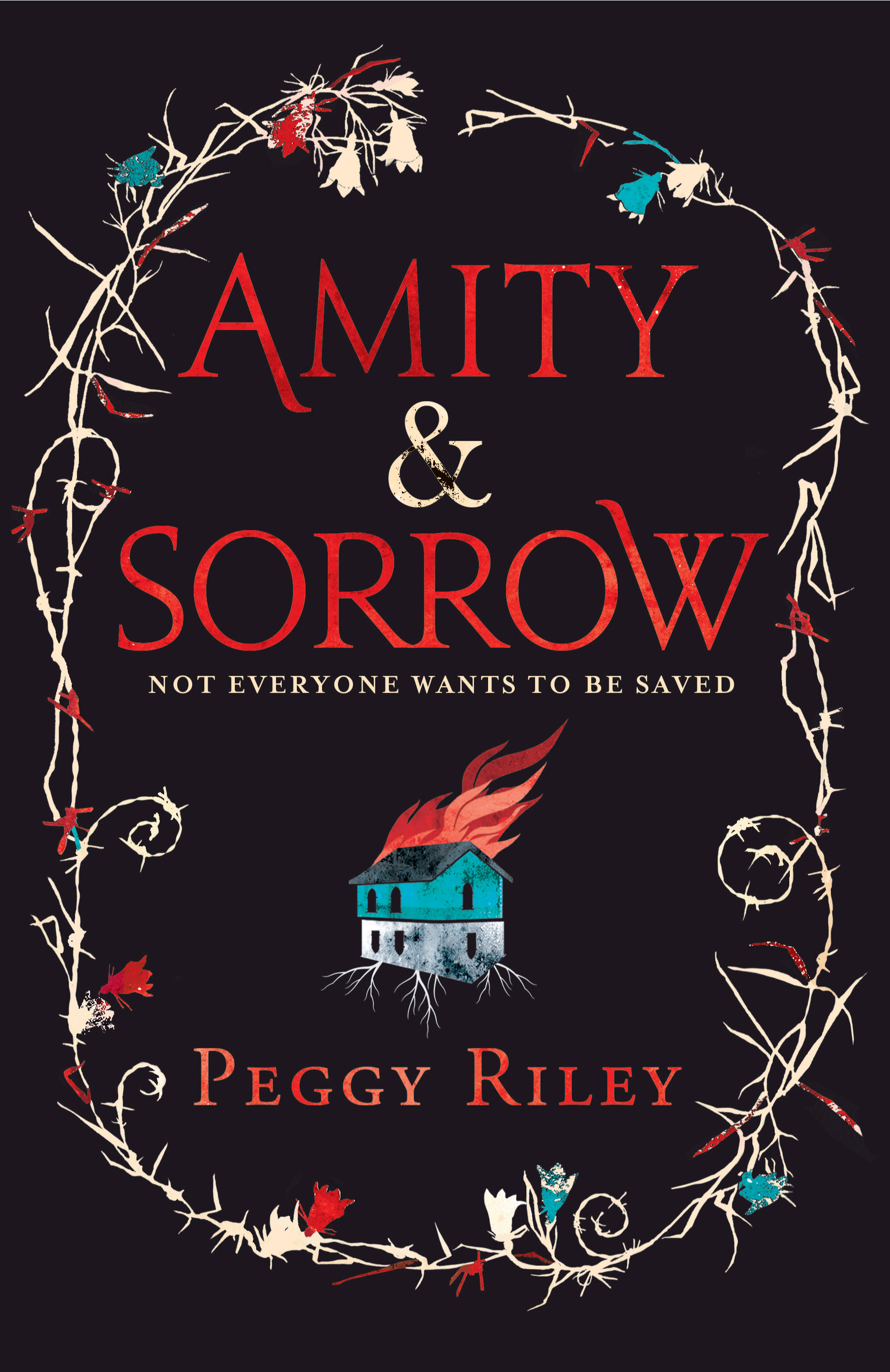
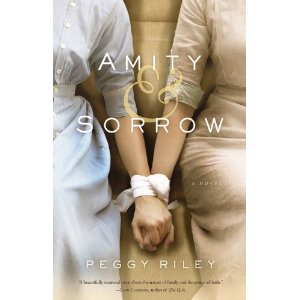
Amity & Sorrow HBK dark.indd

In the wake of a suspicious fire, Amaranth gathers her children and flees from the cult where her children were born and raised. Now she is on the run with no one but her barely-teenage daughters, Amity and Sorrow, neither of whom have ever seen the outside world, to help her. After four days of driving without sleep, Amaranth crashes the car, leaving the family stranded at a gas station, unsure of what to do next. Rescue comes in the unlikely form of a downtrodden farmer, a man who offers sanctuary when the women need it most.

I am currently reading this and I highly recommend Peggy’s novel for it’s rich language and high tension. It is an intriguing story which is beautifully written, never missing a single detail.

Your book, Amity and Sorrow, will be released on 28 March. How does it feel to let your first story go out into the world and what are your hopes for the reader?

I’ve been lucky in that Tinder Press has been sending galleys out for quite a while now, and Little, Brown offered 100 copies of the book on Goodreads.  So, I’ve had plenty of feedback from readers, but I suppose they are the kinds of readers who are used to reading and feeding back.  It feels exciting – and scary – to think of the book sitting in shops, spine to spine with all the other books.  I would be very pleased if people saw it, picked it up and thought – hmm, that sounds good – and then took a chance on it.

 Can you tell us about your planning stages of writing and how you put the ideas into a clear succession? 

I don’t know if there is a clear succession!  I start with place first, where the story will take place.  Then I look at the arc of the book, to get a sense of “how long” the story will be, over how many days or months or years.  Then I see what characters emerge from the place and the story and I spend a lot of time writing from their points of view to find out which ones I will follow most closely.  You have to have the right character for the job!  Chapters come from the characters’ choices, of what they need to accomplish to get them to the end of the story – which often turns out not to be the end of the story that will work for the character.  I try to keep it all as open as possible, to see what comes.  And then I rewrite, over and over.  I’m a big rewriter.

You have said that, ‘There is only one way to write a book – your way.’ Can you tell us how your writing process differs from the books of advice that writers keep stacked away on their shelves? 

I mean that advice is great, but it doesn’t do the writing.  All these writing books – and I have a shelf of them, too – are great reminders of the complexity of the process, of how many balls we’re keeping in the air at different stages in the writing.  They remind us that writing is a craft, that there are specific tools for specific jobs.  They offer comfort at dark moments.  But, ultimately, it’s just you and your own blank page.  The choices you make, the impulses of your imagination, the itches your writing wants to scratch – that we have to find and discover for ourselves and to find our own methods, rather than making someone else’s try to fit.

Your writing covers themes of religion. Do you have any religious or spiritual influences which have fed into your writing? 

I was not raised to be religious and I’m still not.  But I am a spiritual querent, a seeker.  I’m interested in how and why we believe, and my writing often goes in that direction.  I’m interested in great believers and handmade faiths, in our impulse to change the world and build new Edens.  I’m interested in how our own humanness gets in the way of our higher ideals.

You were a writer-in-residence at a young offender prison. It must have been an interesting time for you as a writer, can you tell us a little about your experiences with this and what you learned? What were the challenges and the high points?

It was the very best job and I am grateful to have had the support of the Arts Council, Writers in Prison, and the Prison Service over four years.  Prisons are hard, grim places, but every morning, stepping through the main gate, I just got this overwhelming wash of love and compassion.  I can’t explain it – that isn’t the kind of person I am.  I just felt overwhelmed by the enormity of the task inside, for the offenders and for the officers, to find new ways of working together and to change.  The purpose of prison now is to rehabilitate and to cut down reoffending.  I learned a few tactics for working with challenging behavior and within the strict structure of a big system like a prison.  I learned that a lot of people don’t want to write or to read, that you can only offer what you do and see who responds.  I learned to carry a sound system up and down the stairs on old Victorian wings, so that I could work with the men in their own environment on days when they were in lock down.

I was let into their lives, their hearts and minds.  I was able to assist their attempts to communicate and to be honest with themselves.  I witnessed the birth of a lot of very tender, very heartfelt poetry and lyrics, and learning that they could communicate in that way was very empowering for the men – and for me.  Mostly, I learned how human we all are, how very fragile, how very hurt we are.  Any one of us could make a series of disastrous and dangerous mistakes and end up in prison.

You are also a playwright. How do you find that writing scripts differs from writing novels and short stories

I received some great training as a playwright and I probably still plan all my writing as a playwright, whether I’m writing drama or not. The forms have quite a lot in common, actually.  There isn’t much “telling” in a play and relationships are revealed through dialogue and conflict, as we seek to do in fiction.  All characters have their own stories, their own sense of themselves, so that at any moment any character could rush downstage and say, “Everyone here is a liar.  Listen to me.”

There are some drawbacks to fiction.  Fiction narrows story through point of view, usually conveying story through a character’s eyes or mind.  Fiction isn’t as democratic as a play.  You can choose, as an audient, where to look on stage, no matter what the director lights.  As a reader, you can only look where the writer lets you.  You can’t look inside the book or behind the book unless the writer lets you.

A novel affords a writer (and reader) the luxury of time and possibility.  A novel can go anywhere at any moment, whereas drama is often limited by its own physical environment, its rules and expectations, its budgetary constraints in terms of how many characters you can have, how many locations.  Of course, there are always exceptions.  Epic plays and theatre marathons seek to create the immersion that readers experience, but these often feel “narrated”; it is much harder to slip under the skin of a character you watch rather than read.  And as novels are longer, they have the space and time to allow stories and characters to go deeper, to allow their changes to occur more subtly.

By and large, plays run under two hours with an interval.  A play is usually 85 – 120 pages.  When I wrote my first draft of Amity & Sorrow, I didn’t know if I had 300 pages in me.  I’d never had the luxury of so much paper, so many words.  Lastly, it’s very hard to put a bed onstage; being flat, it’s hard for an audience, and I seem to like writing scenes in bedrooms.  (You can stand the bed up on its end, of course, and staple the pillows down, but gimmicks are rather distracting for an audience.  They might spend all their time worrying about the pillows or looking for the wires and miss a character’s crisis.  Gimmicks are fun, though.)

 What have you taken away with you from your days as a festival producer and as a bookseller?

As a producer, I often included talks and readings in my programming.  I am aware that people want to connect with writers and with the books they love.  Writing and reading are solitary activities and festivals allow us to interact communally and spontaneously.  As a bookseller, I arranged many signings and readings in my family’s shop.  I’ve seen huge queues and great excitement for visiting writers.  I’ve stood in an empty shop with a stack of books and a disappointed writer, when no one came.  Being a bookseller reminds me how many books there are in the world and how many writers, hoping to be read.  And I’ll never forget the thrill of finding the perfect book to hand sell, being able to pop it into a customer’s hand and say, “You’ll love this.  Trust me.”  But woe betide you if they don’t – they’ll never trust you again.

 What do you enjoy most outside your writing time? 

Taking a chair and a bottle of wine down to the beach with husband to watch the sun go down.  I also quite like pulling weeds.

 And, lastly, you are currently working on editing your next novel, can you tells us about the book? 

Of course!  It’s set in the women’s internment camp on the Isle of Man during WW2.  I was commissioned to write a play there about eight years ago now, and the story stayed with me.  The play I wrote was site-specific and promenade, moving through the village with a series of scenes before real locations.  As a novel, I’m focusing on fewer characters and the story has become deeper and richer, much, much darker.

What do you enjoy reading and why?

I have my old favourites, of course, and I love to find new writers.  I’m looking to get lost in a book, same as everyone.  I find it hard to read while I’m writing, so I’m hoping to have a bit sprint of reading in the summer, once my own book is done.

Peggy Hi Res Color-6Peggy Riley is a writer and playwright. She won a Highly Commended prize in the 2011 Bridport Prize and was published in their anthology. Her short fiction has been broadcast on BBC Radio and published in Mslexia Magazine and as an app on Ether Books. Her plays have been commissioned and produced off-West End, regionally, and on tour. She has been a festival producer, a bookseller, and writer-in-residence at a young offender prison. Peggy also runs workshops for writers and readings with authors. Originally from LA, Peggy now lives in Kent.

 

A Library Snapshot

I have been reading a mixture of books recently and many of them are too good not to share, so I’d like to dip into each one and give you a glimpse of what makes the books stand out in a crowded bookshelf. I haven’t finished all of them so these are just outlines and glimpses.

101 days            orkney       amity and sorrow    first-light-charles-baxter-paperback-cover-art     irish short story

A Hundred and One Days by Åsne Seierstad

Author Åsne Seierstad is a freelance journalist and who writes about everyday life in war zones. From her first hand experiences, she has written about Kabul, Baghdad and Grozny. I particularly enjoyed The Bookseller of Kabul, so I have finally picked up this gem, A Hundred and One Days, set in Baghdad during the US invasion of Iraq. I enjoy non-fiction and stories set in conflict areas so her books appeal to me. Seierstad focuses on the lives of Iraqi citizens, providing an insight into their days lived under the constant threat of attack, first from the Iraqi government and later from American bombs. She also describes in vivid detail the frustration felt by journalists in their attempts to sort truth from propadanda. The book looks at the ‘before,’ ‘during,’ and ‘after,’ of the war without casting moral judgement on the situation, and looks at everyday lives with a sharp understanding of human nature, a trait in her writing which I have enjoyed in her other books.

Orkney by Amy Sackville

Amy Sackville is a creative writing teacher at Kent University, and this is her second novel, set on a remote island in Orkney. It is a poetic and lyrical story of an unusual couple: a 61 year old literature professor and his pupil who is never actually named. The  book spans their fortnight honeymoon in this barren landscape and, as she spends an obsessive amount of time by the sea, he realises how little he knows her. We don’t know why his wife is so obsessed by the sea, but it has something to do with her father, who disappeared when she was young. The language of the book is beautiful and intriguing, and I couldn’t put it down.

Amity and Sorrow by Peggy Riley

Riley is a writer and a playwright. There is so much to say about her but I’ll save it for my upcoming author interview next week. Released on March 28, this book is shocking and gripping story of a mother who rescues her daughters from a cult, their father and a fire,  driving for days without sleep until they crash their car in rural Oklahoma. The girls, Amity and Sorrow, can’t imagine what the world holds outside their father’s polygamous compound. Rescue comes in the unlikely form of Bradley, a farmer grieving the loss of his wife. This is an unforgettable story which I was fortunate enough to receive as an advanced reader copy. I would recommend picking it up when it is released in the next few weeks. It has already had some wonderful reviews.

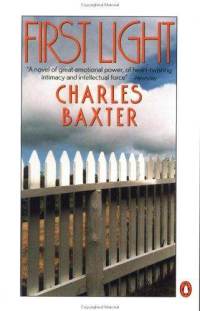
First Light by Charles Baxter

I discovered this out of print gem and managed to find a second hand copy. Charles Baxter’s short stories have appeared in the Best American Short Stories and in two of his own collections. This novel, his first, was supported by a Guggenheim Foundation grant. He takes us backwards through the lives of Hugh and Dorsey Welch who are brother and sister. We meet them as adults, while Hugh is a Buick salesman and Dorsey is an astrophysicist, and discover their dark and difficult pasts. The author traces their paths back to the day of Dorsey’s birth with an unusual subtlety. His opening paragraph includes this vivid description: ‘Hugh keeps both hands near the top of the steering wheel the way cautious men often do, and he does not turn to argue with her, not at first.’

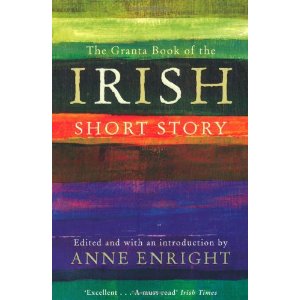
The Grant Book of the Irish Short Story

I am reading both the Irish Short Story collection and the Best American Short Stories, but I wanted to focus on this collection in particular, edited by Anne Enright. Ireland has produced some of the world’s most celebrated short story writers and this, a collection of the best works of contemporary Irish short fiction writers, includes works by  Roddy Doyle, William Trevor, Colm Toibin and Kevin Barry. It  begins and ends with a road accident. The first, which proves fortuitous, involves an out-of-work labourer and a carload of nuns; the second – which is fatal – occurs when a mechanic decides to earn a few extra euros ferrying tourists to a shrine where a statue of Mary is said to weep. Between these two tales we meet a mother who finds her son suspected of abuse and we glimpse the consequences of Irish abortion law. The subjects are heavy and, sometimes dark, but the writing is tight and distinctive. My favourite story so far is John Banville’s Summer Voices. His book, The Sea, won the Man Booker Prize in 2005 and his short story is carried off with the same elegance of style with phrases such as these: ‘The radiance of the summer afternoon wove shadows about him.’ The story follows a young boy and girl who discover a body in amongst an almost eerie description of the landscape.

5 Ways to Write More Effectively

IMG_9529

W.H. Auden’s Desk (copyright F.C. Malby)

I know there are many lists of ‘to to-dos’ and ‘not-to-dos’ for writing and endless amounts of advice, but I just wanted to add a few things which I have found really helpful (some of them dietary!)

  • Write first thing in the morning if you can. I know that people work to different schedules and many people are writing around full-time jobs and some, well into the night. If you have the time, though, I think the mornings are a time when your mind is fresh and uncluttered from everything you might have read on email, twitter, facebook, and the news. Interestingly, I have heard several writers this week saying that they are pulling back from the internet because it is hampering their creativity (but that is another post all together).
  • Cut out caffeine for a while. Yes, I really did say that. I know it sounds like a lot to ask and, believe me, I LOVE coffee but before Christmas I was feeling tired and lethargic and I realised that I was drinking far too much coffee in the form of very strong nespressos. I’m now having a detox for a few months and it really does help. I can only do this because I know that it won’t be forever. I wake up feeling less tired and my mind is much clearer. The difference to my writing output is phenomenal. Since the New Year, I have written 9 short stories, 9 pieces of flash fiction, and mapped out the next novel. I drink peppermint tea and water and I can’t tell you how much it has helped. Getting enough water is really important for brain function. When I teach, I can spot the children who haven’t had a drink in the mornings. They can’t focus.
  • Have a rough plan of where you are going. Whether you are a detailed planner or are more relaxed with your writing, it helps to know where you are heading for the day/week/month. I carved out time during January and February to write short fiction and have achieved my goals. Your targets can be large or small, long-term or short-term but I would encourage you to make some goals rather than to drift through the days.
  • Use visuals to help with details of characters and settings. I use mood boards and Pinterest to give me the fine details, especially for short fiction. See the article I wrote recently on using Pinterest to help your writing. To be able to see images, beyond what is already in your mind, can give a fresh perspective and trigger new ideas.
  • Take a break. You can’t really focus for more than 90 minutes without loosing a certain amount of efficiency and concentration. Some people use timers but you’ll have a clock on your screen/wrist/wall, so make sure that you get out of your seat and move around. It will get the blood flowing to your brain and your muscles, especially the leg muscles which have been squashed into a chair for longer than they were designed to handle.

Short Story Writing

writing

I am in the thick of writing short stories and I really enjoy the punch that you can use to mould a high-impact piece of writing. Last night I read the new issue of Paraxis, a wonderful online publisher of short stories, and I was impressed by the range of prose delivered and the tension created in each short story. This current issue 04 is a publication of the works of both developing and established writers and the combination gels in a surprisingly smooth run of stories:

Seclusion

by Alison Moore

Looking out of Broken Windows
by Dan Powell

Saving Face
by Emma Seaman

The Rat-catcher
by Lorrie Hartshorn

Defacement
by Stuart Snelson

The House in the Woods
by Emily Cleaver

Dan Powell’s metaphorical cracked window panes were still on my mind this morning. The other stories had a similarly disturbing effect. Good writing, writing which lasts, leaves you feeling changed, it forces you to see the world through a different lens and nowhere more so than through a short piece of fiction.

My personal preference is for literary fiction, as that is what I immerse myself in when I read and write, but I was given Ian Rankin’s collection of short stories, Beggars Banquet, for Christmas. In a disturbing and gripping set of stories he covers stories of Edinburgh’s underworld to startling effect. It is important to read outside your genre and read widely, so my repertoire of books is expanding. There was an interesting review of Rankin’s collection on Amazon from a reader who does not usually read short stories who said it was like reading a whole novel in a short story.

This is the essence of the the short story. It should be a complete story in somewhere under 5,000 words. Many are a good deal shorter, but never lacking in impact, never leaving the reader wondering about the rest of the story, apart from to search for meaning and to think about where the characters have been and how they will be impacted by an event or a ending.

Fish Publishing, who publish anthologies of the works of international emerging writers and poets, describes the writing of short stories as being, ‘a glance at the miraculous. Joyce used a religious word. He called his stories ‘epiphanies’. A good short story is almost always about a moment of profound realization. Or a hint of that. A quiet bomb. There is a record by the American singer Tori Amos called Little Earthquakes. That’s a good metaphor for a short story. Often, a good short story will be a little earthquake.’

In an Introduction to the 1997 Fish Anthology, Dog Days & Other Stories,
Joseph O’Connor says this about the writers of this genre:

What kind of strange creature is a short story writer? I must confess that I don’t know. A high priest or priest of art? A wounded soul who can’t understand the real world and thus feels a need to re-invent it? A moralist? A Spinner of yarns? An entertainer? A prophet? Probably all of these things. Possibly none.

The single fact I can be sure about is this: writers are watchers. The one and only thing they have in common is an ability to look at the everyday world and be knocked out by it. Stopped in their tracks. Startled. Gobsmacked.

In an Introduction to the 2003 Fish Anthology, Feathers and Cigarettes & Other Stories, Pat McCabe quotes Frank O’Connor in saying that the form is as close as you could get to the lyric poem:

Henry Thoreau said that it didn’t have to be long but it would take a long while if you wanted to make it short. What was he saying this about? About the form we know as the ‘short story’. Everyone over the years has had something to say on the subject. For V S Pritchett it was an athletic form. If you got a good start you could sprint to the end, unlike the nineteenth-century novel. For Frank O’Connor, it was the closest you could get to the lyric poem, in that the novel requires far more logic and far more knowledge of circumstances, whereas a short story can have the sort of detachment from circumstances that lyric poetry has.

Katherine Ann Porter wrote her stories in one sitting. Or so she said. But then writers say all sorts of things. Another thing that was said about the form – and I think it’s a good one – can be attributed to William Trevor. That it’s the ‘art of the glimpse’. Meaning that if the novel is like an intricate Renaissance painting, the short story tends more towards impressionism. It is an explosion of truth and its strength ought to lie in what it leaves out as much as what it puts in, if not more.

As an aside – Just after I finished writing this post I discovered Charles May’s post on The Secret Life of the Short Story. In it, he discusses the work of  Alice Munro and William Trevor, two of the greatest short story writers in the world today. Munro has been compared to Chekhov. You can read a post on Chekhov’s short stories if you are interested.