Creating Believable Characters

images (3)        images (2)        images (4)


“Plot is no more than footprints left in the snow after your characters have run by on their way to incredible destinations.”

― Ray BradburyZen in the Art of Writing

Character description is crucial to a good story that is both readable and convincing. For a reader to get inside your story, the characters have to seem real. They need to have characteristics which are compelling and hook a reader at an early point in the story. As writers, there are so many elements to plotting a novel which need to be considered, that it can at times be head spinning.

You have to focus on scene setting, dialogue, narrative, pace, story arc, point of view, voice and many other aspects. Without good characters, involving skillful characterisation from the author, the story will fail to bring the reader to the last page. So how do you pen characters who are enticing, captivating, abrupt, frustrating, lovable or frightening?

Study real people – Watch people’s behaviour, body language and conversations. Fictional characters need to take elements from real life. Even sci-fi has elements that can be observed from  every day life. Study human behaviour and you will be much closer to creating characters who resonate with the reader.

“By the end, you should be inside your character, actually operating from within somebody else, and knowing him pretty well, as that person knows himself or herself. You’re sort of a predator, an invader of people.” ― William Trevor

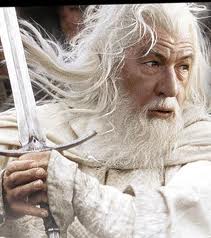
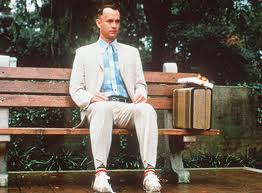
Watch films – They can be a good way of observing character traits and provide ideas for your characters. Look for what is not being said, look at the body language and each character when put into different situations and learn from great scriptwriters. Remember that you have to put together in words what a director will create with images and action. The two forms are similar but the difference is that you have a blank canvas with the reader’s imagination. Create atmosphere through your characters.

“As a writer, I demand the right to writer any character in the world that I want to writer. I demand the right to be them, I demand the right to think them and I demand the right to tell the truth as I see they are.” – Quentin Tarantino

Read books (classics, if you enjoy them) – The classics are still being read because they are timeless and because they contain characters who readers can relate to, characters they love and hate. This is the essence of good story telling.

“I wish we could sometimes love the characters in real life as we love the characters in romances. There are a great many human souls whom we should accept more kindly, and even appreciate more clearly, if we simply thought of them as people in a story.” ― G.K. Chesterton

Write character profiles – Imagine that your character needs a curriculum vitae for a job interview. What would you write for each one? Think about their individual skills and experiences. Push it further and consider locations or events which might have affected them and shaped their character.

“The characters in my novels are my own unrealised possibilities. That is why I am equally fond of them all and equally horrified by them. Each one has crossed a border that I myself have circumvented.” ― Milan Kundera

Put together a pin board of images – this helps if you are very visual. I use Pinterest for this and I find it also engages readers who are interested in your work. Having a selection of portraits can help to remind you of features and posture, if you wish to use this method. Some people would rather writer freely with no prompts and therein lies the truth that no two writers work the same way.

“Be sure not to discuss your hero’s state of mind. Make it clear from his actions.” (Letter to Alexander Chekhov, May 10, 1886)” ― Anton Chekhov

Related articles:

Andrew Miller, Booker and Whitbread shortlisted author, wrote a Guardian article on Creating Characters.

Melissa Donovan has written a good blog post on tips for character writing.

Writer’s Digest wrote an article on How to Craft Compelling Characters.

How You Can Use Your Reading Experience to Shape Your Writing

I was asked to write a guest blog post on Marianne Wheelaghan’s writing blog which is full of useful writing tips. She teaches creative writing classes at www.writingclasses.co.uk and is the author of two books. I would recommend reading some of her articles and getting to know her on twitter and on the blog.  My post is on How You Can Use Your Reading Experience to Shape Your Writing. It is a subject which I think is important for writers. Many people struggle with time to read but if you are a writer is is a necessary part of building your craft and learning skills and techniques. Do leave a comment on the post and I hope you find it useful.

Warning: Structural Work Needed – Plotting Your Novel

Dilapidated Room

I drove past a beautiful old building this morning with incredible detail around the windows. When I looked again, the inside had been completely demolished and was being gutted and restored. From the outside it was a beautiful picture of fine architecture and decadence, an eye-catching building which stood out from the rest, but from the inside there was nothing, just rubble and empty space.

It was a strange sight in some ways and it reminded me of building a novel and the differences in how writers construct their work. I have spoken to people who work in any one of the following ways:

Inside Out Model – Beginning with the bare bones, getting the story down onto paper, and then going back and layering it with detail and links, flashbacks and subtle hints of what is to follow.

Outside In Model – Constructing the outside, the look and feel, the genre, narrator, tense, style and character of the novel, and then working inwards to develop the structure, the chapters and the story arc.

Scatter Graph Model – Starting to write chapters, in no particular order, filling in the gaps as and when the inspiration strikes. This method is often discouraged by agents and editors as it is less structured but some of the most creative writers work this way.

Sprint Runner Model – Beginning in great detail with a clear idea of your central character, racing through the first 1,000 words or so and then drifting as you get further into the plot, not being sure where the novel will end. Instead of it being a slower and more steady pace throughout, the writing decreases in speed as the ideas thin out. 

Foregone Conclusion Model – Knowing exactly how the novel will end, much like a science experiment with an expected outcome, but struggling to begin or sagging  in the middle.

These are just some of the many ways in which authors work and there are many cross-overs in their method. I was impressed by Will Self’s ability to do away with chapters completely in his Booker Prize Shortlisted novel, Umbrella. He is not the first author to do this and I am sure he won’t be the last. Some authors prefer fine structure, plotting meticulously before beginning a single sentence, then there are those who are somewhere in between.

There is no right or wrong way to plot a novel and to construct a story, although there are books which tell you otherwise. You have to experiment with what works. Every writer has a preferred way of working and it changes and develops with time.

I’ll leave you with some interesting quotes from the various writing handbooks:

“A basic structural design underlies every kind of writing. Writers will in part follow this design, in part deviate from it, according to their skills, their needs, and the unexpected events that accompany the act of composition. Writing, to be effective, must follow closely the thoughts of the writer, but not necessarily in the order in which those thoughts occur.”  The Elements of Style, Strunk and White

“Very few writers really know what they are doing until they’ve done it. Nor do they go about their business feeling dewy and thrilled. They do not type a few stiff warm-up sentences and then find themselves bounding along like huskies across the snow.”  Bird by Bird, Anne Lamott

“Writers of literary and much mainstream fiction usually begin by imagining a character…some writers can’t help starting out with a theme that obsesses them. They imagine characters whose lives might involve the theme, or they work out a plot first. If their allegiance is to character, their theme-based story has a better chance of survival.”  Stein On Writing, Sol Stein

“If there are no rules, or none worth [the writer’s] attention, where is the beginning writer to begin?”  The Art of Fiction, John Gardner

What Poetry Teaches Us about Writing Prose

I took a poetry class to fulfill one of my workshop requirements for my master’s in Writing and Publishing. Although I didn’t have much prior experience with poetry beyond some teenage scribbles, I discovered a new way of playing with language.

And in the process, I also realized that writing poetry helped me to create better, stronger prose. Here are four things I learned about poetry that also apply to writing prose:

bookshelf

Photo by Saltygal

Roses are Red, Violets are Blue

1. Focus on one moment.

My professor encouraged us to be specific and concrete when writing our poems—none of that abstract what-does-this-mean? stuff. We narrowed the scope of each poem to one moment and took care to describe it so the setting, action, characters, and emotions were crystal-clear.

2. Choose the best words.

Because most of the poems we wrote were fairly short, we wrote concisely. Each word had to carry meaning and work hard. No fluff allowed.

3. Work with structure.

Some of our assignments dictated the structure of our poems. In those cases, I only had so many lines or syllables to work with or I had to make sure certain lines rhymed, but establishing parameters made my writing stronger. I had to think and revise and move parts around. While we have a lot of freedom in writing, adding the constraint of a structure forces us to have a goal in mind and be creative in a new way.

4. Play with lyrical language.

Even concise writing is allowed to sound pretty. Poetry is rhythm and sound. It’s a form of writing that’s especially wonderful when read aloud. When the language is musical, the poem itself comes into focus and creates a song, one note at a time. It conveys more than just the words.

Reblogged from thewritepractice.com


The Creative Process

Author Jon Rance is guest posting today on the creative process of his writing. His book, This Thirtysomething Life, published by Hodder and Stoughton, is a love story about what happens after we’ve fallen in love, when we’ve swapped frolicking in the bed for cigarettes in the shed and Match of the Day for Mothercare. Brutally honest, laugh-out-loud funny and heart-warming, this is a diary about one man’s bumbling journey on the road to adulthood. If you like Nick Hornby, you’ll enjoy this. Thank you, John.

30something

Firstly, a big Thank You to Fiona for letting me loose on her blog. She’s a brave lady indeed! For those of you who don’t know me, I’m Jon Rance, author of the romantic comedy novel, This Thirtysomething Life. I approached Fiona and asked her if I guest blog on her site. Luckily she agreed and so here I am.

Being a writer, people often ask me the same sort of questions. Where do you get your ideas? How do you write? Where do the characters come from?  I guess what they want to know is what my creative process is. It’s an interesting concept and I’m sure different for every author. Mine is a bit haphazard if I’m honest. I read about authors who meticulously plan out books down to the last full-stop. I don’t.

When I start a novel I need the following things. A title. Main characters. Motivation. An ending. I think having a title from the off helps bring the whole thing together. I often think of the title before I know anything about the book. I need to know who the main characters are. By this I just mean a brief bio, name and what they look like. Motivation is what will drive the book forwards. In This Thirtysomething Life, I knew from the beginning that the story was going to be about a guy having a hard time growing up and coming to terms with becoming a father. Right from the word go everything else stemmed from this idea. An ending. Endings can change during the book, it happens, but I think it’s important to know at the beginning where the story is going. The journey is something else, but a destination is important, whether it’s a scene you have in mind, a sentence or just where the character is emotionally.

Once I have those I just start writing. For me writing is a very organic process. I need a few chapters to really get to know the characters properly. I often find that once I know them better, the plot is formed mostly in part by them and the choices they make. My writing has always been character based. I think in my genre of commercial fiction, characters are the base of everything. Plot is important, but for me the first draft is where I get to know the characters. Once I have the first draft down, the second, third, fourth – fifteenth are mainly about tweaking the structure and the plot. I often think writing a novel is like building a house. The first draft is building the structure. Every other draft after that is about making it look nice. The last draft is the one where you get to hang up the paintings, pop the interesting sculpture you bought from the market on the mantelpiece and then sit down on the comfy sofa and marvel at what you’ve accomplished.

I’ve definitely improved as a writer with every book. I wrote four complete novels before This Thirtysomething Life was picked up and published by Hodder. Those four novels were my learning curve. I made some mistakes, but more importantly, I learnt about my creative process. I think it’s a very personal thing. We can learn from others, read books about writing, get hints and tips, but at the end of the day, we all have to learn our own creative process. I used to think mine was ridiculous and that I should change and be more organised, but what I’ve come to realise is that it doesn’t matter how you write, as long as you do it your way because writing is about being creative, it isn’t painting my numbers and checking boxes. Think of the creative process as your friend rather than your enemy. It’s taken me a long time, but I love mine now because it is all mine and I couldn’t do it any other way.

hodder2Jon Rance is the author of the romantic comedy novel, THIS THIRTYSOMETHING LIFE, which was a Top Ten best-selling book on the Amazon chart. Born in Southampton in 1975, he studied English Literature at Middlesex University, London, before going travelling and meeting his American wife in Australia. He is currently working on his second novel, HAPPY ENDINGS. Outside of writing Jon loves travelling, music, sit-coms, art and watching football (but not playing anymore due to dodgy knees).

Both THIS THIRTYSOMETHING LIFE and HAPPY ENDINGS are published by Hodder and Stoughton. Jon is represented by Ariella Feiner at United Agents.

His website can be found at www.jonrance.com

You can also follow him on Twitter @JRance75