Hilary Mantel’s rules for writers

Hilary Mantel rounded off an astounding year by winning the Costa prize last night for her novel Bring Up the Bodies. Having also won the Man Booker Prize, she is the first person to win both. To celebrate, here are the golden rules for writing that she first shared with the Guardian on 25 February 2010.

Hilary Mantel

Hilary Mantel. Photograph: Murdo Macleod

1. Are you serious about this? Then get an accountant.

2. Read Becoming a Writer, by Dorothea Brande. Then do what it says, including the tasks you think are impossible. You will particularly hate the advice to write first thing in the morning, but if you can manage it, it might well be the best thing you ever do for yourself. This book is about becoming a writer from the inside out. Many later advice manuals derive from it. You don’t ­really need any others, though if you want to boost your confidence, “how to” books seldom do any harm. You can kick-start a whole book with some little writing exercise.

3. Write a book you’d like to read. If you wouldn’t read it, why would anybody else? Don’t write for a perceived audience or market. It may well have vanished by the time your book’s ready.

4. If you have a good story idea, don’t assume it must form a prose narrative. It may work better as a play, a screenplay or a poem. Be flexible.

5. Be aware that anything that appears before “Chapter One” may be skipped. Don’t put your vital clue there.

6. First paragraphs can often be struck out. Are you performing a haka, or just shuffling your feet?

7. Concentrate your narrative energy on the point of change. This is especially important for historical fiction. When your character is new to a place, or things alter around them, that’s the point to step back and fill in the details of their world. People don’t notice their everyday surroundings and daily routine, so when writers describe them it can sound as if they’re trying too hard to instruct the reader.

8. Description must work for its place. It can’t be simply ornamental. It ­usually works best if it has a human element; it is more effective if it comes from an implied viewpoint, rather than from the eye of God. If description is coloured by the viewpoint of the character who is doing the noticing, it becomes, in effect, part of character definition and part of the action.

9. If you get stuck, get away from your desk. Take a walk, take a bath, go to sleep, make a pie, draw, listen to ­music, meditate, exercise; whatever you do, don’t just stick there scowling at the problem. But don’t make telephone calls or go to a party; if you do, other people’s words will pour in where your lost words should be. Open a gap for them, create a space. Be patient.

10. Be ready for anything. Each new story has different demands and may throw up reasons to break these and all other rules. Except number one: you can’t give your soul to literature if you’re thinking about income tax.


Why You Should Try Writing in Second Person

First person and third person—you’ve been there, done that. But what about writing in second person? It may seem strange, unconventional, or confining, but playing with point of view is one way to transform a story.

Point of view affects a story in that it allows readers to gain a very specific perspective. The second person is no different. Here are three reasons why you should try writing in second person:

Photo by Rick Seidel

Photo by Rick Seidel

You, Your, and Yours

1. Second person pulls the reader into the action.

Especially if you write in the present tense, second person allows the reader to experience the story as if it’s their own. To avoid a “choose your own adventure” feel or an aggressive tone, mix up sentence structure and add in description and dialogue. Using the pronoun “you” and describing action as it happens supplies a personal sense of urgency, propelling the story—and the reader—forward.

Example: You’re late. Heart pounding, you race up the stairs as the train enters the station. You weave around the slow-moving people milling on the platform and dash towards the train, throwing your body through the doorway with only a moment to spare.

2. Second person gets personal.

One way to experiment with second person is to write as if the story is a letter from the narrator to “you,” reflecting on past events and current feelings, asking questions. (It doesn’t have to be in an actual letter form; the idea of a letter is simply a way to describe the intimate tone.) This technique isn’t necessarily “pure” second person, as it pairs “you” with the narrator’s first-person point of view, but it allows you to dip a toe in the second-person perspective. At the same time, it gives readers a peek into a relationship, a memory, and a character’s emotions.

Example: You told me to meet you at the bar. Things hadn’t been going well, but I couldn’t put my finger on what exactly was wrong. Did you plan on breaking my heart that night? We locked eyes as I walked through the entrance, and I knew things were coming to an end.

3. Second person stretches your skills and surprises readers.

Because it’s not often used, the second person point of view feels fresh to readers. And for writers, it means a new way of telling a story, a different way of revealing character. In this way, it offers a new perspective for writers and readers alike.

(Reblogged from The Write Practice)


How To Use Pinterest To Improve Your Writing

board

When I write I have the scenes playing in my mind like a film scene and I need images for inspiration. Whether imagined or actual images, I need to ‘see’ the characters and the setting and buildings. I hit gold when I started to use pinterest as I am a highly visual person. I love art and photography, so this sight has an almost magnetic quality about it for a mind which soaks up the visual world.

I began using pinterest to ‘pin’ my ideas and create the atmosphere that I needed in order to write some of my scenes. I have added a clip of the board for Take Me the Castle to the beginning of this post but you can see the whole board here if you are interested.

You can also use scrivener, but I find pinterest quick and easy to use. There is a plethora of images already posted by others which you can search for, or you can pin your own images from any website by pasting the url, or add your own file.

pin

Why and how does this help?

Some writers use prompts or music to help them to write. Jane Friedman has written a good article on prompts and Roz Morris has a blog about how writers use music to build their stories. If you are a visual person a collection of images can spark new ideas or link a character’s responses to his or her environment. It can help to put you in the scene and to think about how the characters will respond to a cliff edge, or a towering building, or a dark room.

According to neurolearning, ‘brainstorming activities of visual thinkers may be more productive if right hemispheric strategies of brainstorming and organization (mindmapping, doodling, free association, analogies) are undertaken. In fiction writing, often the most powerful writers are good at plumbing the strengths of both the right and left hemispheres.’ As a qualified teacher I can attest to the fact that children who are visual thinkers and learners engage more readily when the right side of their brain is stimulated with images and free drawing and mapping. You might be interested to know that most writers are in fact right brained, they use the right side of their brain to engage creativity more than the left side.

I would encourage you to have a look at pinterest and try pinning some images. I also have a board with writing quotes and information and boards with portraits and travel, which help to get the ideas flowing. Let me know if you have any other ideas for visual inspiration.

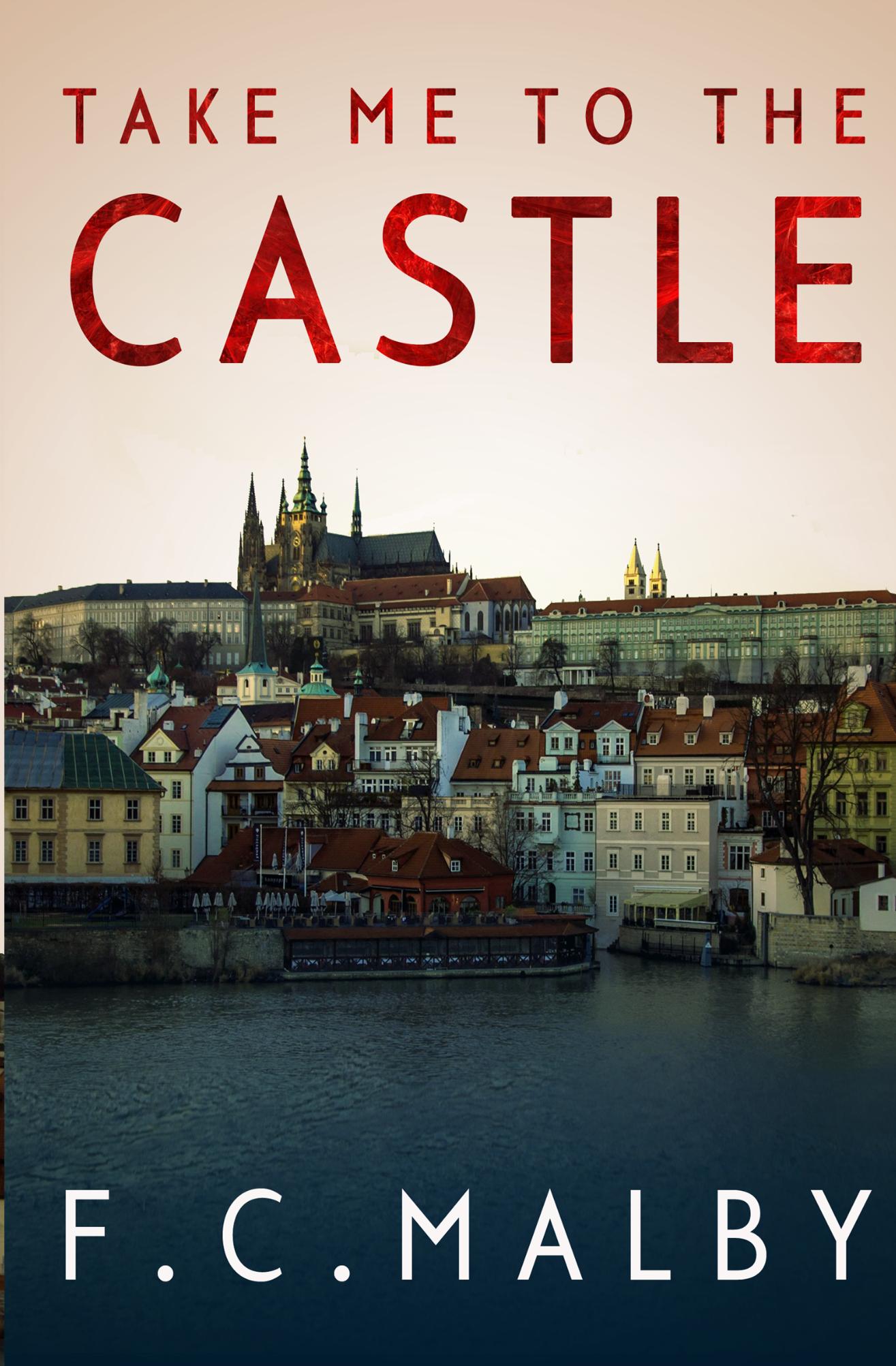
Book Release: ‘Take Me to the Castle’ by F.C. Malby

Image

Today is the release of my debut novel, ‘Take Me to the Castle.’ You can buy it on Amazon in paperback and on kindle. It can also be ordered in bookstores from January 2013.

Thank you for following my blog so far and I am enjoying your comments and your own posts. I wanted to let you know that I will be guest posting on some other writing blogs over the next few days. It would be great see you over at:

http://mysterywritingismurder.blogspot.co.at/ hosted by Mystery writer, Elizabeth Span Craig. She blogs daily and her website was named by Writer’s Digest as one of the 101 Best Websites for Writers for 2010, 2011, and 2012 (19/12/12).

http://www.aliventures.com/ hosted by Ali Luke, author of ‘Publishing eBooks for Dummies’ and a writing coach. Ali is full of information on writing and publishing and is a well-respected blogger. (20/12/12)

http://www.30daybooks.com/blog/ hosted by Laura and Brandon, who post great articles on marketing and publishing. Laura has been featured on CNN and has just released ‘Fire Up Amazon.’ (21/12/12)

Do leave comments and join in with the discussions. I look forward to seeing you there.


Developing Conflict and Tension

Today’s guest post is written by Elizabeth Craig who writes the Memphis Barbeque series for Penguin/Berkley (as Riley Adams), the Southern Quilting mysteries (2012) for Penguin/NAL, and the Myrtle Clover series for Midnight Ink.

She blogs daily at Mystery Writing is Murder, which was named by Writer’s Digest as one of the 101 Best Websites for Writers for 2010, 2011, and 2012. Her most recent releases are Quilt or Innocence (June 2012) , Hickory Smoked Homicide (a November 2011 release), and A Dyeing Shame a Myrtle Clover mystery (December 2011).  Her next release will be February 5, 2013–Knot What it Seams.

Elizabeth is active in the online writing community.  She shares writing-related links on Twitter as @elizabethscraig and posts on craft and the publishing industry on her blog, Mystery Writing is Murder. She and Mike Fleming of Hiveword also manage the Writer’s Knowledge Base–a free search engine to help writers find resources.

Developing Conflict and Tension in Our Story

Conflict is one of the elements of an interesting story.  As much as we love our characters, if everything goes smoothly for them, then it’s hard to keep our readers reading.  After all—if it’s just an ordinary day for our protagonist, then we really don’t have much of a story.

A few tips for developing conflict and tension:

Quickly introduce conflict into your story.  If it’s delayed too long, the reader might start flipping ahead through the set-up and back story to see where the story really gets started.

Use both larger conflicts and smaller ones.  A lower level of conflict can be easily maintained by introducing tension in our story.  Maybe we’ve got a character who lost his job and is struggling to make ends meet.  He finally snares a job interview—and it’s for his dream job.  His car breaks down on the way to the interview. He was in a hurry when he left, and forgot his phone.  This approach can resonate with readers, too—it’s realistic and relatable. It can also give us an opportunity for us to display a character’s personality to our readers…when we show how the character reacts to the problem.

Provide conflict through other characters.  Here we do need to watch our character motivation and know our character and what matches his personality.  Who rubs our character the wrong way and why can tell us a lot about the protagonist as well as the other character.  We could bring in an ex-wife, an overprotective father, an annoying neighbor, or a backstabbing co-worker.  Every time we have a scene with one of the troublesome characters, we have the opportunity for tension.

Use both internal conflict and external conflict. What are our character’s inner demons?  What’s our character fighting with himself over?  Consider how his internal conflict can shape the story and his reaction to events. What external conflict prevents him from obtaining his goal?

Raise the stakes to create a faster pace.  Raising the stakes and making the conflicts and outcomes increasingly dire for the protagonist is one way to increase our story’s pace and keep readers turning pages.

Try to delay resolution. One thing that’s been difficult for me as a writer is delaying resolution of the protagonist’s problems.  I’m a problem-solver in life and I want to solve my character’s problems, too.  But letting problems spiral out of control and allowing them to gnaw at my protagonist can add excitement and tension to a story.

Give readers some breathing room.  Some of this is personal taste, but as a reader, I really enjoy having breaks in the tension and conflict.  This break can be accomplished through humor, or a subplot that’s moving along the path to resolution when hope in the main plot seems to be lost.

Make the protagonist’s external conflict and internal conflict collide.  What if our character had to sacrifice what’s most important to him in order to accomplish his main goal?  What if he’s got to face his inner demons to save the world?

Tension and conflict are two ways to keep readers turning pages.  What tips have you got for developing them in a story?

Writer’s Knowledge Base–the Search Engine for Writers

Twitter: @elizabethscraig