The Fine Art of Bookselling

Christina James is a crime thriller writer of the literary variety. Her novel In the Family was published in November 2012 and her next DI Yates novel is due to be released in June 2013. She has written a guest blog post today on her experiences as a bookseller. Thank you, Christina.

 9781844718771frcvr.indd                              9781907773464frcvr.indd

You might think that bookselling is like any other retail activity and, up to a point, you would be correct.  Bookselling consists of acquiring the right ‘product’, setting it out in an attractive manner and making sure that people who are interested in it are able to find and purchase it – and that throughout the process they are treated with unfailing helpfulness and courtesy from the moment that they walk into the shop.  You could say the same of selling cheese or hats or computer games.

Booksellers, however, have always known themselves to be special.  There are numerous reasons for this, some of them valid.  Booksellers are part of that small, select band – its other members include jewellers, posh dress-shop proprietors and some other sellers of luxury products – commonly classified by marketing gurus as ‘high-end retailers’.  It is not unknown for some booksellers to consider themselves a cut above even these illustrious peer-group members, on the grounds that what they sell feeds the mind.  Therefore, the argument runs, their customer service aspirations are of a different order from those of a jeweller who seeks to make a couple happy by conjuring up the perfect engagement ring or the chocolatier who provides the crowning accompaniment to a romantic date.

So far, so bad.  I am a great fan of booksellers in general – I do believe that they are among the great unsung heroes of civilisation – and probably of 95% of booksellers in particular.  But it is true that there is an annoying minority of booksellers who ponce around giving themselves airs, thus ensuring that all but the most erudite and determined customer is either too scared to enter the shop in the first place or, faced with silence or a supercilious greeting, beats a hasty retreat.  It’s amazing how every fresh generation of booksellers seems to breed a few of these – and how, against all odds, on the whole they manage to survive.

Anyway, back to what booksellers do.  Acquiring the right product is not as easy as it sounds when there are more than a million items to choose from UK publishers alone.  No bookshop can stock more than a fraction of these.  An average bookshop may hold 25,000 titles, a large one twice this figure.  ‘So what,’ you might think, ‘I can’t get every brand of T-shirt in Debenhams or even every brand of deodorant in Boots.’  That’s true, but the difference is that a bookseller’s customers expect to be able to find every book that they want in their local bookshop.  Of course, it’s not possible for the bookseller to fulfil all their expectations, however obscure, but he or she does have to get to know the (constantly-changing) preferences of the local community well enough to be able to score a good hit-rate and also to have an efficient, speedy ordering service in place for the titles that, inevitably, aren’t in stock.

Making the product look attractive is what retailing is all about.  No room for special pleading there, perhaps; except that a bookshop contains hundreds of items that have been arranged according to a system (by category, alphabetical order, Dewey decimal, whatever) and the more successful the shop is in attracting customers, the more likely it is that these items will be lifted out for inspection and returned to the wrong place.  The staff of a sizeable bookshop spends a large percentage of its time just tidying up the shelves.  Then there is the risk of damage.  No bookseller wants to stop a customer from browsing – it is what gives bookshops their unique feel; what makes them, in jargon parlance, ‘destination stores’ – but at the same time repeated handling is bound to leave some of the stock grubby, dog-eared or broken-backed. (One of my pet hates is to see someone callously ‘back’ a paperback.  The screeching of gum and binding as this evil act is perpetrated and the resulting mutilation is as hard to bear as watching a butterfly being broken on a wheel.)  Finally, there is the problem of outright theft – again, the curse of all retailers, but particularly difficult to control when the items being pilfered will slip easily into a bag or pocket.  Security systems help, but they are not infallible.  Bookselling margins are already tiny before being further eroded by ‘shrinkage’.

Finally, there is the challenge of making sure that the customer finds the book that she or he wants, or is even surprised and delighted by being offered a book that pleases but of whose existence s/he has been previously unaware.  In order to achieve this, a bookseller needs not just to understand  the local market, as already mentioned, but to have an almost encyclopaedic knowledge of both backlist and forthcoming titles, along with a highly-developed power of recall.  This is much more difficult than it sounds and is where the bookselling profession really comes into its own.  Booksellers make serendipitous links between what the customer likes and what is on the shelves, dozens of times a day.  Unfortunately, you only get to hear about the times when they drop the occasional stitch.  For example, one of the national newspapers once ran a prominent story on how its reporter had gone into a well-known bookshop and asked for Amsterdam, the novel by Ian McEwan, only to be directed to the travel section.  The member of staff in question was a Saturday girl and, needless to say, she was mortified.

Apart from the three great planks upon which bookselling is constructed – getting the books, displaying them, connecting them with the right customers – there is a myriad of other tasks associated with running a good bookshop, from handling goods-in and returns to keeping the shop floor areas clean and hazard-free to managing complex staff rotas, meeting publishers’ representatives and organising events.

I think that I have just proved the case that good booksellers are special.  And the real crème de la crème of the bookselling industry reinforce their specialness by keeping this to themselves.  They take a modest delight in practising their skills in an understated way, knowing full well that the best way to win and keep customers is by understanding that ars est celare artem.
Christina James Gravatar (1)Christina James was born in Spalding and sets her novels in the evocative Fenland countryside of South Lincolnshire.  She works as a bookseller, researcher and teacher.  She has a lifelong fascination with crime fiction and its history.  She is also a well-established non-fiction writer, under a separate name. You can follow Christina on her blog at www.christinajamesblog.com and on twitter @CAJamesWriter.
The Creative Process

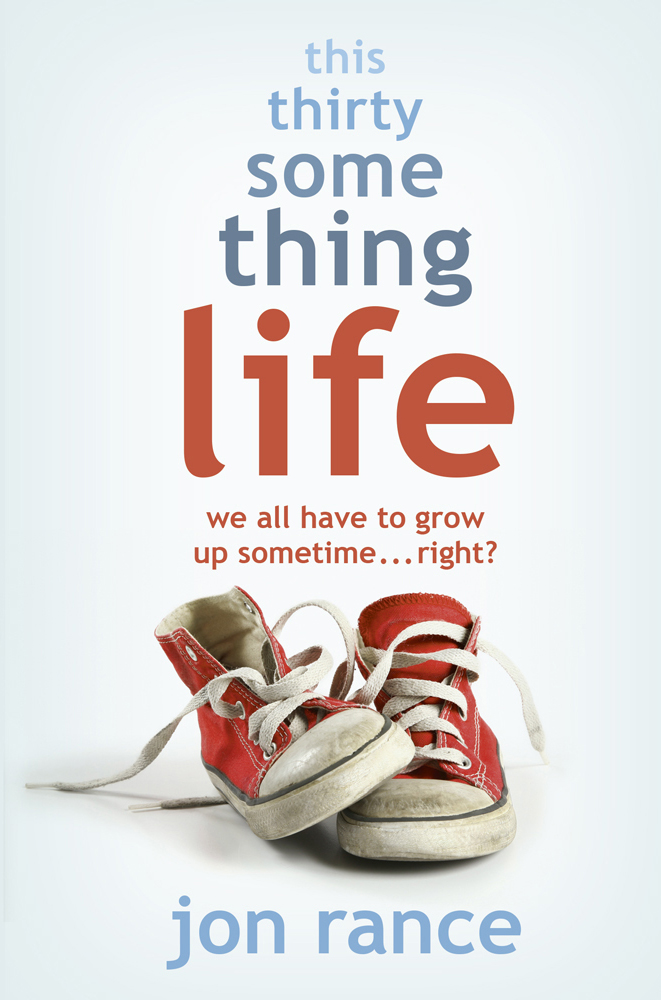
Author Jon Rance is guest posting today on the creative process of his writing. His book, This Thirtysomething Life, published by Hodder and Stoughton, is a love story about what happens after we’ve fallen in love, when we’ve swapped frolicking in the bed for cigarettes in the shed and Match of the Day for Mothercare. Brutally honest, laugh-out-loud funny and heart-warming, this is a diary about one man’s bumbling journey on the road to adulthood. If you like Nick Hornby, you’ll enjoy this. Thank you, John.

30something

Firstly, a big Thank You to Fiona for letting me loose on her blog. She’s a brave lady indeed! For those of you who don’t know me, I’m Jon Rance, author of the romantic comedy novel, This Thirtysomething Life. I approached Fiona and asked her if I guest blog on her site. Luckily she agreed and so here I am.

Being a writer, people often ask me the same sort of questions. Where do you get your ideas? How do you write? Where do the characters come from?  I guess what they want to know is what my creative process is. It’s an interesting concept and I’m sure different for every author. Mine is a bit haphazard if I’m honest. I read about authors who meticulously plan out books down to the last full-stop. I don’t.

When I start a novel I need the following things. A title. Main characters. Motivation. An ending. I think having a title from the off helps bring the whole thing together. I often think of the title before I know anything about the book. I need to know who the main characters are. By this I just mean a brief bio, name and what they look like. Motivation is what will drive the book forwards. In This Thirtysomething Life, I knew from the beginning that the story was going to be about a guy having a hard time growing up and coming to terms with becoming a father. Right from the word go everything else stemmed from this idea. An ending. Endings can change during the book, it happens, but I think it’s important to know at the beginning where the story is going. The journey is something else, but a destination is important, whether it’s a scene you have in mind, a sentence or just where the character is emotionally.

Once I have those I just start writing. For me writing is a very organic process. I need a few chapters to really get to know the characters properly. I often find that once I know them better, the plot is formed mostly in part by them and the choices they make. My writing has always been character based. I think in my genre of commercial fiction, characters are the base of everything. Plot is important, but for me the first draft is where I get to know the characters. Once I have the first draft down, the second, third, fourth – fifteenth are mainly about tweaking the structure and the plot. I often think writing a novel is like building a house. The first draft is building the structure. Every other draft after that is about making it look nice. The last draft is the one where you get to hang up the paintings, pop the interesting sculpture you bought from the market on the mantelpiece and then sit down on the comfy sofa and marvel at what you’ve accomplished.

I’ve definitely improved as a writer with every book. I wrote four complete novels before This Thirtysomething Life was picked up and published by Hodder. Those four novels were my learning curve. I made some mistakes, but more importantly, I learnt about my creative process. I think it’s a very personal thing. We can learn from others, read books about writing, get hints and tips, but at the end of the day, we all have to learn our own creative process. I used to think mine was ridiculous and that I should change and be more organised, but what I’ve come to realise is that it doesn’t matter how you write, as long as you do it your way because writing is about being creative, it isn’t painting my numbers and checking boxes. Think of the creative process as your friend rather than your enemy. It’s taken me a long time, but I love mine now because it is all mine and I couldn’t do it any other way.

hodder2Jon Rance is the author of the romantic comedy novel, THIS THIRTYSOMETHING LIFE, which was a Top Ten best-selling book on the Amazon chart. Born in Southampton in 1975, he studied English Literature at Middlesex University, London, before going travelling and meeting his American wife in Australia. He is currently working on his second novel, HAPPY ENDINGS. Outside of writing Jon loves travelling, music, sit-coms, art and watching football (but not playing anymore due to dodgy knees).

Both THIS THIRTYSOMETHING LIFE and HAPPY ENDINGS are published by Hodder and Stoughton. Jon is represented by Ariella Feiner at United Agents.

His website can be found at www.jonrance.com

You can also follow him on Twitter @JRance75

Short Stories and Flash Fiction

Having spent months editing Take Me to the Castle I have missed the writing process, which is what writers love. Editors scour written work for grammar, punctuation, style, consistency. Publishers focus on pulling a book together professionally and marketing it to readers. Writers love to craft novels and stories. I think we come unstuck when it is time to take a scalpel to the writing and cut out or change words, re-read, re-write, and change any inconsistencies. So I decided to take action and write some short stories and flash fiction. This has served two purposes – It has given me the opportunity to write in a shorter timescale than I would a whole novel, and it has sharpened my skills as a writer. I will keep you posted on the release of these. My aim is to publish an anthology in the future, with a collection of short stories and poems.

I have had some communication with the lovely Alison Moore, author of The Lighthouse, which was shortlisted for The Man Booker Prize for Fiction. She says that she began her journey into writing by writing short stories, and that it tightened her style and honed her craft. I had already read ‘When the Door Closed, It was Dark’ in The Best British Short Stories 2011 by Salt Publishing, and loved it. So I set to work on short story writing and have also written flash fiction, generally under 350 words. For the writer it teaches you to keep the essence of your story within limited boundaries, and for the reader it is a pleasure to read something which is short and intense – like a good espresso!

Before I get back to my coffee, I just want to leave you with an exclusive short story by Hilary Mantel, The Long QT. It is striking in so many ways. Let me know what you think.

What are your experiences with reading or writing short stories and flash fiction? Do you prefer these styles of writing to novel-length work or vice versa? Have your say and feel free to share any of your own reading or writing experiences with short stories or flash fiction.

Recommendations:

Editing and the overuse of words – make each word count

Edit Ruthlessly

I don’t know about you but I find book editing so much more difficult than the actual writing process. It feels as though you are dissecting the life out of your creativity and destroying your story. If you are a good writer, it doesn’t necessarily mean that you will also make a good editor, entrepreneur or (add any other hat).

If you self-publish then the amount of head-spinning changes that you will have to make throughout the writing, editing, publishing and marketing process are phenomenal and at each stage you are wearing a different hat. It is a cycle that many writers resist until they can get to the stage of writing again and beginning the next book.

At the editing stage there is one issue that has played on my mind recently, the overuse of words. After having put my book through beta readers, two professional edits and many, many of my own edits – I’ve lost count – there are still issues popping up, mainly the overuse of words. I obviously have a penchant for certain words, which I’ve used on multiple occasions, we all do. For example, I found ‘somehow’ more than ten times. What purpose does the word serve? Not much, exactly! So I either slashed or replaced it. You can use the ‘find’ function on word, as it speeds up the process, but don’t automatically replace one word with another. Think about the flow of the sentence, the context and the grammar.

Have a look at these words, all on the top of the lists of overused words:

Awesome

Unique

Interesting

Basically

Literally

Really

What do they tell you? Not a lot. The point is that every word needs to drive the plot forward or give the reader a better understanding of a character, which in turn drives the plot forward. Many writers use ineffective words as padding and it derails the pace. If you want to keep the pace going you need to keep your writing tight.

If I wrote ‘The scene of the crime was literally a swarm of reporters, all really hoping for a snap’ would you keep reading? Would you still be awake?

How about ‘The body lay inside a ringed fence, flash-bulbs lit up the scene.’  Better? These are basic but give you the idea. I would also advise against using words like ‘little’. I found that I’d used the word ‘perched’ twice  for a character who would never ‘perch’. It’s not even an appealing word. What about ‘very’ and ‘get’? It’s easy for these words to go unnoticed but it is important to make each word count.

Which words do you use too frequently?