Sewing the Seeds of an Idea: When to Start Planting

Different seed samples await germination testi...

Long before the first word of a novel is written down, there is an original seed, a thought, a scene which plants itself in the author’s mind. Once there, it grows and evolves into possibly a longer scene, a chain of ideas, a few characters and events, and maybe a whole novel.

The question is when do you start to plant the seeds in soil, water them and let them grow? When do you put the first words of the very first chapter down on to paper? It might seem like a strange question because most people imagine that the whole story just comes to you, like the carousel in Mary Poppins, and then you just sit down and write. But it’s an important question because the process of forming a story and growing a seed, if you like, is the bedrock of the whole narrative. The when of starting a story is often overlooked, but starting in the right place at the right time can save hours of painstaking editing and redrafting.

The answer, I have come to realise, is as late as possible. This is different to starting a story as late as possible in the plot and avoiding back story or long chunks of scene setting. It is waiting until your ideas have formed more than just a thought or an image, but a theme, a reason for the story, a conflict or a desire of your protagonist.

I have found the same thing applies with writing short stories, although the process is considerably shorter and you can afford to play around more with the text and change direction if you need to.

With a novel, the longer you leave the seeds to germinate, the more ready they will be to plant and grow in to the full and final plant product. It may seem counter productive to wait, and it might feel like a waste of time, but if you can wait until the ideas are more fully formed it will save heart ache in the long run and give you a clearer picture of the full story.

corn seedling

Lots of Reading: Flash Flood Journal – Short Fiction

National Flash Fiction Day

Issue three of the Flash Flood Journal, an international flash fiction literary journal, is published today on their blog with some wonderful works of short fiction. I would really recommend reading some of the stories as they are varied in topic, style and genre, and are really interesting. My short story, I.P, is also there if you are interested in reading it. Do leave your comments if you enjoy mine or any of the other stories.

Over the course of the next twenty four hours, until midnight tonight, flash-fictions from all over the world will be published online at Flash Flood. This year they are featuring over one hundred stories.

The journal is being published to help launch this year’s National Flash-Fiction Day, which is taking place on 22nd June 2013. It will also take place in Australia, New Zealand, Ireland, the USA and elsewhere. If you want to join in, you can find out more details about the day in the following places:

Flash Flood website at http://nationalflashfictionday.co.uk
Sign up to the mailing list at nationalflashfictionday@gmail.com.

Happy reading and enjoy the weekend.


A Library Snapshot

I have been reading a mixture of books recently and many of them are too good not to share, so I’d like to dip into each one and give you a glimpse of what makes the books stand out in a crowded bookshelf. I haven’t finished all of them so these are just outlines and glimpses.

101 days            orkney       amity and sorrow    first-light-charles-baxter-paperback-cover-art     irish short story

A Hundred and One Days by Åsne Seierstad

Author Åsne Seierstad is a freelance journalist and who writes about everyday life in war zones. From her first hand experiences, she has written about Kabul, Baghdad and Grozny. I particularly enjoyed The Bookseller of Kabul, so I have finally picked up this gem, A Hundred and One Days, set in Baghdad during the US invasion of Iraq. I enjoy non-fiction and stories set in conflict areas so her books appeal to me. Seierstad focuses on the lives of Iraqi citizens, providing an insight into their days lived under the constant threat of attack, first from the Iraqi government and later from American bombs. She also describes in vivid detail the frustration felt by journalists in their attempts to sort truth from propadanda. The book looks at the ‘before,’ ‘during,’ and ‘after,’ of the war without casting moral judgement on the situation, and looks at everyday lives with a sharp understanding of human nature, a trait in her writing which I have enjoyed in her other books.

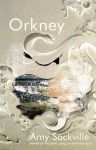
Orkney by Amy Sackville

Amy Sackville is a creative writing teacher at Kent University, and this is her second novel, set on a remote island in Orkney. It is a poetic and lyrical story of an unusual couple: a 61 year old literature professor and his pupil who is never actually named. The  book spans their fortnight honeymoon in this barren landscape and, as she spends an obsessive amount of time by the sea, he realises how little he knows her. We don’t know why his wife is so obsessed by the sea, but it has something to do with her father, who disappeared when she was young. The language of the book is beautiful and intriguing, and I couldn’t put it down.

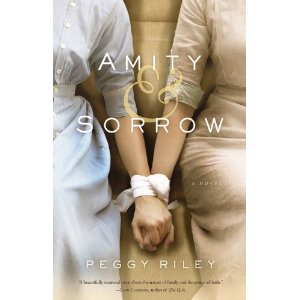
Amity and Sorrow by Peggy Riley

Riley is a writer and a playwright. There is so much to say about her but I’ll save it for my upcoming author interview next week. Released on March 28, this book is shocking and gripping story of a mother who rescues her daughters from a cult, their father and a fire,  driving for days without sleep until they crash their car in rural Oklahoma. The girls, Amity and Sorrow, can’t imagine what the world holds outside their father’s polygamous compound. Rescue comes in the unlikely form of Bradley, a farmer grieving the loss of his wife. This is an unforgettable story which I was fortunate enough to receive as an advanced reader copy. I would recommend picking it up when it is released in the next few weeks. It has already had some wonderful reviews.

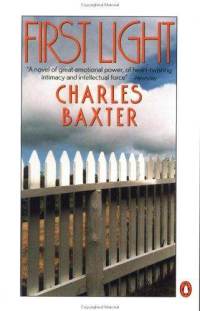
First Light by Charles Baxter

I discovered this out of print gem and managed to find a second hand copy. Charles Baxter’s short stories have appeared in the Best American Short Stories and in two of his own collections. This novel, his first, was supported by a Guggenheim Foundation grant. He takes us backwards through the lives of Hugh and Dorsey Welch who are brother and sister. We meet them as adults, while Hugh is a Buick salesman and Dorsey is an astrophysicist, and discover their dark and difficult pasts. The author traces their paths back to the day of Dorsey’s birth with an unusual subtlety. His opening paragraph includes this vivid description: ‘Hugh keeps both hands near the top of the steering wheel the way cautious men often do, and he does not turn to argue with her, not at first.’

The Grant Book of the Irish Short Story

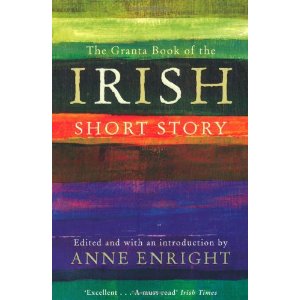
I am reading both the Irish Short Story collection and the Best American Short Stories, but I wanted to focus on this collection in particular, edited by Anne Enright. Ireland has produced some of the world’s most celebrated short story writers and this, a collection of the best works of contemporary Irish short fiction writers, includes works by  Roddy Doyle, William Trevor, Colm Toibin and Kevin Barry. It  begins and ends with a road accident. The first, which proves fortuitous, involves an out-of-work labourer and a carload of nuns; the second – which is fatal – occurs when a mechanic decides to earn a few extra euros ferrying tourists to a shrine where a statue of Mary is said to weep. Between these two tales we meet a mother who finds her son suspected of abuse and we glimpse the consequences of Irish abortion law. The subjects are heavy and, sometimes dark, but the writing is tight and distinctive. My favourite story so far is John Banville’s Summer Voices. His book, The Sea, won the Man Booker Prize in 2005 and his short story is carried off with the same elegance of style with phrases such as these: ‘The radiance of the summer afternoon wove shadows about him.’ The story follows a young boy and girl who discover a body in amongst an almost eerie description of the landscape.

The Magic of Short Stories

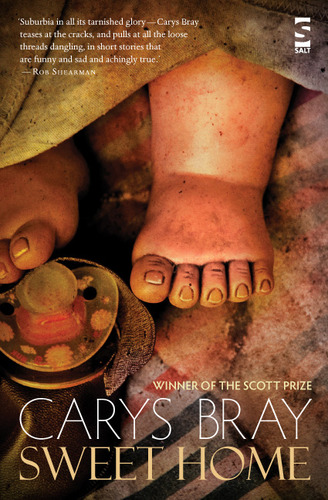
Today’s guest post is written by author Carys Bray, winner of Salt Publishing’s 2012 Scott Prize. Thank you, Carys. I am really enjoying the complexity of these short stories which are honest and gritty accounts of family life, bound up in a collection which leaves its mark long after the pages stop turning. Highly recommended. Carys also had a recent piece of short fiction published in Literary Magazine, Litro. My Brother is Missing is an emotionally charged story and just as gripping as her collection.

??????????????????????

I gate-crashed an undergraduate seminar a couple of weeks ago in order to listen to guest speaker, Chris Beckett. Chris’ collection The Turing Test won the 2009 Edge Hill Short Story Prize and his novel Dark Eden was the Sunday Times SF novel of the year. During the seminar Chris talked about the way he approaches short stories by combining seemingly disparate elements in order to make his fiction three-dimensional. I once heard short story writer Adam Marek say something similar – I can’t quote him exactly, but he talked about how he often takes something fantastic and combines it with something ordinary.

I don’t believe there’s a ‘recipe’ for writing successful short stories, but I suspect Chris Beckett and Adam Marek are on to something when they talk about the way they mix their ingredients: short stories need depth and many of my favourite stories blend the mundane with the magic of the impossible.

Adam Marek’s story ‘Tamagotchi’ is about a father whose son’s Tamagotchi has AIDS. On the surface, the story is about an impossible thing – a terminally ill toy, but it’s really about a father’s relationship with his son and the fundamental helplessness of parents. The father in the story can’t fix the Tamagotchi and he can’t ‘fix’ his son’s developmental issues. There is clearly a connection between the Tamagotchi’s illness and the son’s development – the metaphor may sound laboured as I attempt to dissect it, but it isn’t. The story is touching and funny, a beautiful exploration of a father’s need to make everything right.

Chris Beckett’s story ‘Piccadilly Circus’ is about an elderly woman who is both fascinated and repulsed by new technology. Clarissa is an Outsider in the Urban Consensual Field, a virtual city constructed in the image of London as it was when it ‘still seemed feasible for millions of physical human beings to casually consume what they wanted of the world’s resources.’ As one of the few physical people left, Clarissa can view the consensual world via an implanted switch. Old and frail, she embarks on a journey through the ruins of London to see the lights of Piccadilly Circus as it was in her childhood. It’s a wonderfully clever story set in an extraordinary world. Beckett addresses aging, our perception of reality and whether something is real if it can be turned on and off with the flick of a switch.

I think there’s something wonderful about these impossible stories. At first glance they’re entertaining, but they’re also illuminating; the blend of the familiar and the impracticable can challenge a reader’s perspective and assumptions.

When I started writing short stories I had tremendous fun creating improbable scenarios; supermarkets where children are bought, a baby carved out of ice, and an old lady constructing a gingerbread house. But in each case I suppose I was also writing, or at least thinking, about something else; the commodification of children and childhood, infertility, and the way outsiders are treated.

I’ve been working on a novel for some time now, but earlier this week I spent a day editing a short story I began last summer. It was lovely to handle something small again, to attempt to blend seemingly disparate ideas into a coherent whole. Tobias Wolff said, ‘There’s a joy in writing short stories, a wonderful sense of reward when you pull certain things off.’ I agree, and I think that same joy can be experienced when reading short stories, particularly the kind of stories that illuminate the everyday with a little bit of impossible magic.

Adam Marek’s story ‘Tamagotchi’ is found in his new collection The Stone Thrower, published by Comma Press.

Chris Beckett’s story ‘Piccadilly Circus’ is found in his collection The Turing Test published by Elastic Press.

Adam Marek’s story ‘Remember the Bride Who Got Stung’ is available to read at Thresholds, the international short story forum.

Read about Chris Beckett’s Dark Eden in the Guardian.

Author pic from EH Prize edited Carys Bray’s short stories have been published in a variety of literary magazines. She currently teaches at Edge Hill University and is a co-editor at Paraxis. She is working on a PhD and a novel.


5 Ways to Write More Effectively

IMG_9529

W.H. Auden’s Desk (copyright F.C. Malby)

I know there are many lists of ‘to to-dos’ and ‘not-to-dos’ for writing and endless amounts of advice, but I just wanted to add a few things which I have found really helpful (some of them dietary!)

  • Write first thing in the morning if you can. I know that people work to different schedules and many people are writing around full-time jobs and some, well into the night. If you have the time, though, I think the mornings are a time when your mind is fresh and uncluttered from everything you might have read on email, twitter, facebook, and the news. Interestingly, I have heard several writers this week saying that they are pulling back from the internet because it is hampering their creativity (but that is another post all together).
  • Cut out caffeine for a while. Yes, I really did say that. I know it sounds like a lot to ask and, believe me, I LOVE coffee but before Christmas I was feeling tired and lethargic and I realised that I was drinking far too much coffee in the form of very strong nespressos. I’m now having a detox for a few months and it really does help. I can only do this because I know that it won’t be forever. I wake up feeling less tired and my mind is much clearer. The difference to my writing output is phenomenal. Since the New Year, I have written 9 short stories, 9 pieces of flash fiction, and mapped out the next novel. I drink peppermint tea and water and I can’t tell you how much it has helped. Getting enough water is really important for brain function. When I teach, I can spot the children who haven’t had a drink in the mornings. They can’t focus.
  • Have a rough plan of where you are going. Whether you are a detailed planner or are more relaxed with your writing, it helps to know where you are heading for the day/week/month. I carved out time during January and February to write short fiction and have achieved my goals. Your targets can be large or small, long-term or short-term but I would encourage you to make some goals rather than to drift through the days.
  • Use visuals to help with details of characters and settings. I use mood boards and Pinterest to give me the fine details, especially for short fiction. See the article I wrote recently on using Pinterest to help your writing. To be able to see images, beyond what is already in your mind, can give a fresh perspective and trigger new ideas.
  • Take a break. You can’t really focus for more than 90 minutes without loosing a certain amount of efficiency and concentration. Some people use timers but you’ll have a clock on your screen/wrist/wall, so make sure that you get out of your seat and move around. It will get the blood flowing to your brain and your muscles, especially the leg muscles which have been squashed into a chair for longer than they were designed to handle.