The Magic of Short Stories

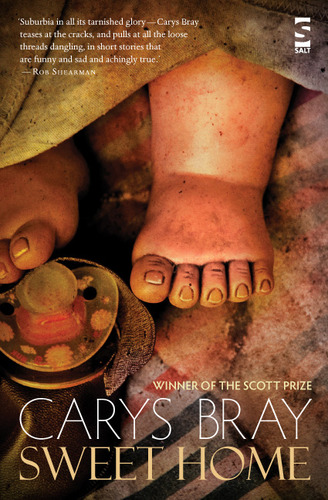
Today’s guest post is written by author Carys Bray, winner of Salt Publishing’s 2012 Scott Prize. Thank you, Carys. I am really enjoying the complexity of these short stories which are honest and gritty accounts of family life, bound up in a collection which leaves its mark long after the pages stop turning. Highly recommended. Carys also had a recent piece of short fiction published in Literary Magazine, Litro. My Brother is Missing is an emotionally charged story and just as gripping as her collection.
??????????????????????

I gate-crashed an undergraduate seminar a couple of weeks ago in order to listen to guest speaker, Chris Beckett. Chris’ collection The Turing Test won the 2009 Edge Hill Short Story Prize and his novel Dark Eden was the Sunday Times SF novel of the year. During the seminar Chris talked about the way he approaches short stories by combining seemingly disparate elements in order to make his fiction three-dimensional. I once heard short story writer Adam Marek say something similar – I can’t quote him exactly, but he talked about how he often takes something fantastic and combines it with something ordinary.

I don’t believe there’s a ‘recipe’ for writing successful short stories, but I suspect Chris Beckett and Adam Marek are on to something when they talk about the way they mix their ingredients: short stories need depth and many of my favourite stories blend the mundane with the magic of the impossible.

Adam Marek’s story ‘Tamagotchi’ is about a father whose son’s Tamagotchi has AIDS. On the surface, the story is about an impossible thing – a terminally ill toy, but it’s really about a father’s relationship with his son and the fundamental helplessness of parents. The father in the story can’t fix the Tamagotchi and he can’t ‘fix’ his son’s developmental issues. There is clearly a connection between the Tamagotchi’s illness and the son’s development – the metaphor may sound laboured as I attempt to dissect it, but it isn’t. The story is touching and funny, a beautiful exploration of a father’s need to make everything right.

Chris Beckett’s story ‘Piccadilly Circus’ is about an elderly woman who is both fascinated and repulsed by new technology. Clarissa is an Outsider in the Urban Consensual Field, a virtual city constructed in the image of London as it was when it ‘still seemed feasible for millions of physical human beings to casually consume what they wanted of the world’s resources.’ As one of the few physical people left, Clarissa can view the consensual world via an implanted switch. Old and frail, she embarks on a journey through the ruins of London to see the lights of Piccadilly Circus as it was in her childhood. It’s a wonderfully clever story set in an extraordinary world. Beckett addresses aging, our perception of reality and whether something is real if it can be turned on and off with the flick of a switch.

I think there’s something wonderful about these impossible stories. At first glance they’re entertaining, but they’re also illuminating; the blend of the familiar and the impracticable can challenge a reader’s perspective and assumptions.

When I started writing short stories I had tremendous fun creating improbable scenarios; supermarkets where children are bought, a baby carved out of ice, and an old lady constructing a gingerbread house. But in each case I suppose I was also writing, or at least thinking, about something else; the commodification of children and childhood, infertility, and the way outsiders are treated.

I’ve been working on a novel for some time now, but earlier this week I spent a day editing a short story I began last summer. It was lovely to handle something small again, to attempt to blend seemingly disparate ideas into a coherent whole. Tobias Wolff said, ‘There’s a joy in writing short stories, a wonderful sense of reward when you pull certain things off.’ I agree, and I think that same joy can be experienced when reading short stories, particularly the kind of stories that illuminate the everyday with a little bit of impossible magic.

Adam Marek’s story ‘Tamagotchi’ is found in his new collection The Stone Thrower, published by Comma Press.

Chris Beckett’s story ‘Piccadilly Circus’ is found in his collection The Turing Test published by Elastic Press.

Adam Marek’s story ‘Remember the Bride Who Got Stung’ is available to read at Thresholds, the international short story forum.

Read about Chris Beckett’s Dark Eden in the Guardian.

Author pic from EH Prize edited Carys Bray’s short stories have been published in a variety of literary magazines. She currently teaches at Edge Hill University and is a co-editor at Paraxis. She is working on a PhD and a novel.

 

5 Ways to Write More Effectively

IMG_9529

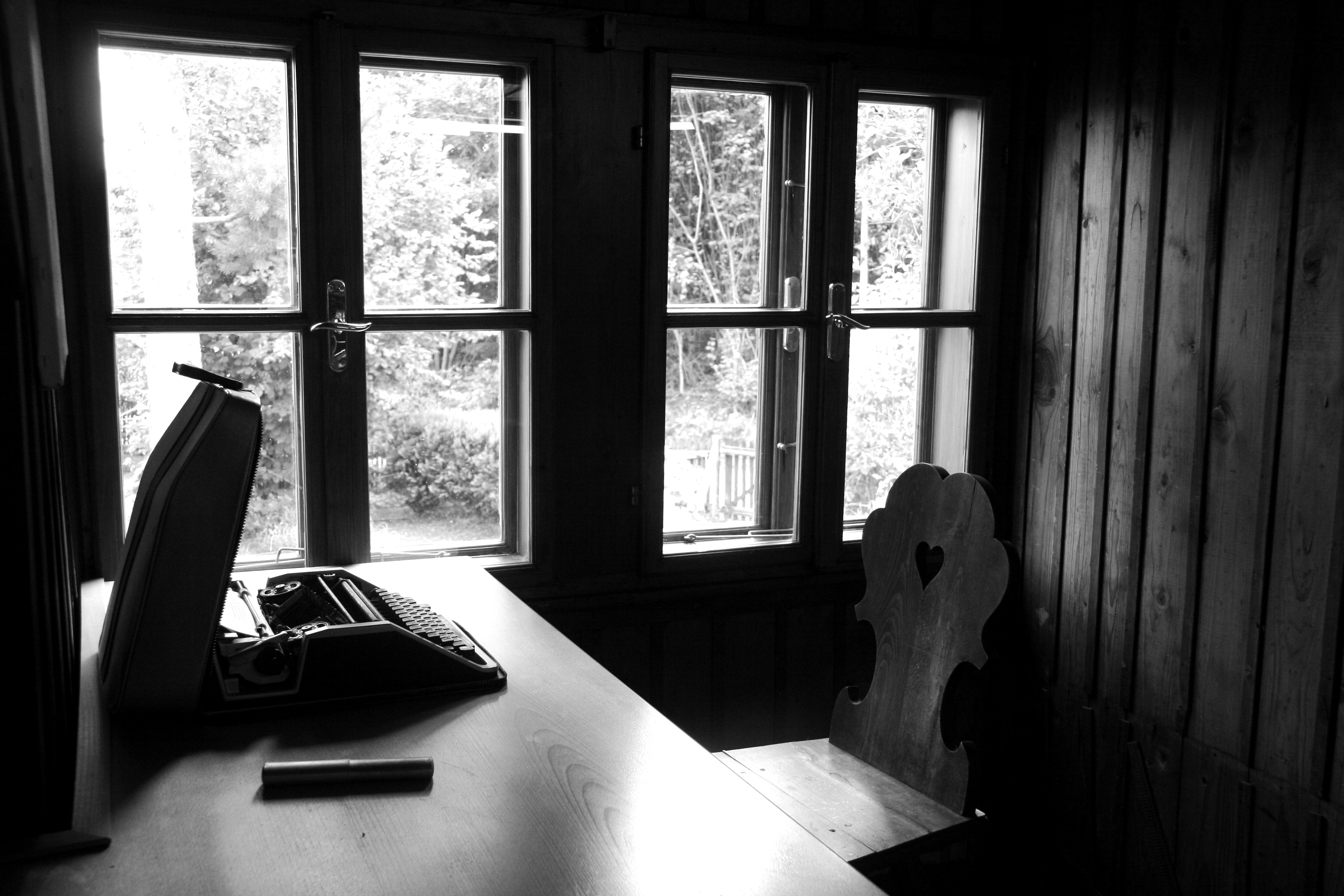
W.H. Auden’s Desk (copyright F.C. Malby)

I know there are many lists of ‘to to-dos’ and ‘not-to-dos’ for writing and endless amounts of advice, but I just wanted to add a few things which I have found really helpful (some of them dietary!)

  • Write first thing in the morning if you can. I know that people work to different schedules and many people are writing around full-time jobs and some, well into the night. If you have the time, though, I think the mornings are a time when your mind is fresh and uncluttered from everything you might have read on email, twitter, facebook, and the news. Interestingly, I have heard several writers this week saying that they are pulling back from the internet because it is hampering their creativity (but that is another post all together).
  • Cut out caffeine for a while. Yes, I really did say that. I know it sounds like a lot to ask and, believe me, I LOVE coffee but before Christmas I was feeling tired and lethargic and I realised that I was drinking far too much coffee in the form of very strong nespressos. I’m now having a detox for a few months and it really does help. I can only do this because I know that it won’t be forever. I wake up feeling less tired and my mind is much clearer. The difference to my writing output is phenomenal. Since the New Year, I have written 9 short stories, 9 pieces of flash fiction, and mapped out the next novel. I drink peppermint tea and water and I can’t tell you how much it has helped. Getting enough water is really important for brain function. When I teach, I can spot the children who haven’t had a drink in the mornings. They can’t focus.
  • Have a rough plan of where you are going. Whether you are a detailed planner or are more relaxed with your writing, it helps to know where you are heading for the day/week/month. I carved out time during January and February to write short fiction and have achieved my goals. Your targets can be large or small, long-term or short-term but I would encourage you to make some goals rather than to drift through the days.
  • Use visuals to help with details of characters and settings. I use mood boards and Pinterest to give me the fine details, especially for short fiction. See the article I wrote recently on using Pinterest to help your writing. To be able to see images, beyond what is already in your mind, can give a fresh perspective and trigger new ideas.
  • Take a break. You can’t really focus for more than 90 minutes without loosing a certain amount of efficiency and concentration. Some people use timers but you’ll have a clock on your screen/wrist/wall, so make sure that you get out of your seat and move around. It will get the blood flowing to your brain and your muscles, especially the leg muscles which have been squashed into a chair for longer than they were designed to handle.

Hemmingway’s Tip Of The Iceberg: Omit What the Reader Knows

iceberg3

If a writer of prose knows enough of what he is writing about he may omit things that he knows and the reader, if the writer is writing truly enough, will have a feeling of those things as strongly as though the writer had stated them. The dignity of movement of an ice-berg is due to only one-eighth of it being above water. A writer who omits things because he does not know them only makes hollow places in his writing.
—Ernest Hemingway in Death in the Afternoon[1

This quote from Hemmingway’s, Death in the Afternoon, is a timely reminder that most of what the reader picks up from a really good piece of prose is submerged. Writers sometimes go to great lengths to make sure that the reader understands every detail and assumes a lack of understanding. Writing can, in this instance, lose it’s subtlety and and crush the flow of the words. You can feel what a good writer is implying without the words actually reaching the page. A good book is charged with these undercurrents and the reader can dig down and grasp emotions and ideas which are never actually written.

To give an example, yesterday I read the Costa Short Story Award winner Avril Joy’s beautiful piece, Millie and Bird. I won’t give anything away but the key theme is always implied, never stated, and deftly written in the hands of a writer who knows her craft. Her story is both lyrical and compelling. Those of you who have been following know that I am currently immersed in short stories (both reading and writing) and I was particularly struck by this one. A well deserving winner, I would say.

Alison Moore’s, The Lighthouse, also follows a strong theme of rejection and loneliness without it ever being stated. The reader is swept away by the desperation of the protagonist’s situations in both his past and present.

I particularly like Hemmingway’s description of the dignity of an iceberg’s movement. Remembering that those critical seven eights of its mass are under water should serve as a warning not to push everything up to the surface or to write all the words into the frame of your picture.

Short Story Writing

writing

I am in the thick of writing short stories and I really enjoy the punch that you can use to mould a high-impact piece of writing. Last night I read the new issue of Paraxis, a wonderful online publisher of short stories, and I was impressed by the range of prose delivered and the tension created in each short story. This current issue 04 is a publication of the works of both developing and established writers and the combination gels in a surprisingly smooth run of stories:

Seclusion

by Alison Moore

Looking out of Broken Windows
by Dan Powell

Saving Face
by Emma Seaman

The Rat-catcher
by Lorrie Hartshorn

Defacement
by Stuart Snelson

The House in the Woods
by Emily Cleaver

Dan Powell’s metaphorical cracked window panes were still on my mind this morning. The other stories had a similarly disturbing effect. Good writing, writing which lasts, leaves you feeling changed, it forces you to see the world through a different lens and nowhere more so than through a short piece of fiction.

My personal preference is for literary fiction, as that is what I immerse myself in when I read and write, but I was given Ian Rankin’s collection of short stories, Beggars Banquet, for Christmas. In a disturbing and gripping set of stories he covers stories of Edinburgh’s underworld to startling effect. It is important to read outside your genre and read widely, so my repertoire of books is expanding. There was an interesting review of Rankin’s collection on Amazon from a reader who does not usually read short stories who said it was like reading a whole novel in a short story.

This is the essence of the the short story. It should be a complete story in somewhere under 5,000 words. Many are a good deal shorter, but never lacking in impact, never leaving the reader wondering about the rest of the story, apart from to search for meaning and to think about where the characters have been and how they will be impacted by an event or a ending.

Fish Publishing, who publish anthologies of the works of international emerging writers and poets, describes the writing of short stories as being, ‘a glance at the miraculous. Joyce used a religious word. He called his stories ‘epiphanies’. A good short story is almost always about a moment of profound realization. Or a hint of that. A quiet bomb. There is a record by the American singer Tori Amos called Little Earthquakes. That’s a good metaphor for a short story. Often, a good short story will be a little earthquake.’

In an Introduction to the 1997 Fish Anthology, Dog Days & Other Stories,
Joseph O’Connor says this about the writers of this genre:

What kind of strange creature is a short story writer? I must confess that I don’t know. A high priest or priest of art? A wounded soul who can’t understand the real world and thus feels a need to re-invent it? A moralist? A Spinner of yarns? An entertainer? A prophet? Probably all of these things. Possibly none.

The single fact I can be sure about is this: writers are watchers. The one and only thing they have in common is an ability to look at the everyday world and be knocked out by it. Stopped in their tracks. Startled. Gobsmacked.

In an Introduction to the 2003 Fish Anthology, Feathers and Cigarettes & Other Stories, Pat McCabe quotes Frank O’Connor in saying that the form is as close as you could get to the lyric poem:

Henry Thoreau said that it didn’t have to be long but it would take a long while if you wanted to make it short. What was he saying this about? About the form we know as the ‘short story’. Everyone over the years has had something to say on the subject. For V S Pritchett it was an athletic form. If you got a good start you could sprint to the end, unlike the nineteenth-century novel. For Frank O’Connor, it was the closest you could get to the lyric poem, in that the novel requires far more logic and far more knowledge of circumstances, whereas a short story can have the sort of detachment from circumstances that lyric poetry has.

Katherine Ann Porter wrote her stories in one sitting. Or so she said. But then writers say all sorts of things. Another thing that was said about the form – and I think it’s a good one – can be attributed to William Trevor. That it’s the ‘art of the glimpse’. Meaning that if the novel is like an intricate Renaissance painting, the short story tends more towards impressionism. It is an explosion of truth and its strength ought to lie in what it leaves out as much as what it puts in, if not more.

As an aside – Just after I finished writing this post I discovered Charles May’s post on The Secret Life of the Short Story. In it, he discusses the work of  Alice Munro and William Trevor, two of the greatest short story writers in the world today. Munro has been compared to Chekhov. You can read a post on Chekhov’s short stories if you are interested.

Writing and the Attention Economy

This is a post from http://damiengwalter.com/

It was so good that I thought it was worth sharing. Valuable advice for writers…

eye

As a writer you are asking for the most valuable commodity your readers have. Time. Each of us gets a finite portion. No sum of money can buy us any more. And the demands on it are ever greater.

The novel evolved at a period in history when the constituency of its readers had much more time to waste. Karl Marx would dub them the ‘bourgeoisie’, the section of society who owned the means of production, so profited vastly from industry in the 18th and 19th centuries. The middle and upper classes had time on their hands and little to do with it. The novel became one of the most popular ways of being idle.

The bourgeoisie no longer exists in quite the same way, and it and the proletariat both have innumerable ways of occupying whatever free time is left from work. Yes, there are dozens of forms of entertainment. Films, music, games, sports. But there are also more and more ways for people to invest their time in improving themselves. Is your book really going to compete with the vast range of information available to me for free on Wikipedia? Or the infinite social networks accessible through Facebook and Twitter?

Information of all kinds is becoming a post-scarce resource. While the time it takes to absorb information becomes scarcer and scarcer. And yet many writers still behave as though their product was scarce and the time of readers unlimited. Writing two novels, four novellas and ten short stories a year is great productivity. But completely counter-productive in an attention economy. Because if I read one story by you and its any less than excellent, I’m very unlikely to read another. Your first novel is very important to you, but as a commodity in the attention economy its almost certainly worth less than the value of my time to read it. Which is why the vast majority of material written and published every day on the internet disappears without a trace.

The philosopher and mathematician Blaise Pascal once wrote, “I did not have time to write you a short letter, so I wrote you a long one.” As a writer working in the attention economy you should take Pascal’s remark as the first rule of your professional life. Take the time to write a short letter to the world. Churning out fiction can give you the comforting illusion of progress. No doubt you’ll find one market or other to publish it. But think about the writing you really love and value enough to come back to again and again. How long do the best authors take to create their work? Why should you aim to be anything less than the best? Every word you write is asking for the gift of the reader’s time. Make sure it’s worth it.