Where do you find your ideas? Short Story and Flash Fiction Inspiration

As an author, the question I get asked most often is, Where do you find your ideas? It’s a notoriously difficult question to answer and most authors struggle to voice, or even to know, where they find their ideas. But, I’m going to give it a try! The short answer is that it comes from the strangest of places, and I need to begin with the adage that everyone is different.

Where do you find your ideas?

The most important important advice I could give any aspiring author is, be an observer. Watch people, observe their movements, eye contact, body language, look at what they don’t say. Only 7% of communication is verbal, in other words through what people say, which means that a whopping 93% of communication is nonverbal – body language, gestures, tone of voice, facial expressions, body posture. A person’s body language is a part of communication and reflects emotions and moods.

Be an observer.

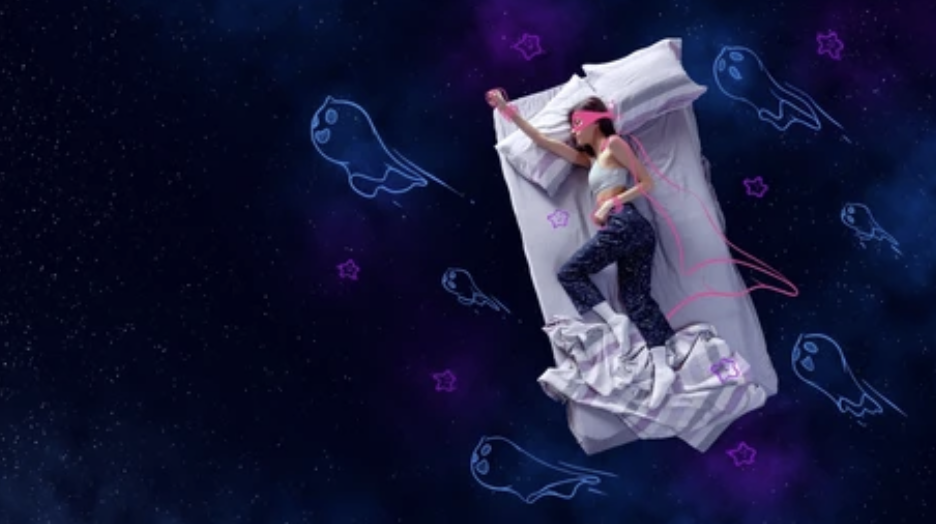
Dreams are often where ideas form, especially in those liminal spaces between the states of being awake and asleep. New neuroscience research from the Paris Brain Institute shows that the phase before we fully fall asleep is hugely creative for our brains. American Inventor, Thomas Edison, used partial naps while holding spheres in his hands to harness his inspiration. The spheres would fall as he fell asleep and wake him at the right time to capture his sleep-inspired ideas. Physicist Albert Einstein and artist Salvador Dali also believed in short bursts of sleep to boost creativity. The experiment, which is reported in the Science Advances article, Sleep onset is a creative sweet spot. Although sleep is often seen as a waste of time and productivity, it is actually essential to our creative performance.

The phase before we fall asleep is hugely creative for our brains.

Imagine that you are taking a photograph of a moment, a snap shot in time. I often walk or drive past a scene, usually of two or more people talking, sometimes a lone person doing something interesting or curious, and I wonder what they might be saying or thinking, and how they might be feeling. Authors are endlessly curious and out of this curiosity often comes new ideas for stories. Imagine taking a photograph of the scene. What would you be wanting to know as a viewer? Who are these people? Where are they from? What are they doing? What is the emotion underlying the event? Could something else be happening?

Imagine that you are taking a photograph of a moment.

Use a prompt – an image, a poem or news article. What ideas does this conjure up in your imagination? Is there big news event with an image of a person or a story about them? Can you find an offshoot from this? Let’s have a go….this is an image from a BBC news article on inflation. There is a woman holding a pizza in a supermarket. What is she thinking (inflation aside!)? What else might be going on in her life? Does she live alone or with a family or a partner? What does her body language convey? Is this a local shop or is she passing through, or escaping something? So many ideas can come from just one image that are entirely unrelated to the image or event. Sometimes a visual cue helps.

Sometimes a visual cue helps.

Have you had an interview or an interesting conversation or event recently? Was there a person who stood out or a part of the dialogue that stayed with you? This is fiction, so the details will need to be changed, but what can you extract from what was said? Did it make you think of something else? Sometimes writing down ideas in a journal can help when you sit down to write. I sometimes do this, although the best ideas tend to stay in your mind.

Be curious.

Photo credit: Shutterstock & BBC News.

Pens of the Earth

Pens of the Earth want to publish a book of environmental stories & poetry, including mine, with the proceeds going to the Solent Seagrass Restoration Project. My story, Prolific, was published on their website and will be published in a collection by Pens of the Earth.

“Our writers have agreed to donate their work, which means that all profits from the sales of this book will go to the inspirational and essential Solent Seagrass Restoration Project.”

Please donate if you feel able. The video below gives you an idea of the project.

@EarthPens

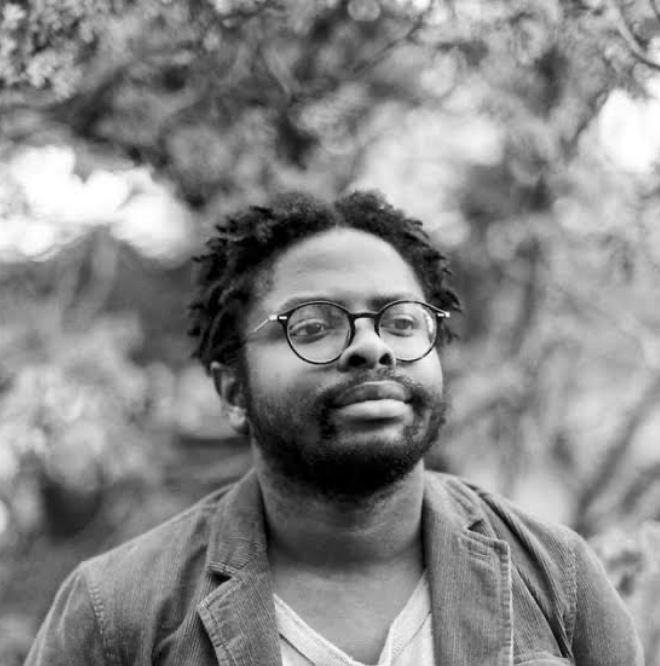
Gboyega Odubanjo 

The literary community has felt the shock waves of the devastating and sudden loss of British Nigerian poet Gboyega Odubanjo, editor of poetry magazine Bath Magg and publisher at Bad Betty Press. He also supported the writing community through mentoring new writers. His work was published in Out of Time: Poetry from the Climate Emergency edited by Kate Simpson, published by Valley Press:

call it a love song.
i’ll get the bathtub ready.
i’m in. we in ceramic.
let’s say black. i’m bp
you’re shell. we all in.
we in the black. we both in
a barrel. call it a village.
we both in the pumping. the people
no get no nothing. no crabs in the river.
no periwinkles to pick. no day
de pas where they no dey cry
suffer dis kind suffer like dis. we no care
for them. i just want you to seep.
blacken my lot..

The Gboyega Odubanjo Foundation for low-income black writers is set to be launched by his family with the money.

The fundraiser, organised by his sister, Rose Odubanjo, described him as:

“Loved by many and widely recognised as a voice of his generation, 27-year-old Gboyega Odubanjo had received an Eric Gregory Award, New Poets’ Prize and the Michael Marks Award, and without doubt would have gone on to produce a lifetime of enduring work as one of poetry’s shining lights. An editor at Bad Betty Press and the poetry magazine Bath Magg, Gboyega gave support and mentorship to many developing artists; his contribution within the poetry community was invaluable, as was his friendship. Gboyega’s full-length debut collection of poetry, Adam, is forthcoming from Faber in Summer 2024. 

The family and friends of Gboyega Odubanjo are asking for the help of his community through community fundraising, the purpose of it is to support in his final arrangements and continue on his legacy. We are launching the Gboyega Odubanjo Foundation for low-income Black writers, with funds from this appeal also going towards the foundation. Gboyega always wanted to uplift and support his community, through mentoring young people, through gently praising someone at a poetry night about their star quality and through teaching in numerous places. His poetry and writing has been a beacon of light to many. 

We, the close friends and loved ones of Gboyega, express our profound sadness and grief at the loss of one of our brightest and most talented stars. Gboyega was the source of incredible joy and laughter for all of us, and we are utterly heartbroken to hear that his life has been so suddenly cut short. Over the past few days, we have been working tirelessly to ensure his name and image remained visible to members of the public across the UK. We would like to thank everyone who helped in the mission to bring Gboyega home safe; all those who shared the callout, sent in information, and went out searching. Your support has meant the world to us in this incredibly difficult time. 

Gboyega was inimitable. He will be remembered as a brilliant poet, inspiring friend, son and brother. He was incredibly talented; someone we will remain in awe of. He was a friend to everyone and anyone, so often befriending complete strangers. We will cherish his loud laughter, his sharp intellect and his love, all which will continue to keep warm the hearts of his friends, family and poetry community.

Gboyega was inimitable. He will be remembered as a brilliant poet, inspiring friend, son and brother. He was incredibly talented; someone we will remain in awe of. He was a friend to everyone and anyone, so often befriending complete strangers. We will cherish his loud laughter, his sharp intellect and his love, all which will continue to keep warm the hearts of his friends, family and poetry community.”

Donate to fundraiser.

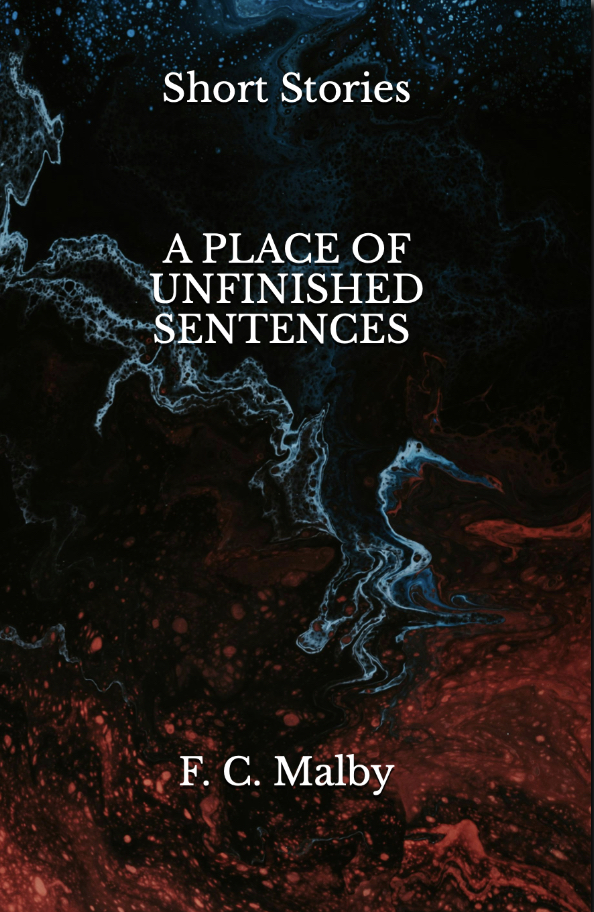
Dead Drop – Book group visit and reviews

This week I was invited to a book group to discussion about my latest book, Dead Drop, published by Linen Press in October. The Q&A session was interesting with lots of interesting questions from readers. A few people asked whether there would be a sequel. Several people said that they had explored more information about the paintings, or visited Vienna, after reading the book. Many shared that they loved the descriptions of the city, the changing seasons, the cafe culture and details about the art and artists, as well as the history.

Some readers asked how Leisl had managed her conscience while stealing priceless works of art and why she had a moral dilemma as the story unfolded. Others wanted to know about the transfer of art to and from galleries, and about my research and writing processes. Many people are unaware of the sheer volume of priceless art which remains missing from galleries. I discussed global art theft, as well as the Art Loss Register and the FBI Art Crime Team.

I also want to share some wonderful recent reviews from readers:

BARNES AND NOBLE –

Jomaghs

5 stars A descriptive masterpiece

“I usually speed read books and whizz through them in no time at all but this book was different. The descriptions were so detailed and captivating that I needed/wanted to take my time and savour every page. It’s beautiful and intriguing at the same time…Couldn’t put it down.”

AMAZON –

Andrea Barton

5.0 out of 5 stars A nail-biting thriller that makes you think Reviewed in Australia on June 19, 2023

“Dead Drop, by F.C. Malby, is a nail-biting thriller that makes you think. Liesl loves her solitary life as an art thief in Vienna, thriving on bursts of adrenaline from rehoming valuable artwork based on clandestine instructions from her illusive employer. But when one of her contacts ends up dead, she realises that she, too, may be in danger.
Dead Drop demonstrates that even art thieves have morals, and I found myself questioning the ethics of art ownership.”

Shal Buy

5.0 out of 5 stars Highly recommend Reviewed in the United Kingdom on 30 May 2023

“A very enjoyable read, I quickly warmed to the main character, Liesl and her involvement in the main plot. Keen to unfold the mystery, didn’t put the book down until I had finished it!”

Poetry Publication in Spillwords Press

WE WANT OUR BODIES BACK

written by: FC Malby

@fcmalby

In memory of David Carrick’s survivors (they are not victims, they are survivors)

We want our bodies back
the flesh you took
thinking it was yours
for the keeping.

We want our bodies back
the ones you thought you
owned, like a play thing
a game of cat and mouse.

We want our bodies back
they are not for sale
and they do not belong
to you or your desires.

We want our bodies back
because you thought that
by dehumanising us it would
make your fragile ego stronger.

We want our bodies back
because you didn’t hear
our no, didn’t ask, and
because they are sacred.

You can read the original post at Spillwords Please leave a comment or a like on their site or here.