An interview with author Peggy Riley

Amity & Sorrow HBK dark.indd

In the wake of a suspicious fire, Amaranth gathers her children and flees from the cult where her children were born and raised. Now she is on the run with no one but her barely-teenage daughters, Amity and Sorrow, neither of whom have ever seen the outside world, to help her. After four days of driving without sleep, Amaranth crashes the car, leaving the family stranded at a gas station, unsure of what to do next. Rescue comes in the unlikely form of a downtrodden farmer, a man who offers sanctuary when the women need it most.

I am currently reading this and I highly recommend Peggy’s novel for it’s rich language and high tension. It is an intriguing story which is beautifully written, never missing a single detail.

Your book, Amity and Sorrow, will be released on 28 March. How does it feel to let your first story go out into the world and what are your hopes for the reader?

I’ve been lucky in that Tinder Press has been sending galleys out for quite a while now, and Little, Brown offered 100 copies of the book on Goodreads.  So, I’ve had plenty of feedback from readers, but I suppose they are the kinds of readers who are used to reading and feeding back.  It feels exciting – and scary – to think of the book sitting in shops, spine to spine with all the other books.  I would be very pleased if people saw it, picked it up and thought – hmm, that sounds good – and then took a chance on it.

 Can you tell us about your planning stages of writing and how you put the ideas into a clear succession? 

I don’t know if there is a clear succession!  I start with place first, where the story will take place.  Then I look at the arc of the book, to get a sense of “how long” the story will be, over how many days or months or years.  Then I see what characters emerge from the place and the story and I spend a lot of time writing from their points of view to find out which ones I will follow most closely.  You have to have the right character for the job!  Chapters come from the characters’ choices, of what they need to accomplish to get them to the end of the story – which often turns out not to be the end of the story that will work for the character.  I try to keep it all as open as possible, to see what comes.  And then I rewrite, over and over.  I’m a big rewriter.

You have said that, ‘There is only one way to write a book – your way.’ Can you tell us how your writing process differs from the books of advice that writers keep stacked away on their shelves? 

I mean that advice is great, but it doesn’t do the writing.  All these writing books – and I have a shelf of them, too – are great reminders of the complexity of the process, of how many balls we’re keeping in the air at different stages in the writing.  They remind us that writing is a craft, that there are specific tools for specific jobs.  They offer comfort at dark moments.  But, ultimately, it’s just you and your own blank page.  The choices you make, the impulses of your imagination, the itches your writing wants to scratch – that we have to find and discover for ourselves and to find our own methods, rather than making someone else’s try to fit.

Your writing covers themes of religion. Do you have any religious or spiritual influences which have fed into your writing? 

I was not raised to be religious and I’m still not.  But I am a spiritual querent, a seeker.  I’m interested in how and why we believe, and my writing often goes in that direction.  I’m interested in great believers and handmade faiths, in our impulse to change the world and build new Edens.  I’m interested in how our own humanness gets in the way of our higher ideals.

You were a writer-in-residence at a young offender prison. It must have been an interesting time for you as a writer, can you tell us a little about your experiences with this and what you learned? What were the challenges and the high points?

It was the very best job and I am grateful to have had the support of the Arts Council, Writers in Prison, and the Prison Service over four years.  Prisons are hard, grim places, but every morning, stepping through the main gate, I just got this overwhelming wash of love and compassion.  I can’t explain it – that isn’t the kind of person I am.  I just felt overwhelmed by the enormity of the task inside, for the offenders and for the officers, to find new ways of working together and to change.  The purpose of prison now is to rehabilitate and to cut down reoffending.  I learned a few tactics for working with challenging behavior and within the strict structure of a big system like a prison.  I learned that a lot of people don’t want to write or to read, that you can only offer what you do and see who responds.  I learned to carry a sound system up and down the stairs on old Victorian wings, so that I could work with the men in their own environment on days when they were in lock down.

I was let into their lives, their hearts and minds.  I was able to assist their attempts to communicate and to be honest with themselves.  I witnessed the birth of a lot of very tender, very heartfelt poetry and lyrics, and learning that they could communicate in that way was very empowering for the men – and for me.  Mostly, I learned how human we all are, how very fragile, how very hurt we are.  Any one of us could make a series of disastrous and dangerous mistakes and end up in prison.

You are also a playwright. How do you find that writing scripts differs from writing novels and short stories

I received some great training as a playwright and I probably still plan all my writing as a playwright, whether I’m writing drama or not. The forms have quite a lot in common, actually.  There isn’t much “telling” in a play and relationships are revealed through dialogue and conflict, as we seek to do in fiction.  All characters have their own stories, their own sense of themselves, so that at any moment any character could rush downstage and say, “Everyone here is a liar.  Listen to me.”

There are some drawbacks to fiction.  Fiction narrows story through point of view, usually conveying story through a character’s eyes or mind.  Fiction isn’t as democratic as a play.  You can choose, as an audient, where to look on stage, no matter what the director lights.  As a reader, you can only look where the writer lets you.  You can’t look inside the book or behind the book unless the writer lets you.

A novel affords a writer (and reader) the luxury of time and possibility.  A novel can go anywhere at any moment, whereas drama is often limited by its own physical environment, its rules and expectations, its budgetary constraints in terms of how many characters you can have, how many locations.  Of course, there are always exceptions.  Epic plays and theatre marathons seek to create the immersion that readers experience, but these often feel “narrated”; it is much harder to slip under the skin of a character you watch rather than read.  And as novels are longer, they have the space and time to allow stories and characters to go deeper, to allow their changes to occur more subtly.

By and large, plays run under two hours with an interval.  A play is usually 85 – 120 pages.  When I wrote my first draft of Amity & Sorrow, I didn’t know if I had 300 pages in me.  I’d never had the luxury of so much paper, so many words.  Lastly, it’s very hard to put a bed onstage; being flat, it’s hard for an audience, and I seem to like writing scenes in bedrooms.  (You can stand the bed up on its end, of course, and staple the pillows down, but gimmicks are rather distracting for an audience.  They might spend all their time worrying about the pillows or looking for the wires and miss a character’s crisis.  Gimmicks are fun, though.)

 What have you taken away with you from your days as a festival producer and as a bookseller?

As a producer, I often included talks and readings in my programming.  I am aware that people want to connect with writers and with the books they love.  Writing and reading are solitary activities and festivals allow us to interact communally and spontaneously.  As a bookseller, I arranged many signings and readings in my family’s shop.  I’ve seen huge queues and great excitement for visiting writers.  I’ve stood in an empty shop with a stack of books and a disappointed writer, when no one came.  Being a bookseller reminds me how many books there are in the world and how many writers, hoping to be read.  And I’ll never forget the thrill of finding the perfect book to hand sell, being able to pop it into a customer’s hand and say, “You’ll love this.  Trust me.”  But woe betide you if they don’t – they’ll never trust you again.

 What do you enjoy most outside your writing time? 

Taking a chair and a bottle of wine down to the beach with husband to watch the sun go down.  I also quite like pulling weeds.

 And, lastly, you are currently working on editing your next novel, can you tells us about the book? 

Of course!  It’s set in the women’s internment camp on the Isle of Man during WW2.  I was commissioned to write a play there about eight years ago now, and the story stayed with me.  The play I wrote was site-specific and promenade, moving through the village with a series of scenes before real locations.  As a novel, I’m focusing on fewer characters and the story has become deeper and richer, much, much darker.

What do you enjoy reading and why?

I have my old favourites, of course, and I love to find new writers.  I’m looking to get lost in a book, same as everyone.  I find it hard to read while I’m writing, so I’m hoping to have a bit sprint of reading in the summer, once my own book is done.

Peggy Hi Res Color-6Peggy Riley is a writer and playwright. She won a Highly Commended prize in the 2011 Bridport Prize and was published in their anthology. Her short fiction has been broadcast on BBC Radio and published in Mslexia Magazine and as an app on Ether Books. Her plays have been commissioned and produced off-West End, regionally, and on tour. She has been a festival producer, a bookseller, and writer-in-residence at a young offender prison. Peggy also runs workshops for writers and readings with authors. Originally from LA, Peggy now lives in Kent.

 

A Library Snapshot

I have been reading a mixture of books recently and many of them are too good not to share, so I’d like to dip into each one and give you a glimpse of what makes the books stand out in a crowded bookshelf. I haven’t finished all of them so these are just outlines and glimpses.

101 days            orkney       amity and sorrow    first-light-charles-baxter-paperback-cover-art     irish short story

A Hundred and One Days by Åsne Seierstad

Author Åsne Seierstad is a freelance journalist and who writes about everyday life in war zones. From her first hand experiences, she has written about Kabul, Baghdad and Grozny. I particularly enjoyed The Bookseller of Kabul, so I have finally picked up this gem, A Hundred and One Days, set in Baghdad during the US invasion of Iraq. I enjoy non-fiction and stories set in conflict areas so her books appeal to me. Seierstad focuses on the lives of Iraqi citizens, providing an insight into their days lived under the constant threat of attack, first from the Iraqi government and later from American bombs. She also describes in vivid detail the frustration felt by journalists in their attempts to sort truth from propadanda. The book looks at the ‘before,’ ‘during,’ and ‘after,’ of the war without casting moral judgement on the situation, and looks at everyday lives with a sharp understanding of human nature, a trait in her writing which I have enjoyed in her other books.

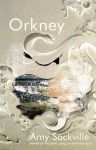
Orkney by Amy Sackville

Amy Sackville is a creative writing teacher at Kent University, and this is her second novel, set on a remote island in Orkney. It is a poetic and lyrical story of an unusual couple: a 61 year old literature professor and his pupil who is never actually named. The  book spans their fortnight honeymoon in this barren landscape and, as she spends an obsessive amount of time by the sea, he realises how little he knows her. We don’t know why his wife is so obsessed by the sea, but it has something to do with her father, who disappeared when she was young. The language of the book is beautiful and intriguing, and I couldn’t put it down.

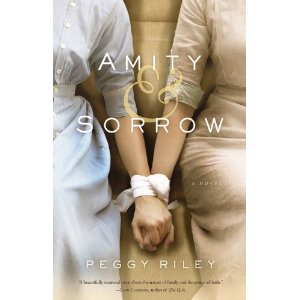
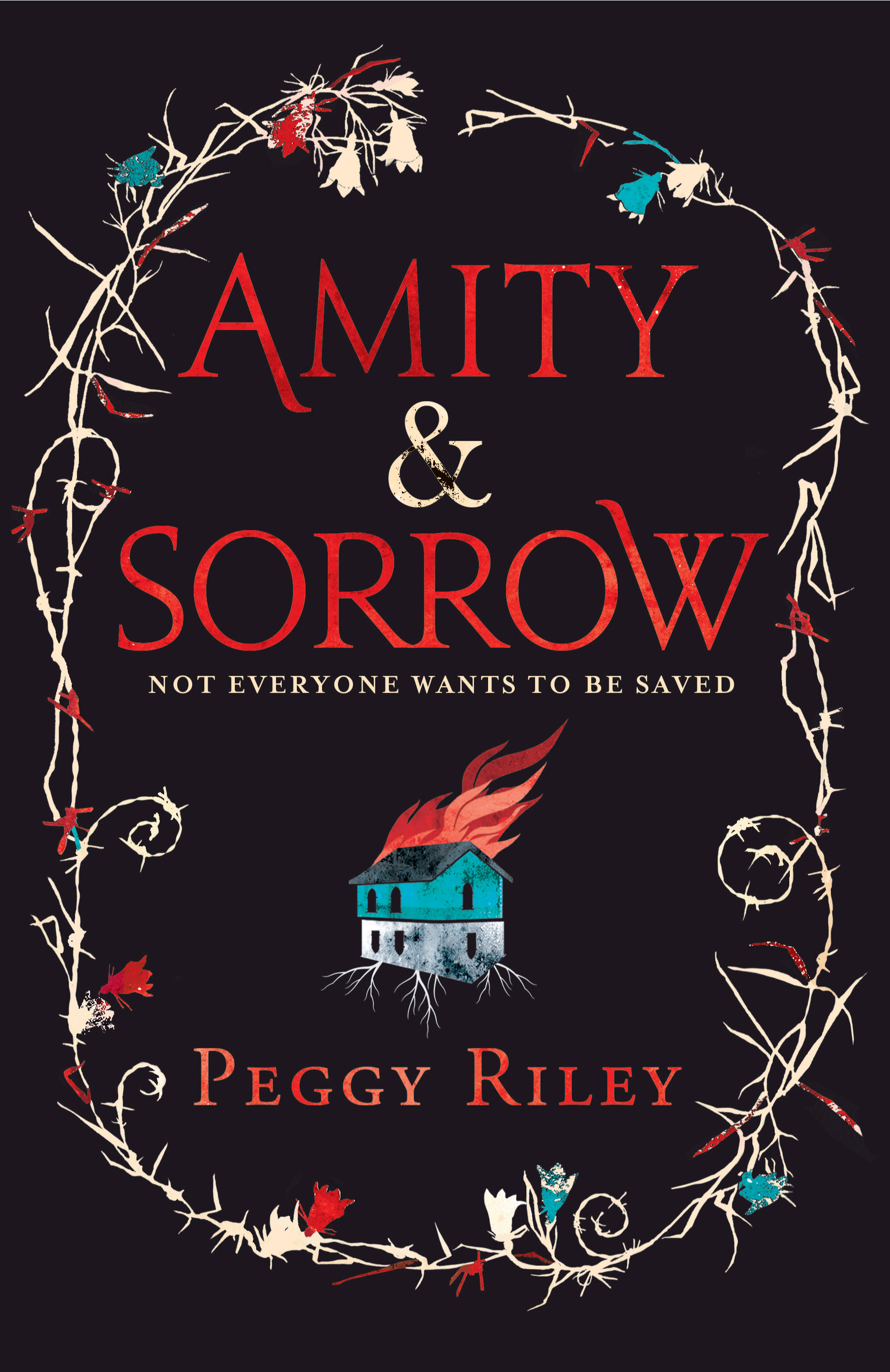
Amity and Sorrow by Peggy Riley

Riley is a writer and a playwright. There is so much to say about her but I’ll save it for my upcoming author interview next week. Released on March 28, this book is shocking and gripping story of a mother who rescues her daughters from a cult, their father and a fire,  driving for days without sleep until they crash their car in rural Oklahoma. The girls, Amity and Sorrow, can’t imagine what the world holds outside their father’s polygamous compound. Rescue comes in the unlikely form of Bradley, a farmer grieving the loss of his wife. This is an unforgettable story which I was fortunate enough to receive as an advanced reader copy. I would recommend picking it up when it is released in the next few weeks. It has already had some wonderful reviews.

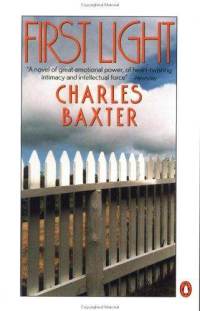
First Light by Charles Baxter

I discovered this out of print gem and managed to find a second hand copy. Charles Baxter’s short stories have appeared in the Best American Short Stories and in two of his own collections. This novel, his first, was supported by a Guggenheim Foundation grant. He takes us backwards through the lives of Hugh and Dorsey Welch who are brother and sister. We meet them as adults, while Hugh is a Buick salesman and Dorsey is an astrophysicist, and discover their dark and difficult pasts. The author traces their paths back to the day of Dorsey’s birth with an unusual subtlety. His opening paragraph includes this vivid description: ‘Hugh keeps both hands near the top of the steering wheel the way cautious men often do, and he does not turn to argue with her, not at first.’

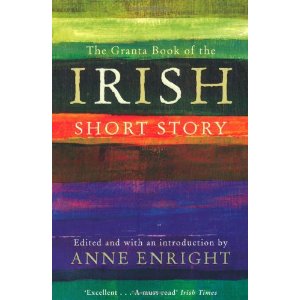
The Grant Book of the Irish Short Story

I am reading both the Irish Short Story collection and the Best American Short Stories, but I wanted to focus on this collection in particular, edited by Anne Enright. Ireland has produced some of the world’s most celebrated short story writers and this, a collection of the best works of contemporary Irish short fiction writers, includes works by  Roddy Doyle, William Trevor, Colm Toibin and Kevin Barry. It  begins and ends with a road accident. The first, which proves fortuitous, involves an out-of-work labourer and a carload of nuns; the second – which is fatal – occurs when a mechanic decides to earn a few extra euros ferrying tourists to a shrine where a statue of Mary is said to weep. Between these two tales we meet a mother who finds her son suspected of abuse and we glimpse the consequences of Irish abortion law. The subjects are heavy and, sometimes dark, but the writing is tight and distinctive. My favourite story so far is John Banville’s Summer Voices. His book, The Sea, won the Man Booker Prize in 2005 and his short story is carried off with the same elegance of style with phrases such as these: ‘The radiance of the summer afternoon wove shadows about him.’ The story follows a young boy and girl who discover a body in amongst an almost eerie description of the landscape.

Goodreads and LibraryThing

goodreads library thing

I have written a guest blog post with a comparison of the two sites for authors. The post covers my experience of meeting readers, giving away books, and gaining reviews. Both are really good sites for readers and authors and are a helpful point of connection between the two. If you haven’t yet had a look, I would highly recommend them. Goodreads has a lot of groups and interesting discussions and LibraryThing is full of readers who are wanting to review books and interact with authors. The site has a fascinating zeitgeist page of reader and book statistics, if you like that kind of thing. I love finding out about which books are popular and which languages are the most translated. I have met some interesting people on both sites and will continue to interact through discussions and groups.

If you would like to link up with me on Goodreads I would be happy to see you there. I also have an author profile on LibraryThing but you don’t connect in the way that you can on Goodreads. Do have a look, if you are interested and browse around the site.


How to Write a Character From Start to Finish

The best fiction is about a character who changes in some significant wayThe selfish brute learns to put others first. The woman marrying for money decides to marry for love. The career ladder climber learns to cut back on his hours to enjoy his family. The bitter old crone learns to let others in. The independent pilot of the Millennium Falcon learns to care about a cause. The owner of Rick’s Café Américain decides he will stick his neck out for somebody after all.

We love to see characters transformed. Mainly because we are being transformed. We know the painful but liberating feeling of ceasing to be one way and beginning to be another, especially if the new way results in more success in relationships or other areas of life we value.

—by Jeff Gerke

Most of the time, main characters in fiction are changing for the better. It’s uplifting to see someone make good choices and improve as a person. Probably your book will be about a character who changes for the best.

But there’s also room for characters who change for the worse. Indeed, though they may lead to depressing, poor-selling books if given the lead role, these tragic characters are fascinating to watch. Before our very eyes, Roger in Lord of the Flies, Allie Fox in The Mosquito Coast and Anakin Skywalker in the Star Wars saga all devolve into villains. It’s terrible and we want them to stop. But part of us doesn’t want them to stop.

Perhaps most intriguing of all is a “bad” character who flirts for a while with the idea of being good, but then decides that his true self is on the dark side of the street. Gollum/Sméagol in The Lord of the Rings is a famous example.

Of course, not every story has to be about a character who changes. Certainly we don’t expect much change from Indiana Jones. He simply is who he is. And there are wonderful stories about people whose character is so complete at the beginning of the tale that everyone else must change around them. Anne of Green Gables is a terrific example of this. Anne is out of step with everyone. She doesn’t fit in. And yet as those around her try to change her to conform, they discover that it is they who are in need of becoming a bit more like Anne. Forrest Gump, WALL-E, Don Quixote, Mary Poppins and even Jesus Christ are the agents of change though they themselves do not transform. But these characters can be difficult to write well—and they’re more the exception than the norm. So let’s focus here on a main character who changes.

Whether your protagonist ultimately turns toward or away from the light will be up to you, but we’ll look at ways to send her on a journey in which she’s transformed.

The Inner Journey

In fiction terms, a character’s transformation is called his inner journey or character arc. I like the former term as it suggests an odyssey, which it certainly will be for this poor creature you’re about to place on stage and commence to torturing.

The heart of this system is your main character’s inner journey. Other characters may be on journeys of their own, but it is the protagonist’s transformation with which we (and our readers) will be most concerned. The core temperament, the birth order, the way others respond to her, her major life events—all of those are essentialbackground, but they are background all the same, for the main event, which is her inner journey as it will be explored in your novel. A character’s inner journey has five major phases:

•                  Initial Condition (including the “Knot”)
•                  Inciting Event
•                  Escalation
•                  Moment of Truth
•                  Final State.

The Nexus

It’s imperative you understand these five phases are steps on a voyage between two points: the “knot” and the moment of truth. The journey itself is a measure of where the character is along the progression between these two points:character-writing-beginning-to-end

Everything else is preparation for this quest, progress along this quest, and aftermath of this quest. The simple graph you see is the thing that is going to ensure that your novel has both incredible characters and satisfying plot.

The Seeds of Change

The knot is the thing that is wrong with your character. It’s her flaw, her besetting sin, the unhealthy lifestyle she’s gotten herself into. It’s the harmful thing that the story’s whole point is to expose and give her the opportunity to change. In short, the knot is the thing that is messing up your character’s life.

You as novelist act as Fate or God over this character. You know exactly what’s wrong with this person, you see how it’s harming her, and you know how to bring it to her attention. You decide you’re going to force her to deal with it. You care about her too much to leave her in this handicapped state, so you’re going to make her see it and make a decision about it once and for all. This moment is your hero’s Inciting Event.

So you begin sending difficulties into her life. She wants to keep things the way they are—stay in an abu- sive relationship, give up on her dreams, not stand up for herself, hang on to her bitterness, etc.—because, despite the pain of the status quo, it beats the potential pain of change. But you won’t let her. So you, as a good fiction deity, rain on her parade. You make it progres- sively harder for her to ignore the folly of the choices she’s making. You bring in positive examples of what her life could be like if she were to try an alternative way. And then you put the squeeze on her (something I like to call Escalation). It’s all about getting her to the point where she will choose, her Moment of Truth. At the outset of the story, she had arrived at an unhappy medium, an imperfect solution that is not good but is at least better than all the other alternatives she’s found so far. But through the course of the tale you will show her clearly how her solu- tion is harming her and you will show her the bright, happy land she could enter if she went the new way. When she gets to this moment of truth, it will be as if she’s standing at a crossroads. She needs to be able to perceive what her alternatives are. “I can stay as I am and suffer these real and potential consequences, or I can make this change—at this cost—and enjoy these real and potential benefits.”

It’s that hanging-in-the-balance moment that is the point to which your entire story is heading. You could go so far as to say that this moment is the one and only purpose of the story. What the character chooses in that moment is the all-important thing, the infinite pause when heaven and earth hold their breath to see what this person elects to do in her instant of perfect free choice.

The aftermath of that choice leads to the Final State and the end of the story. That is your character’s inner journey in a nutshell. Make no mistake: Your book is about what your main character decides at her moment of truth. Everything else is just the vehicle to drive her to that pen- ultimate moment.

Can you see how this is an application of our simple graphic? If the destination we’re driving to is the moment of truth, then the starting point—the causation point, really—is the knot, the issue causing the problem in the first place. The trip from one to the other is your story. If you build your novel as I recommend, 75 percent of your book will consist of your main character’s inner journey.

The Role of Change

When you’re first concepting your character, you might be tempted to think only about who a character is. But to keep your characters interesting you must also think about what your character can become. Given this starting point, this temperament, and these layers, how will this character respond when shown she’s wrong or dysfunctional in some way and offered a better alternative? People don’t like to change. It’s so much easier to stay as we are, even if it’s hurting us. In fiction, as in life, people resist change.

Right up until the moment when it hurts too much. People dislike change, but they dislike unacceptable pain and consequences even more. Wait, you mean I could go to jail for that? You mean I won’t be able to see my girl- friend anymore—ever? You mean I really am, for sure, 100 percent, going to die if I do this one more time? Dude, what do I need to do to make that not happen?

Your job as story god over this pathetic, synthetic human you’ve created is to bring the pain. You have to dislodge her from her comfortable dysfunction like a pebble you have to remove from a block of mud. The crowbar you use is pain. You have to make it more painful to stay the same than it is to contemplate some manner of char- acter revision. People don’t change until it hurts too much to stay the same. Bring that pain to enable that change, and you’ll have uncovered the inner journey.

Reblogged from Writer’s Digest, by Brian Klems. Too good not to share.


What Poetry Teaches Us about Writing Prose

I took a poetry class to fulfill one of my workshop requirements for my master’s in Writing and Publishing. Although I didn’t have much prior experience with poetry beyond some teenage scribbles, I discovered a new way of playing with language.

And in the process, I also realized that writing poetry helped me to create better, stronger prose. Here are four things I learned about poetry that also apply to writing prose:

bookshelf

Photo by Saltygal

Roses are Red, Violets are Blue

1. Focus on one moment.

My professor encouraged us to be specific and concrete when writing our poems—none of that abstract what-does-this-mean? stuff. We narrowed the scope of each poem to one moment and took care to describe it so the setting, action, characters, and emotions were crystal-clear.

2. Choose the best words.

Because most of the poems we wrote were fairly short, we wrote concisely. Each word had to carry meaning and work hard. No fluff allowed.

3. Work with structure.

Some of our assignments dictated the structure of our poems. In those cases, I only had so many lines or syllables to work with or I had to make sure certain lines rhymed, but establishing parameters made my writing stronger. I had to think and revise and move parts around. While we have a lot of freedom in writing, adding the constraint of a structure forces us to have a goal in mind and be creative in a new way.

4. Play with lyrical language.

Even concise writing is allowed to sound pretty. Poetry is rhythm and sound. It’s a form of writing that’s especially wonderful when read aloud. When the language is musical, the poem itself comes into focus and creates a song, one note at a time. It conveys more than just the words.

Reblogged from thewritepractice.com