So When Are You Going To Write A Proper Book, Then?

I am pleased to welcome the Director of National Flash Fiction Day, Calum Kerr, for a guest post on the short fiction form. His new collection, Lost Property, brings together four brand new pamphlets of flash fiction, featuring Singsong, Soaring, Burning and Citadel. The collection contains 83 stories that move from the hilarious to the sinister and demonstrates the unique nature of ultra-short fiction.
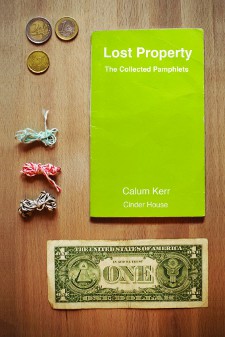
lostpropertyfrontsm

If you are a writer of flash-fiction, short-stories, possibly poetry and maybe even non-fiction, this is a question which may be familiar to you. The person posing the question might be a complete stranger, maybe at some reading or signing event, but is more likely to be a friend or even a relative. You proudly show them your collection of stories or poems, or your book on how to knit cartoon characters, learn economics or install a Linux system on your PC, and they glance through it, nod appreciatively, and then they work their way towards the question.

“So. Well done. This looks good, doesn’t it?” is the opening move.

“Yes. I’m very pleased with it. I think it’s come out very nicely,” is your response.

“Must have been a lot of work.”

“Yes. But enjoyable. Apart from the editing, ha ha…”

“Ha ha, yes.” They nod and look through the book again, then up at you. “So…” they start, and this is where you should stop them, because you know what’s coming next.

“It is a proper book. It has a cover. It has loads of words in it. I did research and everything. People will buy and read it – okay, not in JK Rowling numbers, maybe, but some of them. It has an ISBN number and can be bought from Amazon and those funny old places that people used to go into. You know, bookshops.” Is what you want to say. But you don’t. Instead you let them continue.

“So… when are you going to write a proper book, then?” they ask, and you somehow restrain yourself from swinging for them.

Because, of course, they don’t mean to say that your collection or non-fiction opus is not a ‘proper’ book. They mean ‘when are you going to write a novel’. That’s what it’s all about, after all, isn’t it? Collections of things are nice, but they’re just little stories or poems, not a good chunky page-turner. Non-fiction books are useful, but you don’t settle down on the sofa on an autumnal afternoon to read them. They live on shelves until you have occasion to reach for them. No, they’re talking about the All-Powerful Novel and the place it holds in the public imagination as the pinnacle of writing and the thing that every writer is surely aiming for.

And this is the problem for writers, especially of flash-fiction or short stories. Because each of the small parts looks inconsequential; trivial. There might be many of them, and they might make up a 200 page collection containing 60-70,000 words, but still, you can see the joins; you can see where the writer started and stopped. Not like the seamless flow of a novel (which was surely written in a single, sleepless week of endless typing). And, of course, you are writing prose fiction, so surely you must be working your way up from these little things to try and join the big boys with their ‘proper’ books.

Now, don’t get me wrong, many flash-fiction and short story writers do have aspirations to be novelists, or at least have found an idea coming to them which is too big to cover in just a few hundred or few thousand words, and so are working towards a much longer piece. But that does not mean that they have finally, in some indefinable way, graduated to the big leagues. They have not left behind their childish play with those tiny tales and taken the brave step to write longer. They are simply following their muse where it takes them, and sometimes your muse takes you longer.

But all of those same flash-fiction and short story writers who are dabbling in the world of novels, at least those I know, still love and respect the short form. They are not what we write because we can’t manage the long things. They are the things we write because there is a value to a short story or a flash-fiction, an intensity, a chance at experimentation, and a specific purpose that you simply can’t achieve in the novel.

We don’t write stories because we are waiting for our turn to write a ‘proper’ book. We write stories because they need to be written, and because we love what they can do that all of your ‘proper’ books can’t.

So next time someone looks at your collection of flashes, poems, or your non-fiction work and seems about to ask that fateful question, stop them, point to the cover and ask them: “So, when are you going to read a proper book, then?”
calum-200x180   Calum Kerr is a writer, editor, lecturer and director of National Flash-Fiction Day in the UK. He lives in Southampton with his wife – the writer, Kath Kerr – their son and a menagerie of animals. His new collection of flash-fictions, Lost Property, is now available from Amazon, or direct from the publisher, Cinder House.
Two New Short Story Publications

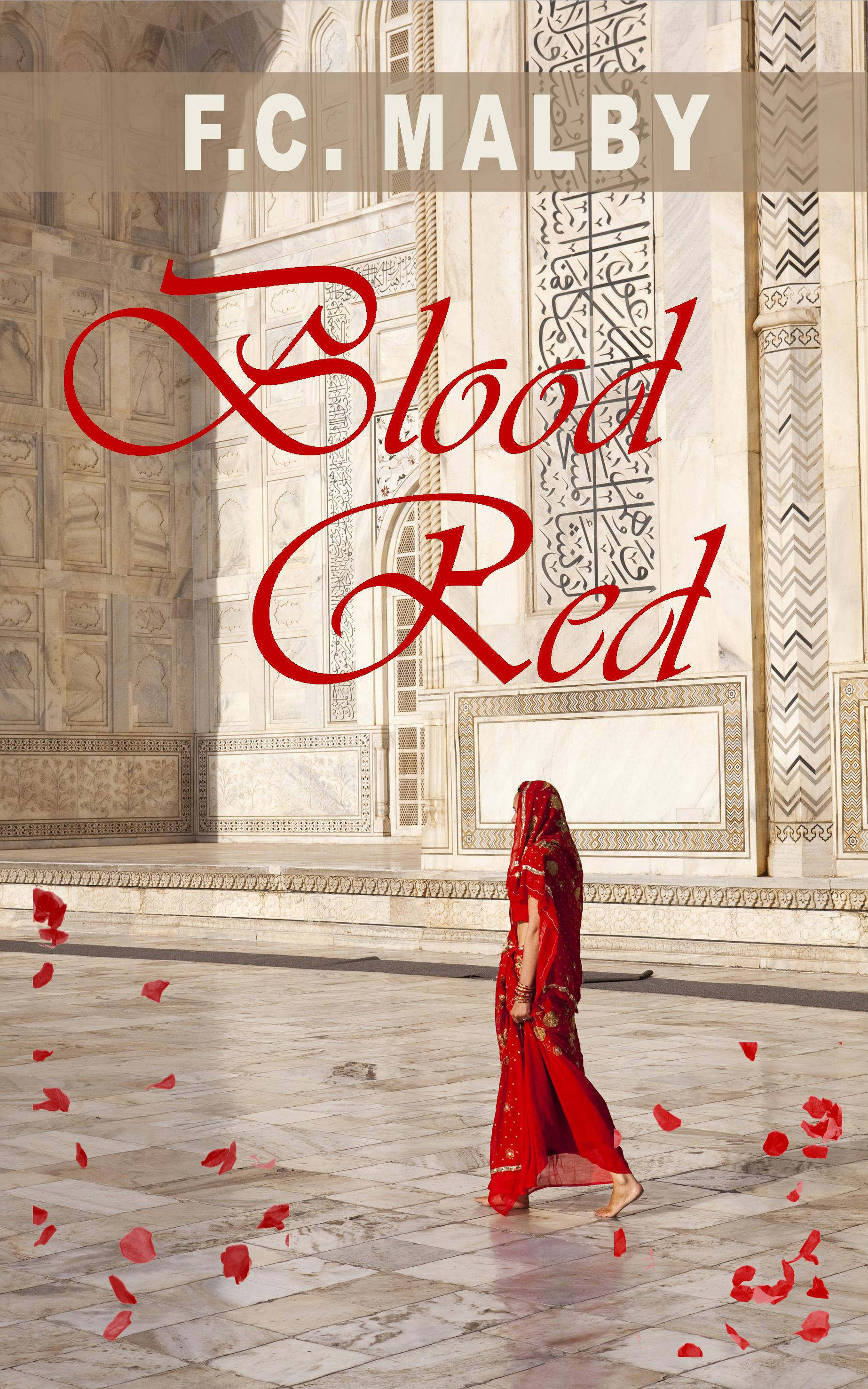
It has been encouraging to receive such a positive response to my first published short story, The Bench. Take Me to the Castle is continuing to sell well, both in paperback and eBook formats. Several readers have been asking when the next short story will be released. I am pleased to announce the publication of two short stories: BLOOD RED and BIRD. You can download copies by clicking on the images on the side bar at the right. Here is a little information on each one.

Blood Red

Blood red cover final

This short story set in India reveals the hidden tension in the mind of a young boy as he has to let go of the girl he loves for an unknown young bride chosen by his parents. But as the wedding day approaches, will he be able to follow his parents’ wishes in the face of his passion and quiet desperation?

Bird

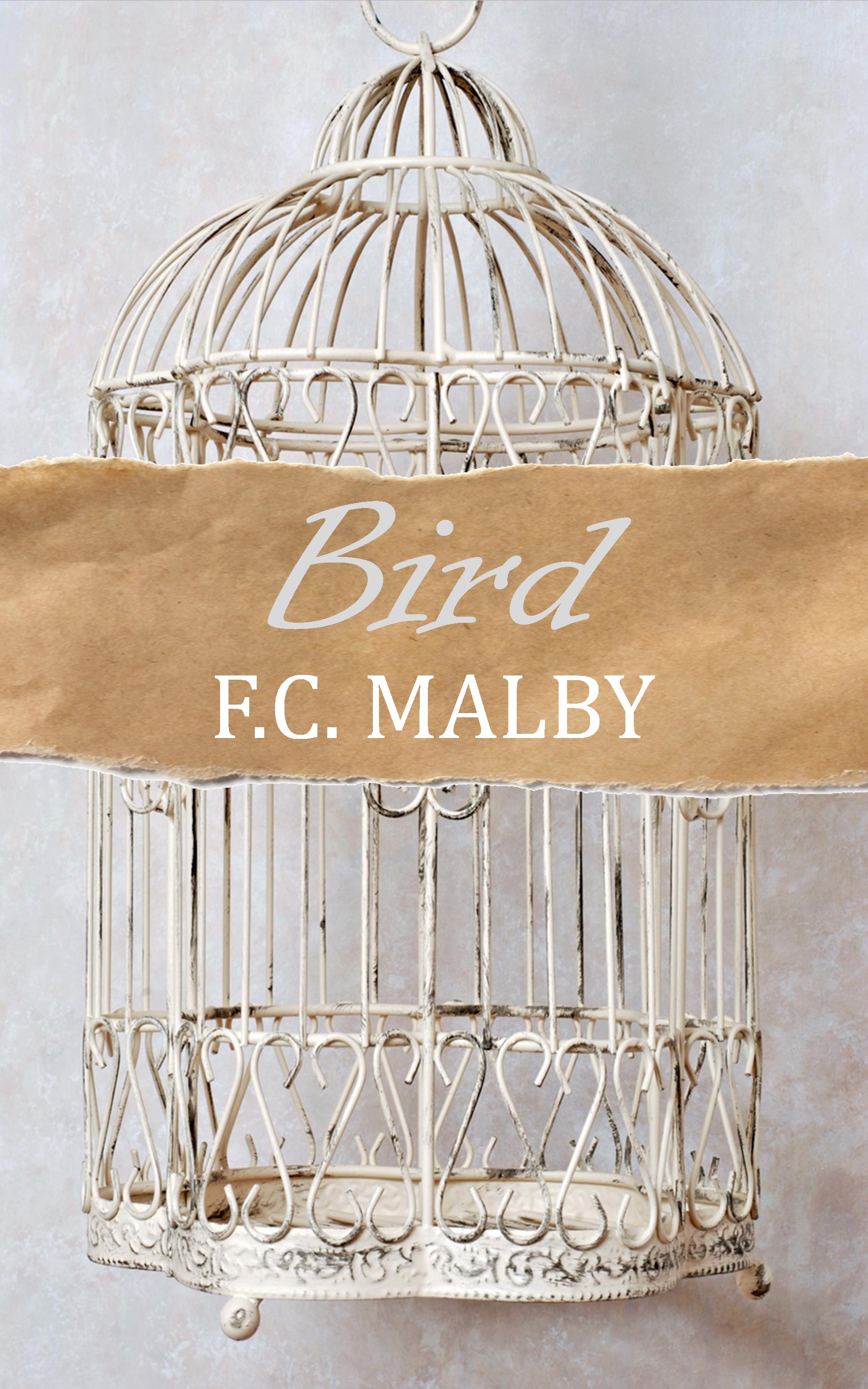
Bird cover
A caged bird, an aging mother and a family loss that noone will talk about. This short story delves into the pain and longings of a girl caring for her mother with an insight into the world through her unspoken wishes.

First Drafts

writer's notes

The previous post about blogging received a record level of traffic and an unprecedented response, given this blog’s short life span, so I’ll come back to it and write more on the topic soon. It is clearly a subject that people feel strongly about and I had not realised the level of passion and dedication behind so many blogs.

First drafts is the issue I’d like to tackle today.  I am in the stage of the first draft of my next novel and I have been thinking about the changes through each stage of writing up to final publication. There is something unique about a first draft; a freshness, an expectation, a certain level of hope.

The first draft is the place of mountain peaks and valleys, it is the place of the Eureka moments and the what ifs, it is the place of ‘first thought’ excitement and of apprehension, the place of originality and of doubt.

In writing your book for the first time, before you go through rounds of editing and rewrites ad infinitum, there is an enthusiasm about where you will take the reader, in fleshing out your characters and plot, in travelling to new places. There is also an apprehension surrounding your words; questions, doubts, fears. Will I be able to keep up the tension and the pace? Will people want to read it? Will I be able to finish it? Is it going to be too long/short? Did I choose the wrong topic/genre/setting? Do the scenes link up? Is there enough cohesion and consistency?

There are endless questions that seek to counter balance the moments where you get lost in the the sentences, your fingers running away with themselves, tapping furiously at the keyboard and you forget to eat.

What is it about first drafts that make them so enticing, yet so difficult to wrestle with? Give an artist a blank canvas and paints, give a singer a microphone and close them in to a sound proof recording studio, give a dancer a stage and a preview audience. There will always be fears surrounding your ability, your audience’s reaction, the longevity of your career (if you are thinking long-term). All art forms are highly subjective, creating a range of responses. I recently scanned some well promoted and popular books, only to find a great and confusing diversity of reviews. This, I think, reflects the fact that no two people will love the same books, music or art. Although there are varying levels of skill among writers, the result, as the publishing industry well knows, can be unpredictable.

How, then, do you wrestle with the first draft to produce your best work? I have struggled with nagging thoughts of what people will think when they read it, much more so now than with any of my short stories or my first novel. I think it is partly down to the fact that there is more pressure with each book that you write to make it better than the last, to keep up reader interest, and to prove that you want to be able to keep writing. There are several people in publishing who are waiting to read my current novel and, whilst it is encouraging, it is also nerve-wracking. When I self-published my previous novel I had complete control over the process and the outsourcing; the deadlines, the cover design, the editing, and it felt safe in many ways. Now I feel a sense of pressure and, sometimes, of impending doom. I have felt paralysed by the need for the first draft to be perfect and to be commercially viable. The truth is no first draft will ever be perfect and nobody can predict what will sell.  Whilst I have been surprised by the sales of my first book, I am under no illusions about the state of flux in which different types of books remain.

My response  to these doubts when they creep up on me, as they always will, is to write as though noone will read it. That’s it. It’s really that simple. Write your book without wondering how good it will be or if it will sell. Imagine that it will never be read and write it for yourself. You do need to be aware of your audience when planning, but I have found that since I made the decision to stop thinking about reader response and beyond, I have moved from writing around 500-800 words a day to up to  2,000 or 3,000. I know it won’t happen every day but it is liberating and freeing. So, here’s to days of carefree writing before you apply a scalpel to the parts that you won’t need, before you carve and sculpt your work. Here’s to writing for the love of writing.

Photo credit: A Leonardo da Vinci notebook with diagram of a potter’s wheel, c. 1508-1509. Flavorwire

The Darker Side of Life: Reality and Fiction

crime scene

I was planning to write a specific post for today until I read the news this morning. I was horrified by the graphic nature of the news that a baby had been flushed down a public and filthy toilet in China. Although this is not the first time it has happened, this seems particularly horrific because of the fact that the baby was alive and had sustained a fractured skull. The weakened cry as it was eventually cut free reduced me to tears. I won’t add a link as not everyone will want to watch, but the video and images are all over the news so you won’t need to look far to find it.

I don’t cry easily so it took me by surprise. I still feel a sense of grief over the complete abandonment of the mother. Although I know that life has elements of evil (look no further than the recent and brutal Woolwich killing), and that humans are fallible, and sometimes mentally ill or disturbed, or just desperate, but my response made me think hard about the difference between the darker side of life in reality and in fiction.

Take Me to the Castle, my debut, was a literary historical fiction novel, set within the framework of the politics of the fall of communism in Eastern Europe. One of the earliest books, which totally gripped me was John Buchan‘s The Thirty Nine Steps. I was given it with a collection of other penguin books in my early teens and the suspenseful journey through Scotland’s wild moors of Richard Hannay, who is on the run from the police after finding a dead body in his flat, kept me turning the pages at breakneck speed. It inspired in me a love of suspense in a good story. I have recently read quite a few crime and literary crime fiction/psychological suspense novels, and I have pondered the difference between the world you inhabit in a book and the world that you wake up in every day.

With fiction there are usually rules and expectations with certain types of books. You look at the cover, the genre, the author and the blurb, and it gives you a hint of what to expect. If you read chick lit novels and do not like horror, you might avoid books with darker covers and bold print. If you enjoy sci-fi and do not like literary fiction, you might avoid the pastel covers with possibly a booker prize winning author’s name across the front. These are crude and basic descriptions but you can see what I’m getting it. Readers come to a book with expectations. They do not expect a gruesome death in a romance novel or a historical drama in a dystopian book. There are, of course, genre cross-overs and new authors breaking the rules and these are continuing to increase. Agents and editors use the term, ‘genre-bending’ to describe these books.

In fiction the darker side of a story is contained within a world with defined boundaries and, although you can become completely absorbed in that particular world, you emerge with the knowledge that the events are fictional and are not directly related to your life. With the exception of fiction novels set within the framework of specific times in history, a fiction novel is just that: FICTION. It’s effects are deep but are limited to the confines of the world the author has created.

In life, the reality of crime and the darker aspects of human nature have no boundaries. The news seems increasingly more shocking and gruesome, although much of this is down to the changing nature of journalism. It would seem that our world is growing increasingly colder and more dangerous, from the point of view of what we read in the press. My husband, however, who is a crime specialist in the field of research and policy, assures me that the world is becoming a statistically safer place. The global homicide rates are lower now than they have ever been. I won’t quote sources as that is his arena, but the issue of what I saw this morning reminds me that the darker side of life in reality does not hold the boundaries that we see in fiction and is often much harder to deal with.

The framework that exists within fiction (as a safety net for some readers) is not apparent in life and the shocking news that we read about often leaves us with deeper fears than the books that we choose to read.

Photo credit: http://www.officialpsds.com

Fact and Fiction: How to Weave Both Elements into a Good Book

English: A panorama of a research room taken a...

While the general categories of fiction and non-fiction are distinct book categories in the publishing world, there is good reason to tie the two together in your novels. It will technically still be classed as fiction, but a combination of the two can be really powerful. My debut novel, Take Me to the Castle,  was a fictional story, written within the framework of communist Eastern Europe, and the resulting secret police activity and fractured family relationships. I wanted to use my research skills to bring the facts to life through the eyes of a young girl, Jana.

Mixing fact and fiction is no easy task because, while you have all the facts to hand after months or maybe years of research, you have to be careful not run the risk of any of the following temptations:

Information dump. Too many facts and the reader will switch off.

Twisting the facts. Inaccuracies will water down your plot and make the story less believable.

Lose your creativity. If you feel the need to stick too tightly to the facts, the plot risks being underdeveloped. You don’t want to become fenced in by tight constraints if you are writing fiction.

What is the best way to weave the two together?

It is important to make outlines after your research so that you have a clear idea of where you are going with the plot. If you begin to write before entering into the research you will end up doing a lot of painful rewrites. It’s best to avoid unnecessary rewriting if possible.

Strike a balance between the two, erring on the side of fiction rather than fact. Too much factual information, and you will end up writing non-fiction, which is fine as long as you are clear about defining your work.

Be creative and don’t be afraid to play with the facts. Use your imagination to fill in the gaps and show the reader your interpretation of the events from a unique angle.

Why will this work?

Given the constraints, you may wonder whether it is worth bringing fact into the arena of fiction at all. I would argue that there are many periods throughout history, and many key events in life, which need to be recorded and written down, and I believe this can be done really effectively through fiction.

Think of The Paris Wife and it’s subject, the first wife of Ernest Hemmingway. What has made the book so successful has been the fact that it gives you a window into the life a famous writer at at time that we know little about.

Magda has just been released in March, and tells the story of Magda Goebells in chilling reality but it is, in part, a fictional representation of the facts. It’s fascination lies in the fact that it covers the difficulties of mother/daughter relationships and the horrific period that was Nazi Germany. It gives an inside view into the life of Hitler’s propaganda minister, Joseph Goebells.

Two of my blog readers and fellow writers also wrote their books based on periods in history:

Tom Gething wrote Under a False Flag based on the overthrow of Marxist president, Salvador Allende, in Chile in 1973. The books is based on a series of recently declassified documents from the period and includes a wealth of historical research.

Marianne Wheelaghan published The Blue Suitcase in 2011, telling the story of her Grandmother, Antonia, through her diary as she grows up in Germany during and in the aftermath of World War II. 

Have you read any other good examples that you can add to the list? Many of these are political. Can you think of other examples?