Where do you find your ideas? Short Story and Flash Fiction Inspiration

As an author, the question I get asked most often is, Where do you find your ideas? It’s a notoriously difficult question to answer and most authors struggle to voice, or even to know, where they find their ideas. But, I’m going to give it a try! The short answer is that it comes from the strangest of places, and I need to begin with the adage that everyone is different.

Where do you find your ideas?

The most important important advice I could give any aspiring author is, be an observer. Watch people, observe their movements, eye contact, body language, look at what they don’t say. Only 7% of communication is verbal, in other words through what people say, which means that a whopping 93% of communication is nonverbal – body language, gestures, tone of voice, facial expressions, body posture. A person’s body language is a part of communication and reflects emotions and moods.

Be an observer.

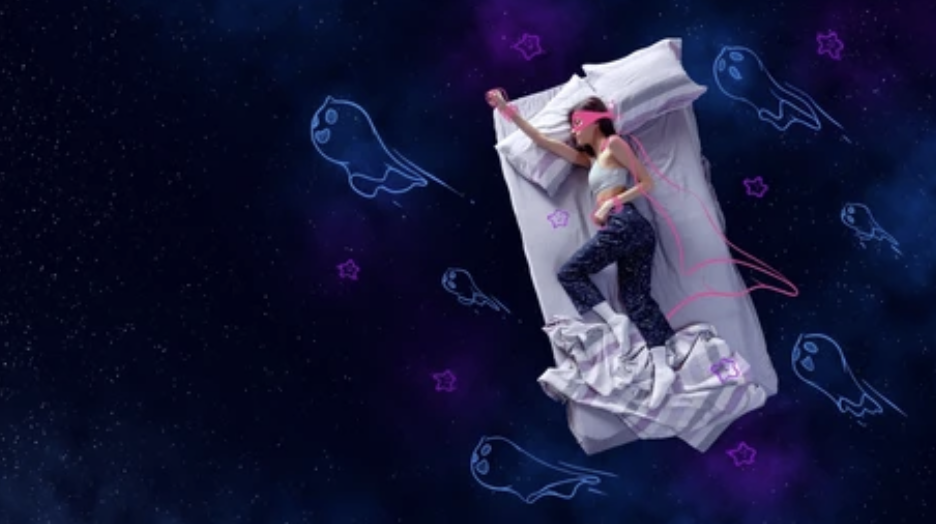
Dreams are often where ideas form, especially in those liminal spaces between the states of being awake and asleep. New neuroscience research from the Paris Brain Institute shows that the phase before we fully fall asleep is hugely creative for our brains. American Inventor, Thomas Edison, used partial naps while holding spheres in his hands to harness his inspiration. The spheres would fall as he fell asleep and wake him at the right time to capture his sleep-inspired ideas. Physicist Albert Einstein and artist Salvador Dali also believed in short bursts of sleep to boost creativity. The experiment, which is reported in the Science Advances article, Sleep onset is a creative sweet spot. Although sleep is often seen as a waste of time and productivity, it is actually essential to our creative performance.

The phase before we fall asleep is hugely creative for our brains.

Imagine that you are taking a photograph of a moment, a snap shot in time. I often walk or drive past a scene, usually of two or more people talking, sometimes a lone person doing something interesting or curious, and I wonder what they might be saying or thinking, and how they might be feeling. Authors are endlessly curious and out of this curiosity often comes new ideas for stories. Imagine taking a photograph of the scene. What would you be wanting to know as a viewer? Who are these people? Where are they from? What are they doing? What is the emotion underlying the event? Could something else be happening?

Imagine that you are taking a photograph of a moment.

Use a prompt – an image, a poem or news article. What ideas does this conjure up in your imagination? Is there big news event with an image of a person or a story about them? Can you find an offshoot from this? Let’s have a go….this is an image from a BBC news article on inflation. There is a woman holding a pizza in a supermarket. What is she thinking (inflation aside!)? What else might be going on in her life? Does she live alone or with a family or a partner? What does her body language convey? Is this a local shop or is she passing through, or escaping something? So many ideas can come from just one image that are entirely unrelated to the image or event. Sometimes a visual cue helps.

Sometimes a visual cue helps.

Have you had an interview or an interesting conversation or event recently? Was there a person who stood out or a part of the dialogue that stayed with you? This is fiction, so the details will need to be changed, but what can you extract from what was said? Did it make you think of something else? Sometimes writing down ideas in a journal can help when you sit down to write. I sometimes do this, although the best ideas tend to stay in your mind.

Be curious.

Photo credit: Shutterstock & BBC News.

Poetry Publication in Spillwords Press

WE WANT OUR BODIES BACK

written by: FC Malby

@fcmalby

In memory of David Carrick’s survivors (they are not victims, they are survivors)

We want our bodies back
the flesh you took
thinking it was yours
for the keeping.

We want our bodies back
the ones you thought you
owned, like a play thing
a game of cat and mouse.

We want our bodies back
they are not for sale
and they do not belong
to you or your desires.

We want our bodies back
because you thought that
by dehumanising us it would
make your fragile ego stronger.

We want our bodies back
because you didn’t hear
our no, didn’t ask, and
because they are sacred.

You can read the original post at Spillwords Please leave a comment or a like on their site or here.

Kurt Vonnegut and the Myth of Talent

In over 50 years Kurt Vonnegut published fourteen novels, three short story collections, five plays, and five works of nonfiction, with further work published posthumously. He is most well know for writing Slaughterhouse-Five, which was published in 1969.

He had an interesting story about ability the myth of talent…

“When I was 15, I spent a month working on an archeological dig. I was talking to one of the archeologists one day during our lunch break and he asked those kinds of ‘getting to know you,’ questions you ask young people: Do you play sports? What’s your favorite subject? And I told him, no I don’t play any sports. I do theater, I’m in choir, I play the violin and piano, I used to take art classes.
And he went WOW. That’s amazing! And I said, ‘
‘Oh no, but I’m not any good at ANY of them.”
And he said something then that I will never forget and which absolutely blew my mind because no one had ever said anything like it to me before: ‘ I don’t think being good at things is the point of doing them. I think you’ve got all these wonderful experiences with different skills, and that all teaches you things and makes you an interesting person, no matter how well you do them.’
And that honestly changed my life. Because I went from a failure, someone who hadn’t been talented enough at anything to excel, to someone who did things because I enjoyed them. I had been raised in such an achievement-oriented environment, so inundated with the myth of Talent, that I thought it was only worth doing things if you could ‘Win’ at them.”

Shortlisted in Lunate Fiction Flash Prize and two more publications

I discovered yesterday that my story has been shortlisted for the Lunate Fiction Flash Prize, judged by EllipsisZine Editor, Steve Campbell. Very exciting news!

Flash Prize Longlist

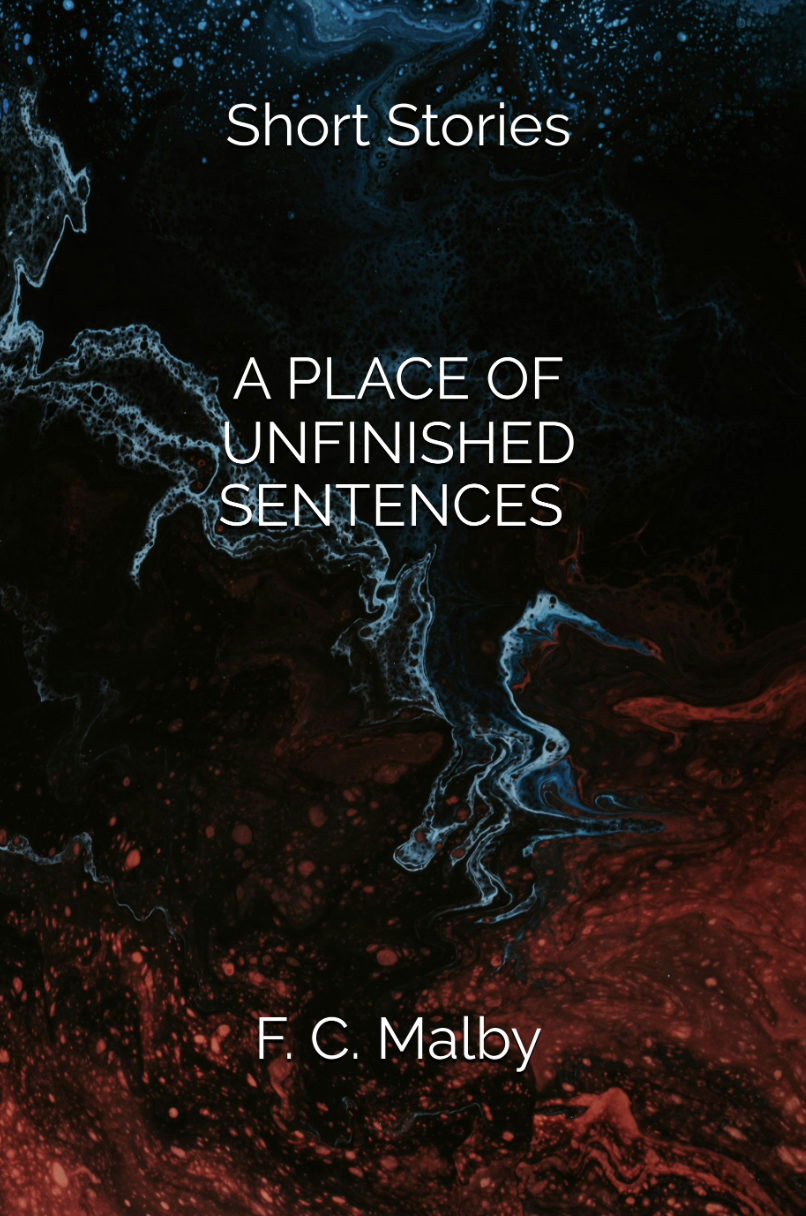
Another story was also published today by Lunate Fiction – A Place of Unfinished Sentences

A Place of Unfinished Sentences

The woman sitting opposite me looks like the guy I used to date. Her face is angular, her eyes fixed to the page of a book I cannot see. I wonder why she reminds me of him, and whether her features are particularly masculine, or his more feminine; maybe both. The door clunks back into the frame of the train’s carriage. A thud as it stops makes me jump and a man with a trolley walks through and scans the seats.

“Tea? Coffee?” he asks, glancing at the ex-boyfriend lookalike.

“Neither,” she says, her eyes remaining fixed on the pages in her hands. 

He looks at me. “Coffee, black, no sugar,” I say, without waiting to be asked. He lowers his shoulders, exhaling slowly as he pours me a cup from a large metal coffee pot. Steam rises from the spout, the scent of it licking at my nostrils. Saliva fills my mouth in anticipation….continued at Lunate.co.uk

And, in case you missed this one, Do You See Me Coming, was also published in July at the new Burnt Breakfast Magazine.

Do You See Me Coming?

Do you see me coming, when the days are short and the nights feverish, when the family gathers round, wondering whether to call the doctor or let you slip away, peacefully. Do you see me coming when the flicker of evening light reminds you that your ancestors are beckoning you home. You think about your childhood and remember days where you came inside, covered in dirt and Mother shooed you away with a flap of a hand, and the smell of creosote where Father had painted the fence. You loved the smell but you weren’t supposed to. It was toxic, you were told, but you also loved the hot scent of tarmac. You always liked the things that you weren’t supposed to. You remember the way the swallows came in to nest then left, like Father, when I had come to him, too. He saw me coming. The rest of you only saw me leave, taking him with me …. continued at Burnt Breakfast  

Speaking at a Book Group

IMG_0265

This morning I spoke at a book group meeting. The members of the group had read my debut novel, Take Me to the Castle, and they invited me to come and speak. They wanted to discuss the writing process and the background to the book.

It was an interesting experience for me as an author and I learned a great deal about what readers want to know. Their questions mirrored many of the reader emails I receive. One of the most interesting questions was, what, if anything, I would have changed about the story. Many readers have said they felt devastated by the loss of one of the characters, which the book group agreed with and they had also felt the same way. This led to a discussion about what captures the heart of the reader and how we become involved in the lives of the characters. They also wanted to know if finishing a manuscript created a sense of loss for an author. My answer was a resounding, yes. It does, it really does. When you spend a few years inside the lives and minds of your characters, closing a door into their world is a bereavement of sorts, even if only fictional.

We covered many areas of publishing, editing, writing, research and whether people prefer ebooks over paperbacks. We discussed the length of the editing process and what happens at each stage of the publishing process at Random House. From an initial idea to the final product, it takes roughly a year to create a book.

They were keen to know the million dollar question (and it is one that is asked most often at literary festivals and in author interviews)….

“Where do your ideas come from?”

While it is difficult to give a tangible answer, because the answer varies from writer to writer, and from story to story, what I can say is that most writing develops from an idea. That idea is often sparked by your own experiences or feelings, or those of others. Every experience creates an image or a thought, every person reveals character traits that can be woven into a fictional character. And in the case of my short story collection, My Brother Was a Kangaroo, I said that some of the stories are purely fictional, while others find their origins in real life experiences.

We discussed the fact that many ideas evolve from a snippet of information or a scene that appears in your imagination. We discussed the creative process and the difficulty of writer’s block. There were many questions and ideas but what really resonated with me was that fact that everyone gleans different experiences from the same story.