Step Away From The Vehicle

Step away from the vehicle – and put your novel in a drawer

step away

This is the final piece of advice I wanted to share with you from Zadie Smith in this series on writing wisdom.

When you finish your novel put it in a drawer for as long as possible. A year or more is ideal, says Smith, but even three months will do. Step away from the vehicle. The secret to editing your work lies in the fact that you must become a reader instead of a writer. Smith says that there have been many times where she has sat backstage with a line of novelists at a literary festival, all with red pens in hand, frantically editing their published novels so that they might go onstage and read from them. Unfortunately the perfect state of mind to edit your own novel is apparently two years after it is published! And ten minutes before you go onstage at a literary festival. At that moment every redundant phrase, each pointless metaphor, all the pieces of deadwood are distressingly obvious to you as a writer.

Several years previously, when the proofs arrived, you looked at the same page and couldn’t see a comma out of place. And by the way, that’s true of the professional editors, too; after they have read a manuscript multiple times, they stop being able to see it. You need a certain head on your shoulders to edit a novel, and it’s not the head of a writer in the thick of it, nor the head of a professional editor who’s read it in 12 different versions. It’s the head of a smart stranger who picks it off a bookshelf and begins to read. You need to get into the head of that smart stranger and forget you ever wrote that book.

Personally, I left my novel for three months and began a Masters in Theology. Needless to say, the theology fell by the wayside once I picked up the book again, cut out a whole family, added two chapters, released it into the hands of my editors and completed the edits once they had finished their job. You don’t need to change course or take up something new, but at least begin some other writing and let it rest.

Here are some of my previous articles which you mind find helpful for editing your work:

https://fcmalby.wordpress.com/2012/10/10/3-things-to-remember-when-editing-your-book/

https://fcmalby.wordpress.com/2012/10/16/editing-and-ove-ruse-of-words-make-each-word-count/

https://fcmalby.wordpress.com/2012/11/09/one-of-the-most-effective-ways-of-editing-your-work/


Some interesting articles on leaving a gap between finishing your book and editing your work:

http://www.wiseinkblog.com/planning/at-first-draft-the-6-minimal-steps-to-revising-your-manuscript-before-submission/

http://www.writersdigest.com/qp7-migration-books/wgf-revision_excerpt

http://www.write4kids.com/feature4.html

http://theliteraryhub.blogspot.co.at/2011/10/top-10-tips-for-revising-your.html

http://www.scriptmag.com/features/rewriting-is-writing (this advice is for screenwriting but it applies equally to novels.)

Zadie Smith on Macro Planners and Micro Managers as Writers

writing

To continue with Zadie Smith’s words on writing, I’d like to look at her breakdown of writers into two categories. They are a little over-simplistic but give a good idea of how differently people plan their writing.

Macro Planners

You will recognise a Macro Planner from his Post-its and notebooks. A Macro Planner organises material, forms a plot, and moulds a structure before deciding on a title for their work. This structural security gives him a great deal of freedom of movement. Many Macro Planners, she states, begin writing their novels in the middle. As they progress, forwards or backwards, their difficulties multiply with their choices and they exchange possible endings for one another, take characters out and put them back in, reverse the order of chapters and perform radical surgery on their novels: moving the setting of a book from London to Berlin, for example, or changing the title.

Micro Managers

Micro Managers, in great contrast, have no grand plan. Their novels exist in the present moment and are written line by line.

Smith says, ‘When I begin a novel I feel there is nothing of that novel outside of the sentences I am setting down. I have to be very careful: the whole nature of the thing changes by the choice of a few words. This induces a special breed of pathology for which I have another ugly name: OPD or obsessive perspective disorder. It occurs mainly in the first 20 pages. It’s a kind of existential drama, a long answer to the short question What kind of a novel am I writing?’

Opening a variety of novels, you can recognise Micro Managers – there will often be a block of stilted wording which loosens and relaxes after the 20-page mark is passed. Yet while this is happening, somehow the work of the rest of the novel gets done. It is much like winding up a toy car and then letting it go. When you can settle on a tone, the rest of the book will find a groove. Worrying over the first 20 pages is a way of working on the whole novel, a way of finding its structure, its plot, its characters—all of which, for a Micro Manager, she says, are contained in the sensibility of a sentence. Once the tone is there, all else follows. You hear interior decorators say the same about a shade of paint.


How To Use Pinterest To Improve Your Writing

board

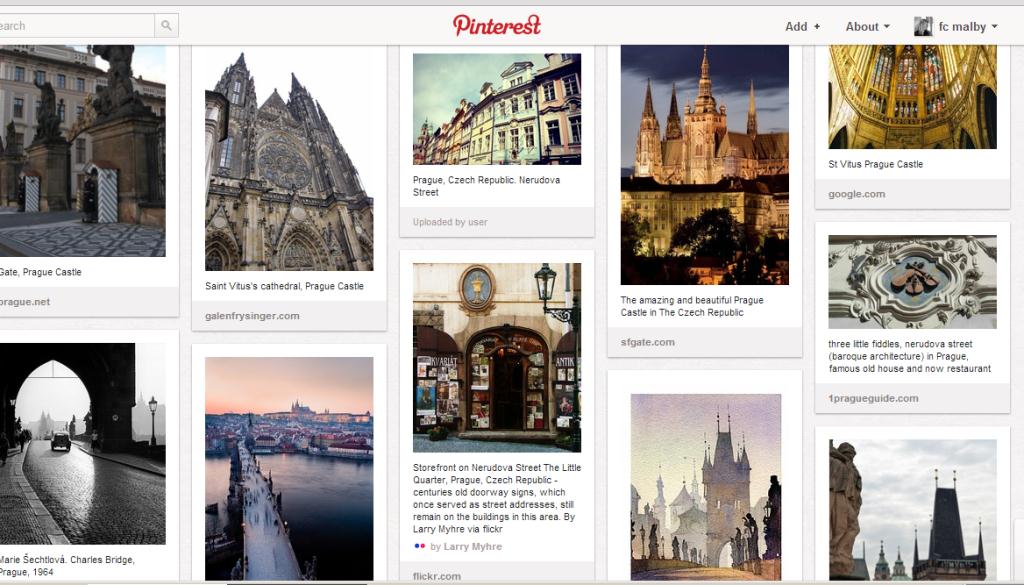
When I write I have the scenes playing in my mind like a film scene and I need images for inspiration. Whether imagined or actual images, I need to ‘see’ the characters and the setting and buildings. I hit gold when I started to use pinterest as I am a highly visual person. I love art and photography, so this sight has an almost magnetic quality about it for a mind which soaks up the visual world.

I began using pinterest to ‘pin’ my ideas and create the atmosphere that I needed in order to write some of my scenes. I have added a clip of the board for Take Me the Castle to the beginning of this post but you can see the whole board here if you are interested.

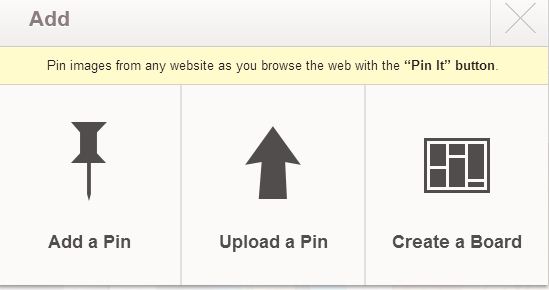
You can also use scrivener, but I find pinterest quick and easy to use. There is a plethora of images already posted by others which you can search for, or you can pin your own images from any website by pasting the url, or add your own file.

pin

Why and how does this help?

Some writers use prompts or music to help them to write. Jane Friedman has written a good article on prompts and Roz Morris has a blog about how writers use music to build their stories. If you are a visual person a collection of images can spark new ideas or link a character’s responses to his or her environment. It can help to put you in the scene and to think about how the characters will respond to a cliff edge, or a towering building, or a dark room.

According to neurolearning, ‘brainstorming activities of visual thinkers may be more productive if right hemispheric strategies of brainstorming and organization (mindmapping, doodling, free association, analogies) are undertaken. In fiction writing, often the most powerful writers are good at plumbing the strengths of both the right and left hemispheres.’ As a qualified teacher I can attest to the fact that children who are visual thinkers and learners engage more readily when the right side of their brain is stimulated with images and free drawing and mapping. You might be interested to know that most writers are in fact right brained, they use the right side of their brain to engage creativity more than the left side.

I would encourage you to have a look at pinterest and try pinning some images. I also have a board with writing quotes and information and boards with portraits and travel, which help to get the ideas flowing. Let me know if you have any other ideas for visual inspiration.

Author Interview: Ian McEwan On Writing (Guardian Open Weekend)

How do you restore the stock of ideas for prolific writing?

Make time by saying ‘no’ to unnecessary things.
Do nothing when you have finished, take a break.
Hike or get out.

How do you enjoy writing?

You need a form of happiness, a total absorption in trying to write.
Get lost in what you are doing.

Where and how do you write. What is the process?

Write in longhand.
Make notes and messages.
List what your chapter will contain, not necessarily in order.
Describe a novel you know you will never write to free your writing. It may turn into a novel.

Chekhov, Short Stories and Goals for 2013

This year has been a whirlwind of editing, marketing and publishing for me, a year where I started to build a platform and an internet presence as a writer – something which is a necessity for both traditionally published and self-published writers. It might sound familiar to many of you, but if I tell you that for the past five years I have been tucked away writing, with no sign of my name on Google and no contact with other readers and writers, you can imagine how much things have changed.

I winced at the thought of loading my photo and sharing ideas from my heart about my passions, and what I enjoy reading and writing. I shuddered at the idea of my thoughts being public, but what I have discovered is that the relationships you build online overtake any fears. The people I have met here, on facebook, twitter, and goodreads have been interesting, inspiring, and encouraging. These are all people who are passionate readers, a range or writers over all types of genres, and marketers with a vast experience of online communication.

So, now that we are nearing the end of 2012, I have been thinking about my goals for 2013. I haven’t had time to come up for air but my mind is always full of writing ideas and next steps, it is constantly wanting to create.

Having spent several years crafting ‘Take Me to the Castle,’ a novel which I am pleased to release, with the kindle version on special offer over Christmas and the New Year, I now want to spend next year reading and writing short stories and flash fiction. I wrote many of both types of story as I neared the end of the edits of my book, as I was craving some writing time. Editing and writing are two entirely different processes and I defy you to find any author who prefers editing to writing. The first draft goes through many many changes and morphs into a different form to the original version. This is a good thing – first drafts can sometimes miss essential ingredients, have too many unnecessary words, or just not be tight enough for a compelling story.

Short stories and flash fiction:

I found in these a style of writing which suits my writing. I love the condensing or framing of a story into 350 words or 3000 words. You can create so much suspense and exagerate themes in a way in which they would be lost in a longer piece of prose. I read many different stories, mainly short stories, and wrote many which I will be publishing next year.

I wanted to share with you two books which are on my table to read over Christmas and into the New Year:

Image I love Chekhov’s short stories, they are powerful, full of enticing detail, and captivating. His literary genius is timeless; he wrote in a way that makes his tales just as readable now as they were in the 1800s. Anton Chekhov was a Russian playwright and short story author. As a doctor, also, who helped the poor, he was disturbed by the darker aspects of society. His father was a tyranical figure, and this has cast its shadows in his writing. I have already dipped in to ‘The Essential Tales of Chekhov,’ and am hugely enjoying the stories. There is a really interesting account of his life in the Guardian if you are interested in further reading…

http://www.guardian.co.uk/books/2010/feb/06/anton-chekhov-short-stories

Image

In time for this year’s National Short Story Week, ‘Overheard: stories to read aloud,’ was released. It is edited by Jonathan Taylor and, wrapped within it’s beautiful cover, are a collection of stories from over 30 of the UK’s most popular storytellers, including Louis De Bernières, Blake Morrison, Kate Pullinger, Salman Rushdie, Ian McEwan, Adele Parks and Hanif Kureishi.

I bought this as it was released in November of this year, as I really enjoy reading books by Louis De Bernières and Ian McEwan. It is now tucked it away for the cosy (post editing) winter evenings.

So my goals are to read and write many short stories in the coming year. What are your goals for books to read, or ideas to write?