My Writing Journey: From Novels to Short Stories

Photo credit: Patrick Fore

WordPress sends these milestone reminders, and it’s often a good time to take stock and realise how far you’ve come as a writer. I began writing my debut novel, Take Me to the Castle, in 2007. It was published in 2012 and won The People’s Book Awards in 2013. I began writing short stories with several going on to be published in literary journals. Some won writing competitions and I was inspired by so many other writers and their stories…Alice Munro, Lydia Davis, Hilary Mantel, David Gaffney, Raymond Carver, Franz Kafka, Anton Chekhov, Ernest Hemingway.

It’s been a journey! Eight books (including two novels, two short stories and work in four anthologies) later and I still get a buzz from writing down the first words of a story, a poem, or a novel. I don’t know where the last 12 years have gone, but it’s been quite a journey. Writing, the grit required to keep going and hone your craft, along with the journey to publication, requires motivation and determination. It demands new learning and a level of discipline, but it’s also a lot of fun. The creativity, the process, it’s all part of the draw to write.

I’ve learned that you will always surprise yourself, and others. You’ll never quite know where you are going. This applies even to the most tightly planned plot! You can read more about planning, plot and structure in these posts:

Warning: Structural Work Needed – Plotting Your Novel

Permission To Not Write In A Linear Fashion?

Narrative Arc: Shaping Your Story

What’s Your First Draft Like? Author Interview

I get asked lots of questions on where I find my ideas and how I write. It’s different for poetry, short stories, flash fiction and novels. Novel writing is a marathon, not a sprint, but it also allows you more space for a story to unfold. Short stories and flash fiction, in particular, are less forgiving and no word can be wasted. You need to grab your reader in just a few hundred words, or more, or less!

I love writing. I love it as much now as I did 12 years ago. Blogging has also been a really helpful way of sharing my journey and what I’ve learned. I’ve been able to encourage new writers, connect with readers, network with people, interview authors and be interviewed. Thanks for joining me on the journey, whether you’ve just arrived (welcome!) or if you’ve been here a while. Drop any questions in the comments.

The Creative Process

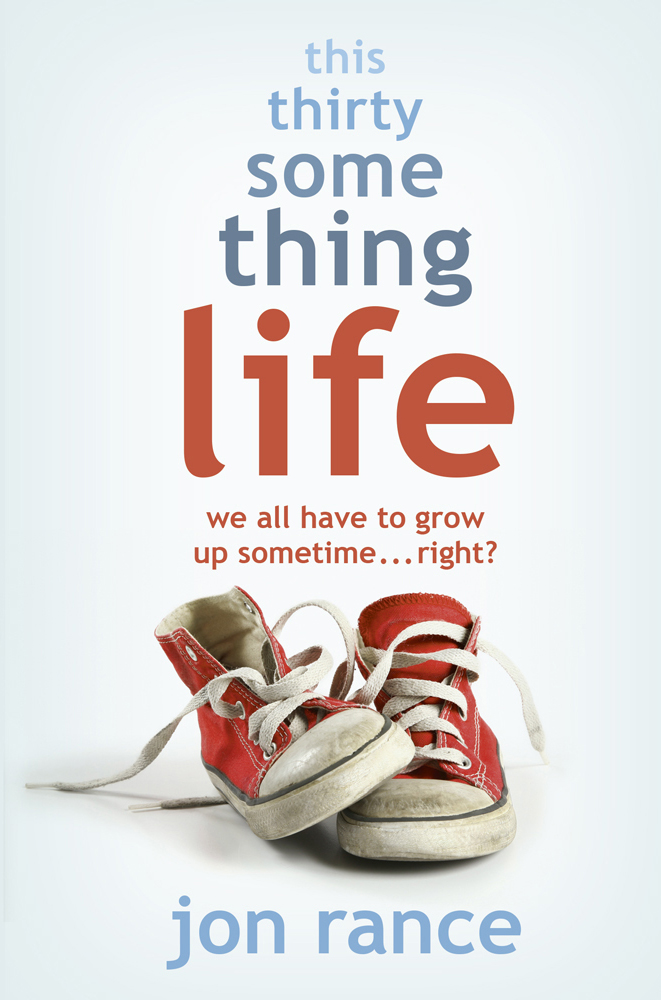
Author Jon Rance is guest posting today on the creative process of his writing. His book, This Thirtysomething Life, published by Hodder and Stoughton, is a love story about what happens after we’ve fallen in love, when we’ve swapped frolicking in the bed for cigarettes in the shed and Match of the Day for Mothercare. Brutally honest, laugh-out-loud funny and heart-warming, this is a diary about one man’s bumbling journey on the road to adulthood. If you like Nick Hornby, you’ll enjoy this. Thank you, John.
30something

Firstly, a big Thank You to Fiona for letting me loose on her blog. She’s a brave lady indeed! For those of you who don’t know me, I’m Jon Rance, author of the romantic comedy novel, This Thirtysomething Life. I approached Fiona and asked her if I guest blog on her site. Luckily she agreed and so here I am.

Being a writer, people often ask me the same sort of questions. Where do you get your ideas? How do you write? Where do the characters come from?  I guess what they want to know is what my creative process is. It’s an interesting concept and I’m sure different for every author. Mine is a bit haphazard if I’m honest. I read about authors who meticulously plan out books down to the last full-stop. I don’t.

When I start a novel I need the following things. A title. Main characters. Motivation. An ending. I think having a title from the off helps bring the whole thing together. I often think of the title before I know anything about the book. I need to know who the main characters are. By this I just mean a brief bio, name and what they look like. Motivation is what will drive the book forwards. In This Thirtysomething Life, I knew from the beginning that the story was going to be about a guy having a hard time growing up and coming to terms with becoming a father. Right from the word go everything else stemmed from this idea. An ending. Endings can change during the book, it happens, but I think it’s important to know at the beginning where the story is going. The journey is something else, but a destination is important, whether it’s a scene you have in mind, a sentence or just where the character is emotionally.

Once I have those I just start writing. For me writing is a very organic process. I need a few chapters to really get to know the characters properly. I often find that once I know them better, the plot is formed mostly in part by them and the choices they make. My writing has always been character based. I think in my genre of commercial fiction, characters are the base of everything. Plot is important, but for me the first draft is where I get to know the characters. Once I have the first draft down, the second, third, fourth – fifteenth are mainly about tweaking the structure and the plot. I often think writing a novel is like building a house. The first draft is building the structure. Every other draft after that is about making it look nice. The last draft is the one where you get to hang up the paintings, pop the interesting sculpture you bought from the market on the mantelpiece and then sit down on the comfy sofa and marvel at what you’ve accomplished.

I’ve definitely improved as a writer with every book. I wrote four complete novels before This Thirtysomething Life was picked up and published by Hodder. Those four novels were my learning curve. I made some mistakes, but more importantly, I learnt about my creative process. I think it’s a very personal thing. We can learn from others, read books about writing, get hints and tips, but at the end of the day, we all have to learn our own creative process. I used to think mine was ridiculous and that I should change and be more organised, but what I’ve come to realise is that it doesn’t matter how you write, as long as you do it your way because writing is about being creative, it isn’t painting my numbers and checking boxes. Think of the creative process as your friend rather than your enemy. It’s taken me a long time, but I love mine now because it is all mine and I couldn’t do it any other way.
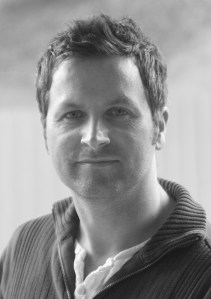
hodder2Jon Rance is the author of the romantic comedy novel, THIS THIRTYSOMETHING LIFE, which was a Top Ten best-selling book on the Amazon chart. Born in Southampton in 1975, he studied English Literature at Middlesex University, London, before going travelling and meeting his American wife in Australia. He is currently working on his second novel, HAPPY ENDINGS. Outside of writing Jon loves travelling, music, sit-coms, art and watching football (but not playing anymore due to dodgy knees).

Both THIS THIRTYSOMETHING LIFE and HAPPY ENDINGS are published by Hodder and Stoughton. Jon is represented by Ariella Feiner at United Agents.

His website can be found at www.jonrance.com

You can also follow him on Twitter @JRance75
Creating Intriguing Characters

Human male face made of several different people, artistic concept vertical collage

Creating interesting, engaging and intriguing characters can be most of the battle when it comes to writing fiction. It is the characters who draw the reader deep into the story and who make a compelling case for why the reader should care about the the people involved in the story. This is relevant for almost any genre of fiction and some non-fiction, although there may be some exceptions.

So how do you go about creating the kind of people who readers will be unable to leave behind? Some characters will be kind and generous, others spiteful or deceitful, some will resist elements of the plot and its events, others will be dislikeable but their flaws might resonate with the reader by exposing a certain vulnerability.

Think about the people who you have met, seen in films, read about in compelling books, or interacted with in business or by other means. Who do you remember and why? What sort of character traits make a person likeable or dislikeable? What has happened in their life to make them behave in a certain way? There are cultural differences to consider – how does the character’s ethnicity and cultural background shape them as a person?

Dig deep into the each character’s psyche and tease out the details of their life, their surroundings, family, experiences, passions, dislikes and fears. Often a character’s fears, especially that of your protagonist, will be rooted in an event or a set of events which might be familiar to people on a larger scale. Are they afraid of change, restrictions, loss, death, illness? Do they have an inability to make decisions?

Take time to profile your characters – brainstorm, make notes, paste photographs into a notebook or onto a Pinterest board (see my post on using Pinterest to improve your writing). Make sure that you know your characters to the very core and then let them loose in a situation, a setting, a crisis and you will know how they respond and why, you will know the decisions they need to make or are afraid to make.

Can you think of interesting characters you have read about recently? Do you have any tips on creating realistic and engaging characters?

Zadie Smith on Macro Planners and Micro Managers as Writers

writing

To continue with Zadie Smith’s words on writing, I’d like to look at her breakdown of writers into two categories. They are a little over-simplistic but give a good idea of how differently people plan their writing.

Macro Planners

You will recognise a Macro Planner from his Post-its and notebooks. A Macro Planner organises material, forms a plot, and moulds a structure before deciding on a title for their work. This structural security gives him a great deal of freedom of movement. Many Macro Planners, she states, begin writing their novels in the middle. As they progress, forwards or backwards, their difficulties multiply with their choices and they exchange possible endings for one another, take characters out and put them back in, reverse the order of chapters and perform radical surgery on their novels: moving the setting of a book from London to Berlin, for example, or changing the title.

Micro Managers

Micro Managers, in great contrast, have no grand plan. Their novels exist in the present moment and are written line by line.

Smith says, ‘When I begin a novel I feel there is nothing of that novel outside of the sentences I am setting down. I have to be very careful: the whole nature of the thing changes by the choice of a few words. This induces a special breed of pathology for which I have another ugly name: OPD or obsessive perspective disorder. It occurs mainly in the first 20 pages. It’s a kind of existential drama, a long answer to the short question What kind of a novel am I writing?’

Opening a variety of novels, you can recognise Micro Managers – there will often be a block of stilted wording which loosens and relaxes after the 20-page mark is passed. Yet while this is happening, somehow the work of the rest of the novel gets done. It is much like winding up a toy car and then letting it go. When you can settle on a tone, the rest of the book will find a groove. Worrying over the first 20 pages is a way of working on the whole novel, a way of finding its structure, its plot, its characters—all of which, for a Micro Manager, she says, are contained in the sensibility of a sentence. Once the tone is there, all else follows. You hear interior decorators say the same about a shade of paint.


How To Use Pinterest To Improve Your Writing

board

When I write I have the scenes playing in my mind like a film scene and I need images for inspiration. Whether imagined or actual images, I need to ‘see’ the characters and the setting and buildings. I hit gold when I started to use pinterest as I am a highly visual person. I love art and photography, so this sight has an almost magnetic quality about it for a mind which soaks up the visual world.

I began using pinterest to ‘pin’ my ideas and create the atmosphere that I needed in order to write some of my scenes. I have added a clip of the board for Take Me the Castle to the beginning of this post but you can see the whole board here if you are interested.

You can also use scrivener, but I find pinterest quick and easy to use. There is a plethora of images already posted by others which you can search for, or you can pin your own images from any website by pasting the url, or add your own file.

pin

Why and how does this help?

Some writers use prompts or music to help them to write. Jane Friedman has written a good article on prompts and Roz Morris has a blog about how writers use music to build their stories. If you are a visual person a collection of images can spark new ideas or link a character’s responses to his or her environment. It can help to put you in the scene and to think about how the characters will respond to a cliff edge, or a towering building, or a dark room.

According to neurolearning, ‘brainstorming activities of visual thinkers may be more productive if right hemispheric strategies of brainstorming and organization (mindmapping, doodling, free association, analogies) are undertaken. In fiction writing, often the most powerful writers are good at plumbing the strengths of both the right and left hemispheres.’ As a qualified teacher I can attest to the fact that children who are visual thinkers and learners engage more readily when the right side of their brain is stimulated with images and free drawing and mapping. You might be interested to know that most writers are in fact right brained, they use the right side of their brain to engage creativity more than the left side.

I would encourage you to have a look at pinterest and try pinning some images. I also have a board with writing quotes and information and boards with portraits and travel, which help to get the ideas flowing. Let me know if you have any other ideas for visual inspiration.