9 Books on Reading and Writing


Taken from Brain Pickings (via kobo writing life) which is a really good website on what’s out there in relation to creativity, thinking, culture and art. These books are highly recommended. I have read most of them and would especially recommend Elements of Style and On Writing.

 01 elements of style 1The Elements of Style Illustrated –  marries Maira Kalman’s signature whimsy with Strunk and White’s indispensable style guide to create an instant classic.


 02 bird by bird 2Bird by Bird, Anne Lamott – the 1994 classic is as much a practical guide to the writer’s life as it is a profound wisdom-trove on the life of the heart and mind.


 03 on writing 3On Writing: A Memoir of the Craft, Stephen King – part master-blueprint, part memoir, part meditation on the writer’s life.


  04 zen in the art 4Zen in the Art of Writing: Releasing the Creative Genius Within You, Ray Bradbury  –  Bradbury shares not only his wisdom and experience in writing, but also his contagious excitement for the craft.


 05 war of art 5The War of Art: Break Through the Block and Win Your Inner Creative Battles, Steven Pressfield  — a personal defense system of sorts against our greatest forms of resistance. “Resistance” with a capital R, that is.


 06 advice to writers 6Advice to Writers, Jon Winokur – From how to find a good agent to what makes characters compelling, it spans the entire spectrum from the aspirational to the utilitarian.


 07 how to write a sentence 7How to Write a Sentence, And How to Read One, Stanley Fish – an insightful, rigorous manual on the art of language that may just be one of the best such tools sinceThe Elements of Style.


 08 hemingway on writing 8Ernest Hemingway on Writing, Larry W. Phillips – a collection of  the finest, wittiest, most profound of Hemingway’s reflections on writing, the nature of the writer, and the elements of the writer’s life.


 09 how to read a book 9How to Read a Book, Mortimer Adler & Charles van Doren – from  basic reading to systematic skimming and inspectional reading to speed reading, the how-to’s apply as efficiently to practical textbooks and science books as they do to poetry and fiction.


Hilary Mantel’s rules for writers

Hilary Mantel rounded off an astounding year by winning the Costa prize last night for her novel Bring Up the Bodies. Having also won the Man Booker Prize, she is the first person to win both. To celebrate, here are the golden rules for writing that she first shared with the Guardian on 25 February 2010.

Hilary Mantel

Hilary Mantel. Photograph: Murdo Macleod

1. Are you serious about this? Then get an accountant.

2. Read Becoming a Writer, by Dorothea Brande. Then do what it says, including the tasks you think are impossible. You will particularly hate the advice to write first thing in the morning, but if you can manage it, it might well be the best thing you ever do for yourself. This book is about becoming a writer from the inside out. Many later advice manuals derive from it. You don’t ­really need any others, though if you want to boost your confidence, “how to” books seldom do any harm. You can kick-start a whole book with some little writing exercise.

3. Write a book you’d like to read. If you wouldn’t read it, why would anybody else? Don’t write for a perceived audience or market. It may well have vanished by the time your book’s ready.

4. If you have a good story idea, don’t assume it must form a prose narrative. It may work better as a play, a screenplay or a poem. Be flexible.

5. Be aware that anything that appears before “Chapter One” may be skipped. Don’t put your vital clue there.

6. First paragraphs can often be struck out. Are you performing a haka, or just shuffling your feet?

7. Concentrate your narrative energy on the point of change. This is especially important for historical fiction. When your character is new to a place, or things alter around them, that’s the point to step back and fill in the details of their world. People don’t notice their everyday surroundings and daily routine, so when writers describe them it can sound as if they’re trying too hard to instruct the reader.

8. Description must work for its place. It can’t be simply ornamental. It ­usually works best if it has a human element; it is more effective if it comes from an implied viewpoint, rather than from the eye of God. If description is coloured by the viewpoint of the character who is doing the noticing, it becomes, in effect, part of character definition and part of the action.

9. If you get stuck, get away from your desk. Take a walk, take a bath, go to sleep, make a pie, draw, listen to ­music, meditate, exercise; whatever you do, don’t just stick there scowling at the problem. But don’t make telephone calls or go to a party; if you do, other people’s words will pour in where your lost words should be. Open a gap for them, create a space. Be patient.

10. Be ready for anything. Each new story has different demands and may throw up reasons to break these and all other rules. Except number one: you can’t give your soul to literature if you’re thinking about income tax.


Why You Should Try Writing in Second Person

First person and third person—you’ve been there, done that. But what about writing in second person? It may seem strange, unconventional, or confining, but playing with point of view is one way to transform a story.

Point of view affects a story in that it allows readers to gain a very specific perspective. The second person is no different. Here are three reasons why you should try writing in second person:

Photo by Rick Seidel

Photo by Rick Seidel

You, Your, and Yours

1. Second person pulls the reader into the action.

Especially if you write in the present tense, second person allows the reader to experience the story as if it’s their own. To avoid a “choose your own adventure” feel or an aggressive tone, mix up sentence structure and add in description and dialogue. Using the pronoun “you” and describing action as it happens supplies a personal sense of urgency, propelling the story—and the reader—forward.

Example: You’re late. Heart pounding, you race up the stairs as the train enters the station. You weave around the slow-moving people milling on the platform and dash towards the train, throwing your body through the doorway with only a moment to spare.

2. Second person gets personal.

One way to experiment with second person is to write as if the story is a letter from the narrator to “you,” reflecting on past events and current feelings, asking questions. (It doesn’t have to be in an actual letter form; the idea of a letter is simply a way to describe the intimate tone.) This technique isn’t necessarily “pure” second person, as it pairs “you” with the narrator’s first-person point of view, but it allows you to dip a toe in the second-person perspective. At the same time, it gives readers a peek into a relationship, a memory, and a character’s emotions.

Example: You told me to meet you at the bar. Things hadn’t been going well, but I couldn’t put my finger on what exactly was wrong. Did you plan on breaking my heart that night? We locked eyes as I walked through the entrance, and I knew things were coming to an end.

3. Second person stretches your skills and surprises readers.

Because it’s not often used, the second person point of view feels fresh to readers. And for writers, it means a new way of telling a story, a different way of revealing character. In this way, it offers a new perspective for writers and readers alike.

(Reblogged from The Write Practice)


The People’s Book Awards Nomination

The People's Book Awards Image

This is just a quick post to let you know that Take Me to the Castle has been nominated for The People’s Book Awards. I am over the moon. Thank you to those of you who have read it, and if you enjoyed it I wanted to ask if you would be willing to vote. There is a winner picked for the kindle and print categories each month. At the moment I am in between J.R.R. Tolkien and J.K Rowling!!

Thank you also for following this blog and for your likes and interesting comments. I am really enjoying following your blogs, especially this weeks posts on the great Robert Burns and your wonderful photographs. I hope those of you in the colder regions of the world are keeping warm. Here, in Vienna, it is freezing.

And have a good weekend.

But pleasures are like poppies spread, 
You sieze the flower, its bloom is shed; 
Or like the snow falls in the river, 
A moment white–then melts for ever; 
Or like the borealis race, 
That flit ere you can point their place; 
Or like the rainbow’s lovely form 
Evanishing amid the storm.– 
Nae man can tether time or tide; 
The hour approaches Tam maun ride; 
That hour, o’ night’s black arch the key-stane, 
That dreary hour he mounts his beast in; 
And sic a night he taks the road in 
As ne’er poor sinner was abroad in.

Extract from ‘Tam o’ Shanter’ Robert Burns


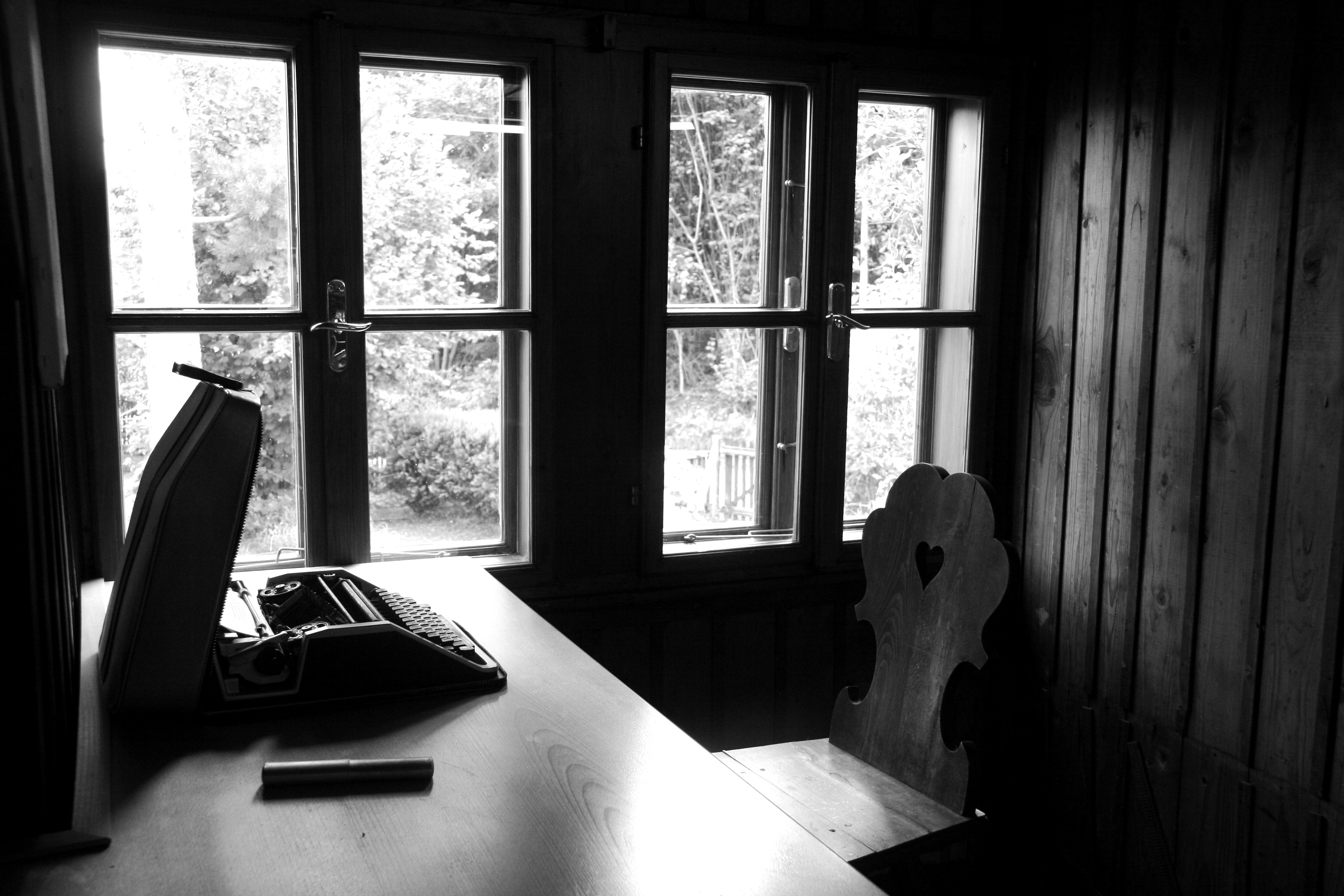
Kurt Vonnegut’s 8 Rules for Writing Fiction

typewriter

1. Use the time of a total stranger in such a way that he or she will not feel the time was wasted.

2. Give the reader at least one character he or she can root for.

3. Every character should want something, even if it is only a glass of water.

4. Every sentence must do one of two things — reveal character or advance the action.

5. Start as close to the end as possible.

6. Be a sadist. Now matter how sweet and innocent your leading characters, make awful things happen to them — in order that the reader may see what they are made of.

7. Write to please just one person. If you open a window and make love to the world, so to speak, your story will get pneumonia.

8. Give your readers as much information as possible as soon as possible. To heck with suspense. Readers should have such complete understanding of what is going on, where and why, that they could finish the story themselves, should cockroaches eat the last few pages.