Poems Published in Cable Street Press: Issue 9

Four of my poems have been published in the marvellous Summer Edition of Cable Street Press, Issue 9.

A word from the editor on Issue 9:
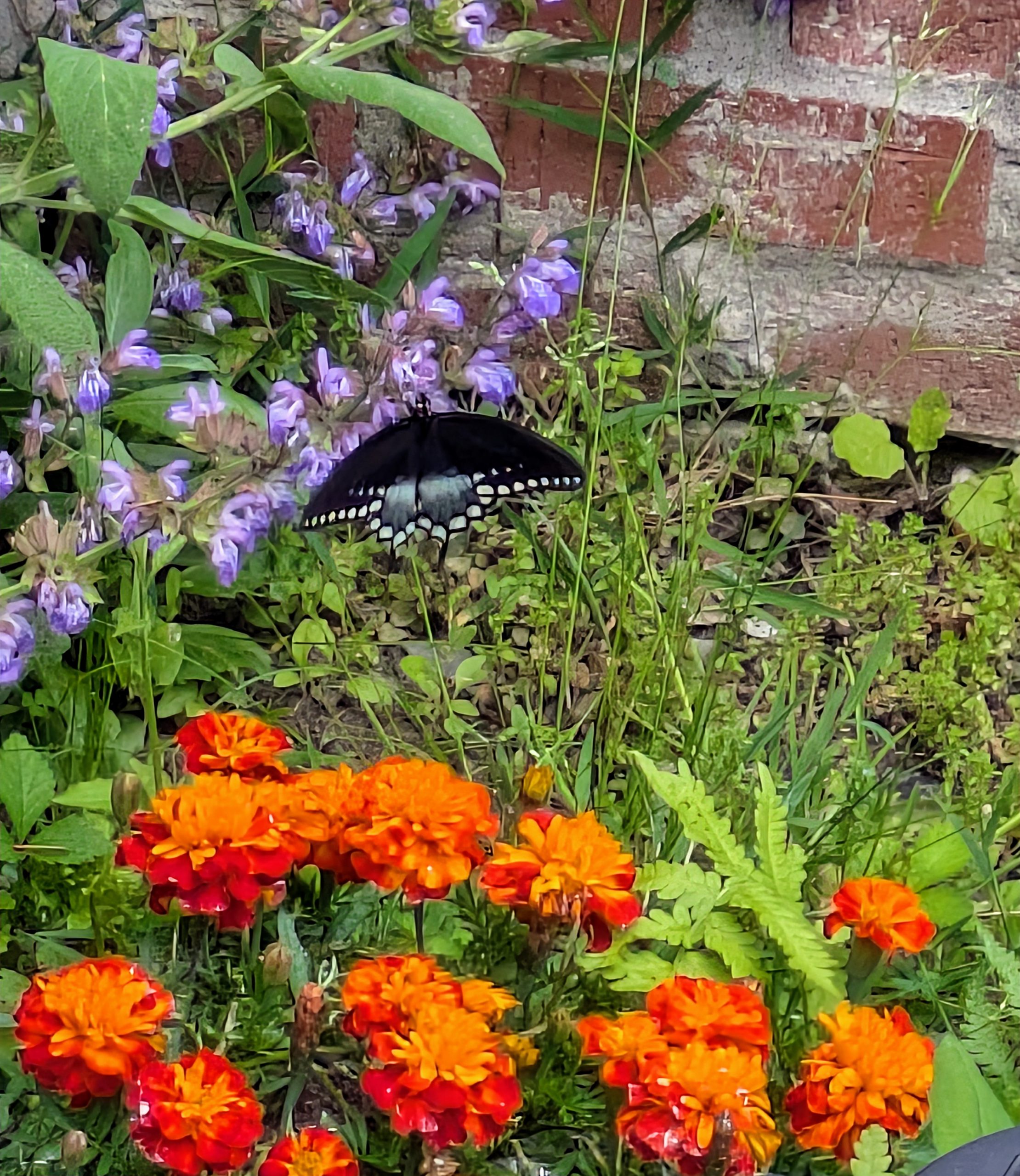
Tiger Swallowtail Butterfly, Sage Flowers, Marigolds.

Bastille Day has come and with it, the explosion of writing and art that is the latest Cable Street Issue. I’ll be frank with you—every issue blows my mind. I see all the pieces one by one and they are surprising, delightful, shocking, thought provoking. But then they all come together, and each and every time, I’m moved by the web of art in conversation that is created...And these are only some of the many treasures of this issue. Storm into this tower at your own speed, making sure to check out the poetry of F.C. Malby and Roberta Schultz…There is plenty to enjoy on this Bastille Day weekend.

— Hardy Griffin for the editors

Poems by F C Malby

My poems, Crossing, I Have Already Gone, Moths, and Where Have All the Birds Gone feature a range of themes, including the contentious issue of immigration. Through Crossing, I wanted to give a voice to the voiceless; this is a particularly exigent issue.

Crossing

I line up with other bedraggled bodies,
some look as though they might be dying,

others carry the weight of grief. I watched
a child slip away while we waited yesterday,

saw the life leave its lungs, the mother clung
to its body, tears wet the child’s face. It’s not

pretty, it’s worse than they tell you. I don’t
know whether we will make it or whether

we might be taken back. I don’t speak
the language, few of us do. It matters.

The look on the guard’s faces is difficult
to read, tells me they’ve seen so much

of this. None of us know what to do or
what’s next. Clothes dry on a makeshift

line between tents, next to plastic bags
of what we have left after the police take

anything else. Some of us camp under
bridges, avoiding the boulders that stop

us settling on softer ground. We wait for
the next boat, for a better life. The

mother is still holding the child. We
wait. Some of us won’t make it.

Read my other three poems here.
My Writing Journey: From Novels to Short Stories

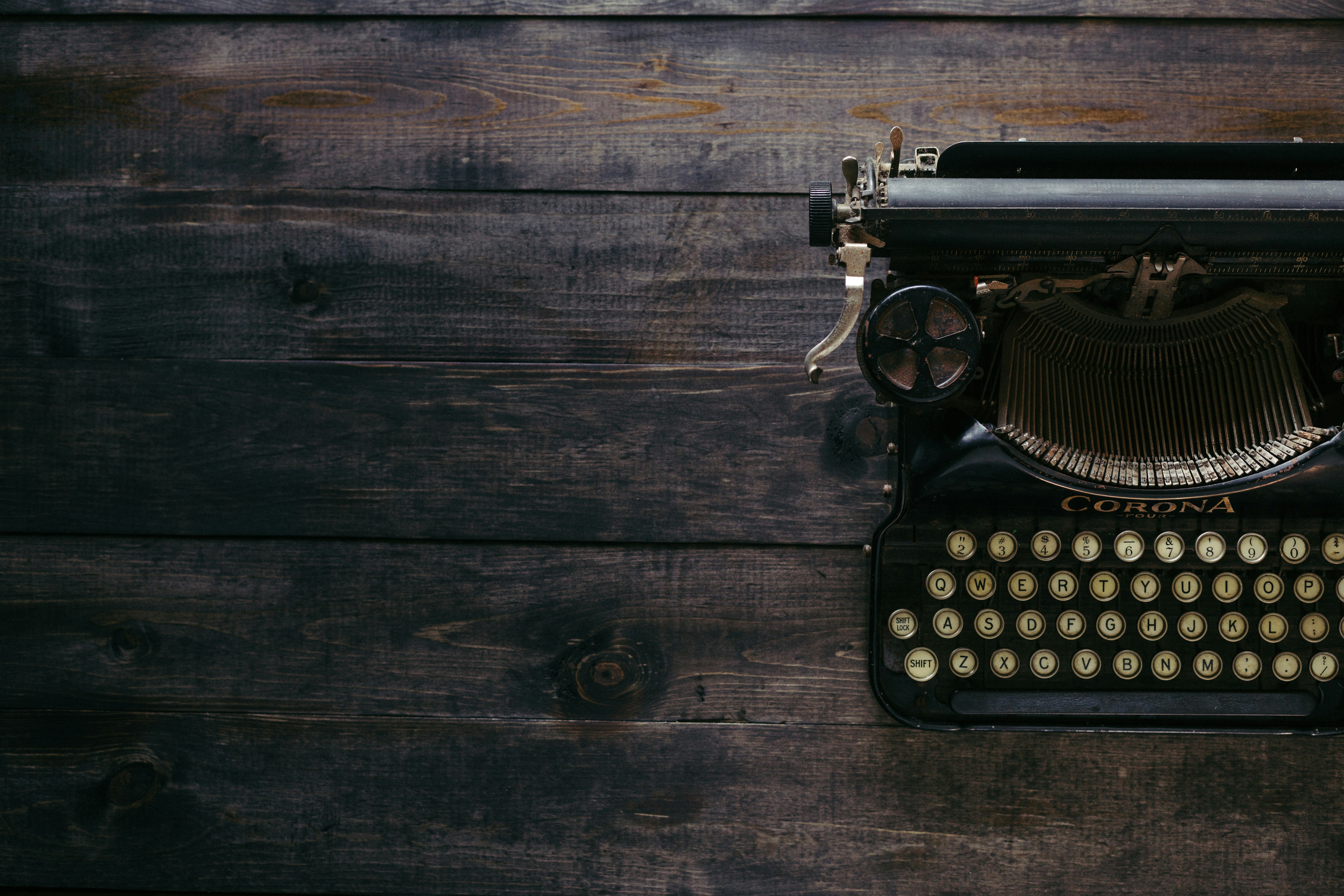
Photo credit: Patrick Fore

WordPress sends these milestone reminders, and it’s often a good time to take stock and realise how far you’ve come as a writer. I began writing my debut novel, Take Me to the Castle, in 2007. It was published in 2012 and won The People’s Book Awards in 2013. I began writing short stories with several going on to be published in literary journals. Some won writing competitions and I was inspired by so many other writers and their stories…Alice Munro, Lydia Davis, Hilary Mantel, David Gaffney, Raymond Carver, Franz Kafka, Anton Chekhov, Ernest Hemingway.

It’s been a journey! Eight books (including two novels, two short stories and work in four anthologies) later and I still get a buzz from writing down the first words of a story, a poem, or a novel. I don’t know where the last 12 years have gone, but it’s been quite a journey. Writing, the grit required to keep going and hone your craft, along with the journey to publication, requires motivation and determination. It demands new learning and a level of discipline, but it’s also a lot of fun. The creativity, the process, it’s all part of the draw to write.

I’ve learned that you will always surprise yourself, and others. You’ll never quite know where you are going. This applies even to the most tightly planned plot! You can read more about planning, plot and structure in these posts:

Warning: Structural Work Needed – Plotting Your Novel

Permission To Not Write In A Linear Fashion?

Narrative Arc: Shaping Your Story

What’s Your First Draft Like? Author Interview

I get asked lots of questions on where I find my ideas and how I write. It’s different for poetry, short stories, flash fiction and novels. Novel writing is a marathon, not a sprint, but it also allows you more space for a story to unfold. Short stories and flash fiction, in particular, are less forgiving and no word can be wasted. You need to grab your reader in just a few hundred words, or more, or less!

I love writing. I love it as much now as I did 12 years ago. Blogging has also been a really helpful way of sharing my journey and what I’ve learned. I’ve been able to encourage new writers, connect with readers, network with people, interview authors and be interviewed. Thanks for joining me on the journey, whether you’ve just arrived (welcome!) or if you’ve been here a while. Drop any questions in the comments.

PUBLICATION DAY

The day has arrived. It’s the release of my long-awaited second collection of short stories. Lots of you have asked when they will be available to buy and the wait is over. I’m thrilled to announce the release of a new collection of stories, many of which have been placed in competitions and published in international literary journals. Two of the stories can be found in anthologies – You Fold Yourself into Tiny Spaces was Longlisted in the Reflex Press Quarterly International Flash Fiction Competition and published in In Defence of Pseudoscience: Reflex Fiction Volume Five. Prolific was published in Pens of the Earth and is forthcoming in a Pens of the Earth Anthology in October 2024. Some of my favourite stories are new to this collection.

“Intense, beautifully realised and ice-sharp”

ABOUT THE COLLECTION:

The sentences we leave unfinished, questions surrounding sudden loss, a decision on a train. This second collection covers themes of relationships and memory, exploring what happens when memory fails. It looks at beginnings and endings, weaving through themes of generations, family, uncertainty, and what happens when experiences change us.

“F C Malby’s stories capture characters teetering on the edge of precipices in their lives, sometimes literal, sometimes metaphorical, as they decide whether or not to take a leap of faith into the unknown. These intense, beautifully realised and ice-sharp stories momentarily suspend us over an Everestian abyss.” Jonathan P Taylor, author and Senior Lecturer in Creative Writing, University of Leicester

“In this impressive collection of 65 short and very short stories, F C Malby gives us sharply honed glimpses into the profundity of the ordinary and the impact of the extraordinary. Malby’s characters deal with choices and their consequences, with themes of life passages, nature and the sea. Her prose is strong with much implied and left to the interpretation of the reader. Highly recommend.” Barbara Byar, novelist, short story author and Fiction Editor, Variant Literature

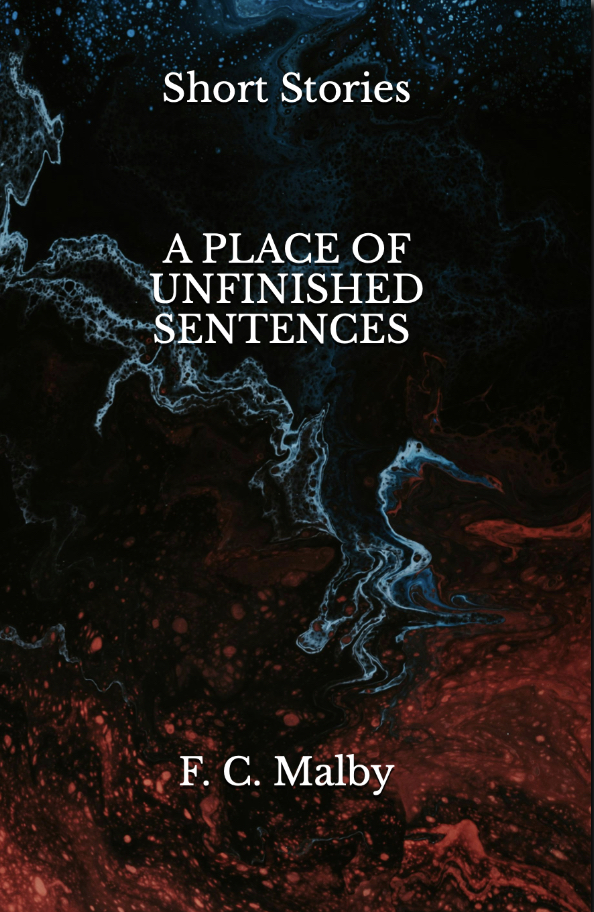
You can purchase my second collection of short stories, A Place of Unfinished Sentences, in paperback and as an eBook https://www.amazon.co.uk/dp/B0DFW6BPMW

Grief, Loss and Creativity

Dead Poets Society

Yesterday the world lost an incredibly talented comedian and actor. He was a man who saw me through my childhood, teens, twenties and beyond with an equal measure of thought-provoking moments and good humour. But it was no surprise to hear that the star of Dead Poets Society and Goodwill Hunting had also been battling severe depression.

I felt stunned by the news of the death of Robin Williams because he was part of the fabric of my childhood and teenage years, through what I watched and through what those films taught me about life. It was his remarkable ability to bring characters to life that has entertained millions of us through the years. And I believe that comedy and acting quite possibly provided the escape that he needed, an escape from the darkness of his own mind. Depression is a very hidden issue and it is often misunderstood. Scientists have been fascinated by the possibility of a link between depression and creativity for years. In this interesting article on the link between the two, we learn that Norwegian artist, Edvard Munch, wrote the following diary entry: “My fear of life is necessary to me, as is my illness. They are indistinguishable from me, and their destruction would destroy my art.”

Early studies found that creatives often suffered from depression: Charles Dickens, Tennessee Williams, Ernest Hemingway, Graham Greene, Hans Christian Andersen, Leo Tolstoy and Virginia Woolf. Sylvia Plath also sadly took her own life.

Why am I discussing this here? Because I believe that writers have an innate ability to tap into the pain of grief and loss; to take the experiences which they encounter, and to illustrate the difficulties of anxiety and pain. They are able to translate these emotions into the lives of their characters, allowing the reader to tap into their own difficulties and to rise above them.

I often hear people talking about finding solace in books. Some readers say that they find particular books healing. The talent of a creative who is able to paint, act, write or create music lies in their ability to mold their own suffering and angst into a form that is universally understood. Where it might be difficult and overwhelming to face certain situations head on art, books, film and music allow a release of emotions and allow people to reach into the painful aspects of life and engage with issues that can be difficult to discuss.

Writers and artists are often accused of being oversensitive or overly analytical, as though these traits might be weaknesses, but I would argue that this is exactly where their strength lies, and where their empathy and ability to connect with difficult emotions helps them to write a character with flaws, a character who experiences setbacks and difficulties. Interestingly, the body releases natural opiates as a result of the creative process. Harvard Professor, Shelley Carson, says that “creative endeavors are intrinsically rewarding, and you get shots of dopamine in the rewards center of the brain.”

What are your thoughts? Are you a writer with any experience of depression? Do you find find solace in reading or writing?

images (36)

Finding New Books…

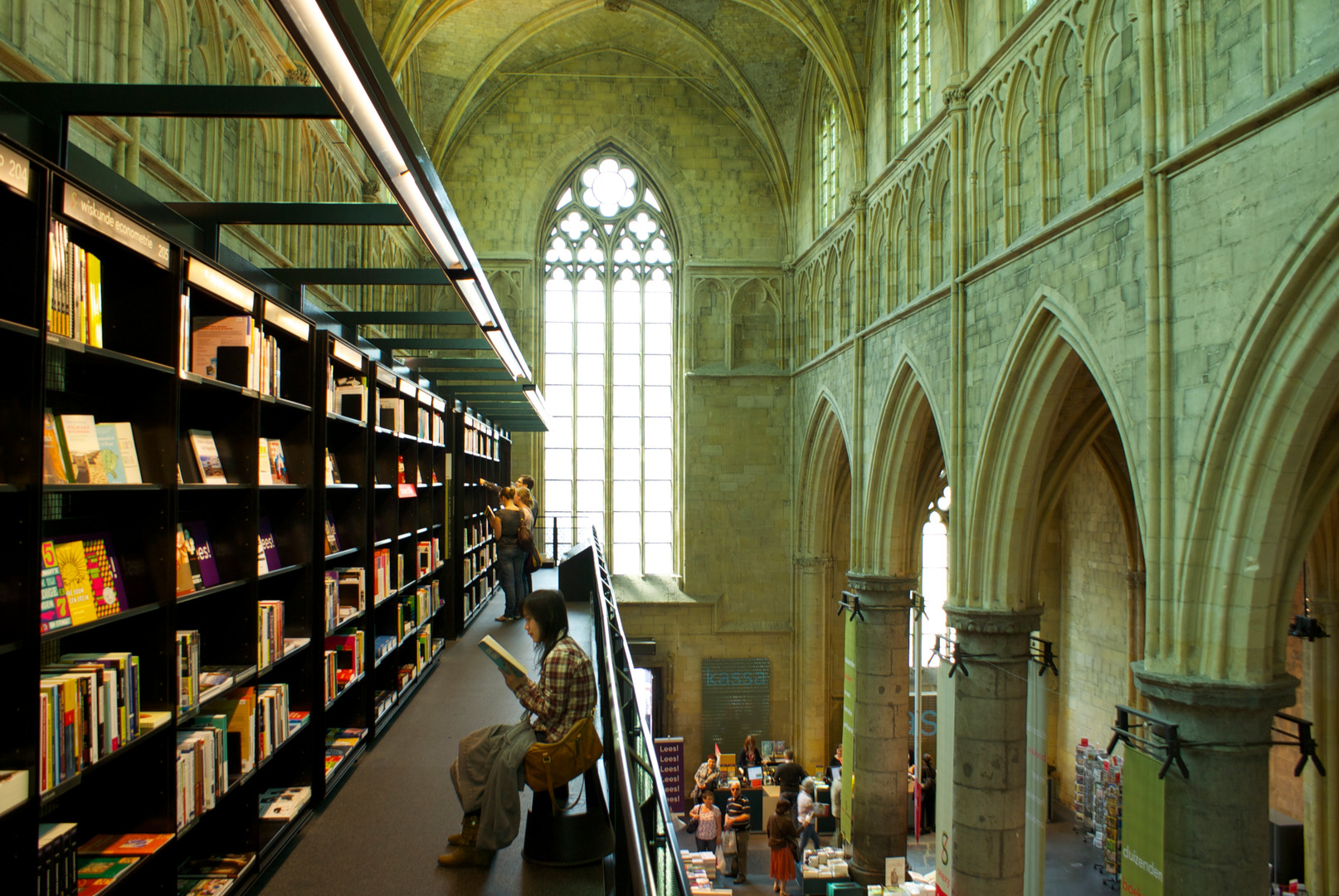
reading                                                           bookshelfbookstore.blogspot.com

It’s not always easy to find books that you will enjoy, and very often I have set a book aside to come back to or have left it all together, and not without a sense of guilt. How do you find the books that you will really enjoy?

I enjoy browsing through bookshops, second hand and new, and finding an author whose work I haven’t yet delved into. I generally go by the blurb and the first few pages. The cover less so; I have learned over the years that the cover will not always give me an idea of what to expect. Some of the covers that have been less appealing to me have been those of books which I really enjoyed, and vise versa.  The old cliché rings true for me with books as well as for all of the other implied judgements we make!

I do look at Amazon’s recommendations, although they sometimes recommend my own work! I look at the emails they send and the recommendations on the site itself. They often give an accurate representation of my tastes.

I really appreciate recommendations from friends and other authors and will try both established authors and debut novelists. Don’t forget that every author was new to the craft at some point. We often cling to the authors we know and love but can miss some fantastic books if we don’t branch out. I have learned who to trust as far as book recommendations go and it has certainly expanded my horizon. Reading widely is important: push the boundaries and try a new genre, read something you ‘would never read’.

I read a lot of book blogs and there are a selection at the end of a previous post on blogging. Book bloggers are a fantastic way of finding new books and getting an overview of new releases, and sometimes classics I’ve missed. Their summaries are often more helpful to me than the reviews on various books sites.

Literary Prizes flag authors who I might not otherwise have found, this includes short story awards as I particularly enjoy reading short stories and collections. There are many book prizes, but if you find the ones that suit your tastes you can find some wonderful books.

I often find books on Pinterest, which I pin for later and I can go back to the list on my to-be-read board later and take a closer look to see if it is something I want to buy and read. It’s a great way of seeing the covers in a larger format and reading reviews.

Libraries are a good way of finding books, especially out of print editions. Having a library card is also a fantastic way of encouraging children to read.

Finally, bestseller lists. I left this until last because I don’t always love the bestsellers, and people’s tastes vary, but going to the bestseller shelves in bookshops and looking on-line will give you an idea of what’s popular. Moods and genres shift, and there is a wave of psychological thrillers. I have found some great books this way. Amazon has a list of kindle bestsellers. I have linked the fiction page, but you can find almost anything. I you are looking for a particular genre within fiction, the links are on their sidebar. Most of you are familiar with this but it’s worth a reminder.

What have you discovered that surprised you? Any recommendations?

Reading_in_the_Bookstore                                    www.fotopedia.com