To celebrate reaching a blogging milestone of over 100,000, I thought I’d share more of what you’ve enjoyed recently. One of my most viewed posts over the past month has been Writers and Their Creative Spaces. So, here are some of the creative spaces of other writers.
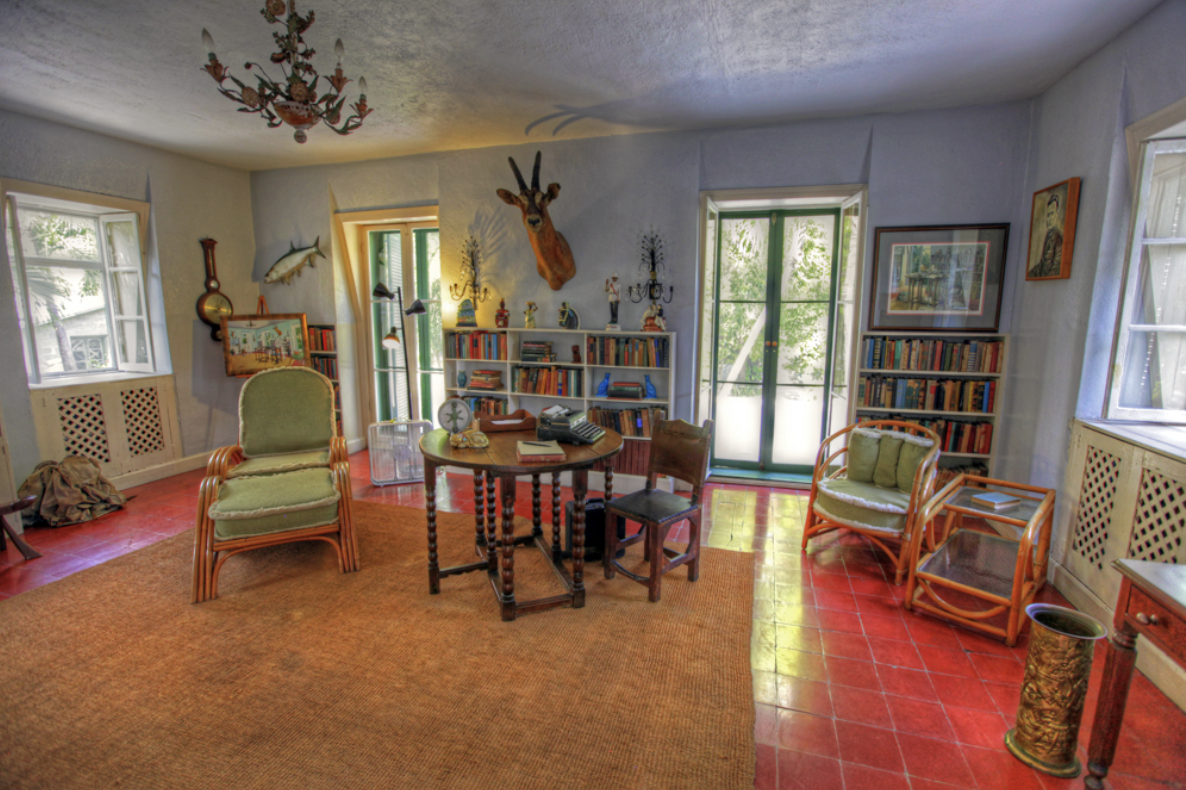
Hemingway’s writing space at his home in Florida Keys. He wrote whilst on his boat or at his Key West home. Here, he wrote The Old Man and the Sea.
In celebration of hitting a blogging milestone of over 100,000 views
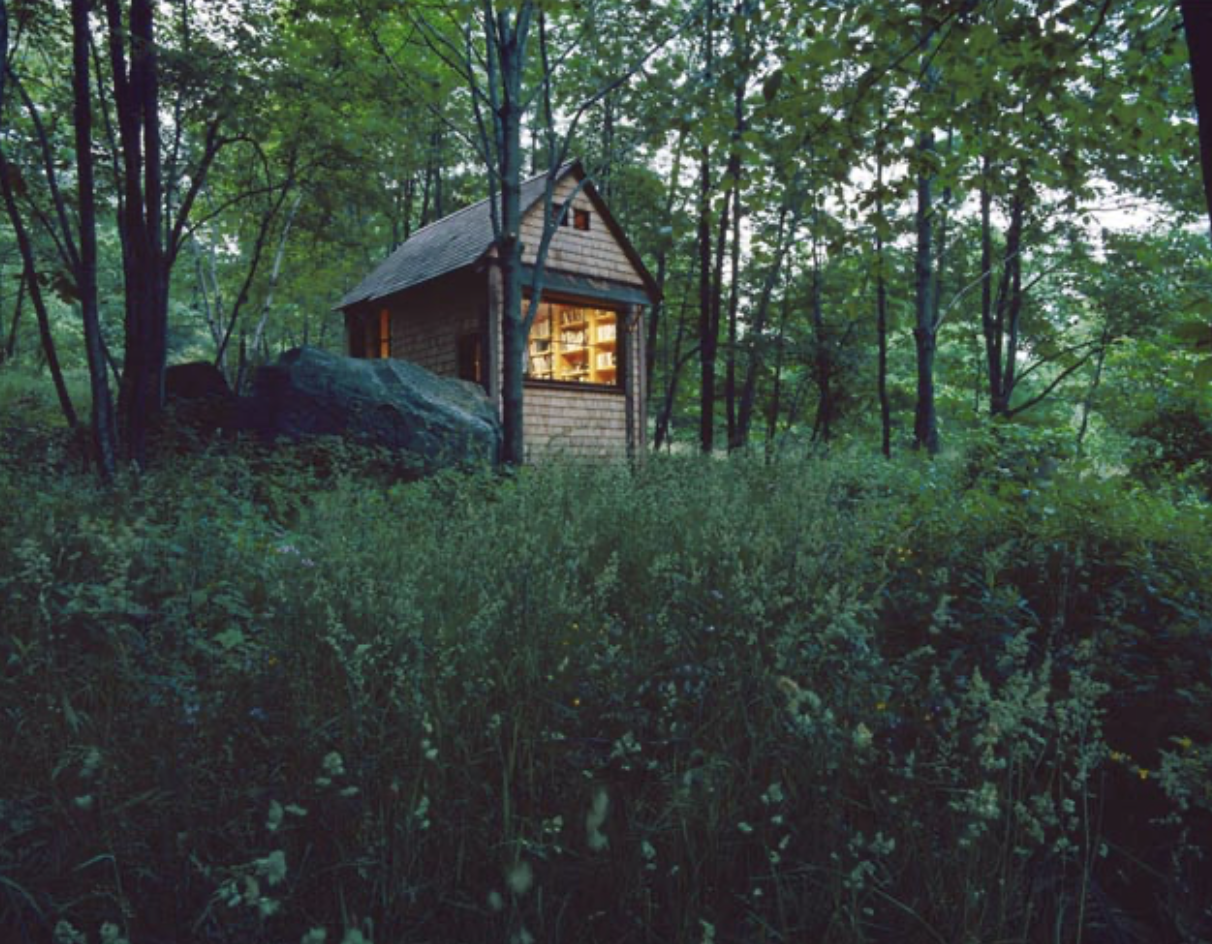
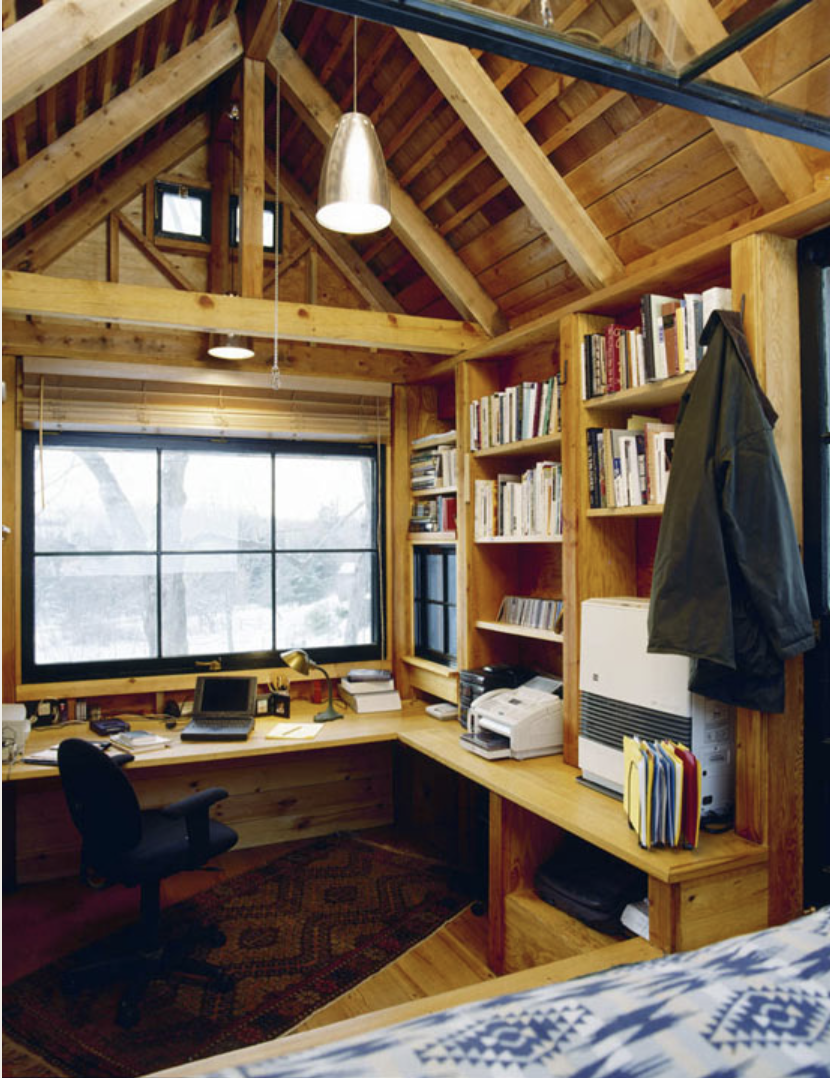
Michael Pollan built this small writing hut in the woods by his house in Connecticut. Pollan was inspired by French writer, Gaston Bachelard, who wrote in The Poetics Of Space, ‘I should say: the house shelters day-dreaming, the house protects the dreamer, the house allows one to dream in peace.’
“The house shelters day-dreaming, the house protects the dreamer, the house allows one to dream in peace.”
Neil Gaiman built a gazebo almost 30 years ago in his garden. He says, “I can look out of the window and some wildlife will occasionally look back…There are heaters down there, because it gets cold here in winter, and blankets on the chairs, ditto, and I have to try and remember not to leave bottles of ink on the table as they freeze. It’s just out of reach of the house Wifi, too, which is a good thing.”
It’s just out of reach of the house Wifi, too, which is a good thing.
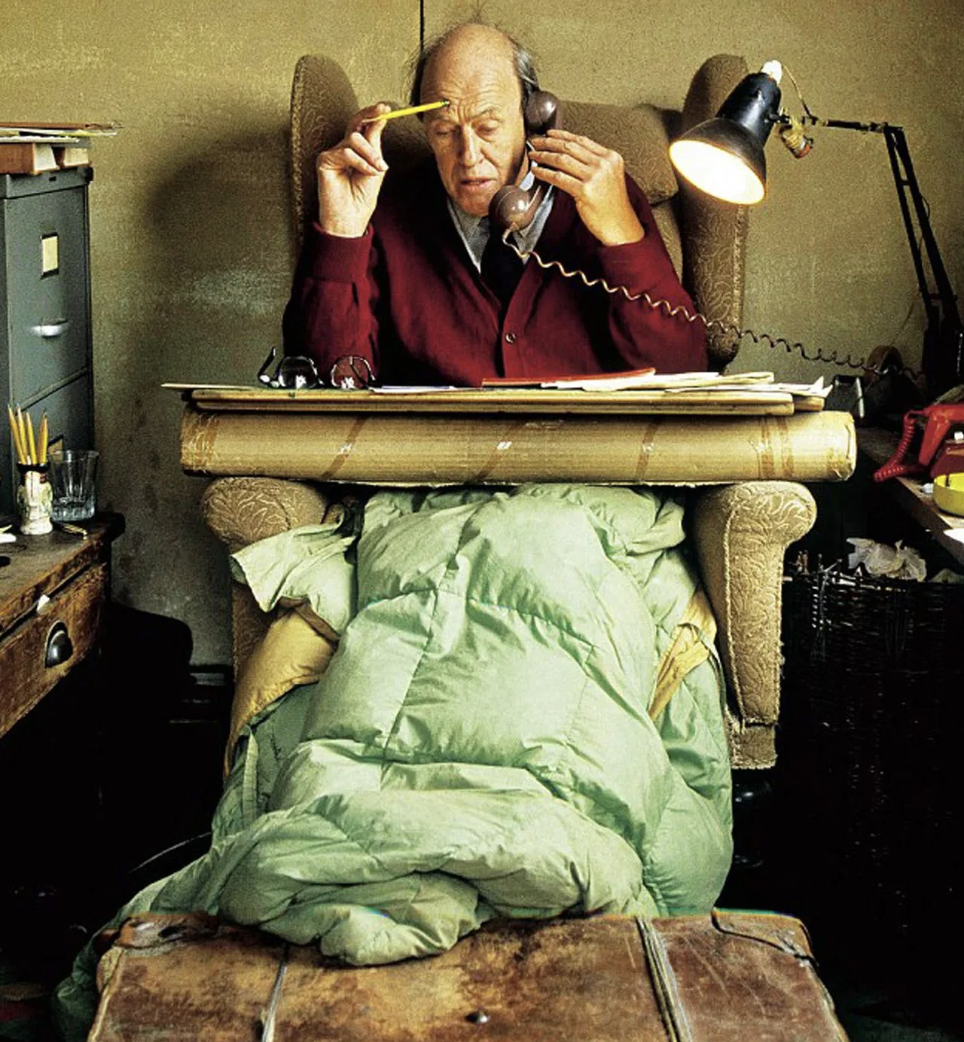
Roald Dahl wrote in a shed in Buckinghamshire, which he called his Gipsy House. Everything was within reach of his chair, according to illustrator, Quentin Blake. He also wrote with his favourite pencils on yellow paper.
Inspired by Dylan Thomas, who found writing at home difficult with young children, Dahl built his Gipsy House – a sanctuary, somewhere where he could work without any interruptions.
A sanctuary, somewhere where he could work without any interruptions.
75,000 views in 12 years – 6,000 views a year – an average of 500 views a month.
That’s far more than I ever expected, especially as there have been years when I haven’t been able to post as often. But, I consistently show up and that’s the bottom line. So, what have I learned?
1. Social media isn’t dead, and neither are blogs
Despite the rumours swirling around about various different social media platforms dying off, I believe they are here to stay. Even though they morph and change – as some do lose popularity, others will inevitably pop up in their place. Your blog can feed into different social media platforms, but it is also a platform in its own right, and it’s a good one. I wrote a post asking Is Blogging Worth the Time and Effort? I still believe that it is.
2. People will continue to follow you if they feel invested in what you are writing
It’s much to my surprise that people who followed me 12 years ago (is it really that long?) remain engaged with what I post today. So, make it interesting and varied. I love hearing your thoughts and comments, and I’m still connected with many authors who I interviewed when I began blogging. Author interviews are popular. You can read my interviews with authors Matt Haig and S J Watson on their writing process and background, as well as some of the challenges they have faced.
3. Surprisingly, I get most of my traffic from Pinterest
Yes, I expected Pinterest to die off, but it remains ever popular, particularly in sharing content about books and bookshops. I wrote a post on How To Use Pinterest To Improve Your Writing, which talks about how useful it can be to pin ideas to boards for inspiration and to share content. Have a look at my boards, which include a TBR Pile, Book Reviews and Author Interviews, as well as information on writing and more. It still gets 2,000 monthly views.
4. Readers like variety, whether it’s author interviews, book news and reviews, tips on writing or pictures of beautiful libraries
Variety, as they say, is the spice…(you know the rest). I try to vary my blog posts. No one wants the same content every time. Mine, as an author, is on books and fiction writing. Staying within your niche is important, but variety keeps things more interesting, so I mix it up. The second most popular category, after writing tips, is libraries around the world, with Space to Read and Relax: Bookshop Cafés and Bars Around the World… and 30 Amazing Libraries and Bookshelves. So, what can I learn about my readers? They’re writers, aspiring writers, readers and book lovers.
5. Keep it visual. Images capture what you are writing about and grabs people’s attention
75,000 have come to my site as a result of my blog posts. That’s on top of usual website traffic. This means I get to engage with so many more people, and it’s led to author interviews and book recommendations. It’s a network. I write a lot about short stories, as an author of short stories and flash fiction. This guest post from Cary Bray on The Magic of Short Stories is a popular read.
7. People will read and re-read your writing over the years as you build up your content
8. Blogging is a creative outlet other than writing stories, books or poetry
It’s a way of sharing ideas that don’t go into books and journals. For example, this infographic on Quentin Blake’s Rights of the Reader Illustrations, which I shared on World Book Day is too good not to share.
9. It connects you with others
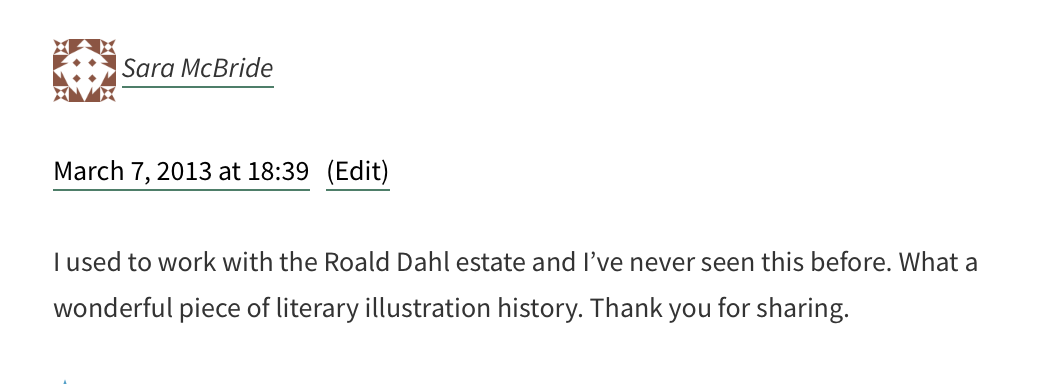
Like this reader response to the above Quentin Blake post:
What a lovely connection!
10. I really enjoy it!
I love writing, and I really like to be collaborative and share information and what I know, especially if it helps others. Whether that might be finding a new book to fall in love with, or discovering a new author, or helping people find beautiful libraries, or giving writing tips. Sharing things that you find, and your ideas, has a ripple effect and sparks creativity in others.I also find new readers for my own work, but this is not the primary reason for writing blog posts. For me, it’s secondary to everything else that I do.
Sharing things that you find, and your ideas, has a ripple effect and sparks creativity in others.
There are many writing blogs with an array of articles on different aspects of the craft of writing. I read a range of them and have learned a great deal about writing, publishing, editing and much more. The writing blog WRITE TO DONE is searching for the Top 10 Blogs for Writers in 2013. Edited by Mary Jaksch, Write to Done posts regular articles on writing fiction, copywriting, freelancing, blogging, creativity, and the art of writing. It is an invaluable resource for writers, so if you haven’t yet browsed their pages I would recommend having a look. It will be well worth your time. Their top 10 chosen blogs from previous years have led me to many new and useful blogs.
Those of you who read this blog regularly know that there are a range of author interviews, book reviews, guest posts and writing posts, and despite advice from some bloggers not to blog about writing, they are precisely the posts which receive the highest number of hits on this blog. The difference between a post on writing and a book review, or a post on something less related to fiction is surprising. Many writers obviously read posts about writing, although some prefer not to, and readers are also curious to know about the inside workings of the craft of writing. Give me someone who loves Formula One racing who wouldn’t want to step inside a Ferrari or a Lotus, or a person who loves classical music who wouldn’t want to sit in an orchestra pit and watch the conductor at close range, and the bows of the string section moving in time to the conductor as he sets the tempo for the sound. Are you with me?
So, now is the time to vote for any writing blogs which have inspired you over the year. Here’s how you can nominate a blog:
How to Nominate Your Favorite Writing Blog:
→ Nominate your favorite blog in the comment section.
→ You have only one vote (only your first will be counted).
→ Please include the web address of the blog.
→ Explainwhy you think the blog is worthy of winning this year’s award.
To make the cut, a blog must be nominated more than once. Nominations must be received by 12th December, 2013.
The top 10 list will be incredibly helpful for other writers once it is compiled. Here is a brief list of some of the blogs which have inspired me.
http://annerallen.blogspot.co.uk which is written by Anne Allen and Ruth Harris. It is one of Writer’s Digest’s 101 Best Websites for Writers and is full of honestly and humour, and is really informative.
http://www.jonathanpinnock.com This blog, Jonathan Pinnock’s Write Stuff has a great range of information and thoughts on writing and, again, is very honest. He also covers short stories, which keeps me happy.
http://www.claire-king.com/blog Claire’s advice and insights are to-the-point and given from the perspective of a writer who is rigorous and, again, honest. Do you see a theme emerging here?
Don’t forget to vote for your favourite writing blogs and do add any others in the comments.
Last week’s post was on blogging for writersand I promised a post this week on blogging for readers. They deserve two separate posts in order to do them both justice. I post a few reviews, in amongst author interviews and I discuss different aspects of writing. Book bloggers do a wonderful job of reviewing and sharing books. I have bought several books based on the recommendations of bloggers whose opinions I trust. Some bloggers share books in one genre, be it crime, historical romance, literary fiction, young adult or science fiction, others read and review a vast range of books in one blog. In a previous post I shared a list of bloggers who I follow and whose posts are varied and informative.
So, what do you write and how?
I don’t want to be formulaic because the joy of different blogs lies in their individuality and their unique voice and layout. But the key points are important:
Book Cover
Ask the author or publisher for a high resolution image of the book, and make sure that it is clear and not too large or small for the post. Thumbnails can get lost in amongst your words but a billboard sized image can overtake the review.
Book Information
Include the ISBN number, publication date and publisher information to make it easy for people to locate the book.The genre of the book can also be a helpful indication for the reader. If a reader really enjoys, or doesn’t enjoy, a particular genre, it can help them to make a quick decision about whether to read your review or buy the book.
Synopsis
This is a crucial part of the review and, if you don’t want to include a whole synopsis, at least give a snapshot of the book to frame it for the reader. You probably wouldn’t see a film or a play unless you had a rough idea of the plot or the style, especially if you haven’t previously heard anything about it. Most people go on recommendations before they watch or read anything new, and your introduction can make or break their decision to read a book. Either take the full review or give an outline, and preferably before you give your candid opinion.
Your review
This is the meat of the post. It is your take on the book, your view of the style, the language and the story. Be honest, but it is best to avoid scathing comments. Some bloggers are asked by agents or publishers to review books, and others pick up books to review themselves. If you have been asked to review a book that you don’t connect with, be honest about what didn’t work and try to find the positives. If you really enjoyed the book your enthusiasm will be clear, and hopefully it will encourage others to pick up the book. Try to look at different aspects: the characters, their interaction with each other and the situations in which they are placed, the pace and style, the plot with it’s twists and turns, or the descriptive prose. Have fun and let your journalist’s hat run free.
Other reviews
Has the book been reviewed by the national press or magazines? Are there reviews by other well-known authors? These are worth sharing as they give the reader a better idea of the substance of the book. Quote from other reviews or from the press release. Most books have these quotes on Amazon, which will make them easier to find.
Author info
Does the author have credits or other publications? It is always interesting, although not essential, to gain some background knowledge on the person behind the cover. Do they enjoy travel? Do they have a PhD in an unusual subject? Have they previously been involved in an interesting job? Part of the reason why people enjoy author interviews is because we are all essentially curious (nosey) and it is intriguing to find out about the author or their reasons for writing the book. If readers enjoy the book, they will want to know where to find other material by the writer. Some readers find novels through reading short stories that they enjoy and then searching for books by the same author, and sometimes it works the other way around.
Contact info
This is helpful but not essential. In an age of what I would call ‘the social media explosion,’ many authors have blogs and websites and are on twitter, Facebook, Pinterest or any of the other social media sites. Readers like to connect with authors. Some authors are fiercely private, and little can be found out about them or their lives and writing, but most will at least have a website. Many author websites will have widgets which take you to their other sites.
Can you recommend any good book blogs? Do you review books? How has it helped you to find what you are looking for or, perhaps, surprise you with something new?
My earlier post about blogging received a huge amount of interest and it appears to be a subject close to the hearts of many readers. I promised to come back to it, so I’d like to start with a post on blogging for writers. I’m aiming to look at blogging for readers in a separate post.
Many people warn against blogging about writing, or blogging at all if you write fiction. I would disagree, for the following reasons:
I have gained a huge insight into writing and publishing from a range of authors who blog about the process of writing, editing or publishing. I have learned about both self-publishing and traditional publishing. Some agents and agencies also blog and their comments can be really helpful in finding your way through the rabbit warren that is the publishing industry.
Drawing in other writers who understand the process, and can support you, is essential. I would go so far as to say it as essential as gaining readers. Writing can be an isolating business and blogging can help you to connect with others with a certain level of freedom. I have gained so much from the comments on this blog from other writers, and by following blogs written by writers.
It limbers you up and keeps your words flowing. The process of writing for a blog is very different to the process of novel writing and it can teach you things that you won’t necessarily learn from writing your manuscript.
Reader responses are immediate and interactive. I would say that this is one of the biggest joys of writing blog posts. I really enjoy the comments and suggestions. I like to meet new blog readers and discover new blogs and books. The debates which are sometimes struck up from a particular topic can be really invigorating and will challenge your various perceptions.
Although you can blog about your subject area – crime, if you are a crime writer; relationships, if you write women’s commercial fiction; a specific area of expertise if you write non-fiction – I find that blogging about writing helps me to formulate ideas and to share what I have learned with others who are travelling along the same path.
I find that readers are also interested in finding out about the writing process and I receive emails from people who are just starting out or who would love to write but are nervous about putting their ideas down onto paper. Some readers are just interested in how writers tick and like to know what goes on behind the pages.
Any thoughts? Do any of you find blogging about writing helpful?






 F C MALBY
You must be logged in to post a comment.